
The Trusty Gardener-Growing Sunflowers
Brighten Your Garden With Easy to Grow Sunflowers
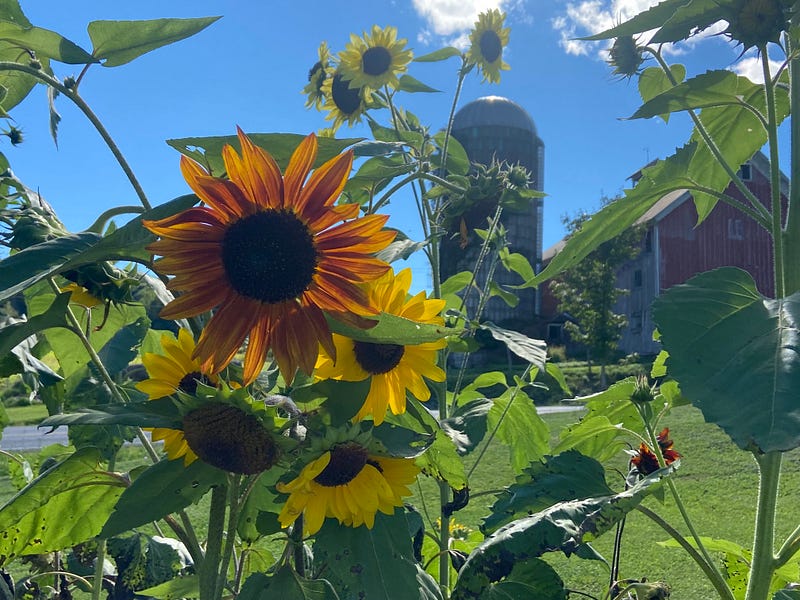
Welcome back, fellow gardeners. It’s that time of the year. Hard to believe September is here. The growing season is winding down, however, I am still getting some wonderful heirloom tomatoes, enjoying each and every one. Other veggies I’m still harvesting include peppers, kale, onions, leeks, and carrots. Over the next few days, I will be digging potatoes. The sunflowers are in full bloom and definitely brighten up the late summer garden.
Sunflowers are easy and fun to grow. I started growing them when I was about 10 years old. I owe my love of gardening to my Mom and Dad, who were avid gardeners. At the time, in the late 1960s, I was also establishing my love for birdwatching and thought it would be fun to grow giant Russian Mammoth Sunflowers and harvest the seeds to feed the birds. I still remember cutting the big seed heads and allowing them to dry for a few days so I could easily remove the seeds. Thus began my love of growing sunflowers.
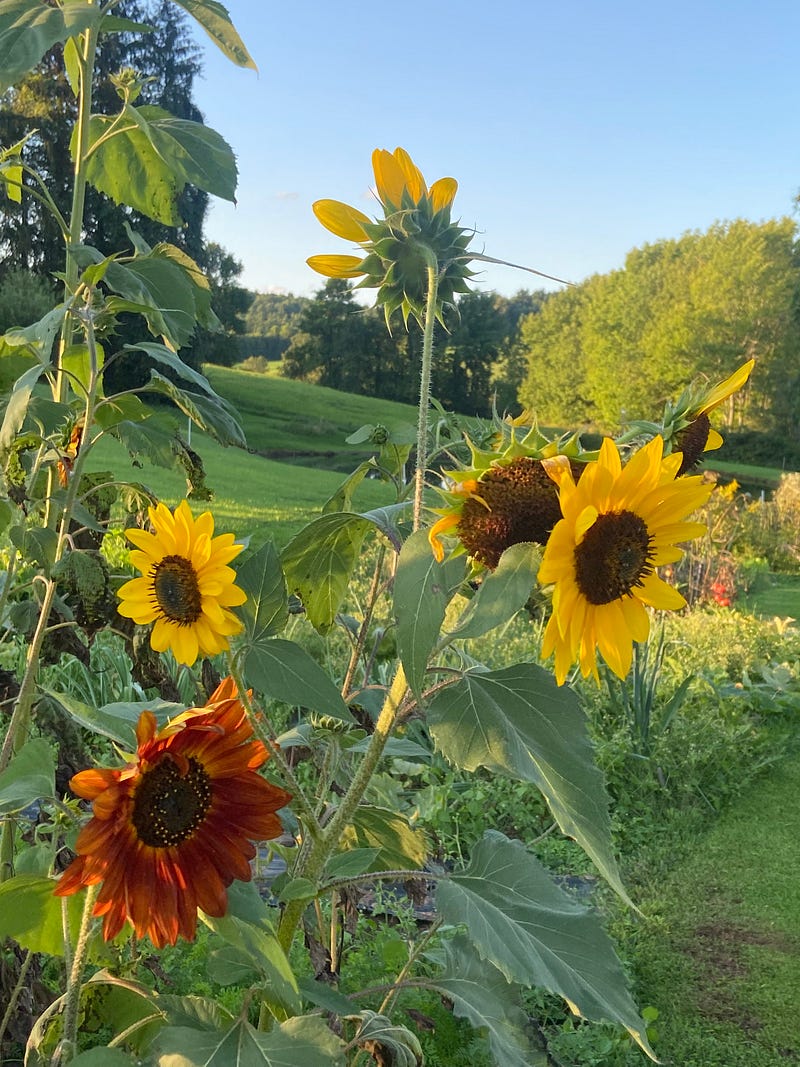
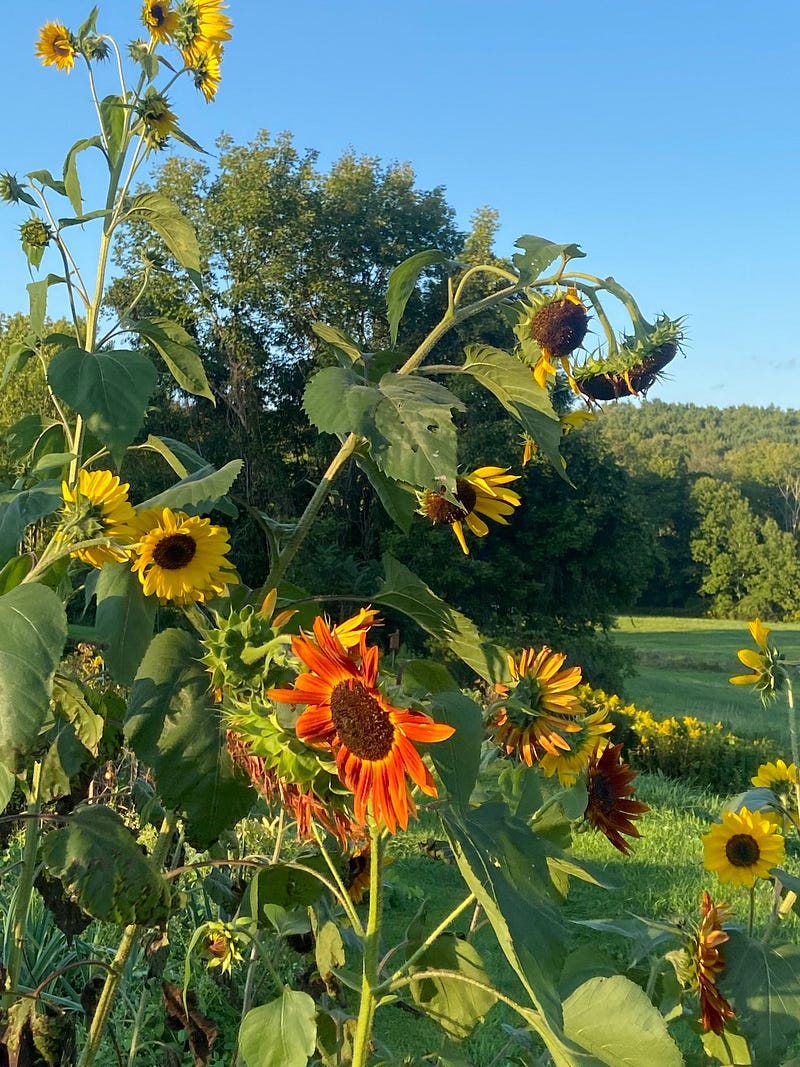
In recent years, I have been growing the decorative varieties instead of the seed types. As I mentioned above, sunflowers are relatively easy to grow, however, I have a few tips that may benefit you.
When I was a kid, I started the sunflowers from seed indoors in the Spring, following my Mom’s model of starting tomatoes. I typically started the seeds in late March and transplanted the plants to individual containers once they were a few inches tall. In our house growing up, some of the rooms upstairs didn’t have heat and we used those rooms to put the tomatoes and sunflowers. The cool temperatures and ample sun kept the plants sturdy and prevented them from growing too quickly and becoming spindly.
Back in the day, I used to cut in half 2-quart milk cartons, before the time of plastic milk jugs. The wax coating on the cartons worked well to keep them from leaking. I would then transplant them into the garden in late May or early June as Mom would do with the tomatoes.
The Mammoth Russian sunflowers were huge, reaching a height of at least 8 feet, with seed heads a foot across or more. So much fun for a kid to grow. One of the seed catalogs my Mom used to get had a contest for growing the largest seed head. I would submit a photo of myself next to them with the diameter of the seed head. I don’t remember ever winning, but it is definitely a lasting memory for me.
Growing Decorative Sunflowers
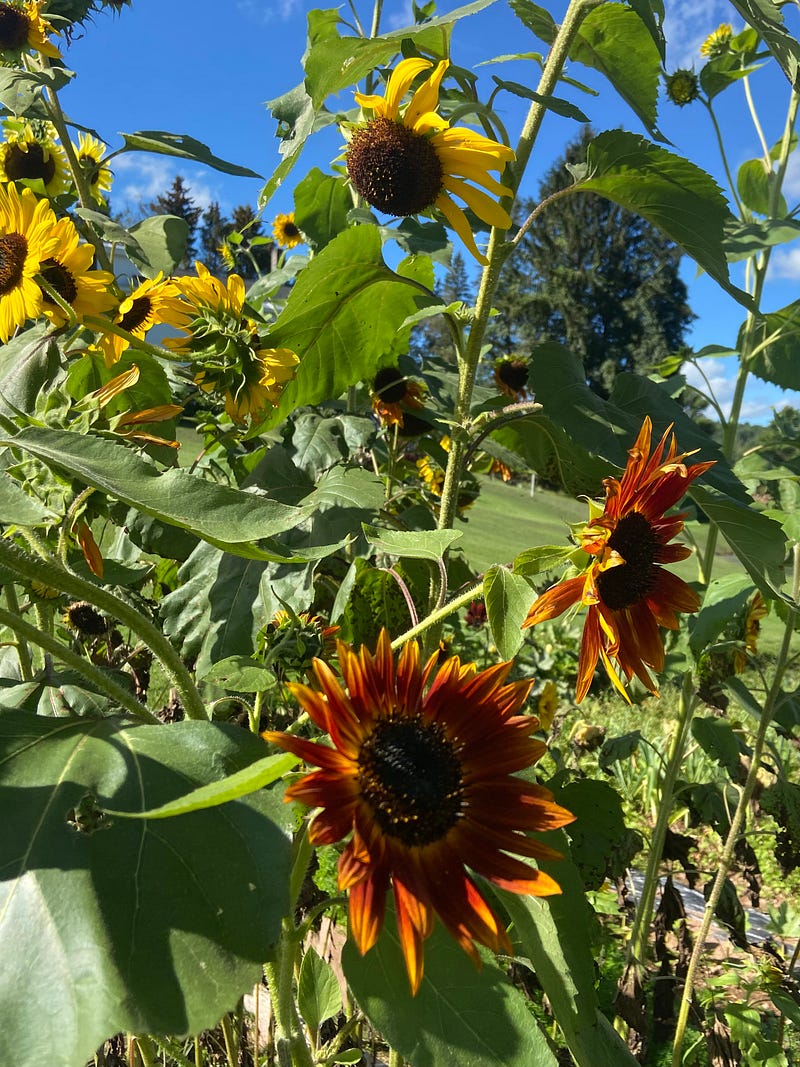
There are so many varieties of sunflowers to grow. Tall, short, many different colors. I typically grow ones about 5 to 7 feet tall of varying colors. I no longer start them indoors, I just plant the seeds directly in the garden in late May or early June.
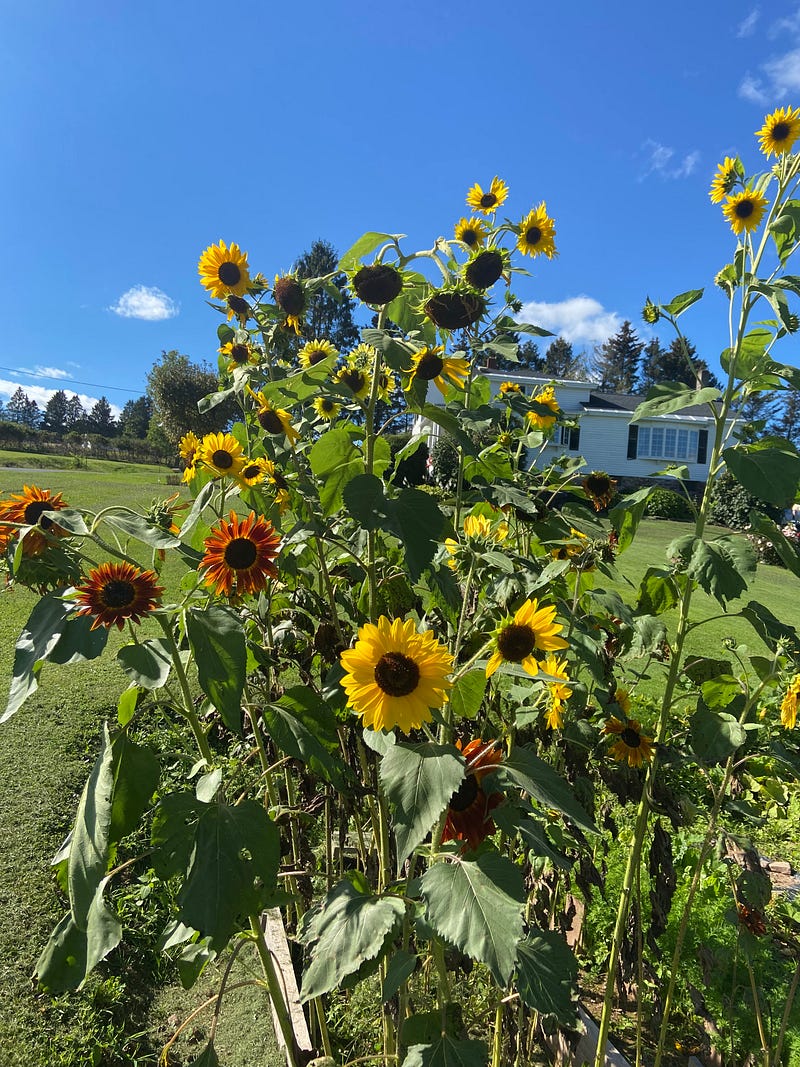
They are easy to grow, however, in recent years I have had some issues with birds and other critters. Believe it or not, I have had issues with birds eating the seeds once they are planted! Typical planting depth is a quarter of an inch. I’m not sur how the birds know there are seeds under the soil but they pick them out! At least in my garden.
Also, I have issues with woodchucks eating the plants! They seem to love to eat them and will mow them off. I have even seen a woodchuck bend over a sunflower several feet tall and munch away! Unreal. I had to come up with a solution to both of these issues.
A few years ago I built a wooden raised bed-type box to grow the sunflowers in. Similar to the one I use for lettuce and other greens. I then cover the box with netting which does several things. First, it prevents the birds from being able to pick the seeds out of the ground and also prevents woodchucks or other critters from munching on the apparently tasty plants.
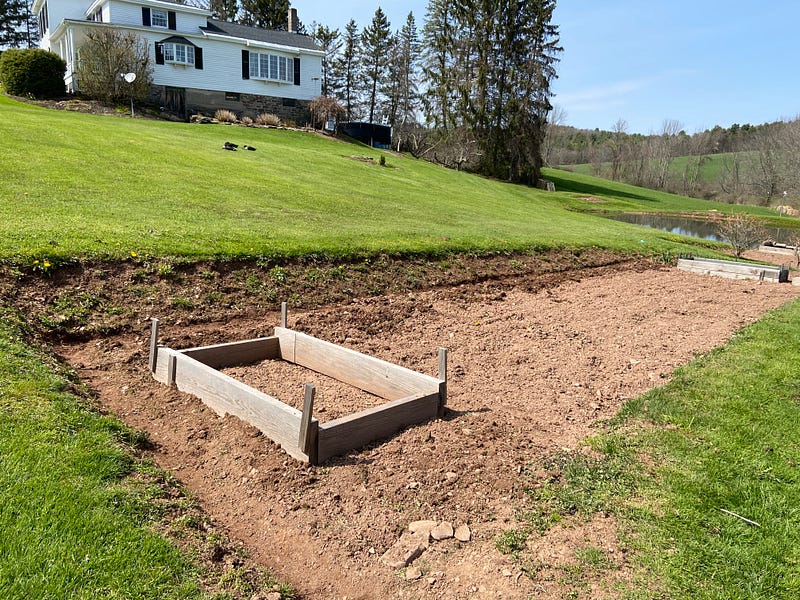
I leave the netting on until the plants get about 6 inches high (the height of the box). I haven’t had issues with the woodchucks once I remove the netting.
You may not have these issues, maybe your garden is fenced which would keep many critters out. Maybe the birds won’t bother your planted seeds. Give it a try and see what happens.
Another important aspect is to properly thin the plants. I normally plant quite a few seeds to make sure I get enough plants. Once they are about 3 inches tall, I then move some of them if needed to space them at least 6 or 8 inches apart, 12 inches is better. This way you can fill in areas where seeds may have not germinated and thin other areas with too many plants.
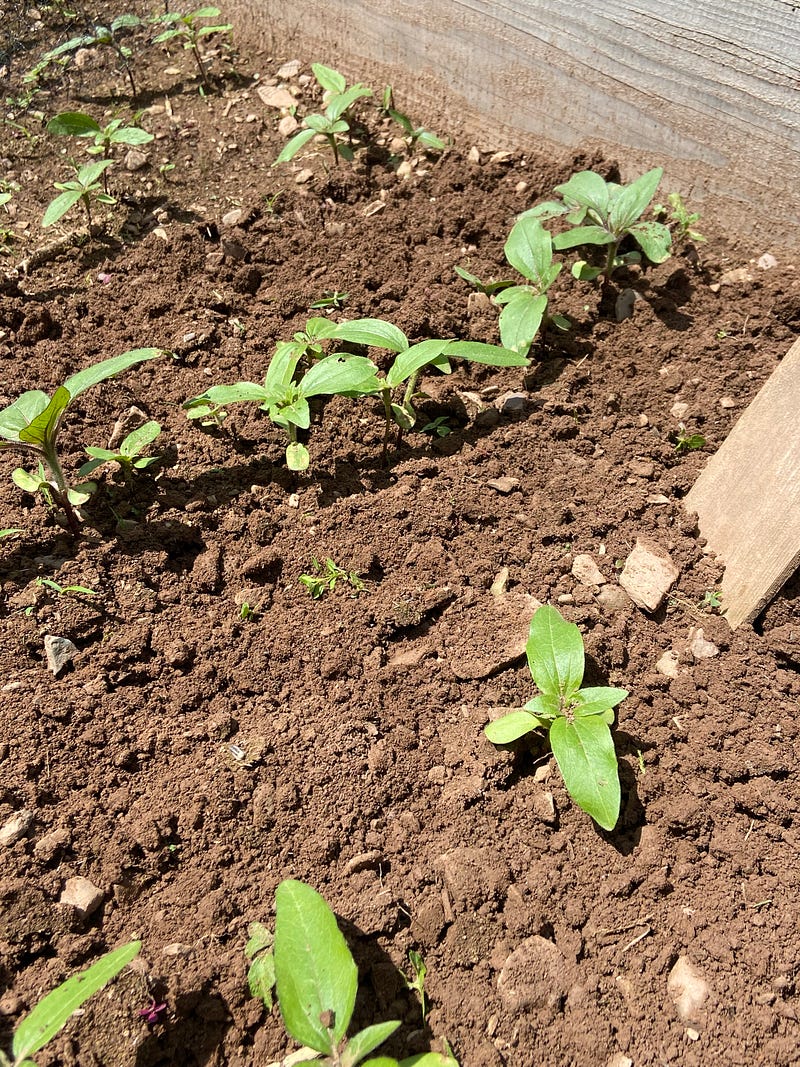
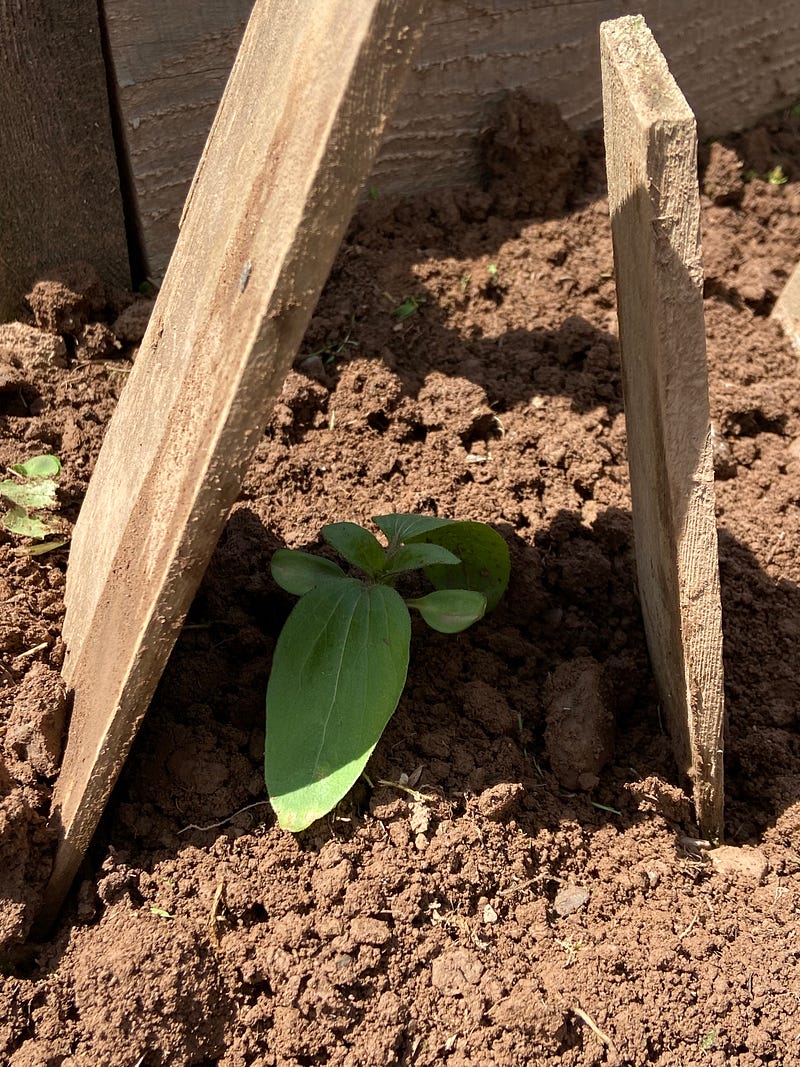
Once sunflowers are established, little more work is needed except for occasional weeding and cultivating. Just sit back and watch them grow, and wait for the blooms to emerge. They will create a show!
Getting back to the varieties I plant, I usually buy 2 or 3 different ones, mix the seeds together, and plant.
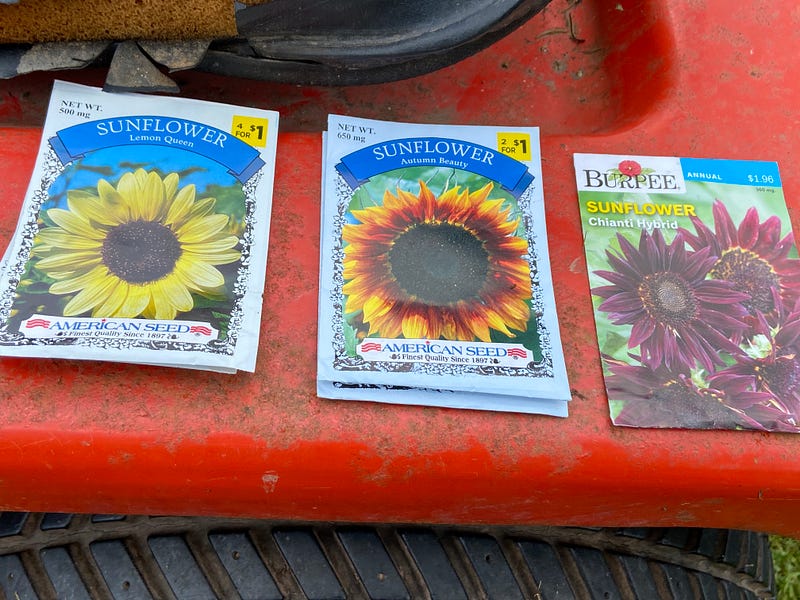
This gives me a good mixture as far as colors and heights. As I mentioned above, there are so many types to chose from, so go ahead and pick what you like. No matter which ones you pick, you won’t be disappointed.


