
The Trusty Gardener-Give Winter Sowing a Try
This Plant It and Forget It (Outdoors) Technique Works Well
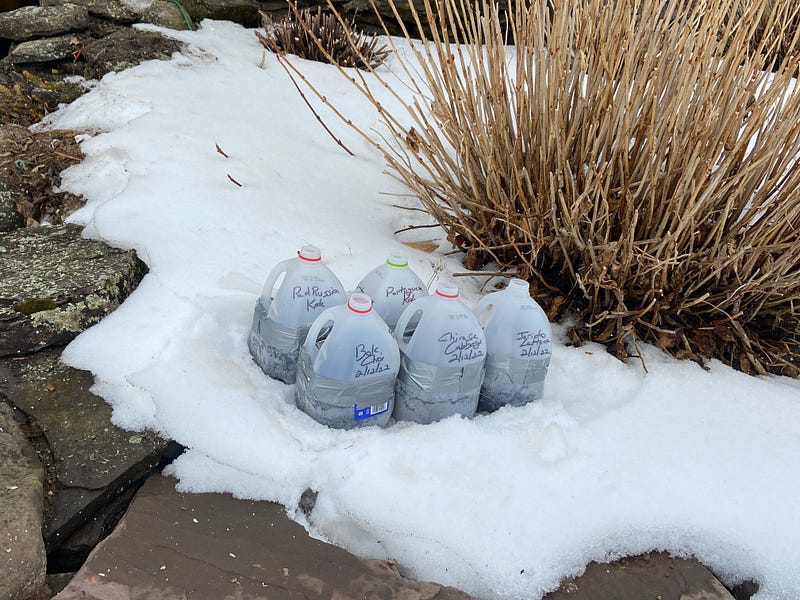
Welcome back fellow gardeners. A few weeks ago I wrote about ordering vegetable seeds for the upcoming growing season. It’s that time of the year once again. In another month or so I will be starting my tomato seeds and also some onions, leeks, and scallions. These will be planted and left indoors to germinate and grow as per normal indoor seed stating techniques. Once the weather warms some, the seedlings will be placed in my greenhouse on the porch until they can eventually be transplanted into the garden in mid to late May.
And then there is Winter Sowing. This technique involves planting seeds in containers and then placing them out in the snow and cold until Spring. Yes, you are reading this correctly! This is a plant it and forget it method that sounds crazy. But it works.
The best results will be with cold hardy, short season vegetables such as kale, lettuce, spinach, onions, leeks, radishes, and Brussels sprouts. Tomatoes and peppers will also germinate, but will be delayed compared to those started indoors and will mature much later. The nice thing is that seeds sown this way require absolutely no care once planted, until they germinate. The containers are planted and frozen in time.
This can be used also for some flowers, although I only have tried vegetables. Following is a good video regarding Winter Sowing:
Winter Sowing is actually pretty simple. I start with a one gallon milk or water jug that is clean. Remove the cap, and cut the jug in half except to leave one area to act as a hinge. Drain holes should be drilled or poked in the bottom to allow for proper drainage. The containers will not need to be watered once placed outside.
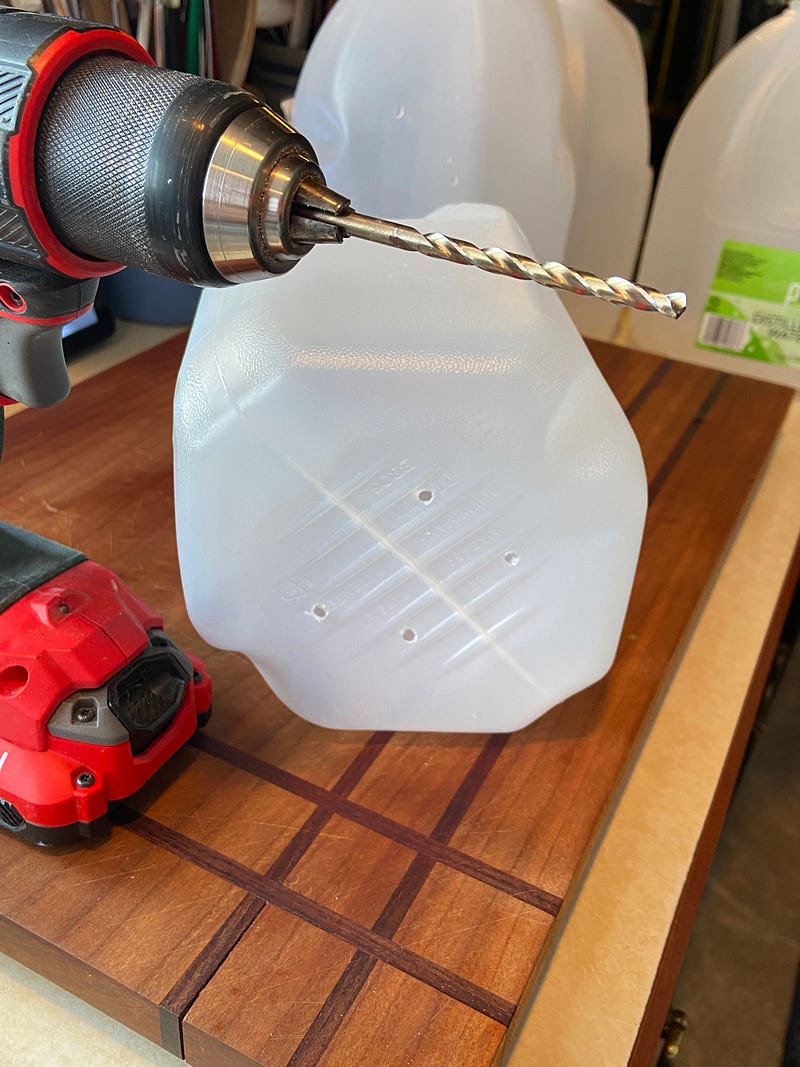
Fill the containers to about one inch from the top with a good growing medium. I tend to use potting soil as opposed to seed starting soil since potting soil normally is better at retaining moisture. Seed starting mixes tend to be very light and will dry out quickly.
Thoroughly wet the soil while allowing excess water to drain through the drain holes. Obviously this is best done in a sink. Once wet, lightly tamp down the soil to create a uniform planting surface.
At this point the containers can be planted and seeds covered to the recommended planting depth. Use a spray bottle to wet the soil again as to not to disturb the seeds. Again gently tamp the soil.
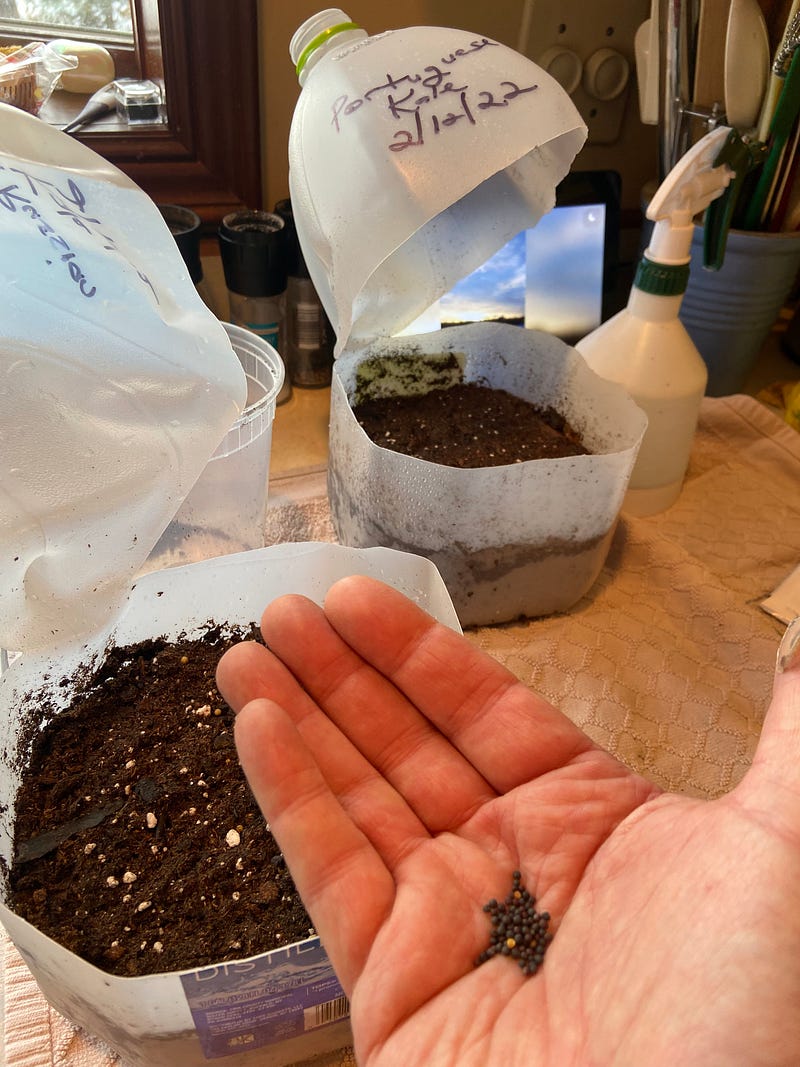
Once planted, the containers can be sealed. I normally use duct tape, but clear package tape will work also. Make sure you get a good seal so the containers can be carried outside without separating . The cap is left off the container when placing outside. This will allow rain rain to enter once the snow eventually becomes rain as Spring approaches. Once outside, watering will not be needed until the seeds germinate.
Place the containers outside in a spot where they will not tip over. If necessary, even dig into the snow to create a level spot. Snow will not hurt them, they can be completely encased in snow.
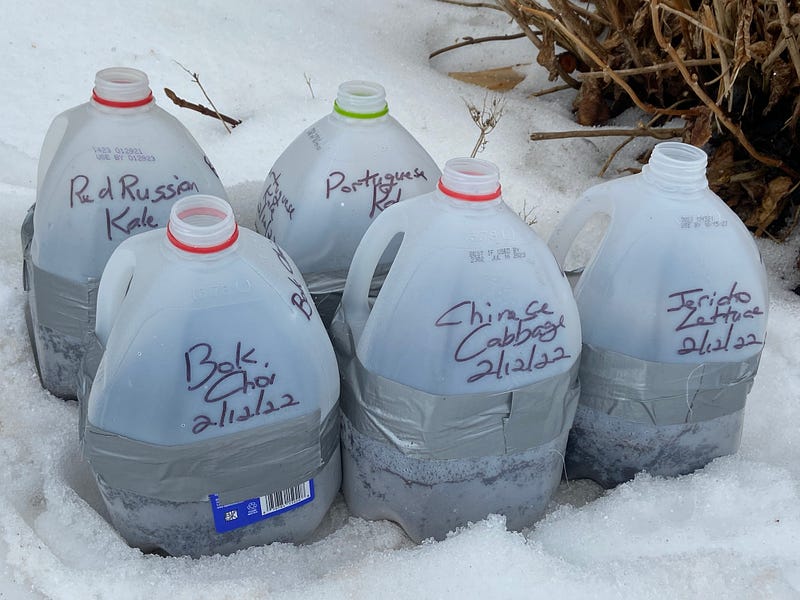
As you can see, I planted Jericho lettuce, a type of Romaine, Portuguese and Red Russian kale, Bok Choi and Chinese cabbage. The containers will be like a time capsule. Plant it and forget it. To be re-discovered in the Spring, when you will find yourself peeking in through the tiny cap opening to see if any seeds have sprouted. In the meantime, no maintenance necessary. Just relax and wait for Spring.
Stay tuned for updates.
Would You Like to Read All of My Stories? Membership is only $5 Per Month. I would really appreciate this!


