
The True Power of China’s Military
A Critical Analysis of the People’s Liberation Army’s Capabilities and Intentions
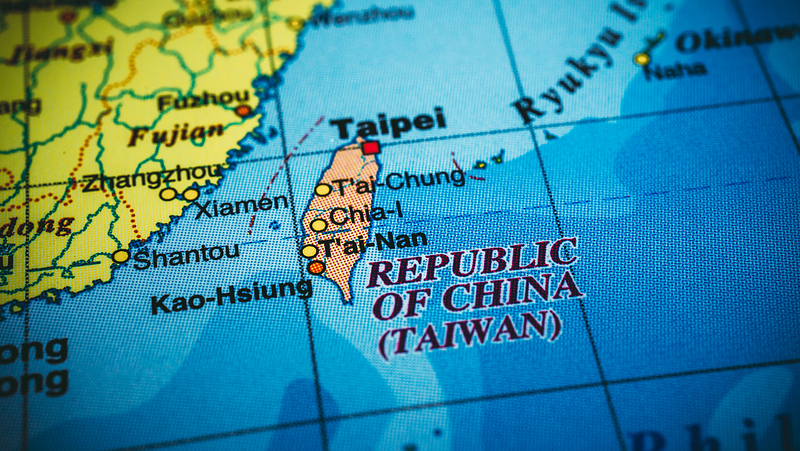
The spectre of the Cold War looms large as the world grapples with the modern military ambitions of China, particularly its stance towards Taiwan.
Historical parallels drawn from the mid-20th century remind us of the costly errors of miscalculating an adversary’s capabilities, as seen in America’s inflated perception of Soviet missile strength.
In the late 1950s, the United States was embroiled in the Cold War and faced escalating tensions with the Soviet Union. The launch of Sputnik and the demonstration of Soviet missile capabilities spurred fears of a “missile gap,” which became a significant political and defenc
e concern. American intelligence reports exaggerated Soviet capacities, predicting an overwhelming number of ICBMs that would eclipse the U.S. arsenal. This prompted then-Senator John F. Kennedy to demand decisive action to prevent Soviet dominance.
However, this belief was unfounded, as later intelligence via satellite imagery showed that the Soviet Union had a fraction of the predicted missile count.
Despite this revelation, President Kennedy maintained a trajectory of nuclear armament, fuelling the hostilities that culminated in the Cuban Missile Crisis.
Lyndon B. Johnson later acknowledged that this arms race led to unnecessary military expenditures and construction.
The United States’ overestimation of the Soviet threat stands as a cautionary tale of how misjudging an adversary’s strength can have profound implications — a theme that resonates in the current evaluation of China’s military might.
Western intelligence was recently also taken aback by the unexpectedly poor performance of Russian forces in Ukraine, prompting a reevaluation of how nations appraise their adversaries, particularly China.
Fast forward to today, and the world faces a similar challenge in interpreting China’s military intentions, especially concerning Taiwan.
While the People’s Liberation Army (PLA) has metamorphosed from an outdated, land-based force into an expansive military power with the world’s largest army and navy, along with significant air force and missile capabilities, it still grapples with structural and technological challenges, including outdated command structures, logistical deficiencies, and the absence of recent combat experience.
These issues are compounded by modern challenges such as adapting to lessons from conflicts like the war in Ukraine, navigating U.S. technology export limitations, and recruiting technologically skilled personnel.
Despite these internal issues, China’s assertive actions in the South China Sea, its confrontations with India, and its military infrastructure developments near Taiwan indicate a readiness to project power beyond its borders though.
China’s nuclear capabilities, though not as extensive as those of the U.S. or Russia, are rapidly advancing.
It has fortified its South China Sea positions, asserting maritime claims and constructing artificial islands, and its clashes with Indian troops and the establishment of an overseas base in Djibouti underscore its growing assertiveness.
China’s intensified activities near Taiwan have also raised concerns among U.S. military leaders about potential aggression.
Xi Jinping’s recent softer rhetoric towards the West may however, seem to indicate a growing willingness for greater diplomatic engagement (we can only hope), but it’s essential to scrutinise this against years of hostile language and actions too.
The Chinese government has unequivocally linked the notion of Taiwan’s unification with its broader nationalistic goals, which are tied to the centenary of Communist rule in 2049.
Xi’s aggressive timelines for military modernisation and the directive for the PLA to be prepared for an invasion by 2027 point to a clear trajectory, despite the ambiguity in public statements.
The shifting political winds, including Xi’s recent overtures, should not dilute the recognition of China’s long-term strategic plans.
The PLA’s apparent vulnerabilities, such as the “peace disease” cited by Xi and the slow pace of military reform, may serve as a smokescreen for its underlying advancements.
These developments are evident in the PLA’s growing nuclear arsenal and its more assertive posture in the Indo-Pacific region.
The dismissal of top generals within the PLA, while signaling potential cracks in discipline, also underscores Xi’s intent to consolidate power and streamline military command towards efficiency.
American intelligence’s suggestion that the PLA aims to be invasion-ready by 2027 is a stark reminder of the potential for conflict.
While Xi’s statements and recent softer language could be interpreted as a pivot towards diplomacy, they may also be strategic, buying time to strengthen military capabilities.
The nuanced difference between capability and intent is critical; the former is quantifiable, but the latter is speculative and thus more prone to misinterpretation.
In the U.S., the response to China’s military rise has sparked a debate with far-reaching implications. Some advocate for a fortified defence posture, including increased military spending and explicit support for Taiwan.
This perspective is driven by the acknowledgment that China’s military buildup and its focus on Taiwan are not merely for show but a likely prelude to action if the conditions are favourable.
The PLA’s past unmet deadlines for military progress should not be dismissed as simple failures but rather viewed as part of a longer strategic patience.
The same patience should be exercised in assessing the implications of Xi’s recent softer discourse.
It is a delicate balance; while the PLA’s current capabilities may not guarantee a successful invasion, its trajectory suggests a steady march towards that capability.
This analysis contends that the threat of a Chinese invasion of Taiwan is a tangible one.
The PLA’s shortcomings are part of a complex puzzle that, when combined with its strengths, paints a picture of a military force inching closer to realizing its aspirations, with Taiwan squarely in its sights.
The West’s challenge is to discern the PLA’s actual state of preparedness amid fluctuating political signals and to prepare for the possibility that Xi Jinping’s administration, emboldened by nationalistic fervour and military advancements, might seize a strategic opportunity to alter the status quo across the Taiwan Strait.
The rhetoric and actions of the past few years, despite recent diplomatic gestures, have set a tone that cannot be ignored, and it would be prudent to plan with the assumption that China is gearing up for a scenario where invasion becomes a strategic choice, not just a theoretical possibility.