The true history of the Jews
20 August 2024
The traditional account of Jewish history, as portrayed in Israeli textbooks and many other sources, generally follows a narrative that emphasises the ancient origin of the Jews, their historical connection to the land of Israel, and their survival through centuries of exile and persecution. The modern state of Israel stakes its legitimacy on the factual accuracy of this account. Developments in scholarly and scientific research over the past few decades have, however, shown every element of the traditional account to be false. These discoveries fatally undermine the legitimacy of the state of Israel.
This article briefly examines the main elements of the traditional narrative and explains how scientific and scholarly discoveries have discredited each one.
At the UN’s 1947 sessions deliberating Palestine’s future, Ben-Gurion testified that Palestine belonged to the Jews because they never gave up their claim to it from Biblical times – three thousand five hundred years ago, to use his figure. The irony of Zionism selling its ethnic-nationalist project in the wake of the Allies’ defeat of racial-nationalism in Europe was repeatedly noted at the time, including by people who knew Nazi- and Zionist fascism firsthand. It was, as the physicist Wolfgang Yourgrau put it in the journal Orient in February, 1943, a tragicomedy:
The growth of Fascism in Palestine at a time when the liberated nations will put it into its grave is a tragicomedy.
Even if the UN accepted Ben-Gurion’s extraordinary claim that he was the descendant of a particular ancient Middle Eastern people, the argument itself would have been laughable, indeed delusional, had his audience’s mindset about Palestine not also been influenced by the musty fairytales spun by Zionist propagandists, which painted an entirely mythical picture of Jewish history. It’s time to move beyond such fictions and face up to the historical facts.
1. Biblical Era and the Patriarchs
The traditional narrative begins with the biblical Patriarchs — Abraham, Isaac, and Jacob — who are supposed to be the founders of the Jewish people. Abraham, who is believed to have lived in the 2nd millennium BCE, is supposed to have made a covenant with God, which includes the promise of the land of Canaan (modern-day Israel) to his descendants. The narrative continues with the story of the Israelites’ enslavement in Egypt, their liberation under Moses, and the receiving of the Torah at Mount Sinai.
From a modern historian’s perspective, there are several issues with the idea that Jewish history begins with the biblical Patriarchs. These concerns arise from the difference between religious or traditional narratives and historical or archaeological evidence. There is, in fact, no direct archaeological evidence or contemporary historical records to confirm the existence of Abraham, Isaac, or Jacob, or the events associated with them as described in the Torah. In any case, the Torah was never intended to be simple record of history, in the modern sense, but is first and foremost a theological text. The stories of the Patriarchs reflect a theological perspective that sees Jewish history as beginning with a divine covenant and direct interaction with God. Such theological claims are, of course, outside the scope of historical analysis, and the stories of the Patriarchs must be seen as mythological expressions of the the values and beliefs of ancient Judahites rather than as reliable historical records.
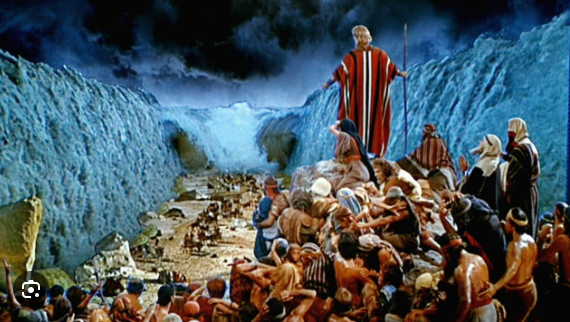
Nor is there any historical evidence to corroborate the story of the Israelites’ enslavement in Egypt or that of the Exodus. Archaeologists have looked in vain for evidence of a large-scale migration of people from Egypt into Canaan at the time suggested by the biblical account. Nor is the story corroborated by Egyptian records, which are remarkably detailed and would certainly have mentioned the departure of a large number of slaves had it actually occurred, since this would have been a significant event. It is now widely accepted that the Exodus narrative is a theological or national myth that was invented no earlier than the sixth century BCE. As with the Patriarchs, the existence of Moses is not confirmed by contemporary historical evidence. The story of Moses and the reception of the Torah at Mount Sinai is seen by most modern scholars as a foundational myth rather than a historical event.
Biblical scholars have long understood that the Torah is a composite text, compiled from various sources over several centuries, and dating from no earlier than the sixth century BCE. The narratives of the Patriarchs, the Exodus, and the Sinai covenant almost certainly represent different traditions that have been woven together by later editors rather than a single, continuous historical account — and are certainly not the product of a single author.
2. Conquest and Settlement in Canaan
According to the traditional narrative, the Israelites wandered in the desert for forty years after escaping from Egypt. Then, led by Joshua, they entered Canaan and began to conquer and settle the land, dividing it among the twelve tribes.
Archaeological evidence suggests that Canaan during the second millennium BCE was home to a well-established civilisation with its own cities and cultures. The idea of an empty land promised to the descendants of a single family does not align with what is known about the region’s population and political landscape at that time.
There is also evidence that the early Israelites were culturally and ethnically similar to other Canaanite peoples, challenging the idea of a distinct group of people emerging from a single patriarchal family that immigrated from elsewhere. Most historians and archaeologists now agree that the Israelites were originally indigenous Canaanites who gradually differentiated themselves culturally and religiously from their compatriots. The earliest archaeological evidence for this process of differentiation is the almost complete disapperance of pig bones from archaeological layers dating from the Iron Age (1130–586 BCE) in certain parts of the Levant associated with the Canaanites and the Arameans. This suggests that the elimination of pork from Levantine diets arose first for economic or ecological reasons, and only became a Jewish religious taboo at a later date.
Nor is there any archaeological evidence for a unified, large-scale military conquest of Canaan under Joshua. Instead, evidence suggests that the spread of groups identified as Israelites to other parts of Canaan was gradual process, taking centuries, rather than a sudden conquest. This process might have involved the assimilation of local populations rather than their outright displacement or destruction. The whole idea of a “conquest” may in fact represent a later ideological or theological interpretation of how Israel came to possess the land, rather than a historical military campaign.
The Book of Joshua, which describes the conquest and settlement of Canaan, is considered by modern scholars to be a text that blends historical memories, theological concerns, and later editorial work. It likely reflects the perspectives and religious beliefs of a later period, possibly the early monarchy or even later, rather than a factual recounting of events. The division of the land among the twelve tribes of Israel, in particular, may be more of a symbolic or idealised structure rather than a reflection of actual historical divisions. The idea of twelve tribes may have been retroactively imposed to reflect a later understanding of Israel’s social and political organisation. Historical and archaeological evidence suggests that the social structure of early Israel was likely more fluid and complex, with tribal identities evolving over time. The biblical description of a clear-cut division among twelve tribes is likely an oversimplification.
3. United Monarchy and the First Temple
The traditional narrative recounts the establishment of a monarchy under King Saul, followed by King David and his son King Solomon. King David is credited with uniting the tribes and establishing Jerusalem as the political and religious capital. King Solomon, is supposed to have built the First Temple in Jerusalem, which became the central place of worship for the Jewish people. This era, especially under David and Solomon, is often portrayed as a golden age.
Here, once again, the traditional narrative is not supported by archaeological evidence. While there are some suggestive hints, such as the Tel Dan Stele, which mentions a certain “House of David”, the material evidence for a unified and extensive kingdom under David and Solomon is sparse and does not support the biblical narrative of a powerful, centralized state. The archaeological evidence from Jerusalem and other sites during the 10th century BCE (the time traditionally associated with David and Solomon) does not indicate a large, prosperous empire. Instead, the Kingdom of Israel during this time was probably a small, regional power rather than the dominant state that is portrayed in the Bible.
The idea of a “golden age” almost certainly reflects later idealisation by biblical authors rather than an accurate historical depiction. The biblical texts, which were written and compiled centuries after the events they describe, often portray David and Solomon in a highly positive light, possibly to serve theological or political purposes, such as legitimising the Davidic dynasty. The biblical account of David uniting the tribes of Israel into a single kingdom is not supported by substantial evidence. Modern historians question the extent to which the tribes were politically unified or even clearly defined in the 10th century BCE. Likewise, the centralization of political and religious power in Jerusalem under David’s reign is also debated. Archaeological findings do not support the existence of a large, centralised capital in Jerusalem during this period, suggesting that the city’s significance grew gradually rather than being instantly established by David.
Nor is there any direct archaeological evidence for the elaborate First Temple as it is described in the Bible. While the biblical account attributes its construction to Solomon, the lack of material evidence from Jerusalem complicates efforts to verify this claim. Much of the area where the Temple would have stood is either inaccessible for excavation or has been extensively altered over millennia. Besides, the historical reality of Solomon’s kingdom is also in question. The grandeur and wealth attributed to Solomon, including the construction of the Temple, almost certainly reflect later traditions or exaggerations. Some historians suggest that the account of Solomon’s reign might be a composite or symbolic narrative rather than a factual history. There almost certainly was a temple in Jerusalem before the Babylonian conquest, but it was likely a rather rudimentary construction.
4. Division and Exile
After Solomon’s death, according to the traditional narrative, the kingdom split into the northern kingdom of Israel and the southern kingdom of Judah. The northern kingdom was eventually conquered by the Assyrians in 722 BCE, leading to the dispersion of the ten lost tribes. The southern kingdom was conquered by the Babylonians in 586 BCE, who destroyed the First Temple and exiled the Jewish people to Babylon.
Archaeologists and historians now think that the whole idea of a united kingdom followed by a split is probably a retrospective construction by later biblical authors to explain the existence of two related kingdoms that had in fact never been united. The kingdoms of Israel (in the north) and Judah (in the south) likely developed independently, with their own distinct political, cultural, and religious characteristics. The narrative of a split after Solomon’s death vastly oversimplifies the complex processes of state formation in the region. Israel and Judah were likely always distinct entities that gradually developed closer relations or ideological connections over time.
Archaeological evidence suggests that the northern kingdom of Israel was more powerful and economically advanced than Judah for much of its history. The biblical portrayal of Judah as the primary successor to a united monarchy under David and Solomon reflects the perspective of later biblical authors, particularly those from Judah, rather than a balanced historical account.
The concept of the “ten lost tribes” of Israel, who were supposedly dispersed after the Assyrian conquest, is also a later development and is not well supported by contemporary evidence. The Assyrians did conquer the northern kingdom in 722 BCE and deported parts of its population, but the idea that exactly ten tribes were lost and that they disappeared entirely is more legend than historical fact. While the Assyrian conquest did involve deportations, the scale and impact of these displacements are subject to debate. The population may not have been entirely displaced, and some Israelites likely remained or fled to Judah, where they could have influenced the religious and cultural development of the southern kingdom.
Likewise, the idea of a total exile of the Jewish people to Babylon in 586 BCE is entirely lacking in historical plausibility. The Babylonian exile primarily affected the elite and ruling classes of Judah, such as the king, priests, and nobility. Most of the common people likely remained in the land, though under difficult conditions. The exile was significant in shaping Jewish identity and religious thought, but it was far from a complete displacement of the population. Even after the Babylonian conquest, life continued in Judah, albeit under Babylonian control. Archaeological evidence shows that some communities persisted, and religious practices likely adapted to the new circumstances.
The destruction of the First Temple in 586 BCE is a well-supported historical event. However, the significance of this event is often interpreted through a later theological lens. While the destruction had profound religious and cultural implications for the Jewish people, the temple’s significance and the nature of religious practice in Judah before its destruction was without doubt far more complex and varied than the biblical narrative suggests.
5. Return and the Second Temple
According to the traditional narrative, when the Iranian King Cyrus conquered Babylon he allowed the Jews to return to Jerusalem and rebuild the Temple. This period, known as the Second Temple period, saw the return of the Jews to the land and the rebuilding of Jewish religious life, culminating in the construction of the Second Temple.
While it is true that Cyrus issued a decree allowing exiles to return to Judah (as recorded in both the Hebrew Bible and the Cyrus Cylinder), the actual return of the Jews was a complex and gradual process. Jewish communities have always been diverse and heterogeneous, and so it is not surprising that responses to the possibility of return were diverse. Some Jews had become well-established in Babylon and chose to stay, contributing to the development of the Jewish diaspora. Those who did return likely did so in waves over several decades rather than in one contingent, and the rebuilding of the Temple and Jerusalem’s infrastructure took a long time and faced significant challenges. Back in Jerusalem, they faced the challenge of re-establishing their community amid the mixed populations already living in the area, which included the majority of Judahites (who had never been exiled) as well as other groups that had moved in during the Babylonian period.
Cyrus’s decision to allow the Jews to return to Judah was not, of course, motivated by a desire to help them rebuild their religious life. Cyrus’s decree was part of a broader policy of religious tolerance and political pragmatism, aimed at stabilising the newly conquered territories by allowing various peoples, including the Jews, to return to their homelands and restore their communities. This policy was intended to secure loyalty and maintain order within the diverse and vast Persian Empire, rather than being motivated by any particular affinity for the Jewish people. The rebuilding of local temples (including the Second Temple in Jerusalem) was a way for the Persian Empire to exercise control over its territories. By supporting local religious institutions, the Persians could gain the favour of local populations and ensure the smooth functioning of their empire.
The construction of the Second Temple faced many delays due to local opposition, lack of resources, and internal disputes among the returning Jews. The Book of Ezra-Nehemiah in the Hebrew Bible describes these difficulties, indicating that the rebuilding of the Temple was not a straightforward or immediate process. The Second Temple’s completion in 516 BCE occurred during the reign of Darius I, and support from the Persian administration continued under subsequent kings, indicating that the rebuilding of the Temple was part of a long-term policy rather than a singular event linked only to Cyrus.
The rebuilding of the Temple was marked by significant religious, social, and political changes in Jerusalem. The returnees had to integrate their Babylonian experiences with the traditions of those who had remained in Judah, leading to breathtaking new developments in religious practices and identity. This era saw the rise of different sects, the development of new religious texts and interpretations, and evolving relationships with the Persian authorities and neighbouring peoples. Above all, Iranian culture and religion exerted a profound influence on Jewish life and thought. The Jews drank deeply from the ideological wellspring of their new Iranian rulers, with results that transformed their religion beyond recognition.
Unlike the early Hindus, who conceived time in cyclical terms, the worshippers of Ahura Mazda in Iran had developed a completely original view according to which history would one day come to an end. Suffering and injustice would be abolished when Ahura Mazda would triumph in a final cataclysmic battle between good and evil. The dead would then be resurrected, and the good would live forever in the House of Song, while those who had lived bad lives would be condemned to spend all eternity in darkness. All these ideas were born in Iran; no previous culture had ever conceived of such things before. Not even the Jews had contemplated such ideas before they found themselves ruled by an Iranian king.
By the time Alexander the Great conquered Iraq in 331 BCE, the ancient religion of the Jews had been completely transformed. Gone were the old anthropomorphic descriptions of Yahweh that predominated in the earlier writings. Gone was the old view of the afterlife as a shadowy underworld to which all the dead went, irrespective of whether they had lived good or bad lives. Gone was the idea that history would last forever. Replacing these Semitic notions were Iranian ideas: a much more abstract creator God, and a clear distinction between heaven and hell. The Jews also adopted the Mazdan idea of a future messiah — the Saoshyant, who would be born miraculously at the end of time from a virgin mother, and restore justice to the world. The Jews even borrowed the poetry of the Iranians to describe this future king — as a good shepherd.
The Tanakh actually shows this process itself, since some of the books it contains record traditions that predate contact with Iran, while others show much greater Iranian influence. The difference between the two sets of books is striking. The pre-Iranian books are thoroughly Semitic, and resonate with previous Semitic literature such as the Babylonian Enuma Elish and the Sumerian Gilgamesh. The Iranian books (especially Esther and Daniel) are a world apart, and seem thoroughly permeated by Mazdan ideas and Persian culture.
Cultural influence is rarely a one-way street. The Iranians also absorbed Jewish ideas. Jewish monotheism, for example, seems to have encouraged Iranians to sharpen the distinction between Ahura Mazda and other spiritual beings; Ahura Mazda was increasingly seen as the one supreme being, and other supernatural entities were demoted, and became the prototype for the evolving Jewish concept of “angels.” The Second Temple period was, therefore, not just about the physical reconstruction of the Temple but also about the re-creation of a Jewish community with new forms of governance and social structures. It was a time of significant challenges and transformations which laid the groundwork for all subsequent developments in Jewish religious and cultural life.
6. Foreign Rule and Revolts
The traditional narrative portrays the Second Temple period as one of domination by foreign rulers — first the Persians, and then the Greeks and Romans. Under the Greek Seleucid Empire, the Jewish Maccabees led a successful revolt, leading to the establishment of the Hasmonean dynasty. However, the Romans eventually took control, and after a series of revolts, including the Great Revolt (66–70 CE) and the Bar Kokhba Revolt (132–135 CE), the Romans destroyed the Second Temple and exiled the Jews from the land.
Contrary to the traditional narrative, the Second Temple period was not a time of total domination by foreign powers; there were, in fact, significant variations in the degree of Jewish autonomy. For example, during Persian rule, Jews had considerable religious and administrative autonomy under the leadership of the high priests, and Persian policy generally allowed for local governance and religious freedom. Similarly, the Hasmonean dynasty, which followed the Maccabean revolt, was an independent Jewish state for nearly a century before Roman control became dominant.
The relationship between Jewish and Hellenistic culture was also more complex than the traditional narrative suggests, with varying degrees of acceptance and resistance rather than a simple oscillation between domination and revolt. Under Greek rule, particularly during the Ptolemaic and Seleucid periods, there was significant cultural exchange, and many Jews adopted aspects of Hellenistic culture.
Nor was the Maccabean revolt solely a reaction to foreign domination. While the revolt was indeed sparked by religious persecution under the Seleucid ruler Antiochus IV Epiphanes, it also had significant political and social dimensions. The Maccabees were not only fighting for religious freedom but also seeking to establish political independence and consolidate power within the Jewish community. The revolt was as much a civil conflict among Jews with different views on Hellenism as it was a rebellion against the Seleucids. These internal conflicts and controversies continued to dog the Hasmonean dynasty which the Maccabees established. The Hasmonean rulers, who initially gained power as champions of traditional Judaism, increasingly adopted Hellenistic practices and faced opposition from other Jewish groups, such as the Pharisees and Sadducees.
The Jewish response to Roman rule was also complex and multifaceted. While the Great Revolt (66–70 CE) and the Bar Kokhba Revolt (132–135 CE) were significant uprisings, many Jews accommodated Roman rule and sought to coexist within the empire. The Roman authorities, at least initially, allowed a degree of religious freedom and local governance, and many Jews participated in Roman society and politics. The Great Revolt led to the destruction of the Second Temple, but it did not immediately result in the exile of the Jewish population. Many Jews continued to live in Judea and surrounding regions after the revolt. The Bar Kokhba Revolt was indeed catastrophic, leading to massive loss of life and harsher Roman measures, including the establishment of the province of Syria Palaestina and increased persecution. However, even after these revolts, Jewish communities persisted in the land.
The idea of a complete exile is a myth. The Romans never engaged in mass population transfer or large-scale forced exile. While the destruction of the Second Temple and the Bar Kokhba Revolt certainly led to significant demographic changes and many Jews were killed, enslaved, or fled, the idea of a complete exile is a huge oversimplification. Jewish communities remained in the land, particularly in Galilee, and in other parts of the Roman Empire. The concept of a total exile was fabricated out of whole cloth by Christian — and later Jewish — tradition, but in reality, the Jewish presence in the region continued, albeit under Roman repression. Jewish religious and cultural life continued both in the land of Israel and in the growing diaspora. The rabbinic movement, which eventually led to the compilation of the Mishnah and Talmud, developed during this period, reflecting a significant continuity of Jewish tradition even in the face of adversity.
7. Diaspora and Survival
For nearly two millennia, the story goes, Jews lived in the diaspora, spread across the world. Despite facing persecution, including the Crusades, the Inquisition, and pogroms, Jewish communities maintained their identity through religious practices, education, and a strong sense of community. The longing for a return to Zion (Eretz Yisrael) remained a central theme in Jewish prayers and culture.
The importance of this bit of the traditional narrative to Zionist ideology and the modern state of Israel can hardly be exaggerated. Take, for example, the second paragraph of the Declaration of the Establishment of the State of Israel, which was approved by the Jewish People’s Council at the Tel Aviv Museum on 14 May 1948:
After being forcibly exiled from their land, the people kept faith with it throughout their Dispersion and never ceased to pray and hope for their return to it and for the restoration in it of their political freedom.Impelled by this historic and traditional attachment, Jews strove in every successive generation to re-establish themselves in their ancient homeland. In recent decades they returned in their masses. Pioneers, ma’pilim [(Hebrew) — immigrants coming to Eretz-Israel in defiance of restrictive legislation] and defenders, they made deserts bloom, revived the Hebrew language, built villages and towns, and created a thriving community controlling its own economy and culture, loving peace but knowing how to defend itself, bringing the blessings of progress to all the country’s inhabitants, and aspiring towards independent nationhood.
This statement gives the impression that the Jewish diaspora was a uniform experience characterised primarily by persecution and a longing for return to Zion. However, Jewish life in the diaspora was far more diverse and included periods of significant cultural, intellectual, and economic flourishing. For example, Jewish communities in medieval Spain (Al-Andalus) during the Golden Age experienced a high degree of cultural integration and produced important works in philosophy, science, and poetry. Similarly, Jews in the Ottoman Empire, particularly in cities like Salonika and Istanbul, enjoyed relative stability and autonomy. While persecution was indeed a significant part of Jewish history, there were also many periods and places where Jews lived relatively peacefully, contributing to and thriving within their societies. These periods of stability and integration that some Jewish communities experienced, particularly in Muslim lands, and later in certain parts of Europe, were crucial in the development of Jewish thought, law, and culture.This diversity of experience is often overshadowed by a narrative that emphasises persecution and suffering.
The Crusades, the Inquisition, and the many pogroms that have victimised Jews, all warrant condemnation for their brutality and antisemitism, but it is important to note the varied responses of Jewish communities to these challenges. Jews responded to persecution in multiple ways, including migration, adaptation, intellectual and theological development, and, in some cases, resistance. The formation of new Jewish legal, philosophical, and mystical traditions (such as Kabbalah) was often a response to the pressures and uncertainties of diaspora life.
The idea of a continuous and unchanged Jewish identity throughout the diaspora is a myth; in reality, Jewish identity evolved in different ways in response to different cultural, political, and social environments. The experiences of Jews in Europe, North Africa, the Middle East, and later in the Americas and other regions were each distinct, leading to the development of diverse Jewish customs, rich variations in religious practice, and even different languages (such as Yiddish, Ladino, and Judeo-Arabic). Jewish communities were never monolithic. Over the centuries, significant internal diversity and sectarianism developed, including the rise of different Jewish movements such as Rabbinic Judaism, Karaism, Hasidism, and later, Reform, Conservative, and Orthodox Judaism. These movements reflected varying interpretations of Jewish law and practice, often influenced by the surrounding cultural and intellectual environments.
While the longing for Zion was indeed a central theme in Jewish prayers and culture, it is important to note that this longing was not always understood as a literal desire to return to the physical land of Israel. In many periods, the return to Zion was interpreted in a spiritual or messianic context, with the belief that a divinely orchestrated return would happen in the future, often in conjunction with the arrival of the Messiah. This messianic expectation varied widely among different Jewish communities and thinkers. The idea of physically returning to Zion as a political goal was a thoroughly modern development connected with the rise of political Zionism in the 19th century, and was the offspring of romantic nationalism, Enlightenment ideas, and the specific conditions of European Jewry, particularly in Eastern Europe. This represented a dramatic rupture with traditional religious beliefs about the return to Zion.
For the past two thousand years, the vast majority of Jews have understood their “exile” primarily in spiritual terms — that is, as a metaphor with therapeutic, even cathartic value. Never in the two thousand years before the sudden emergence of Zionism in late nineteenth century Europe did the Jews attempt to settle the Holy Land en masse. Before the invention of political Zionism, a broad consensus had always existed that a return to the land of Israel by political means was absolutely contrary to the idea of salvation in Jewish tradition.
It is also important to remember that Jews were never entirely in the diaspora; in reality, there has always been a continuous Jewish presence in the land of Israel (Eretz Yisrael) from the Iron Age down to the present, even though this presence has often been small. Jewish communities existed in cities like Jerusalem, Safed, Hebron, and Tiberias throughout the so-called “exile,” and these communities maintained religious and cultural ties with the broader Jewish world. The presence and significance of these communities are often overlooked in narratives that focus solely on the diaspora.
8. Zionism and the Modern State of Israel
The final episode in the traditional narrative relates how, in the late 19th century, the Zionist movement, led by figures like Theodor Herzl, emerged in response to growing antisemitism and the desire for a Jewish homeland. The movement culminated in the establishment of the modern State of Israel in 1948, following the Holocaust and the end of the British Mandate in Palestine. The narrative often concludes with Israel’s struggle for survival and security in the face of regional conflict and its efforts to ingather Jewish exiles from around the world.
The idea that the Zionist movement was a direct and singular response to antisemitism is a huge oversimplification; in reality, the origins of Zionism are far more complex. The movement was influenced by a variety of factors, including the rise of nationalist movements in Europe, the impact of modernity, and the Jewish experience in various countries. While antisemitism was a significant factor, particularly in Eastern Europe, the movement also drew on earlier Jewish and Christian utopian ideas, as well as the work of earlier Jewish thinkers and reformers who envisioned a return to the land of Israel. Various streams of Zionism emerged, including political Zionism (championed by Theodor Herzl), cultural Zionism (promoted by figures like Ahad Ha’am), and religious Zionism. Each had different visions for the Jewish homeland and varying approaches to achieving these goals.
The idea that there is some direct link between the Holocaust and the establishment of the state of Israel is also highly misleading. While the Holocaust undoubtedly intensified the urgency and international support for a Jewish state, the process of establishing Israel was already well underway well before World War II. The Zionist movement had been active for decades, and the Balfour Declaration of 1917 and subsequent British policies played a significant role in the political context leading up to 1948. The end of the British Mandate was part of a broader geopolitical process, involving significant negotiations and conflicts between various stakeholders, including Jewish and Arab leaders, the British government, and international bodies such as the United Nations.
The emphasis on regional opposition as the primary challenge faced by Israel since its founding is also one-sided, and neglects the numerous internal challenges faced by the state of Israel, which include political, social, and economic issues. The conflicts with neighbouring states, such as the Arab-Israeli wars, are certainly important, but so are the many internal conflicts, including disputes over settlements, relations between different Jewish communities, and issues of minority rights. It is also important to acknowledge the various efforts that the state of Israel has made toward peace and normalisation with its neighbours, such as the peace treaties with Egypt (1979) and Jordan (1994), as well as ongoing negotiations with other regional actors. These efforts are crucial to understanding the broader context of Israel’s regional relations.
It is also vital to understand the historical context underlying efforts to ingather Jewish communities in the diaspora. The aliyah (Jewish immigration) to Palestine was a central element of Zionist ideology long before the establishment of the state of Israel. The country has indeed seen significant waves of immigration from around the world, driven by various factors including persecution, economic opportunity, and Zionist ideology. The ingathering of Jewish “exiles” has been accompanied by significant challenges related to integration, absorption, and the social dynamics within Israeli society. The diversity of Jewish immigrants, including those from Arab lands, Ethiopia, the former Soviet Union, and other regions, has added complexity to the task of building a cohesive society.
While Israel has faced ongoing security challenges, the nature of these challenges is complex and multifaceted. Israel’s security concerns are intertwined with its political, economic, and social policies, and the situation is continually evolving. The focus on survival and security alone does not capture the full range of issues facing the country, including economic development, technological innovation, and international diplomacy. It has also led to a widespread feeling of victimhood and persecution among Jewish Israelis and Jews in the diaspora which leads some Jews to see any criticism of the state of Israel as a form of antisemitism. This runs the risk of turning the ideology of the Jewish state into “a surrogate religion,’’ to the point that criticism of Israel may be seen as a betrayal of Jewishness itself, and leads some extremists to “excommunicate” any Jew who might not unconditionally support the Zionist state. This dogmatism threatens to destroy the creativity of Jewish culture, whose genius has always lain in its dazzling diversity.
Such fanaticism can be seen in the increasingly shrill tones with which many Zionists insist on clinging to the traditional narrative of Jewish history in the face of the accumulating mass of contrary evidence. The traditional account is deeply rooted in religious texts, historical records, and cultural memory, and it forms the basis of Jewish identity and education in many contexts, including Israeli textbooks. It also, as noted earlier, provides the ideological foundation for the claims of Israel to legitimacy. The overwhelming evidence against the traditional account therefore undermines these claims to legitimacy. If the state of Israel can find no other basis for these claims, the only conclusion must be that it lacks legitimacy altogether.