
The Tricks used to keep you on Social Media.
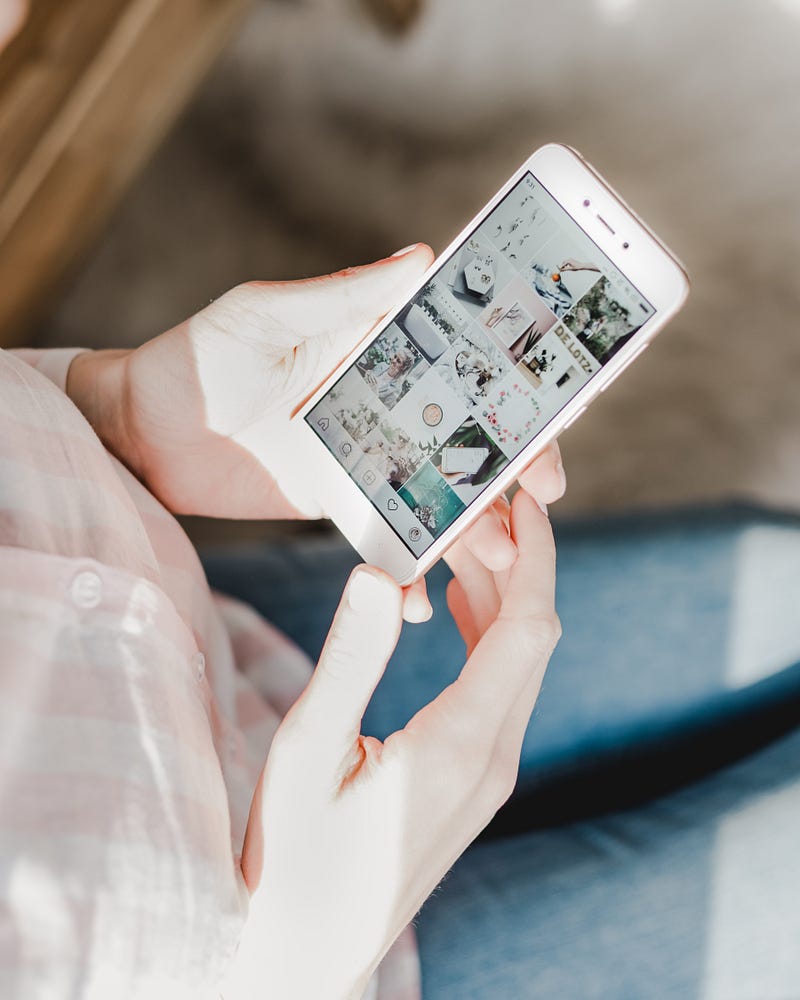
Have you ever wondered why having a smartphone is more addictive than having a dog? Both of them give you a feel-good factor in life and give you a lot of dopamine. Gen Z, my generation is slowly being turned into a generation of bonafide addicts, don’t dismiss this as hyperbole, it’s true. Want some evidence?
“I feel tremendous guilt… I think we have created tools that are ripping apart the social fabric of how society works,” said Chamath Palihapitiya, Facebook’s former vice president for user growth, last November during a talk at Stanford University’s Graduate School of Business. He added that he rarely uses Facebook and that his children “aren’t allowed to use that sh*t”. Apple’s chief executive, Tim Cook does not allow his nephew to use social networks, what’s scary is that the people who designed these systems such as Chamath Palihapitiya and Sean Parker don’t allow social media, yet we use it freely every day.
What do these people know that we don’t?
The Social Environment in your pockets.
Smartphones are not addictive by themselves they can be a useful means of communicating, the apps on your phone are what makes it so addictive, thanks to the likes of Facebook and Instagram, smartphones allow us to carry immense social environments in our pockets.
The reason we have been successful as a species so far is that our social groups have been limited to 150 individuals, we thrive in this amount, it is the perfect number of people to have, how many people do you have in your contacts? How many have you called recently? In most cases, the number will be less than 150. Really popular people have 200.
There are a billion people on Facebook, if you have the app on your phone, you have a social environment with a billion people in your pocket. A billion new faces to see, a few to slide in the DM’s and it’s no wonder social media has made us into a society of stalkers. Everyone is an addict, that is also part of the reason why social media causes anxiety, you have a lot of people seeing your posts, a few of them like your posts, so it is obvious that you are nervous about looking good in front of a crowd.
How do these companies make money?
Firstly we need to understand why companies like Facebook have us hooked in the first place. Before the Cambridge Analytica row, the value of Facebook had surpassed 500 billion dollars, yet it is free to use, so how does Facebook make its money?
You and I are not the customers of Facebook, we are the products. The customers of Facebook or any social media platform are the ones who post advertisements, and the commodity being sold is our attention. The more time you spend on these websites, the more ads you will see.
Advertisements are the doorways to data and I would say that Facebook is the biggest accumulator of personal data since DNA. Data is where the money is at.
How they keep your attention.
This explains why social media companies want our attention for as long as possible, it is profitable. To keep our attention, they have to play a few tricks, they build features into their apps to make them more addictive.
You may know that slot machines have a lever, when you pull it, there is uncertainty, you might hit 777 or you may lose, what pulls us toward social media is the uncertainty, the pull to refresh action gives us the same high, there could be something exciting waiting for us or there could be something boring, they take advantage of our attraction to unpredictability.
Secondly, our feeds are endless, you can scroll forever. If you had to go click on to the next page on Instagram, it would be less addictive, which is what companies don’t want.
How it affects your brain.
The question of whether social media is as addictive as cocaine is controversial, but there is no denying that the dopamine system is involved in both. Every time we check our feeds and find that something exciting is waiting for us, our brains release dopamine, which tells our brains that we check social media again.
There’s no shortage of dopamine triggers baked into the design of social media apps. ‘Like’ buttons take advantage of both our desire for social validation and our love of seeing our ‘score’. Elements, such as Snapchat’s ‘streaks’ feature, which publicly keeps track of how many days in a row you’ve used the app, make users feel compelled to check their apps every day to keep up their rating. It gives you a false sense of satisfaction.
Social media, just like drugs and gambling, breaks the reward system of our brain, five to ten per cent of the people that are addicted to Instagram can’t control how much time they spend online. Brain scans of social media addicts are similar to those of drug-dependent brains: There is a clear change in the regions of the brain that control emotions, attention and decision making.
To make things worse, according to a TED talk, the reward centres in our brains are most active when we’re talking about ourselves. In real life, people talk about themselves 30 to 40 per cent of the time; social media is all about showing off your life, so people talk about themselves a whopping 80 per cent of the time. When a person posts a picture and gets positive social feedback, it stimulates the brain to release dopamine, which again rewards that behaviour and perpetuates the social media habit.
To conclude, smartphones and social media are not going anywhere anytime soon, so it is left to us as consumers to decide how much of our time we want to give to them. I don’t think the advertisement based profit model will change, so companies like Facebook will continue to try and keep your eyes glued to a screen as long as possible. The tricks used to leverage our brains love for dopamine against us will not go away, so the cards are stacked against us.
All is not lost, you can use simple tricks to spend less time on your phone, you can find them on my article here:


