avatarRudylee

Free AI web copilot to create summaries, insights and extended knowledge, download it at here

2267

Abstract

the Chinese National Sports Administration established the National Mahjong Rules.</p><figure id="7380"><img src="https://cdn-images-1.readmedium.com/v2/resize:fit:800/1*0LgerDYVkZhUyfhQGbzEgQ.png"><figcaption>My illustration “The leader is playing mahjong”</figcaption></figure><p id="f2b6">Posters promoting Mahjong as a sport also targeted students in schools. The image on the poster depicted a male student aiming a slingshot at sparrows, while a female student carried several sparrows that had been shot down.</p><figure id="f134"><img src="https://cdn-images-1.readmedium.com/v2/resize:fit:800/1*V3xkqY4Yc93Fafu-1j3nyw.png"><figcaption>My illustration “Great leaders of various countries playing mahjong”</figcaption></figure><p id="acf9">Perhaps because the game of Mahjong was associated with the "symbol of capitalist corruption," the sparrows flying in the sky faced the tragic history of racial extermination.</p><p id="d3b6">In 1955, some farmers reported that sparrows were damaging crops, and Chairman Mao Zedong, then the leader of the Chinese Communist Party, declared that sparrows were harmful and should be eliminated. In the second half of 1955, during the drafting of the Agricultural Development Outline (also known as the "Seventeen-Article Plan"), Mao Zedong decided to include sparrows along with rats, flies, and mosquitoes as the "Four Pests" that needed to be eradicated. In January 1956, the expanded version of the "Outline" was officially adopted by the Political Bureau of the Communist Party's Central Committee and the National People's Congress. Article 27 of the "Outline" stipulated that starting from 1956, sparrows, rats, flies, and mosquitoes should be essentially eliminated wherever possible within 5,7, or 12 years.</p><figure id="fd5b"><img src="https://cdn-images-1.readmedium.com/v2/resize:fit:800/1*XMVrbZG27vMq61GF666oFA.png"><figcaption>“Everyone is here to fight sparrows”, the poster comes from the online archive</figcaption></figure><p id="3b1b">In 1956, a group of biologists, including Zhu Xi, opposed the eradication of sparrows, but their efforts were unsuccessful. On January 18, 1957, an article titled "Sparrows are Clearly Harmful Birds" by Zhou Jianren, then Deputy Minister of Education, was published i

Options

n the Beijing Daily, affirming that "it is beyond doubt that sparrows are harmful birds" and "harmful birds should be eliminated without hesitation." Rocket expert Qian Xuesen, mathematician Hua Luogeng, writer Ba Jin, and others actively participated in the campaign to kill sparrows. According to reports in the People's Daily at that time, over 2,000 scientists and staff members from the Chinese Academy of Sciences participated in the "battle." Incomplete statistics show that over 200 million sparrows were killed nationwide in 1958 (another source claims around 2.11 billion), resulting in the near devastation of leaves on both sides of the streets in many Chinese cities by pests in the spring of 1959.</p><figure id="c1ff"><img src="https://cdn-images-1.readmedium.com/v2/resize:fit:800/1*3QX21wLdLXbRzUjM5nOx7Q.jpeg"><figcaption>“Eliminate the Four Evils”, the poster comes from the Internet data archive</figcaption></figure><p id="3b5b">The extermination of sparrows resulted in a severe lack of natural predators for pests such as locusts in agricultural fields, leading to a significant decline in grain production and ultimately causing a devastating famine the following year. Although sparrows were removed from the list of "Four Pests" in 1960, the ecological balance had already been disrupted. Combined with flaws in the food production system and policy errors, as well as exaggerated claims, China experienced a three-year famine.</p><figure id="b156"><img src="https://cdn-images-1.readmedium.com/v2/resize:fit:800/1*SY_QyEwZ63GXLaTc5pMOIw.png"><figcaption>My illustration “Silent Leadership”</figcaption></figure><p id="3545">The game of Mahjong, with its association with capitalism, led to the extinction of sparrows, which in turn resulted in the starvation and death of millions of Chinese people (according to online sources). Perhaps when Li Yonghao created the song "Sparrow," he was reminded of this tragic event. If not, maybe he wrote the lyrics after losing a significant amount of money playing Mahjong that evening!</p><figure id="3ac2"><img src="https://cdn-images-1.readmedium.com/v2/resize:fit:800/1*QCQXfwdfGynELbC8j4LjMA.png"><figcaption>My illustration “Leaders Command Attack Sparrow”</figcaption></figure></article></body>

The Tragic Tale of Mahjong and the Sparrow

A Song that Echoes a Dark History
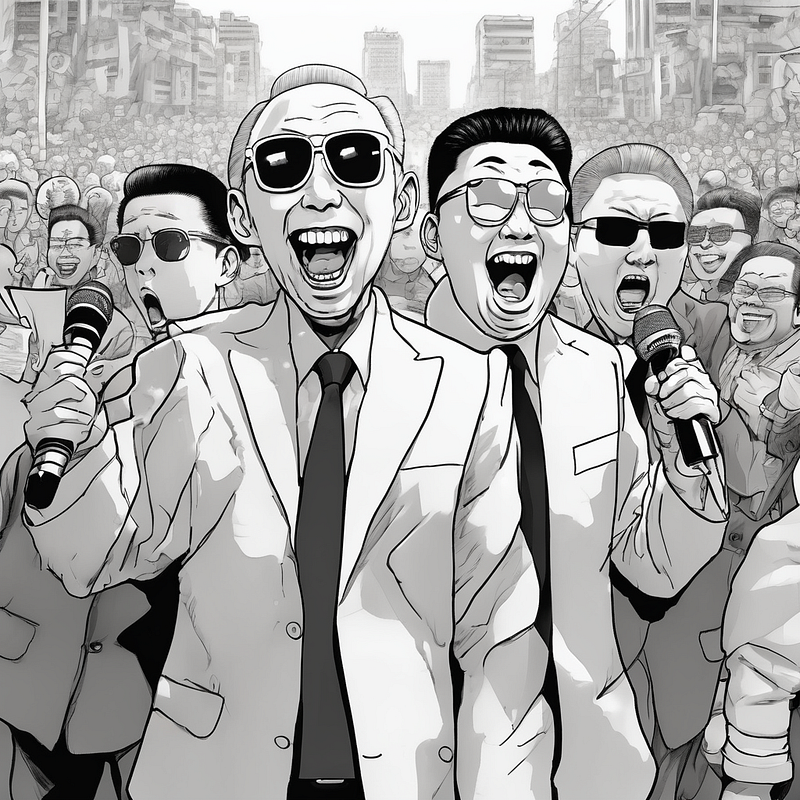
My illustration “Singing for the Victory of Fighting Sparrows”

In the past two years, there has been a Chinese singer named Li Yonghao who gained popularity with a song called "Sparrow." This song is a melancholic ballad.

https://youtu.be/2l4x_TvBKiw?si=b_XRgBqZXVsldFBF

Li Yonghao who gained popularity with a song called “Sparrow.”

Sparrow, also known as Mahjong, is a tile-based game that originated in China. The game usually involves four players. The birthplace of Mahjong is generally agreed to be Ningbo. Researchers generally agree that Mahjong evolved from the Qing Dynasty's Mohepai and Penghepai (a different form of Penghe from Tianjiu tiles). Although both games used thirty cards with different suits, their gameplay (as described in the book "History of Chinese Gambling") was quite different from the popular Mahjong today. For example, both games aimed to form complete sets of tiles, and the term "Peng" originated from Penghepai. Additionally, Mohepai also established the system of having four players. While Mahjong is limited to four players, the game itself does not require four players; on the other hand, Mohepai must have four players, with one person responsible for dealing the cards.
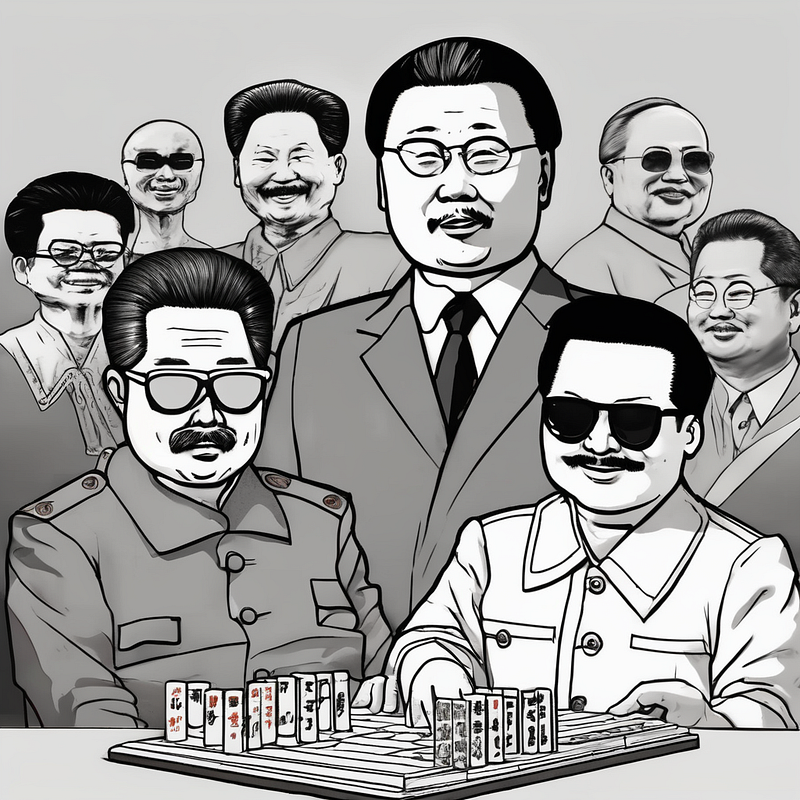
My illustration “Playing Mahjong with Leaders”

After the establishment of the People's Republic of China in 1949, Mahjong was viewed as a gambling game and considered a "symbol of capitalist corruption." It was banned and strictly prohibited by the government. It gradually regained popularity after the end of the Cultural Revolution. In July 1998, the Chinese National Sports Administration established the National Mahjong Rules.
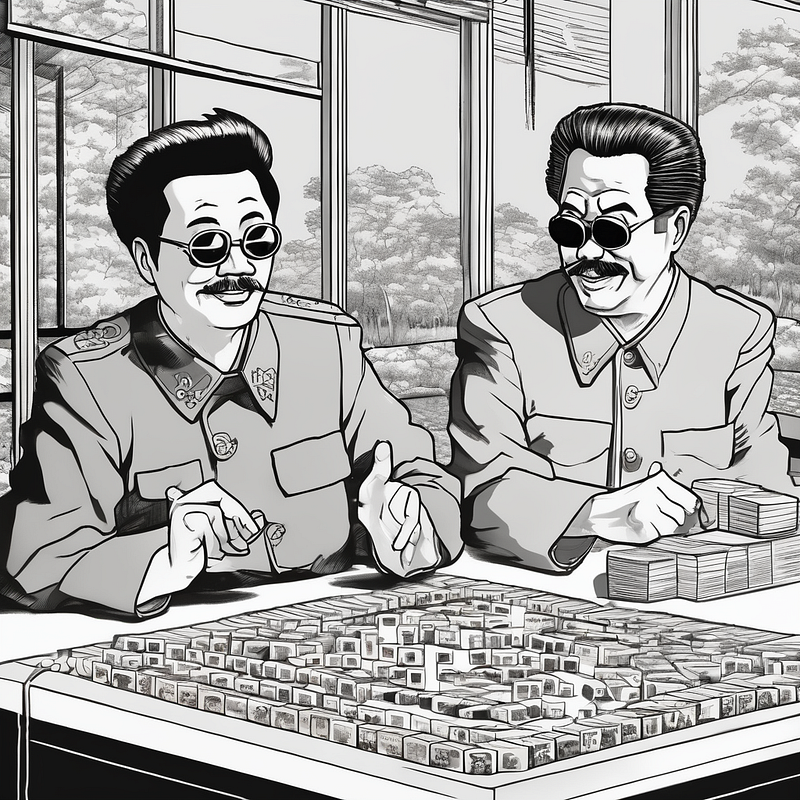
My illustration “The leader is playing mahjong”

Posters promoting Mahjong as a sport also targeted students in schools. The image on the poster depicted a male student aiming a slingshot at sparrows, while a female student carried several sparrows that had been shot down.
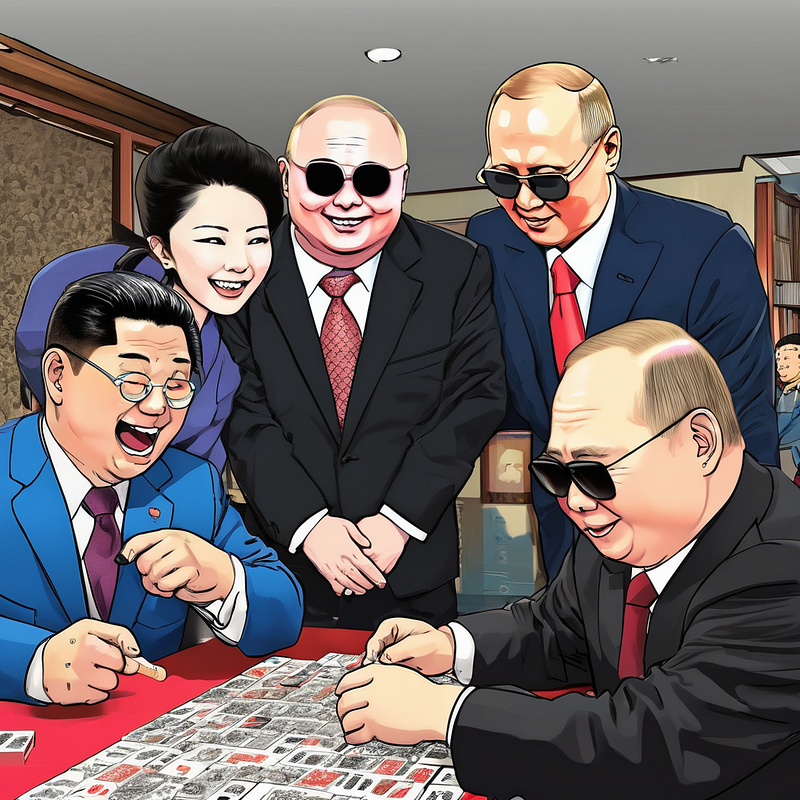
My illustration “Great leaders of various countries playing mahjong”

Perhaps because the game of Mahjong was associated with the "symbol of capitalist corruption," the sparrows flying in the sky faced the tragic history of racial extermination.

In 1955, some farmers reported that sparrows were damaging crops, and Chairman Mao Zedong, then the leader of the Chinese Communist Party, declared that sparrows were harmful and should be eliminated. In the second half of 1955, during the drafting of the Agricultural Development Outline (also known as the "Seventeen-Article Plan"), Mao Zedong decided to include sparrows along with rats, flies, and mosquitoes as the "Four Pests" that needed to be eradicated. In January 1956, the expanded version of the "Outline" was officially adopted by the Political Bureau of the Communist Party's Central Committee and the National People's Congress. Article 27 of the "Outline" stipulated that starting from 1956, sparrows, rats, flies, and mosquitoes should be essentially eliminated wherever possible within 5,7, or 12 years.
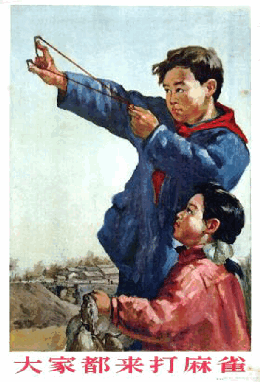
“Everyone is here to fight sparrows”, the poster comes from the online archive

In 1956, a group of biologists, including Zhu Xi, opposed the eradication of sparrows, but their efforts were unsuccessful. On January 18, 1957, an article titled "Sparrows are Clearly Harmful Birds" by Zhou Jianren, then Deputy Minister of Education, was published in the Beijing Daily, affirming that "it is beyond doubt that sparrows are harmful birds" and "harmful birds should be eliminated without hesitation." Rocket expert Qian Xuesen, mathematician Hua Luogeng, writer Ba Jin, and others actively participated in the campaign to kill sparrows. According to reports in the People's Daily at that time, over 2,000 scientists and staff members from the Chinese Academy of Sciences participated in the "battle." Incomplete statistics show that over 200 million sparrows were killed nationwide in 1958 (another source claims around 2.11 billion), resulting in the near devastation of leaves on both sides of the streets in many Chinese cities by pests in the spring of 1959.
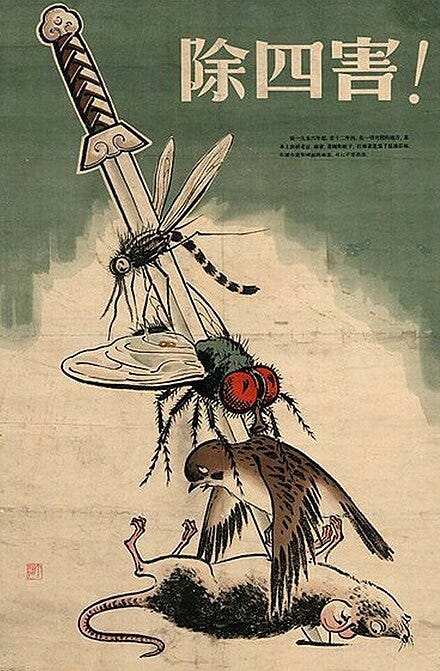
“Eliminate the Four Evils”, the poster comes from the Internet data archive

The extermination of sparrows resulted in a severe lack of natural predators for pests such as locusts in agricultural fields, leading to a significant decline in grain production and ultimately causing a devastating famine the following year. Although sparrows were removed from the list of "Four Pests" in 1960, the ecological balance had already been disrupted. Combined with flaws in the food production system and policy errors, as well as exaggerated claims, China experienced a three-year famine.
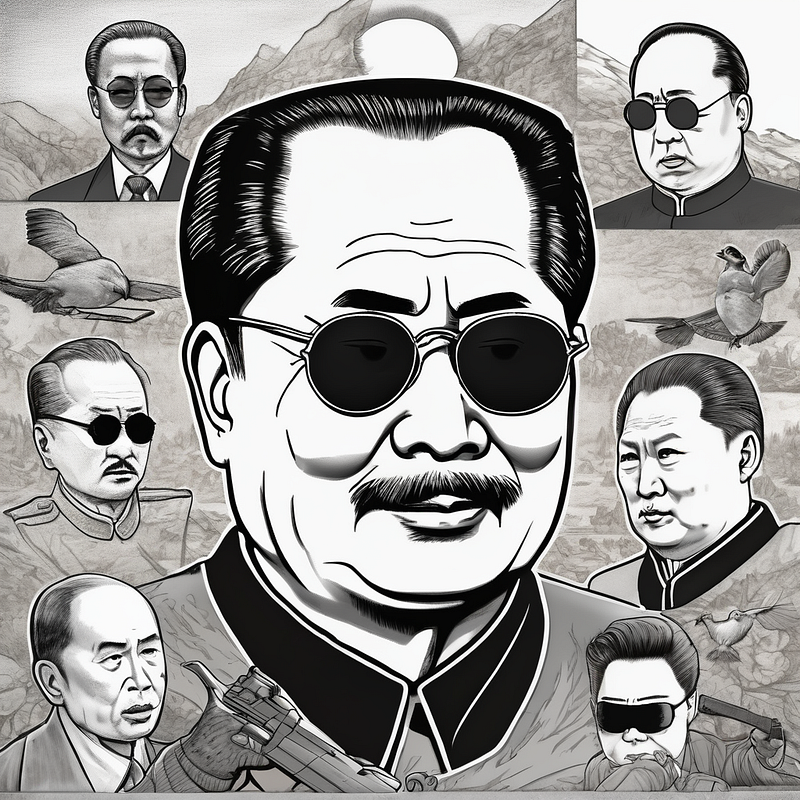
My illustration “Silent Leadership”

The game of Mahjong, with its association with capitalism, led to the extinction of sparrows, which in turn resulted in the starvation and death of millions of Chinese people (according to online sources). Perhaps when Li Yonghao created the song "Sparrow," he was reminded of this tragic event. If not, maybe he wrote the lyrics after losing a significant amount of money playing Mahjong that evening!
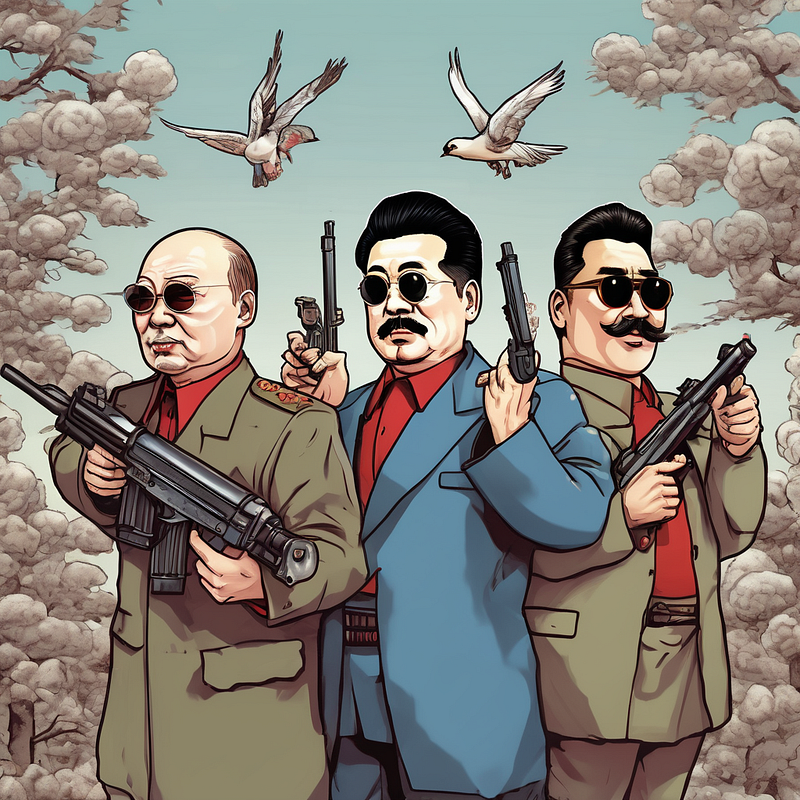
My illustration “Leaders Command Attack Sparrow”
Humor
History
Medium
Self Improvement
Politics
Recommended from ReadMedium