The Tragic Story of the Smartest Man in History
Hint: It’s not Einstein.
In a world that celebrates genius, the story of William James Sidis unfolds a different narrative. His IQ, estimated between 250 and 300, eclipses even Einstein’s reputed 200. Hailed as the brightest mind ever, his life was a complex combination of unparalleled intellect and profound isolation.

Prodigious Beginnings
William James Sidis’ life began under the watchful eyes of his Ukrainian Jewish immigrant parents, Boris and Sarah Sidis.
Both were remarkable in their own right, with Boris being a renowned psychologist and Sarah a trailblazing woman who pursued medical school at a time when it was rare for women to do so. Their brilliance provided the foundation for what would become one of the most extraordinary early lives in modern history.
From infancy, William, affectionately known as Billy, displayed signs of an exceptional mind. By six months, he was already familiar with the alphabet, a feat that astounds even today. By 18 months, his ability to read the New York Times was a hint at his future academic prowess. This early development was no accident. His parents believed firmly in the potential of early education and took an innovative approach to nurturing his intellect.
Billy’s learning environment was unconventional. His parents treated him more like a small adult rather than a child, believing that early and serious intellectual engagement would foster his growth. For instance, they introduced him to self-feeding at a young age, placing food and a spoon before him and allowing him to learn through observation and experimentation. This method exemplified their approach to his education — understanding through natural reasoning rather than rote learning.
This philosophy extended to his language learning. By the age of eight, William was not only fluent in English but had also mastered Latin, Greek, German, Russian, Hebrew, Turkish, French, and Armenian. His linguistic skills were further demonstrated by the creation of his own language, Vendergood, which drew upon his knowledge of European languages. This was not just learning for the sake of learning. It was a demonstration of his deep understanding of language structures and principles.
His parents avoided traditional bedtime stories, opting instead for Greek myths, which, in turn, helped William learn about the planets and other aspects of the world. His life was one of constant learning, with every moment seen as an opportunity for intellectual development. He had little interest in typical childhood activities like sports or games, preferring to spend his time in more scholarly pursuits. This focus on education led to remarkable academic acceleration. William completed elementary school in less than a year and high school in just six weeks.
The media soon caught wind of this extraordinary child. As he advanced through his education at a startling pace, the newspapers often painted him as a peculiar phenomenon. His mother, however, insisted that despite his intellectual capabilities, Billy was a normal child in every other respect.
This normalcy, however, was often overshadowed by the public’s fascination with his intellect, setting the stage for the challenges he would face as he stepped into the halls of Harvard at the age of 11.
A Mind Beyond His Years
William James Sidis’ entrance into Harvard University at the age of 11 marked a new chapter in his already remarkable life.
His intellectual capabilities were not just about learning languages or memorizing facts. They involved a deep understanding of complex concepts, especially in mathematics and science. His time at Harvard was a period of intense academic exploration but also one of increasing challenges and isolation.

At Harvard, Sidis was not just a student. He was a phenomenon. His lecture to the Harvard Math Club on the fourth dimension was a clear display of his extraordinary understanding of complex mathematical concepts.
His ability to comprehend and discuss topics like multi-dimensional shapes and spaces, which are hard for many to grasp even in adulthood, left a significant impression. An MIT professor who attended his lecture was so impressed that he predicted Sidis would become a great astronomical mathematician. However, Sidis’s journey took a different turn.
Despite his academic brilliance, William struggled to fit into the social fabric of Harvard. His age set him apart from his peers, and his interests diverged significantly from the typical college student’s concerns. His lack of interest in sports or social activities, coupled with his intellectual superiority, made it challenging for him to form meaningful connections with others. This social isolation was mixed with the media’s portrayal of him, often depicting him as a ‘know-it-all,’ which further alienated him from his peers.
The pressure of being in such a spotlight at a young age began to take its toll. William fell ill shortly after his famed lecture, an event that the media was quick to sensationalize. Reports claimed he had suffered a mental breakdown, a rumor that would follow him for the rest of his life. This period marked the beginning of a shift in William’s relationship with his academic pursuits, particularly mathematics, a field he would grow to resent due to the pressures associated with it.
After a brief time away, Sidis returned to Harvard, but the damage had been done. His biographer Amy Wallace described him as a ‘complete freak’ in the eyes of his fellow students, noting his lack of social graces and disinterest in typical collegiate activities. The emotional and psychological impact of this isolation and the burden of his genius were profound, influencing his decisions and shaping the course of his life.
The Burden of Genius
The life of William James Sidis, post-Harvard, was a harsh departure from the trajectory one might expect of a prodigious intellect.
The challenges he faced were deeply personal and psychological, rooted in the immense intellectual expectations placed upon him from a young age. Sidis’s story, while unique in its details, reflects the often unseen burden that comes with extraordinary talent.
After graduating from Harvard, Sidis found himself at odds with the academic world he had once navigated with ease. The public scrutiny he endured throughout his early years left a lasting impact. The media, fascinated by his intellectual prowess, often portrayed him unfavorably. Such intense exposure and the accompanying pressure contributed significantly to his decision to step away from the public eye.
The label of a ‘child prodigy’ and the expectations that came with it proved to be a double-edged sword, offering fame on the one hand but imposing a heavy psychological burden on the other.
Sidis’s relationship with mathematics, one of comfort and achievement, evolved into a source of distress. This shift was emblematic of the broader changes in his life. The young man, who had once stood before academics discussing complex theories, now sought a life far removed from these academic accolades. This change was a necessity for his mental well-being.
His decision to lead a life of seclusion, as he had mentioned upon graduation, was a response to the overwhelming nature of his early fame. Sidis yearned for a ‘perfect life’ away from the crowds, an obvious contrast to the world he had inhabited at Harvard. This desire for solitude was a coping mechanism for someone who had spent his formative years under the unrelenting gaze of the public and the academic community.
In his pursuit of a quieter life, Sidis took up positions that were far from the expectations set for someone of his intellectual caliber. His choices in career and lifestyle were not about underachievement but about finding a space where he could exist without the pressures that had so dominated his youth.
The Path Less Traveled
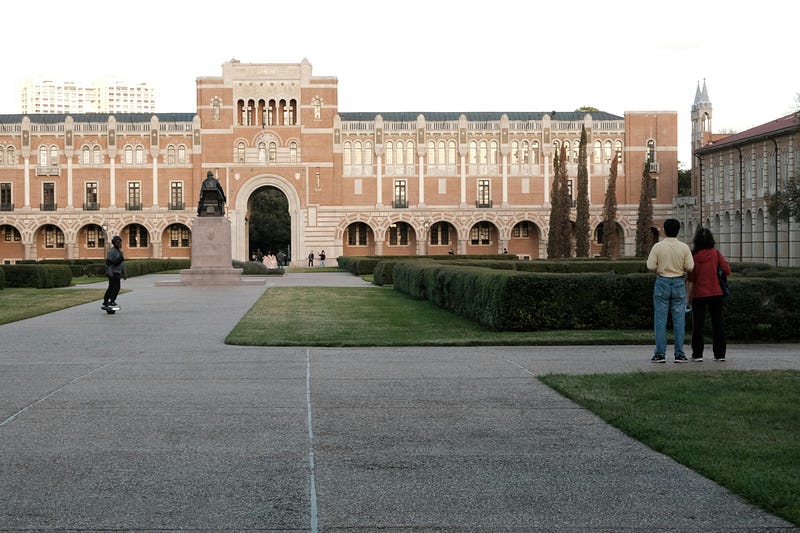
At 17, Sidis accepted a position teaching mathematics at Rice Institute (now Rice University) in Houston. However, his tenure there was brief. Sidis left after just eight months.
The social dynamics of college life, much like those at Harvard, proved challenging for him. His colleagues and students, aware of his prodigious past, often found it hard to relate to him on a personal level. His experiences at Rice mirrored his time at Harvard, reinforcing his desire for a more secluded life.
Sidis’s next academic pursuit led him to Harvard Law School in 1916. However, in a turn of events that surprised many, he quit in his last semester, just shy of earning his law degree. The reasons for his abrupt departure remain unclear, but this decision further distanced him from the traditional path of academic and professional success.
His mother, Sarah Sidis, was notably upset by this decision, going so far as to fabricate a story that the Harvard Law School had shut down due to World War I. This act shows the family’s struggle to reconcile William’s genius with his unconventional life choices.
Politically, Sidis was passionate and outspoken. His antiwar stance during World War I was a bold position, especially considering the patriotic fervor of the era. He even faced imprisonment for refusing to register for the draft, saved only by the Armistice in 1918.
His political activism did not stop there. Sidis was arrested for his involvement in a May Day rally in Boston, which turned violent. This event, organized by socialists, was a significant moment in his life, reflecting his strong beliefs and willingness to challenge societal norms.
Sidis’s political actions contrasted with the capitalist system that had helped his parents rise from being poor immigrants to becoming successful members of American society. His rebellion against this system was a manifestation of his broader struggle to find his place in a world that seemed at odds with his personal values and intellect.
Sidis’s life was becoming a series of paradoxes. He was a genius who shunned the spotlight, a teacher who left academia, and a son of successful immigrants who rebelled against the very system that had given his family opportunities.
Love, Loss, and Isolation
The personal life of William James Sidis was as complex and nuanced as his intellectual endeavors.
After his academic pursuits took a backseat, Sidis found himself navigating the complexities of personal relationships and his own inner world. One significant episode in his life involved Martha Foley, a young woman he met during his brief imprisonment following the May Day rally. This encounter marked one of the few instances where Sidis allowed himself to explore an emotional connection.
Despite his earlier declaration to the Boston Herald of a life of celibacy, stating, “Women do not appeal to me,” Sidis developed feelings for Martha. However, these feelings were not reciprocated, as Martha assured him that their relationship would not progress beyond friendship.
This unrequited love left a lasting impression on Sidis, affecting his emotional state and possibly influencing the trajectory of his life. Martha went on to achieve notoriety in her own right, co-founding the literary magazine Story. In her memoirs, she briefly mentioned Sidis, referring to him as “the famous and tragic prodigy who was the first boy ever to pay court to me.”
During this period, Sidis also explored his ideas of a utopian society in his paper Hesperia. This work, reflecting his views on social organization and governance, was different from his previous academic writings. In Hesperia, he proposed a society where citizenship was contingent upon passing an intelligence test, and traditional concepts of marriage and child-rearing were radically altered. This paper was a window into Sidis’s mind, revealing his thoughts on how society could be structured differently.
Sidis’s life was increasingly characterized by isolation and a retreat from the public eye. He took up a series of menial jobs, a choice that seemed to be in direct contradiction to his intellectual capabilities. These jobs, far removed from the expectations set for someone of his academic background, were a reflection of his desire for a simpler, quieter life. His brilliance was not something he sought to showcase; instead, he chose to hide it, moving from job to job whenever his true identity was discovered.
Sidis’s rejection of his intellectual past and the pursuit of a more ordinary life were not signs of defeat but a conscious choice to seek peace and solitude. This phase of his life was marked by a significant shift from public intellectualism to a more introspective and private existence. As he navigated this quieter path, Sidis continued to grapple with the complexities of his identity, caught between the world of extraordinary intellect and the desire for an unremarkable life.
The Forgotten Intellectual
In the latter part of his life, William James Sidis made contributions to science that, while significant, largely went unnoticed. In 1925, he authored a book titled The Animate and the Inanimate, in which he challenged the Second Law of Thermodynamics.
This law posits that the universe is inexorably moving towards a state of entropy, or ‘heat death,’ where all energy is evenly distributed, leaving no room for energy-driven processes. Sidis theorized the possibility of reversing this direction, suggesting that living organisms could harness a hidden source of energy to counteract this process.
He used the analogy of a ball bouncing down stairs, explaining that when reversed, it appears as though an unseen force propels it upwards. Despite the intriguing nature of his theory, it was met with indifference. His book did not receive a single review in its time.
Sidis’s intellectual journey was marked by a constant struggle between his extraordinary mental capacities and his desire for a normal life. After leaving behind his academic pursuits, he took on various low-paying jobs, including working as an operator on an early mechanical calculator called a comptometer. His decision to work in such roles was not due to a lack of opportunities. On several occasions, he turned down higher-paying jobs that required him to utilize his intellectual abilities.
This avoidance of intellectually challenging work stemmed from his growing aversion to mathematics and other sciences, which had once been his areas of expertise. Sidis’s biographer notes that taking on a job involving intricate calculations risked triggering emotional and physical illness in him.
Moreover, Sidis struggled with basic life skills. He confessed to an aunt that he had never been taught how to tie his shoelaces, a revelation that highlighted the gaps in his upbringing. His grooming habits were also a topic of discussion. He rarely shaved and reportedly struggled with personal hygiene.
As his health declined, Sidis maintained his privacy, living in a modest room in Boston. He suffered from high blood pressure and eventually succumbed to a cerebral hemorrhage in 1944 at the age of 46. His death marked the end of a life that was as complex as it was extraordinary, a life that, despite its early promise, remained largely misunderstood and underappreciated.
The Shadows of Prodigy
The phenomenon of child prodigies often captures the public’s imagination. However, the stories of William James Sidis and other prodigious talents reveal a darker side to this fascination. These individuals frequently faced overwhelming societal and parental pressures, media scrutiny, and heightened expectations that ultimately led to challenging lives.
One poignant example is Norbert Wiener, the father of cybernetics. A child prodigy in mathematics, Wiener graduated college at the age of 14. However, his early life was fraught with pressure from a demanding father and social alienation due to his age. This relentless pressure contributed to a life marked by emotional struggles, despite his significant contributions to mathematics and science.
Bobby Fischer, the chess grandmaster, is another example of a prodigy whose life took a turbulent turn. Fischer became the youngest ever U.S. Chess Champion at 14 and later the World Chess Champion. Yet, his life post-championship was marred by erratic behavior, legal troubles, and reclusiveness. His genius in chess was undeniable, but it came with a price of personal and social challenges.
These stories, along with that of Sidis, show a recurring pattern. The immense potential of child prodigies often collides with the realities of high expectations, media attention, and societal pressures. In many cases, their intellectual gifts set them apart from their peers, leading to isolation and emotional challenges.
The narratives of these gifted individuals serve as a cautionary tale about the complexities of early fame and exceptional talent. They remind us that behind the awe-inspiring abilities of child prodigies often lies a human story of struggle, highlighting the need for a supportive and understanding environment that fosters both their intellectual and emotional growth.


