
The Tragic Story of India’s Math Genius
Ramanujan defied all odds of his socioeconomic status to become a mathematical prodigy — journeying from India to Cambridge in the pursuits of his passion.
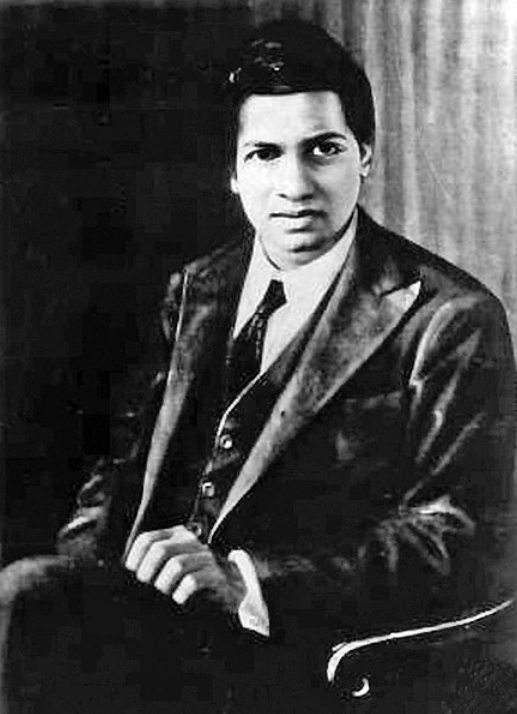

Srinivasa Ramanujan was born in a small town south of Madras, now known as Chennai, in South India.
Ramanujan was the only one among his mother’s first four children to survive infancy, evidence of the precarious health conditions of the time. In addition, he endured a bout of smallpox, a deadly disease that claimed many lives.
From a young age, Ramanujan demonstrated an exceptional aptitude for numbers. His talent for mathematics was a passion that consumed him. He found solace and joy in the world of numbers, a world that was orderly and fascinating compared to the unpredictable nature of his early life.
This passion was further fueled by his belief that his mathematical abilities were a gift from the divine. Ramanujan often attributed his mathematical insights to the Hindu goddess Namagiri, who he believed communicated with him in his dreams.
Ramanujan’s childhood was marked by an intense curiosity and a relentless pursuit of knowledge. Despite the lack of extensive resources or formal training in advanced mathematics, he was not deterred.
He spent countless hours at the nearby Sarangapani Temple, where he would engage in the unusual activity of sketching complex mathematical equations on stone slabs with chalk. This practice was a ritual that connected him to the divine source of his inspiration.
The Book That Unleashed a Prodigy
The turning point in Srinivasa Ramanujan’s journey into the depths of mathematics was his encounter with A Synopsis of Elementary Results in Pure and Applied Mathematics, a book authored by George Shoobridge Carr. This book, which was more a collection of 5,000 theorems than a traditional textbook, came into Ramanujan’s hands during his teenage years.
Unlike conventional mathematics textbooks of the time that offered detailed explanations and step-by-step solutions, Carr’s book presented only results and formulas. For many students, this approach was daunting and confusing. However, for Ramanujan, it was an open invitation to explore and discover the proofs behind these theorems on his own.
Ramanujan’s engagement with Carr’s book was a deep, immersive process that allowed his innate mathematical intuition to flourish. The lack of detailed solutions in the book did not hinder him. Rather, it spurred his creativity and problem-solving skills. This self-directed exploration allowed Ramanujan to develop a profound understanding of mathematical concepts far beyond what formal education could have offered him at the time.
It was through his independent study of the theorems listed in Carr’s book that he began to develop his own theories and formulas. This period of intense self-study and discovery was critical in shaping Ramanujan’s mathematical prowess.
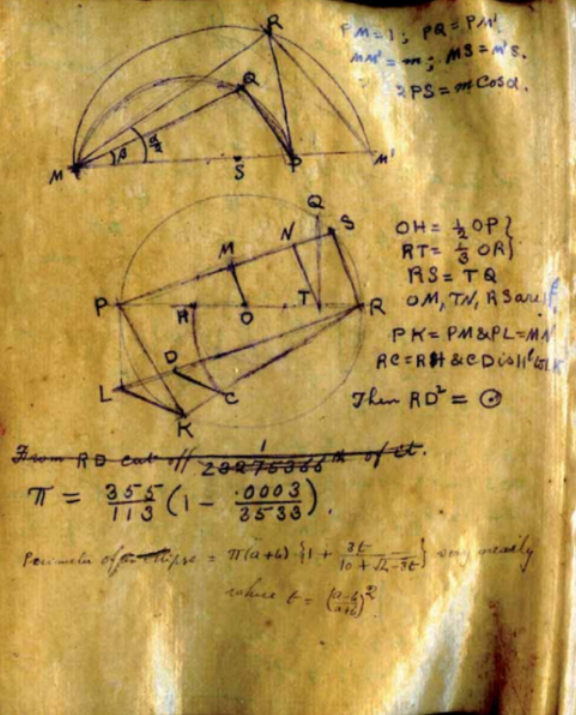
He started to record his findings in notebooks, a practice he would continue throughout his life. These notebooks would later become a significant part of his mathematical legacy, filled with original results and insights that would contribute to various fields of mathematics.

Triumph Over Academic Failures
Despite his burgeoning talent in mathematics, Srinivasa Ramanujan faced significant obstacles in the formal academic world. His single-minded focus on mathematics came at the expense of other subjects, leading to his failure to secure a college degree.
Ramanujan enrolled at the Government Arts College in Kumbakonam, but his disregard for non-mathematical subjects led to a loss of scholarship and eventual expulsion. This pattern repeated itself when he later attempted to continue his education at the University of Madras, where he again failed to advance due to poor performance in subjects other than mathematics.
Ramanujan’s academic failures were a source of personal distress. The financial strain on his family made it impossible to pursue education without a scholarship, and the societal expectation at the time was to excel in a well-rounded curriculum.
His father’s modest income as a clerk in a sari shop barely met the family’s needs, making the 32 rupee tuition fee a significant hurdle. These challenges forced Ramanujan to leave formal education behind, a decision that, while difficult, allowed him to dedicate himself entirely to mathematics.
This period of self-imposed isolation was critical for Ramanujan’s development as a mathematician. Without the constraints of a structured curriculum, he explored deeper into his own mathematical investigations, often spending hours on end developing new theories and solving complex problems.
A Mathematical Maverick Gains Recognition
In 1911, Ramanujan’s efforts to share his discoveries found a platform in the Journal of the Indian Mathematical Society, where his work was published for the first time.
This publication gave him with the academic validation he had long been denied due to his unconventional educational path. It was through this journal that Ramanujan’s unique approach to mathematics began to reach a wider audience, sparking interest and curiosity among his peers.
Around this time, Ramanujan’s personal life underwent significant changes as well. At the age of 21, following the customs of the time, his family arranged his marriage to Janaki, a nine-year-old girl from a distant relative. This new responsibility added another layer of complexity to his life, but it did not deter him from his mathematical pursuits.
Ramanujan’s day-to-day life also saw a dramatic shift when he secured a position as an accounting clerk at the Port of Madras, now known as the Port of Chennai. This job provided him with financial stability and, more importantly, introduced him to individuals who recognized his talent.
His supervisor, an amateur mathematician, and the head of the port, a British engineer, both encouraged Ramanujan to continue his mathematical explorations. They advised him to communicate his findings to prominent mathematicians in England.
The encouragement Ramanujan received at the Port of Madras was instrumental in propelling him onto the international stage. Despite initial rejections, his persistence paid off when his letter to G. H Hardy, filled with complex theorems and results, caught the attention of the Cambridge mathematician. This correspondence set the stage for his eventual move to England and his collaboration with Hardy, which would solidify his status as a mathematical maverick and a genius of his time.
The Cambridge Chapter
Ramanujan arrived at Cambridge University in 1914. His collaboration with G.H. Hardy, a leading mathematician of the time, became one of the most celebrated partnerships in the history of mathematics. Their work together produced groundbreaking results, particularly in the field of number theory.
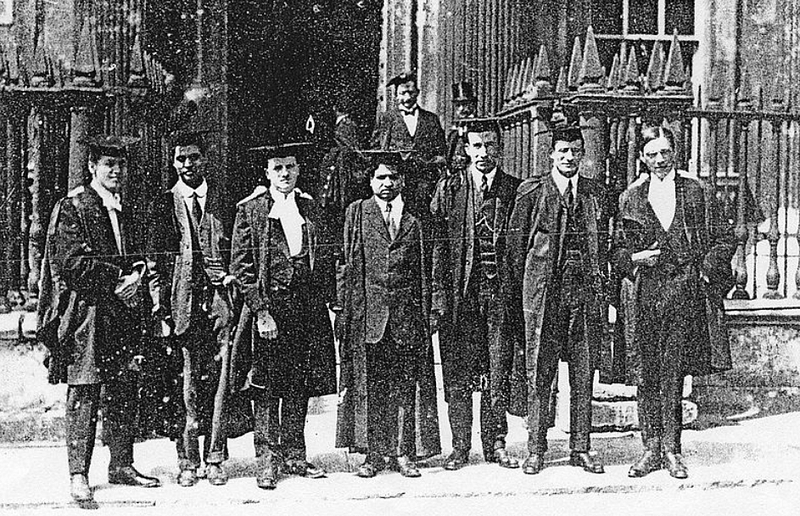

The collaboration between Ramanujan and Hardy was a convergence of contrasting backgrounds and personalities. Ramanujan, with his intuitive approach to mathematics, largely self-taught and driven by a deep religious conviction, found an unlikely counterpart in Hardy.
Hardy, an atheist and a firm believer in rigorous mathematical proofs, represented the pinnacle of formal mathematical education and discipline. This juxtaposition of Ramanujan’s intuitive brilliance and Hardy’s methodical rigor proved to be highly productive, leading to significant advances in various complex mathematical domains.
One of the duo’s notable contributions was to the theory of partitions. Their work in this area opened new avenues for research, influencing future generations of mathematicians.
Ramanujan’s time at Cambridge was not without its challenges. The transition to a new cultural and academic environment, the cold British climate, and the ongoing strains of World War I took a toll on his health. Despite these difficulties, his productivity and creativity flourished, fueled by the stimulating academic atmosphere and the support of Hardy and other Cambridge mathematicians.
As Ramanujan’s health began to decline, the importance of his contributions became ever more apparent. His legacy, marked by his prolific output and the profound impact of his theorems, continued to grow, setting the stage for his eventual return to India and the recognition that would follow.
The Final Years
Srinivasa Ramanujan’s final years were a mix of significant professional achievements and personal health struggles. After his productive period at Cambridge, his health, already weakened by the cold climate and dietary challenges, began to decline further.
In 1919, Ramanujan returned to India, hoping that the familiar environment and climate would aid his recovery. Despite the warm reception and recognition of his contributions to mathematics, his health continued to deteriorate.
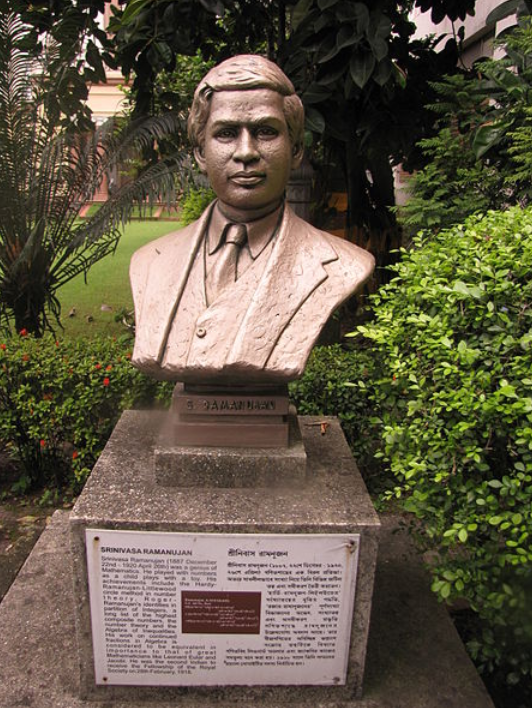

During his time in England, Ramanujan’s work had garnered significant attention. One of his notable recognitions came in 1918 when he was elected a Fellow of the Royal Society, one of the highest honors for a scientist in the UK. Additionally, he became a Fellow of Trinity College, Cambridge, marking him as one of the first Indians to receive these prestigious honors.
Despite these accolades, Ramanujan’s health issues, primarily diagnosed as tuberculosis, overshadowed his return to India. The lack of advanced medical treatment for his condition at the time meant that his health rapidly worsened.
His last year was spent in relative isolation due to his illness, but his passion for mathematics remained undiminished. He continued to work on his theories and correspond with colleagues in England, sharing his latest discoveries until the very end.
Ramanujan passed away on April 26, 1920, at the young age of 32. His early death was a significant loss to the mathematical community and to the world. However, the legacy of his work was far from over.
The breadth and depth of his contributions continued to be felt long after his passing. His notebooks, filled with unpublished results and theorems, became a valuable resource for mathematicians. The work contained in these pages has inspired numerous papers and new lines of inquiry.