
The Tragic Story of Homosexual Jews in Nazi Germany
Paragraph 175 — This travesty of justice wasn’t abolished until 1994
When World War II ended, it was a time of great jubilation for the thousands of people incarcerated in the Nazi concentration camps. However, nothing changed for the homosexual prisoners who continued to serve their sentence due to a provision of the German Criminal Code from 15 May 1871 to 10 March 1994.
As per Paragraph 175 (Section 175 in English), homosexual acts were a crime. The law wasn’t completely abolished as late as 1994.
Although the Nazi’s treatment of homosexuals is well documented, far less attention has been given to the continuation of this persecution in post-war Germany.
The origins of Paragraph 175 can be traced to as early as the 15th century. Most sodomy related laws in the western civilizations are a vestige of Christianity during late Antiquity.
On May 17, 2002 — a date symbolically chosen as ‘17.5’ — the German parliament pardoned all the victims and made provisions for ‘vindication certificates’ upon request.
Torture and camp treatment of homosexual Jews
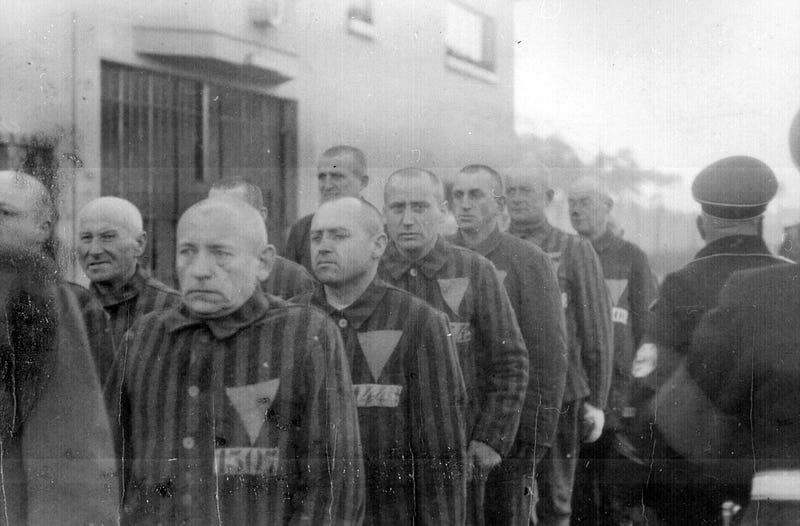
A Pink Triangle was used as a badge of shame to identify homosexual detainees in the concentration camps.


The prisoners were required to wear a pink downward-pointing, triangle cloth badge on their chest.
The homosexual detainees not only faced extremely cruel torture from the Nazi soldiers but also were looked down upon by other detainees.
Boiling off testicles by water, mutilation, inserting sharp metal and wooden objects in the anal orifice, and beating to death was common.
Nazi human experiments
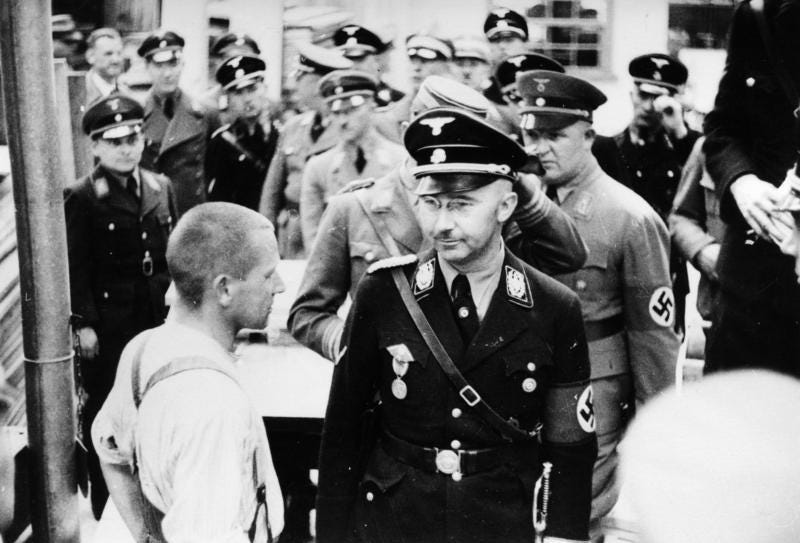

Himmler, the architect of the Holocaust, had great disdain towards homosexuals. At Dachau, the Nazi doctors were commissioned to find a medical cure for homosexuality.
The treatment involved forced biological operations to implant male sexual glands, injecting high dozes of the hormone testosterone, and forced sex with female prisoners. This caused irreversible biological and psychological damage.
Post-war treatment of homosexual Jews
Torture against homosexuals was not acknowledged in post-war Germany. There was no state documented record of the number of homosexual victims in the Holocaust.
Additionally, although non-homosexual detainees received pension and reparations as they were still classified as criminals under Paragraph 175. Most of the detainees were re-imprisoned after the end of World War II and served time in regular prisons for repeat offenses.
Rudolf Brazda, one of the last known homosexual concentration camp survivors, died on August 3, 2011, at the age of 98.
Abolition of Paragraph 175 and pardon of victims
Germany’s homosexuality law reformation started after 1990. Finally, in 1994, paragraph 175 was completely annulled and deleted.
On May 17, 2002 — a date symbolically chosen as ‘17.5’ — the German parliament pardoned all the victims and made provisions for ‘vindication certificates’ upon request.
In 2017, Germany officially approved the bill to compensate €3,000 for each conviction, plus €1,500 for every year of jail time.
Today, same-sex relationships are legally recognized in Germany. The first same-sex weddings in Germany were celebrated on 1 October 2017.