
Sociology
The Tradition Of Violence In Russian Society
Internalized violence runs through practically all areas of life
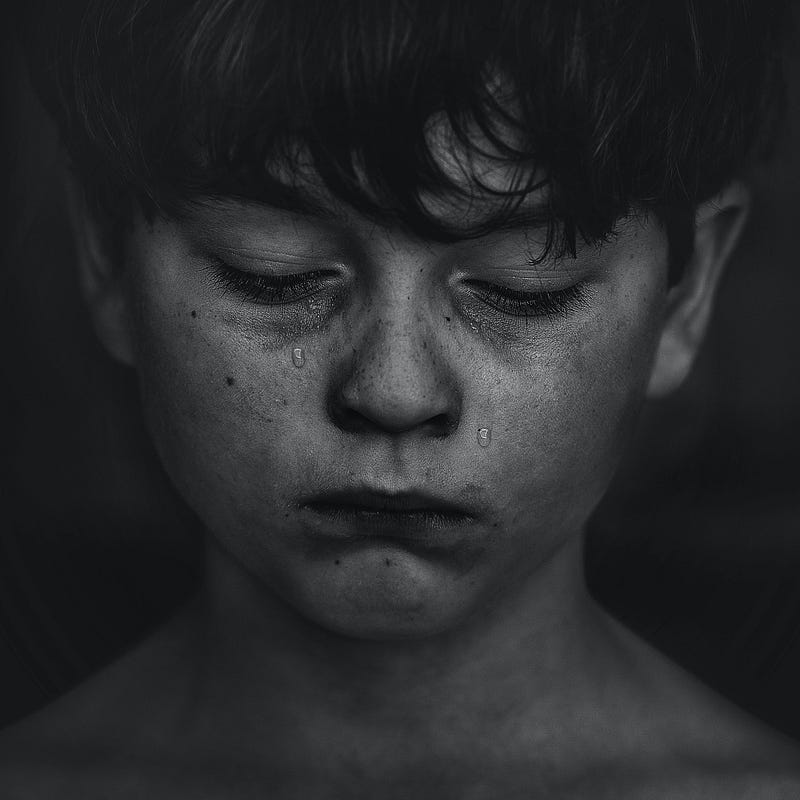
The atrocities committed by the Russian army in Ukraine are not unilaterally embraced by all Russians. There are those who are horrified but they must do so in silence or while abroad or risk prison or the gulag. Having said that, violence is deeply rooted in the fabric of Russian society. It is a principle of power. Youngsters are toughened up and brutalized early on. The brutality of Russian soldiers throughout the centuries is not a myth. My grandmother told me many stories.
A not uncommon scenario: A playground somewhere in the center of Moscow. The kids are running around, laughing, and climbing the monkey bars. “Get down there, I told you, you good-for-nothing!” a mother yells at her son. “Stop yelling right now, or the policeman will come and get you, you bastard!” says a father to his three-year-old, who wails loudly because she doesn’t want to leave. A mother runs after a boy, throws him to the ground, stands over him, raises her finger, and rants: “You won’t do that again. You bumped into my child.”
Only two adults raise their voices in defense of the boy. The others look away, some speak in agreement: “If you allow the brats everything and let everything go, they will never stop. You can’t allow that.”
Scenes of everyday Russian life. Scenes that are emblematic of a society that experiences and practices violence from an early age, as a mundane reality that is often not even questioned. And if it is questioned, the doubt is usually interpreted by those around you as a weakness, as a “poison from the West”.
The fear of punishment
Children should be toughened up, people tell themselves and everyone else. Being tough means accepting humiliation, it means subservience. The fear of punishment — even the youngest know the word for punishment— is great. It’s how children learn to be “good” and “to behave”, so as not to attract attention. Whiners and complainers are not valued in a society that is built on hierarchy and subordination. The experience of not being noticed with one’s wishes and needs, often over decades, the ingrained helplessness, which also gives rise to aggression, is passed on through generations.
The atrocities committed by the Russian army in Ukraine, which also causes incomprehensible horror among many in Russia, are part of the norm of the Russian apparatus of violence. An internalized violence that runs through practically all areas of life. It expresses itself in language and also in action. It is a principle of power and often goes unpunished.
Teachers humiliate their students to show who is stronger. If the parents complain, directors threaten to involve the child services. Parents usually withdraw out of fear and tell themselves that it was no different when they were at school. Violence plays an even more obvious role in dealing with the weaker in society. Children’s homes, in which social orphans often live, i.e. children with relatives who are still alive, are mostly to be found on the outskirts, behind gates that are not easy for outsiders — even if they are school friends of these children — to pass through. The barracks-like life, in which bad behavior is sometimes punished with admission to psychiatric hospitals, conveys to even the youngest children a world in which everything is about survival. And survival only works through the use of force, people are convinced of that. “You have to fight back,” many parents teach their children.
Violence is becoming the norm and isn’t discussed. Even among couples and families. The sentence “If he hits you, that means he loves you” stems from a medieval legal code and the resulting behavior is still accepted by many Russians today as normal in a relationship.
There are no reliable figures on domestic violence. According to surveys, at least a fifth of Russian women has experienced intimate partner abuse. Many view marital rape as a part of marital duty, not a criminal offense. In any case, domestic violence is not defined in Russian law. The state does not consider it necessary. Repeat that to yourself a few times. It is beyond disturbing, to say the least. There are many other laws, “a law against hooliganism, for example,” said President Vladimir Putin in 2019. Nothing has changed in the cynical attitude since then.
Domestic violence is considered trivial in Russia and is punished with a fine of the equivalent of 50 euros (which is currently, about $50). When the European Court of Human Rights asked Russia to do better at protecting women from domestic violence a few years ago, the Russian Ministry of Justice called the problem clearly exaggerated and saw the Strasbourg judges’ demand as “discrimination against men”.
The statements demonstrate the basic position of the Russian state on violence in families. Since the legal situation is so unclear, even police officers often don’t know how to behave. Some judges also dismiss lawsuits against husbands and fathers who abuse with the sentence: “For the plaintiff, violence is a systemic phenomenon, she should be used to it.”
Ultimately, society as a whole is used to violence. Every demonstration, especially when the people direct their demands against the government, is interspersed with police violence. The brutal Omon special police also beat minors with their batons and drag people who are already bleeding into the police van. Courts then convicted the demonstrators for allegedly attacking police officers.
The Right to abuse
In the army, recruits submit to older soldiers. The Russian has a term for it: Dedovshchina.
Dedovshchina is the informal practice of hazing and abuse of junior conscripts historically in the Soviet Armed Forces and today in the Russian armed forces, Internal Troops, and to a much lesser extent FSB, Border Guards, as well as the military forces of certain former Soviet Republics. Wikipedia
The “rule of the grandfathers” is an initiation rite of the armed forces left over from the days of the Tsars and describes the systematic mistreatment of soldiers. Often the seniors — called “Dedy”, grandfathers — confiscate the property of the juniors — “Duchi”, spirits. They take their food rations, sometimes their pay as well. They abuse them as slave workers and lend them to companies as foreign workers for money. They are beaten and raped.
The military reform has curtailed the Dedovshchina, but it is not gone. Many conscripts cannot stand up to the pecking order within the army, a traditionally closed space. Some kill others, some kill themselves. The Kremlin always refers to such incidents as an individual’s private affair.
The mechanisms can also be found in the Russian prison system. When footage of systematic torture in the country’s penal colonies is made public, many in Russia shrug their shoulders. “After all, it’s jail,” they say and don’t want to deal with the extent of the abuses. The traditions in the “zone”, as detention is called in Russia, also date back to the days of the tsars. In Stalinism, the methods of dehumanization were perfected. To this day, the Russian penal camp system — organized in a strictly hierarchical and military manner — is based on the Gulag, and some camps from this period are still used as penal colonies. They are closed systems that are about punishment, not dealing with the crime.
Ukraine shows how the Russian state promotes violence and even praises it: the infantry brigade that accuses Kyiv of war crimes and mass killings in the city of Bucha, awarded Putin the honorary title of “Guard” for “heroism and bravery, determination and courage.” Russian society continues to be blind toward violence because its President has made violence the principle of his policies.
Sources:
My father spent several years in Russia; my grandmother’s home was occupied by Russian Soldiers during WWII — I heard the stories; My great-aunt, who spent years in St. Petersburg, shared her experiences as well Russian friends and acquaintances from university.
Books: Putin’s Kleptocracy by Karen Dawisha, Gulag A History by Anne Applebaum, Mein Russisches Abenteuer by Jens Mühling, Russland: Das Wahre Gesicht einer Weltmacht by Thomas Roth and many more


