
The Trade War of the Century: China vs. the United States
Historically, the term “trade war” has referred to “unusual restrictive measures” issued by at least two states that affect the import of goods and services, therefore affecting the economy of at least one nation.
The US-China trade war will shape the century. The relationship between the US and China will affect us all.

The US trade policy has evolved drastically since it has become the largest economy in the world at the end of the 19th century.
It has become more globalized and dependent on members of the World Trade Organization (WTO).
Since the end of the Cold War, the US has enacted trade policies that promote free trade and globalization. However, the US is not the only nation that benefited from a globalized trade market.
In fact, when China entered the WTO in 2001, it experienced a historic economic breakthrough. From 2000 to 20008, China’s export volume soared from US$ 250 billion, 3.9 percent of global export, to US$ 1.43 trillion, 8.9 percent of global exports.
Following the 2008 global financial crisis, the US started focusing on regional trade policies, including the Trans-Pacific Partnership (TPP) and Transatlantic Trade and Investment Partnership in 2011 and 2013.
US Trade & Trump
Under the former US President, Donald Trump, foreign policy has drastically changed, leading the US to withdraw from the TPP.
The Trump administration paid particular attention to what they called the “unfair trade advantages” of China. This should not come as a surprise since during Trump’s Presidential campaign, one of his most firm policy proposals was to change US trade with China because it was “the greatest fraud in the history of the world.”
Trump went on to call the US trade deficit with China a “rape” of the United States. I will address whether this trade imbalance and Western fears associated with it is correct later in this analysis. For now, I want to further focus on instances of trade escalation between China and the US.
The Origins of the Trade War
In order to assess why this trade war began, we have to understand China’s economic intentions. One of the primary reasons China joined the WTO was to influence the rules and decision-making.
Due to this fact, China has repeatedly aimed to economically coerce strong economies.
For example, when the Norwegian Nobel Committee selected the imprisoned Chinese author and activist, Liu Xiaobo, for the Nobel Peace Prize some six years ago, China retaliated by boycotting Norway’s salmon.
Similarly, after the arrest of Huawei Technologies Co. Ltd. chief financial officer, Meng Wanzhou, at the Vancouver International Airport in December 2018, China retaliated with a ban on Canadian pork and beef; China also stopped purchasing Canadian soybeans and canola oil.
This “economic coercion,” as economist and senior fellow Duanjie Chen calls it, is not new for China and will likely not go away.
Companies such as H&M and Nike were similarly boycotted after voicing concerns over human rights abuses in Xinjiang.
The US National Basketball Association (NBA) have also suffered financially after the manager of the Houston Rockets, Daryl Morey, tweeted “Fight For Freedom. Stand With Hong Kong,” in solidarity with Hong Kong protestors.
Australia has been threatened with $135 billion in revenue, after PM Scott Morrison’s criticism of Chinese wet markets.
The list of threats and coercions is seemingly endless.
Xi Jinping desires to influence the market in China’s favor for obvious reasons; however, Trump has also not shied away from voicing his “America first” policy.
Unsurprisingly, this creates tensions between the two economic superpowers.
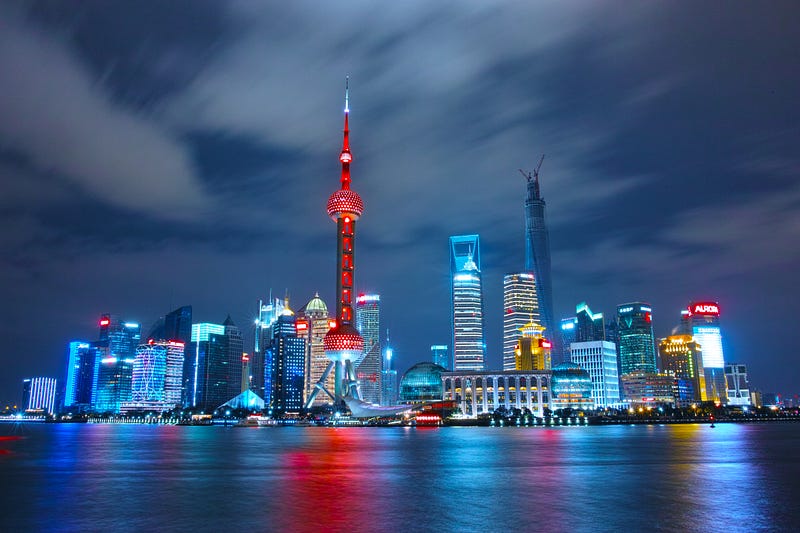
2018: The Beginning
The US and China have been at a “trade war” since 2018. However, this trade war is slightly different from trade wars that have happened between global superpowers before.
The present day China-US trade war is occurring in a heavily globalized and interdependent world; many multinational enterprises (MNEs) from Japan, South Korea, the United States, and the European Union rely on China for their production base.
When we look at the number of exports and imports between the US and China specifically, we find their scale is severely affected. The difference is billions of dollars previously to hundreds of billions now. This is not to mention the Trump administration’s ban on certain technology products in the US, such as Huawei Technologies, and other bans.
Due to the fact that China and the US comprise 40 percent of the world’s economy, there is some good reason for us to be concerned about these tensions escalating further.
This is also not to mention that China and the US are the WTO’s most influential members.
Trump & Xi at Mar-a-Largo: The 100-Day Plan
The first meeting between Trump and Xi at Mar-a-Largo in Florida that aimed to resolve the trade deficit was just three months after Trump entered office in 2016. After some negotiating, the two world leaders finally agreed to a 100-Day Action Plan, the “100-Day Plan for China‒US economic cooperation,” in 2017.
Unfortunately for both sides, an agreement was not reached which had serious economic ramifications.
From April to July 2017, China and the US had a series of further negotiations; however, no important point of agreement was reached. This undesired effect led to an investigation under Section 301 of the Trade Act of 1974 on China and Chinese exports which resulted in a subsequent trade war. From July 2018 to August 2019 alone, the United States proposed tariffs on $550 billion worth of Chinese products; China retaliated with an estimated $185 billion of US goods.
The “temporary truce” of the trade war in June 2019 resulted in a 90-day negotation, suspending tariffs on goods. Due to the failure of the negotiations, both sides issued larger tariffs on each other in May 2019. In December 2019, many of these tariffs were reversed, keeping the rate at 25% tariffs on US$ 250 billion worth of Chinese imports. Furthermore, the signing of a bilateral Phase One trade deal on 15 January 2020 helped deescalate some of the tensions between the two superpowers.
That is not to say that there are no problems with the deal. For one, it has not removed all tariffs. Secondly, it has “institutionalized” a “confrontational approach” to solving political bickering.

The Negatives of Trade Wars
Apart from the debatable ethical value of sanctions and tariffs, trade wars can be very damaging to the global economy. Trade wars severely affect GDP growth due to the decrease of exports and imports.
Secondly, trade wars lead to a reduction of investments which reduces capital flow.
Thirdly, businesses are forced to reduce their investment expenditure due to the uncertainty of the market.
Lastly, trade wars affect consumer confidence at the macro level which halts economic progress. Countries such as Luxembourg, Hungary, and Taiwan are most affected by the China‒US trade war due to their strong reliance on global trade; Taiwan’s economy, for example, is estimated to rely 67.6% of its economy on global trade.
There are also many countries that have benefited from the trade war, including Vietnam, South Korea, Thailand, and Indonesia, to name but a few. The trade war has not improved the American economic condition, however.
Data suggests that the tariffs imposed on China did not diminish the trade deficit between China and the US. This is why some argue that Trump “lost” the trade war.
The United States Trade Representative estimates that the trade deficit was close to $419.2 billion in 2018 ‒ a 11.6 percent increase ($43.6 billion) from 2017. Therefore, the trade war was inconsequential to any progress despite the continuous debates both sides have with one another.
Trade War & Unemployment
For obvious reasons, unemployment has also been affected by the trade war with China. According to some estimates, the trade war had cost the US 300,000 jobs by 2019, approximately 0.3% of real GDP. Others have claimed that the true cost to US GDP may be closer to 0.7%. The Federal Reserve Bank of New York and Columbia University estimate that US companies may have lost “at least” $1.7 trillion in stock-value due to US tariffs on Chinese imports.
Trade War & Economic Growth
The economic growth of China is similarly affected by the US trade war, according to some estimates. Data suggests that China’s quarterly GDP growth rate was 6.8% to 7.0% in early 2016, then declining from mid-2018. And in the third and fourth quarters of 2019, the GDP growth rate fell to 6.0% ‒ the lowest growth rate since the 1990s.
Indeed, China’s trade surplus with the United States is one of the primary reasons for China’s economic growth. The trade war’s effects extend further, however; the global market is also affected.
Researchers, Liang and Ding argue in The China-US Trade War, that “the danger for an ‘economic cold war’ is real.” They argue that trade flows worldwide have been affected by the unusually high “new normal” price for tariffs.
Other leading economies have been benefiting from the trade war because of the demand for goods. Brazil, for example, exports soybeans to China; and India offers an “alternative” export possibility to the US.
Brazil heavily relies on soybean production from the Amazon rainforest. The National Institute for Space Research (NISR) estimates that in 2019 alone, the first year of the China‒US trade war, Brazil has cut down 3,769 square miles of the Amazon rainforest ‒ a 30% increase from 2018. In 2020, these figures went up by 50 percent in the first three months alone.
With China’s increasing demand for meat consumption, it is unlikely that China will be able to find other sources for soybean production because the largest producers are the United States, Brazil, and Argentina.
Therefore, Brazil may have short-term benefits from soybean production and export; the long-term negatives are that the Amazon rainforest will reach a tipping point and not be able to return to a sustainable environment.
Despite some benefiting economies, overall the China‒US trade war is a negative, impacting trade, creating “market turmoil,” and disrupting productivity. Globalization, immigration, and worldwide cooperation have thus come under scrutiny. This is not helped by the increasing awareness and economic disturbance of pandemics that are an all-too-real threat to the global economy and relative order that we have achieved.
Future Predictions
It is likely that if China and the US continue their trade war in the 2020s, the world will form two opposing trade camps, or what some call “the great fracture.”
We can entertain the possibility of nuclear war between the two superpowers, but this seems highly improbable; instead, it is likely that the world is about to enter into a brief, or long, period of economic cold war.
The trade war has shown that “deglobalization” is a real threat; superpowers have exchanged multilateral systems that are based in rules and laws for unilateral actions.
Trump has even poignantly called himself the “Tariff Man” due to his repeated threat on countries who do not follow the will of the United States in foreign policy. In fact, Trump has gone so far to say that “trade wars are good, and simple to win.”

If US President Joe Biden does not change this foreign policy, the world may turn to a more cooperative trade force.
If China desires to continue its economic expansion and dominion over its neighbors and, slowly, the world, it will have to put trade wars to the side. Chinese economic expansion is by no means miraculous and in large part depended on its inclusion in the WTO, as I argued above.
Therefore, viewing Chinese economic growth as miraculous may be misleading. In fact, Michael Schuman explains that China simply relied on some “basic economic principles,” such as allowing for the market to regulate itself. Xi Jinpig, however, is reversing this method and regulating much of the trade China has been doing with the world “inward.”
This, Schuman argues, will only result in “serious consequences” for both China and China’s foreign relations. The underlying assumption of China is to create a sanctions-resilient economy that is self-sufficient. Indeed, many economists have been “barking” at Beijing that its economic growth may be “healthier” if they were to primarily rely on Chinese markets rather than global markets.
Others have adopted similar practices.
Despite this, Xi wants to make their markets completely independent from the West. James McGregor argues, for example, that Chinese officials “are eliminating all vulnerabilities to the outside world,” or rather reducing them to the best of their capabilities.
Experts can speculate on the possibility of these changes and whether China will be able to establish itself independently from the rest of the West. In the end, the goal for Xi and China is self-sufficiency; in the words of Schuman, China will maintain its policy of being open for business, “if that business helps protect its own interests.”
Will China Continue to Grow?
One reason why China may not achieve this autonomy is because their economic activity has not been progressing as expected. I will look at some political explanations for why China’s economy is not growing as steadily as it has for the past 30 years.
Carl Minzner, an expert on Chinese law who teaches at Fordham University’s law school, argues that China has been enacting “the most sustained domestic political crackdown” since Tiananmen Square in China as of 2020.
China has historically never been completely “free” in the Western sense of the word and this may have severely damaged their economic progress. In the words of Schuman, Xi has always been in favor of a “visible hand” of the state, rather than Adam Smith’s invisible hand. Some of the leading factors for Xi closing the state from trade are “fear” and “distrust.”
As with other recent authoritarian regimes, paranoia and distrust can usually result in market reform that inadvertently harms the government but provides state officials with much-needed control over citizens. The instability of government will likely harm the continued economic growth of China.
China is changing for the worse according to both inside and outside observers.
James Fallows, who lived in Shanghai and in Beijing, argues that it is apparent that China is “cracking down,” “closing up,” and “lashing out” in a number of ways that is different from the last 30 years, or so. Former US President, Barack Obama, poignantly argued in an interview with Jeffrey Goldberg that his biggest fear was a “a weakened” or “threatened” China, rather than a “successful” China.”
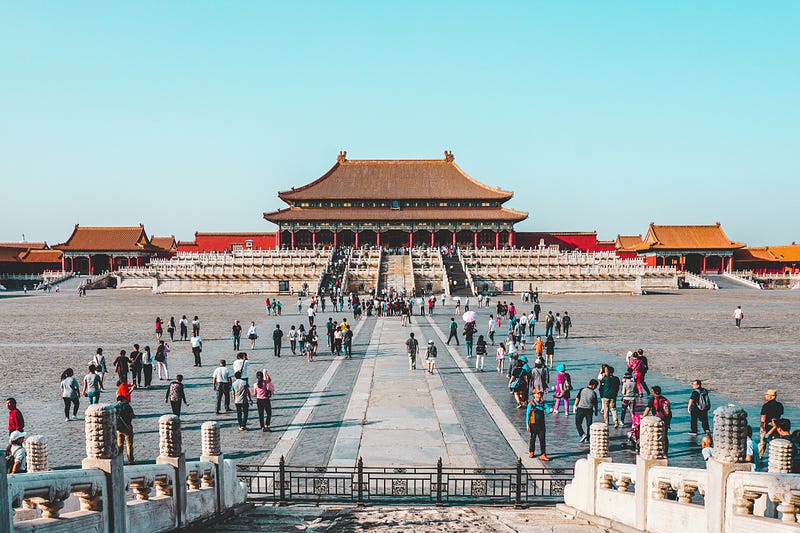
Must This Trade War Continue?
The trade war has clearly not benefited neither the United States or China. Many political observers argue that this is because, as one Chinese proverb put it, “no two rival tigers can exist in the same mountain.”
This realist position toward trade may not be entirely accurate when it comes to trade, however. There are a number of reasons to suppose that US deficits in trade are overblown.
Researchers argue that it is true that China and the US have an imbalance in trade. However, this imbalance is not as potent as some in the United States claim it is for a number of reasons:
- statistical differences: when Chinese goods are allocated to the US, they often travel via a third destination. Chinese statistics show that they have travelled through a third destination, whereas US statistics only take into account the place of origin.
- Global value chain perspective: goods coming from China have imported parts that comprise the goods. Trade statistics do not take these into account and only calculate the total value of the product.
- Exports by Chinese affiliates of foreign companies: many American countries operate in China, meanwhile China garners the “blame” for American exports.
These factors, among others, affect the statistical understanding of the trade deficit between the US and China.
Therefore, it seems clear that because of (1) China’s political domestic problems and (2) their reliance on global exports, they will have to continue to trade with the West, particularly the US, if they are to continue to grow.
In the end, the Chinese and US economies are closely intertwined.
In 1991, China exported approximately 1% of their exports to the United States. Presently, the US is China’s largest goods trading partner with an estimated $659.8 billion (two-way) goods trade in 2018.
This was an increase of up to 6.7% ($34.0 billion) from 2017 and up to 59.7% from 2008.
Because of globalization, there is a “structural interdependence” between China and the US. Therefore, any trade war between the two economic superpowers is sure to undermine both parties.
Before you go…
🗣 I love connecting with fellow thinkers. Find me on Twitter, Facebook, Goodreads, or Instagram.
ALSO, here’s a link to MY BOOK, “Up in the Air: Christianity, Atheism & the Global Problems of the 21st Century,” if you wish to purchase it! I appreciate the support.
I’d love it if you’d share the article on Facebook/Twitter if you want your friends to benefit from it in some way at all.
Until next time, keep reflecting!