
The Torn Posters in the Paris Metro (December 2023)
Documenting the weird and wonderful underground galleries exhibiting accidental artworks
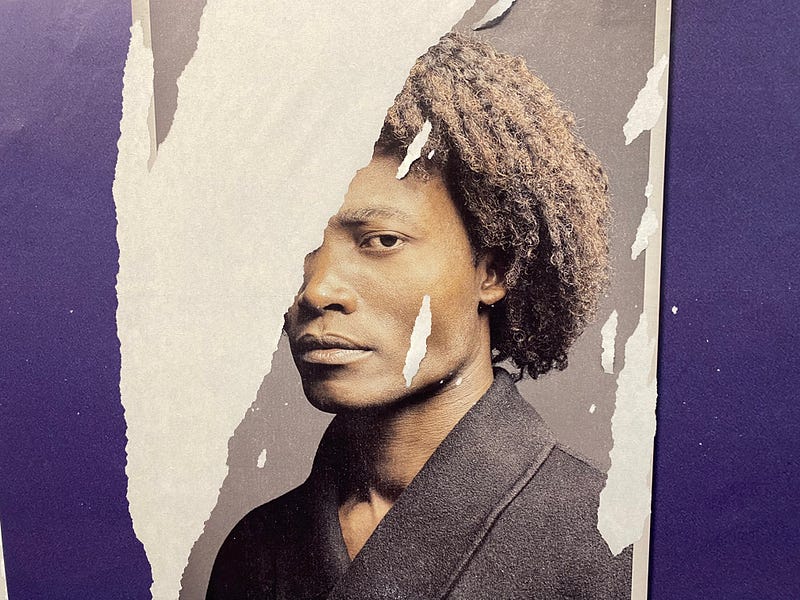
One of the most interesting things about the Paris metro is its design — or rather, its designs. Almost every station has a unique style that distinguishes it from all the others. So just by being in a station, you pretty much always know where you are.
One reason for this architectural variety has to do with the fact that stations have been commissioned in different years, decades and centuries. The ones with the iconic metal ‘vine-like’ entrances designed by Hector Guimard were built in the early 1900s when Art Nouveau was all the rage, while larger, slicker, coldly futuristic stations are unmistakably twenty-first century creations designed on computers.
A lot of stations also have unique features that relate to major landmarks within their immediate vicinity. The station Louvre Rivoli features what I presume to be replicas of statues living in the Louvre. Meanwhile, Arts et Métiers has a unique bronze-like layout that pays homage to the museum that shares its name.
The visual diversity of each metro station means that while I have been taking photos of ripped posters below the French capital, I’ve also been able to check out the unique personalities of each subterranean station in which the posters feature. If every poster tells a story, the same can be said for the places that house them.
Porte de Clichy
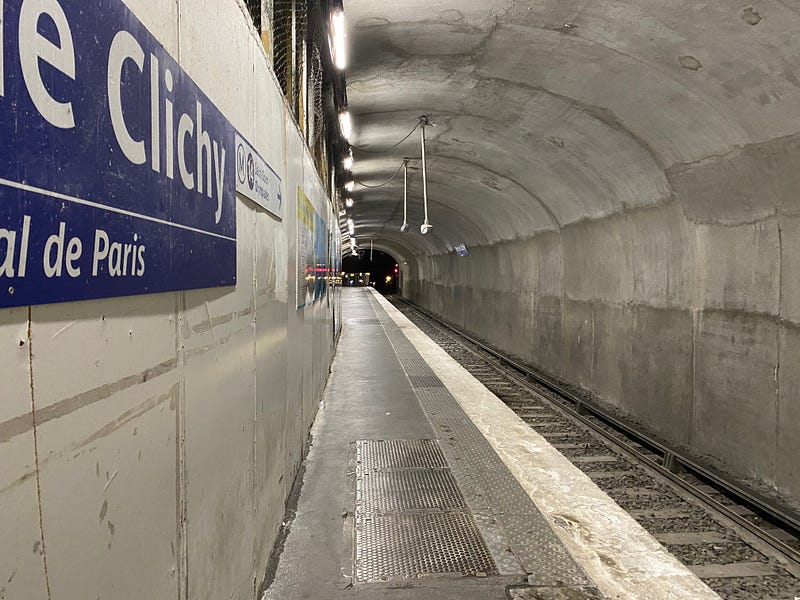
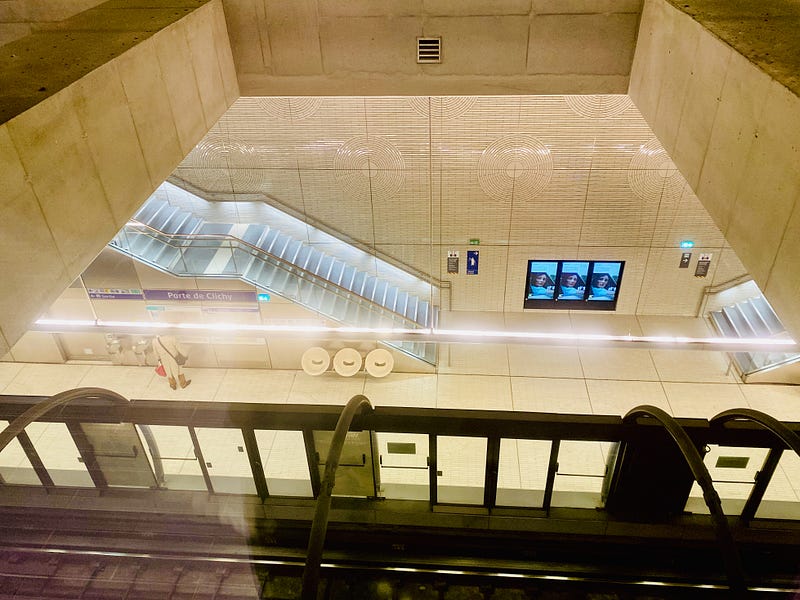
Let’s start with the station that I use almost every day, Porte de Clichy. Its name begins with porte, or ‘gate’, as it’s right on the northwestern edge of the city. Every station on the borderline between Paris and the banlieues begin with ‘Porte de’, or ‘Gate of’, and is followed by the name of the district in which it is situated.
But what differentiates Porte de Clichy from other stations is just how ugly it is. While almost every station has a unique visual identity, Porte de Clichy takes the cake for being both bland and unsightly. The main tunnel on line 13 contains rough concrete walls, as well as cables still wrapped in ragged plastic lining that looks like decaying cobwebs. The sight is so unrelentingly grim, it could pass for a Brutalist vision of Dante’s Inferno. To the RATP’s credit, however, the metro authorities are planning on dolling up the station, which should go some ways to toning down the weird underground volcano vibe.
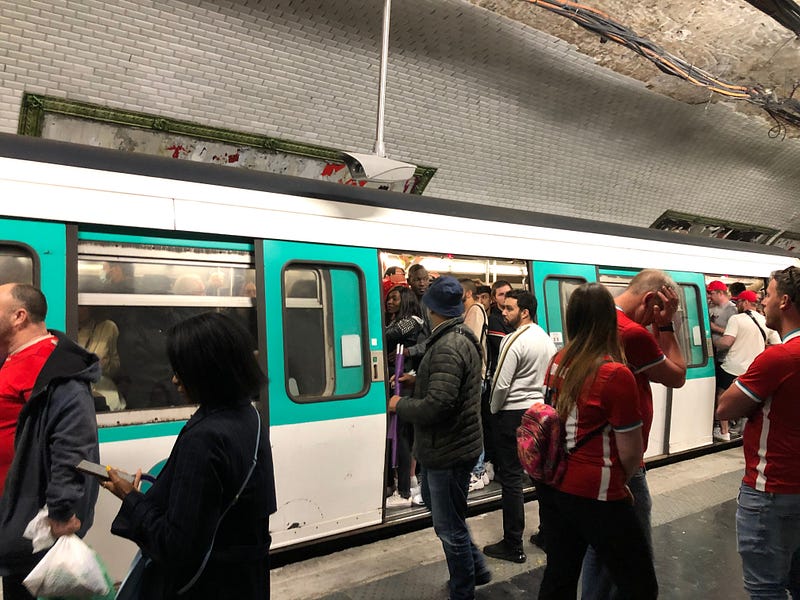
Other features of note include a tunnel with green posters that seemingly never get replaced — perhaps because they’ll just get vandalized again within short order — and turnstiles that break every other day. Having to deal with such inconveniences can be a pain when you’re paying over 84€ a month to squeeze into a tin can, which might explain why a lot of locals avail themselves of the discounted subscription known as “jumping over the turnstile”.
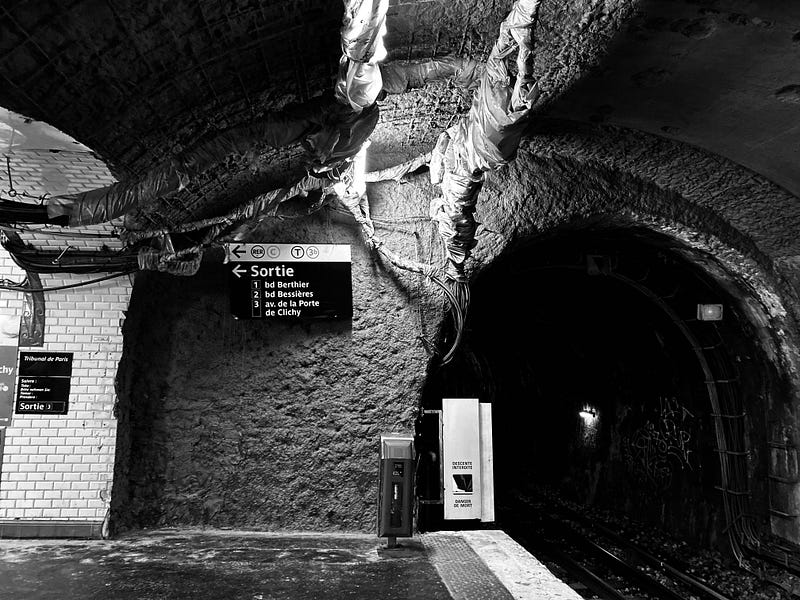
The place is pretty chaotic, in other words.
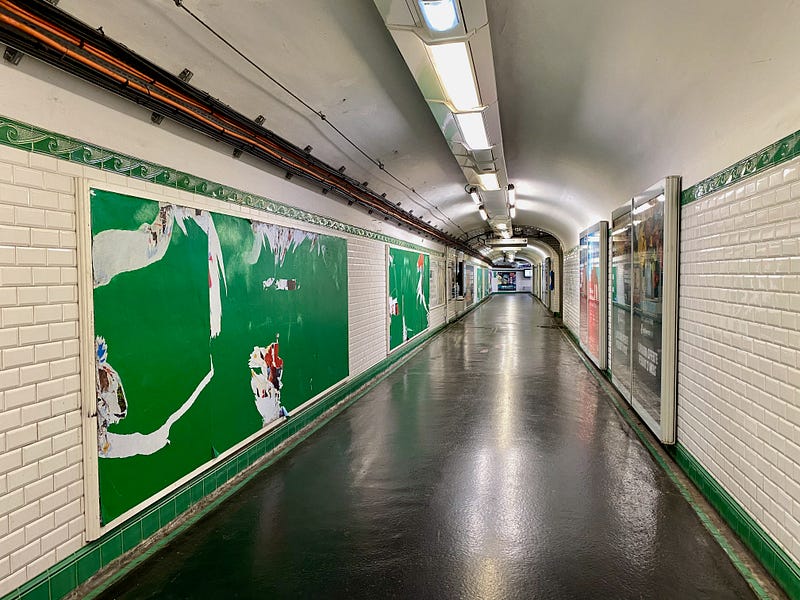
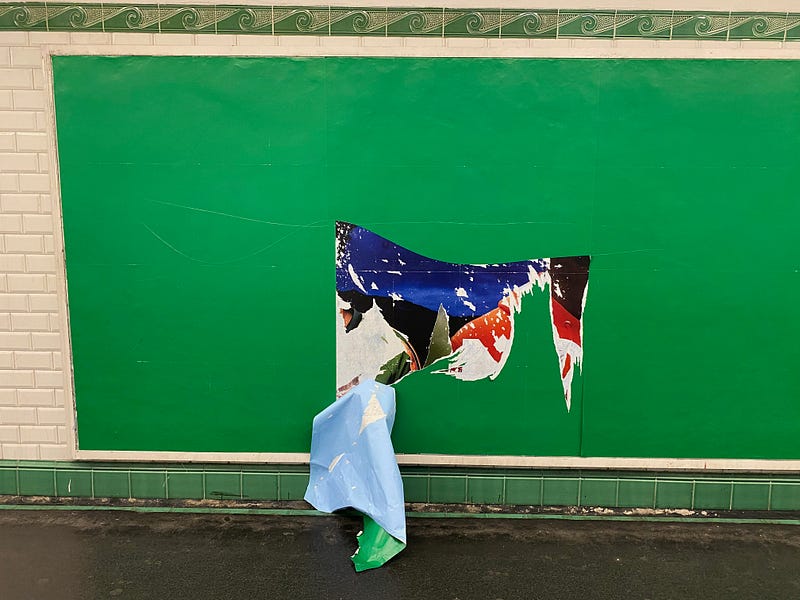
Besides the metro maps, which either get torn up or go missing, a lot of the poster canvases are now being replaced by glass frames, which should make vandalism much more difficult. But of course, where there’s a will, there’s a way.
Bastille
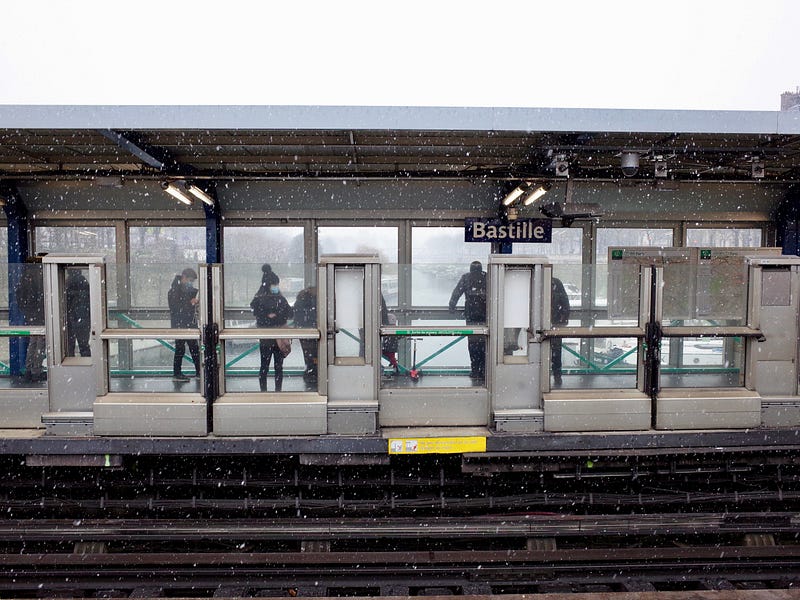
Besides being near the site of a former prison that was stormed by revolutionary insurgents during the French Revolution in an event which arguably changed the global political landscape forever, the Bastille metro station has loads of torn posters.
I don’t know what it is about this station in particular, but every time I visit it, I come away with two or three photos. After getting off line one, I would wander down its corridors in search of tear marks — and always find something interesting.
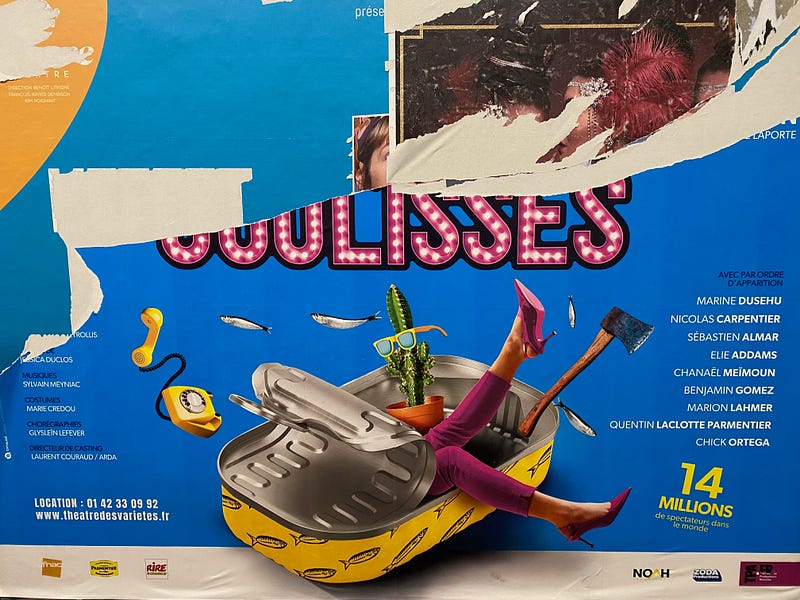
I suppose the fact it’s a multi-line station on line 1, the busiest line of all, would mean that it receives a lot of traffic, increasing the odds of vandalism.
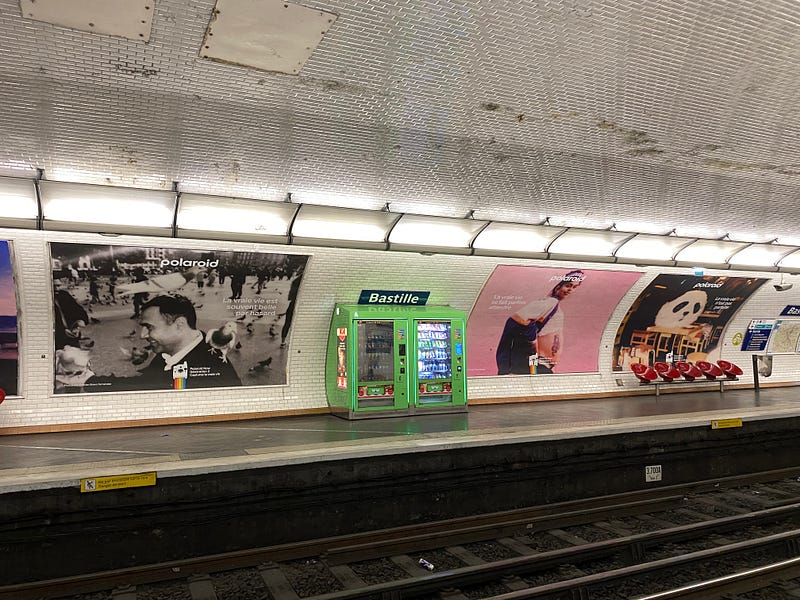
In addition to its historically significant location, Bastille is also interesting for being next to an abandoned metro station called Arsenal. Funnily enough, there’s an underground station called Arsenal in both London and Paris, however only one of them is named after a football club.
Châtelet
Paris is often described as a busy, chaotic city. But in most places, it’s really not that bad. Away from the central districts and the ring roads, the streets can be surprisingly calm.
Below ground, though, it’s a different story.
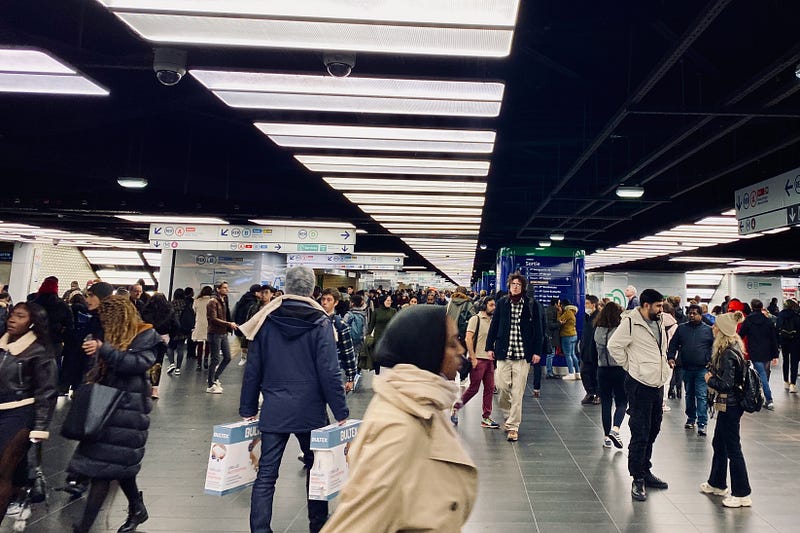
As the busiest public transport hub in all of Europe, Châtelet is a byzantine maze of tunnels, staircases, escalators and travelators all heading in every possible direction. Once while riding a travelator down there, I don’t think I had ever seen such large throngs of people in one space; the numbers are simply mind-boggling. If Paris can sometimes feel almost calm on the surface, it would be because all the chaos is down here.
Due to the sheer numbers of people, Châtelet is the hardest place to take photos. There have been times when I’ve spotted a torn poster, but as there were so many people around, I resigned myself to letting it be. Whipping out my phone and taking a cheeky snap of a ripped image would have just been too awkward.
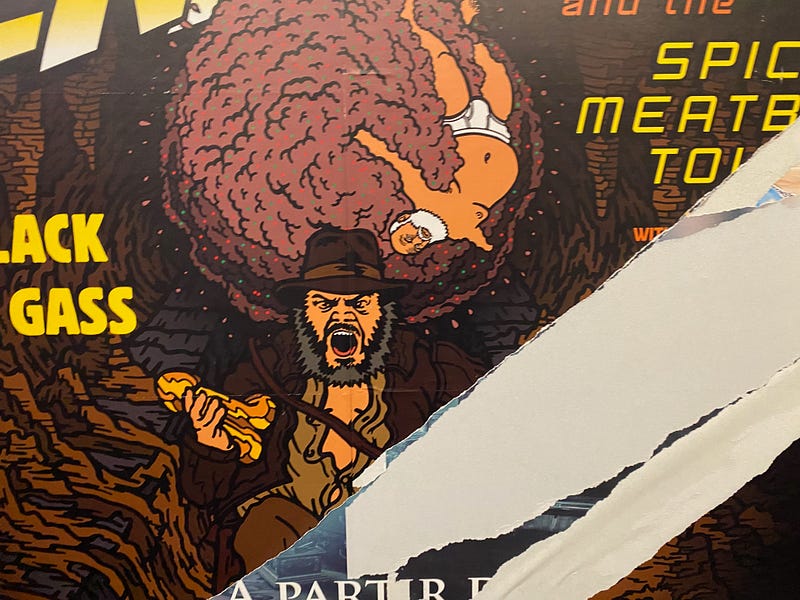
The reason that Châtelet is so busy is because it’s right in the heart of the city. The shopping mall above ground, Châtelet-les-Halles, is near dozens of restaurants, bars, cafes and the Centre Pompidou.
The station also connects multiple metro lines, as well as regional RER lines, including the one that goes to the Paris-Charles de Gaulle International Airport, and so everyone seems to assemble in this one spot.
If you’re lucky, from time to time you can catch musicians busking at a certain spot next to a stairwell. I once recorded some string players performing a piece by a twentieth-century Spanish composer back in 2012. I haven’t seen musicians performing there for a while, however.
Buttes Chaumont
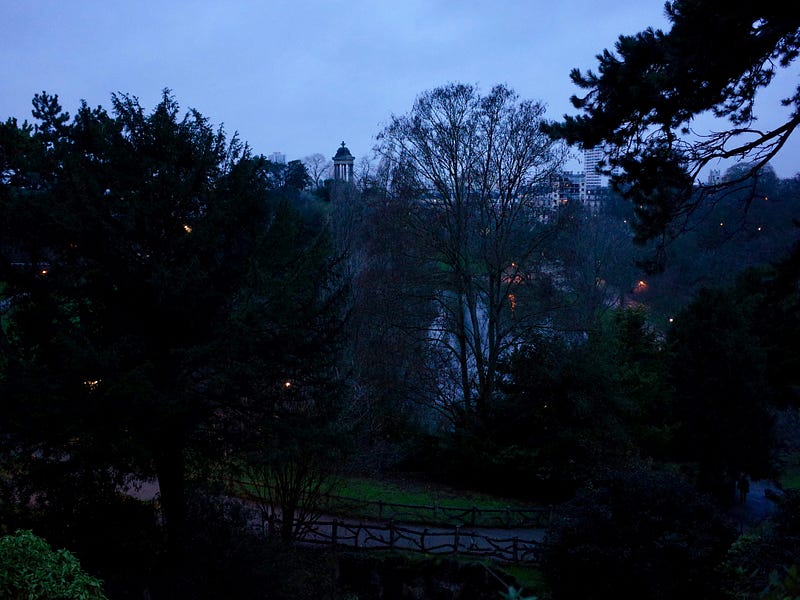
When I lived in Eastern Paris, I used to catch the metro to work from the Buttes Chaumont station. In hindsight, it was pretty stupid. The station is on line 7bis — an offshoot of line 7 — and trains on it take absolutely ages to arrive.
From what I’ve heard, the line was made because a law stipulated that everyone had to have a metro station within walking distance of their homes. But as the line is short and pretty much goes around in a loop, almost no one catches it.
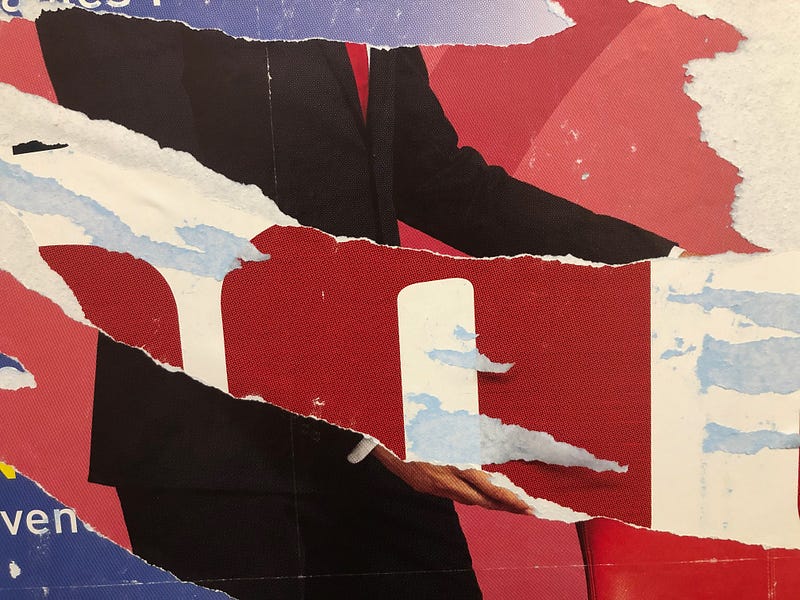
There have been times when I’ve been the only person on my particular metro train. On another occasion in January 2021, while coming home after finishing work around midnight, I was all alone on a carriage except for a man who laughed like the Joker in Joker.
Needless to say, I couldn’t wait to get off it.
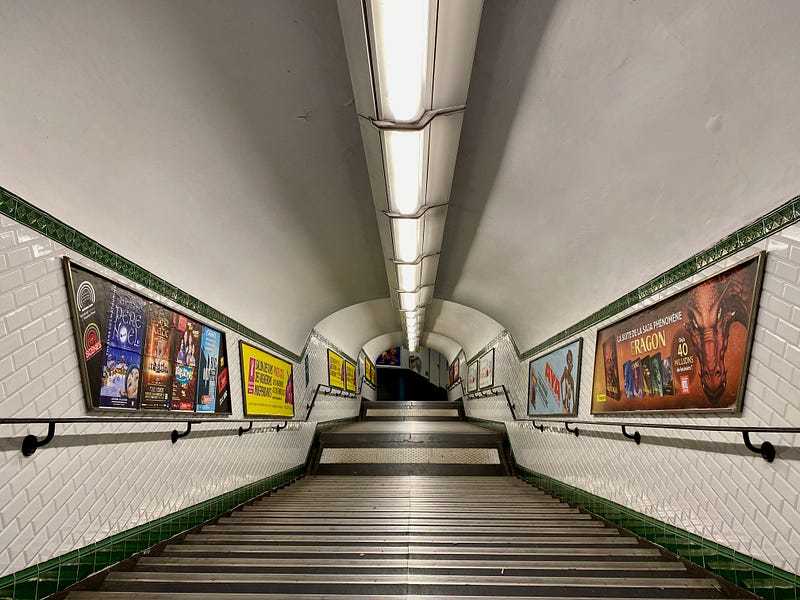

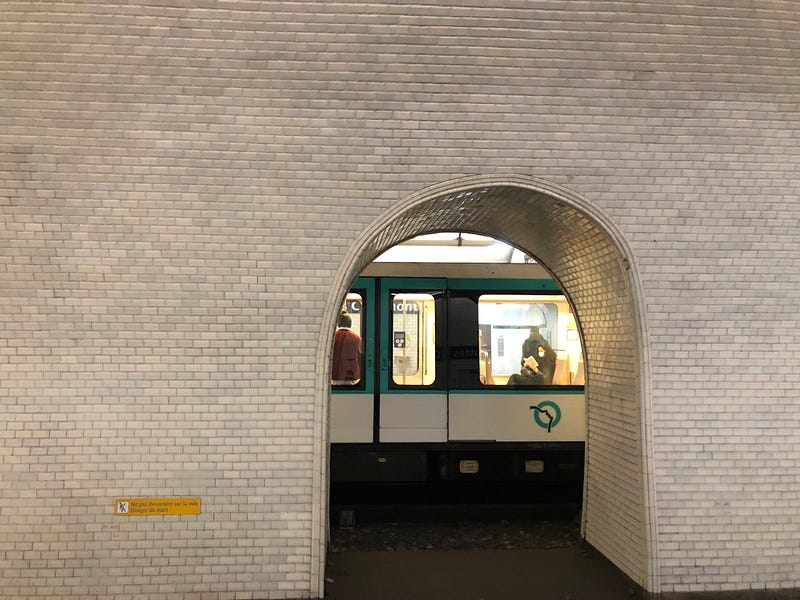
Besides the near total absence of passengers, the station is also characterised by the three flights of stairs that lead down into the underground. While going down them is easy enough, coming up them can be pretty tiring. If Parisians are thin, it’s because every day is leg day.
The good news for me, though, is that because hardly anyone catches the metro from here, taking photos of torn posters is easy. There’s no one there to watch you, and so you can take all the time in the world to compose a shot.
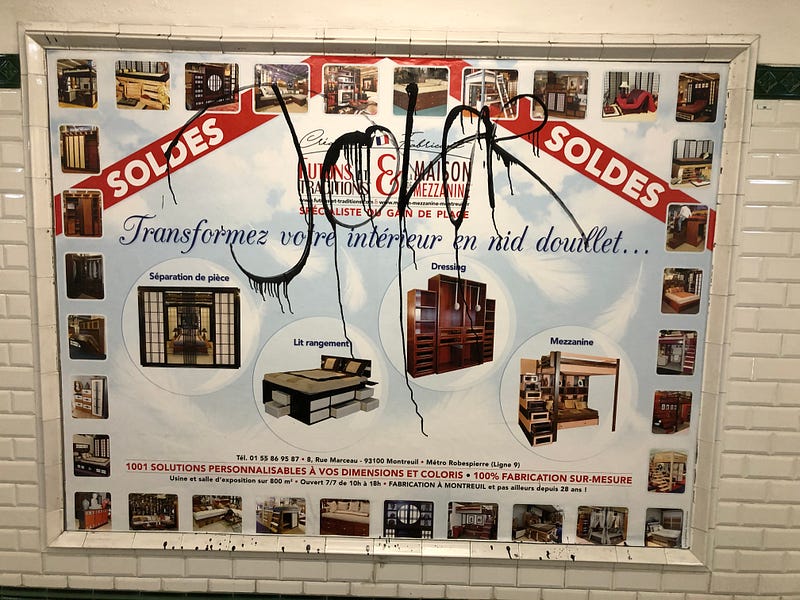
So why did I catch the metro from this station when I could have saved up to twenty minutes by walking to another one? It’s simple. The metro is below a park — the Parc-des-Buttes-Chaumont, to be precise — and I liked walking through it on my way to work.
Mabillon
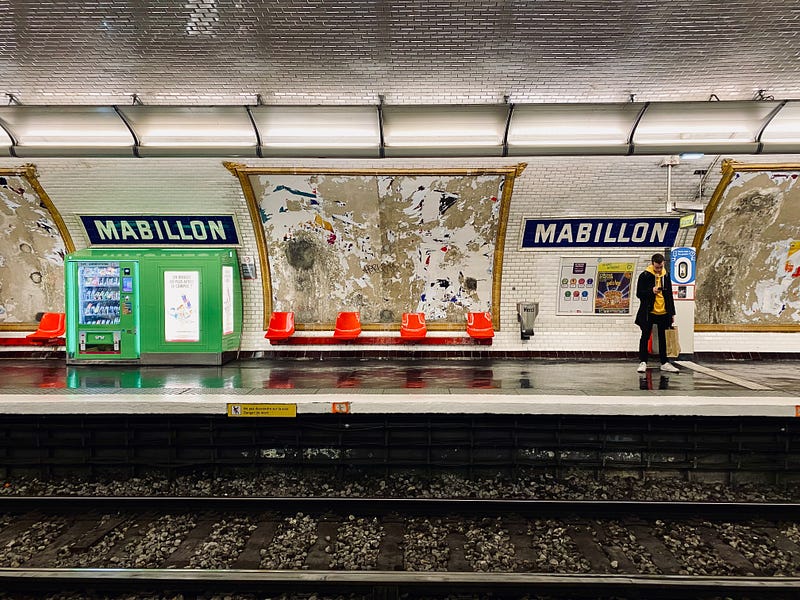
Though Mabillon on line 10 might not seem especially interesting from a design perspective, what makes it shine is its surfeit of torn posters. Every time I’ve caught line 10, I’ve been amazed by the number of defaced images facing the tracks that never seem to be replaced.
It’s honestly quite a sight to behold.
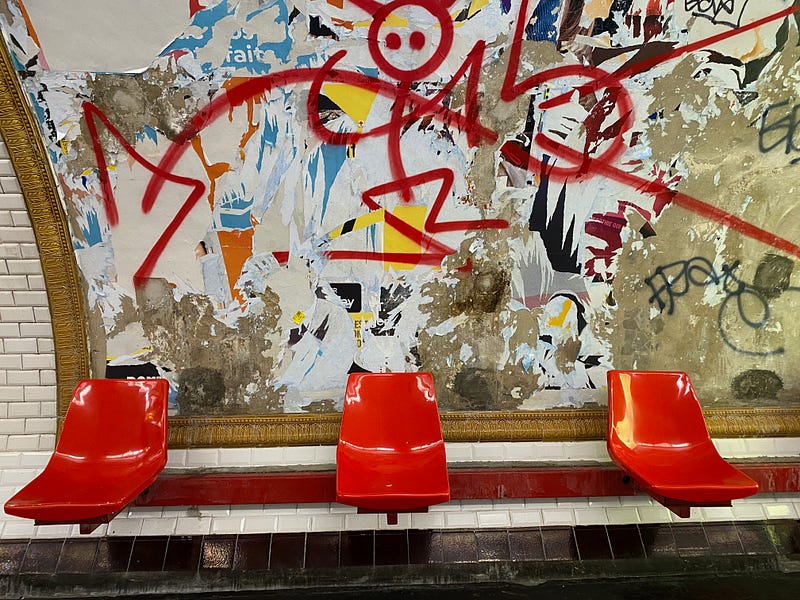
While there are a few posters that seem to get changed regularly, there are always five or six canvases which remain perpetually ripped. My guess is that staff have simply given up on putting up new posters. Why bother with the hassle of plastering up new ads if someone is just going to tear them up later that day?
I don’t know why this station in particular has a vandalism issue, but ironically, you could argue that its poster issues put it on the map.
The metro map, that is. When it’s not being stolen from Porte de Clichy.


