
How Thai Food — And Pad Thai — Became So Popular
The third most popular type of Asian food in America
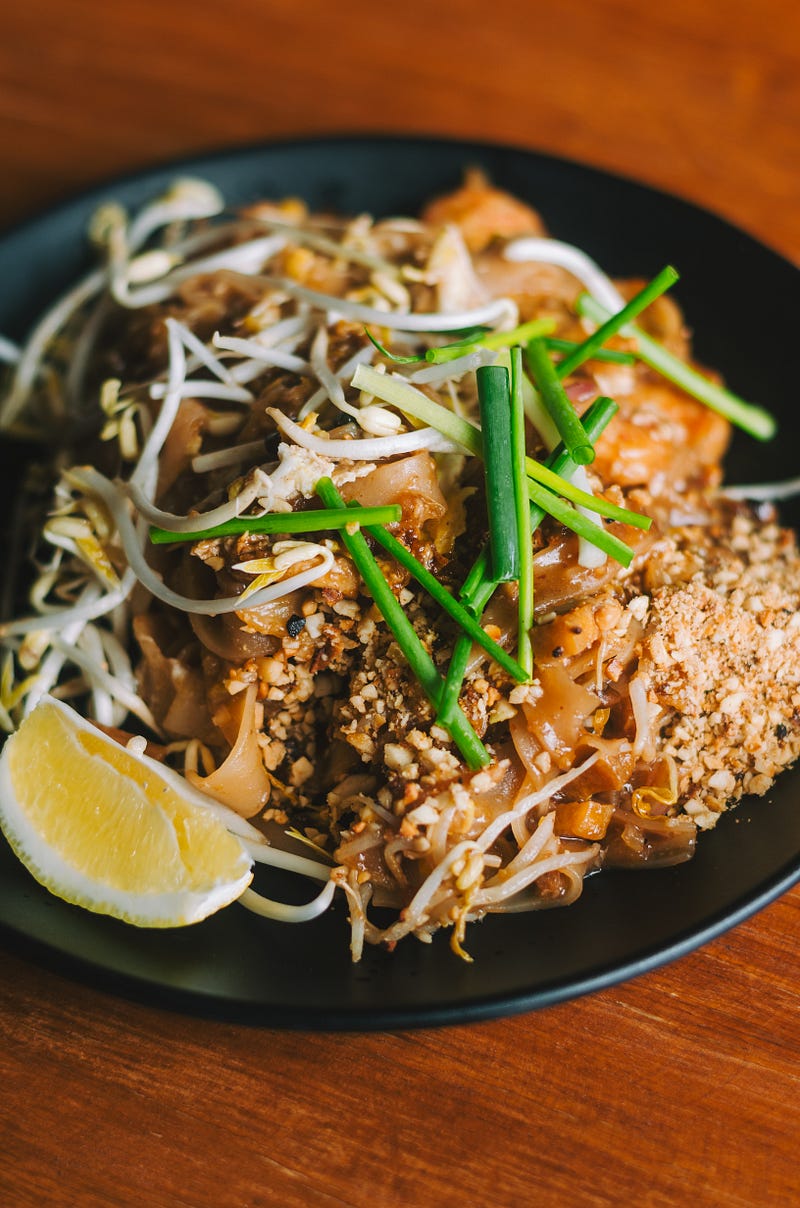
I listened to a podcast where two Asian podcast hosts asked listeners what they thought the three most popular types of Asian food were. I guessed Chinese, Japanese, and Korean based on my own personal anecdotal experiences as an Asian person who frequents all types of Asian food. However, I was wrong about one of the three.
The first two most popular types of Chinese food are Chinese and Japanese.
The third most popular type of Asian food was Thai food. The fact that the cuisine that serves drunken noodles and pad thai is more popular than restaurants that serve chicken tikka masala contradicts my anecdotal experience.
That was a big surprise to me. I would have thought Korean and Indian food were more popular than Thai, even though I do know of a lot of Thai restaurants. A statistic that shocks me even more is that there are ten times as many Thai restaurants in America as there are Mexican restaurants. The number of Thai restaurants in America is especially impressive given the relative share of the Thai population — Thai Americans make up 0.1% of the U.S. population, while Indian Americans make up 1% of the population.
The Pew Research Center poll found that up to 71% of Asian restaurants serve Chinese, Japanese, or Thai food. Indian, Vietnamese, and Korean came just behind in that order. Filipino food is actually not that popular — but that makes sense given the notion that a lot of Filipino immigrants who come to the U.S. are teachers and nurses instead of chefs or restaurant owners.
So how and why did Thai food become so popular?
The Thai government sponsored Thai restaurants around the world
According to Dr. Mark Padoongpatt, author of Flavors of Empire: Food and the Making of Thai America, there’s an oft-stated rumor that the Thai government sends trains people to open restaurants and then sends them into the world.
But this is completely true — in the early 2000s, the Thai government trained chefs and exported them around the world to stimulate tourism in Thailand as part of a national development plan. The government also felt somewhat ashamed of what Thai food looked and tasted like around the world, so sending chefs everywhere was also an effort to standardize what Thai food tastes like around the world.
In the U.S., though, Thai immigrants started making restaurants well before the early 2000s. In the 1950s and 1960s, Padoongpatt notes that the Cold War caused a lot of contact with U.S. military service members, Peace Corps volunteers, and Thai food. These U.S. citizens actually started to write Thai cookbooks.
In the ’70s, there started to be an influx of Thai immigrants in Los Angeles, as well. In 1971, the famous Bangkok Market, the first Thai grocery store in L.A., opened, but it was also known for using a lot of the same ingredients as Chinese food. The store tried to import Thai produce and also grow it in California, but eventually started growing this produce in Mexico.
Other Thai immigrants, particularly international students, started spreading Thai cuisine around the country as well. The students could only find limited employment due to restrictions on their work visas. And there was one Thai chef named Tommy Tang who spread the popularity of Thai “fusion food” nationally, particularly in New York.
While this explains the beginnings of Thai cuisine in America, Thai food’s explosion in L.A. and particularly in West Hollywood explains how it got so popular so quickly. Madonna, in particular, had her very own booth in a Thai restaurant named the Siamese Princess.
But at the time, a lot of people still thought Thai food was just really spicy Chinese food.
The 2000s explosion
While the Thai government’s sponsorship of Thai food did introduce Thai food to America, it certainly accelerated it. It started to be a lot more than just pad thai — other regional dishes like kai yaang and khao soi started to gain prominence.
According to Harmeet Kaur at CNN, Andy Ricker, a chef and founder of the restaurant group Pok Pok, was ironically a White American who traveled back and forth from Thailand to the U.S. and who made this push to diversify what Thai food looked like in America. He cited going to Bangkok and Chiang Mai and not being able to get the same food in those cities.
Padoongpatt notes that a lot of Thai restaurant owners limited their cuisine not because they didn’t know how to make the food, but because they were often wary of how serving dishes Americans didn’t know about would affect sales and business. Padoongpatt comments on the significance of Americans only accepting a greater diversity of Thai food once a White guy started to advocate for it (Padoongpatt calls Ricker a friend).
As Thai migration to the U.S. increased, Thai restaurants started to have secret menus that Thai customers could order from, and now these menus have become a lot more mainstream.
One very interesting fact is pad thai was not popular in Thailand at all prior to this push. Alexandra Domrongchai at Food & Wine notes that prior to 2002, pad thai had “virtually no cultural history,” but the government started pushing it as the country’s national dish as part of its Global Thai Program.
Pad thai was a dish that began in Thailand in the 1930s. The government started to promote rice noodles at the time during the flooding of rice fields, especially since noodles could be manufactured with 50% of the grain. The government fostered a sense of national identity if people started eating pad thai. Some writers and historians, however, say that pad thai was actually introduced to Thailand by Chinese immigrants to Thailand.
Regardless, pad thai’s popularity exploded in the early 2000s.
The government, by 2011, started to give standards for different styles of restaurants, like Thai high-end food and Thai fast food. It also started to give the Thai Select award if the food at a given Thai restaurant met the government’s standards for quality and authenticity, was open for at least five days a week, employed chefs trained by the Thai government, and used Thai products.
“These standards may ensure the quality of the restaurants, but also contribute to a standardization of Thai food and by extension, perceptions of Thai people,” Domrongchai says.
Takeaways
I think it’s probably easy to guess how Chinese or Japanese food got so popular in America through immigration. However, the story of Thai food’s popularity in America, and throughout the world, is different.
I will say that I love Thai food, but as a stereotypical American and non-Thai person, I always get pad thai. However, as a person who has familial origins in the Hunan region of China and regularly eats Sichuan food, I always get the spiciest food the restaurant offers in its pad thai. I’m often disappointed and have a “come on, bro,” reaction when it’s really not that spicy, but perhaps I need to specifically request that the food be even spicier than the spiciest option on the menu.
I digress, but like K-Pop and K-Dramas are a form of soft power and diplomacy for South Korea, Thai food is (sometimes) a form of soft power for Thailand.
I also wondered whether the popularity of Thai food actually led to an explosion of tourism. It did — the Thai government estimated that about one in ten people that dine at a Thai restaurant around the world would visit Thailand. I thought this was a stretch, but there was a 200% increase in tourism to Thailand following the program, and a third of new tourists said Thai food was a huge reason behind their trip.
I would think that Indian food would quickly supplant Thai food’s popularity, but it doesn’t look like that popularity is eroding any time soon.