
The Top Backtesting Software to Enhance Your Trading
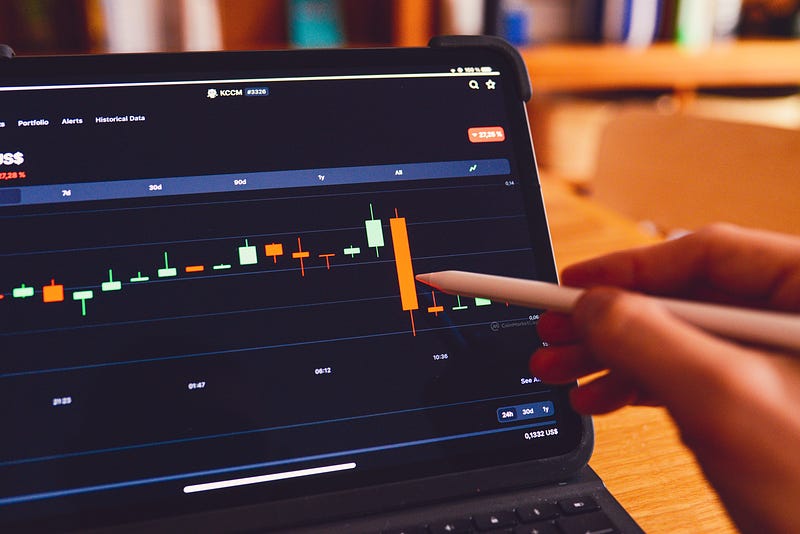
In an unpredictable market, making trading decisions can be a challenge. However, with the help of backtesting software, you can test your trading strategies on historical data to see how they would have performed in the past. This can help you make decisions and reduce your risk.
Today, I’ll explore the top backtesting software options available.
What is Backtesting Software?
Backtesting software is a tool that allows you to test trading strategies on historical data. It works by simulating trades using past market data to see how a particular trading strategy would have performed in the past. The software can be used to test a wide range of strategies, from simple to complex, and can be customized to fit your needs.
Compared to manual testing, backtesting software is faster and more accurate. Manual testing requires traders to manually go through historical data and record trades, which can be time-consuming and prone to errors. Backtesting software automates the process and provides accurate results based on the data provided.
Solutions for Developers
Backtesting engines are typically built using programming languages such as Python, R, C++, and Java. Each of these programming languages has its strengths and weaknesses, and the choice of language depends on the specific needs and requirements of the project.
Python is a popular choice for building backtesting engines due to its ease of use, flexibility, and large community support. It offers a wide range of libraries and tools for data analysis, numerical computing, and machine learning, making it well-suited for building complex trading algorithms. Some libraries you can use are Backtrader (my favorite), Zipline, or PyAlgoTrade…
R is another popular language for building backtesting engines, particularly for statistical analysis and data visualization. It offers a wide range of statistical libraries and tools that make it easy to analyze and visualize financial data. I’ve personally never tried R but I’m sure it can be a good solution.
C++ and Java can be used used for building high-performance backtesting engines that require low latency and high throughput. These languages offer low-level control over system resources and can be optimized for speed and efficiency, but I think are harder to use than Python and R.
Finally, the choice of programming language depends on the specific needs and requirements of the project. You must consider factors such as the complexity of the strategy being tested, the size of the dataset being used, and the performance requirements of the backtesting engine.
Solutions that do not Require Coding
If you don’t have programming skills, there are backtesting tools available that do not require any coding knowledge. Two popular options are Portfolio Visualizer and Composer. There’s also ThinkOrSwim which is a bit less known.
Portfolio Visualizer is a free tool that offers a range of portfolio analysis features, including portfolio optimization, factor analysis, and asset correlations. It is easy to use and does not require any coding knowledge, making it accessible to traders without programming experience. However, the tool only uses monthly data, so it may not be suitable if you’re looking for more granular data. Additionally, while Portfolio Visualizer has some market timing models, it does not allow for more sophisticated logic beyond these pre-built models, making it more suited for traditional portfolio models rather than modern algorithmic trading.
Composer, on the other hand, is a visually appealing tool that allows you to backtest strategies without coding. It uses daily data and allows for the addition of conditions and filters, making it suitable for more modern trading strategies. The strategy builder also allows for the creation of nested strategies, giving you more flexibility in designing your trading algorithms. I find that Composer may sometimes be lacking some data, but more seem to be added regularly.
Finally, ThinkOrSwim is a platform for technical analysis of the American stock market. One of the standout features of ThinkOrSwim is the OnDemand function, which allows you to test your trading strategies in a simulated environment without risking real money. This can be very useful for backtesting and refining trading strategies. Another advantage of ThinkOrSwim is that it provides real-time data without the need to open an account, which can be particularly beneficial for traders located outside the United States who are not able to open an account with a US broker. ThinkOrSwim also offers the ability to trade through Interactive Brokers or other platforms, giving traders flexibility in their trading choices. However, it’s a paid option. Here is the link to ThinkOrSwim if you want to have a look: https://thetrader.top/.
Final Note
With this article, you have some suggestions of backtesting software you can try. I hope you’ll try them in order to find the one that fits best your needs!
To explore more of my trading stories, click here! You can also access all my content by checking this page.
If you liked the story, don’t forget to clap, comment, and maybe follow me if you want to explore more of my content :)
You can also subscribe to me via email to be notified every time I publish a new story, just click here!
If you’re not subscribed to medium yet and wish to support me or get access to all my stories, you can use my link:


