
The Top 5 Growth Resources You Need in 2023
The best ways to learn more in less time

When I first began growth hacking, few blogs or books covered the subject, and Ryan Holiday’s “Growth Hacker Marketing” was the only brief growth hacking book available.
Now there are hundreds of options to learn more about growth. It’s no longer about finding resources but cutting out all the noise to get the best insights.
Focus is what leads to growth, and that applies to learning too.
So I’m constantly re-evaluating my top resources to get the most out of my learning time.
Here are my current top five (all of which I’ve been using for at least a year):
1. GrowthMentor
by Foti Panagiotakopoulos & Jessica Volbrecht
This is an incredible community to learn from; you can always find an expert on a specific challenge. I’ve used it for over a year as a mentor and mentee.
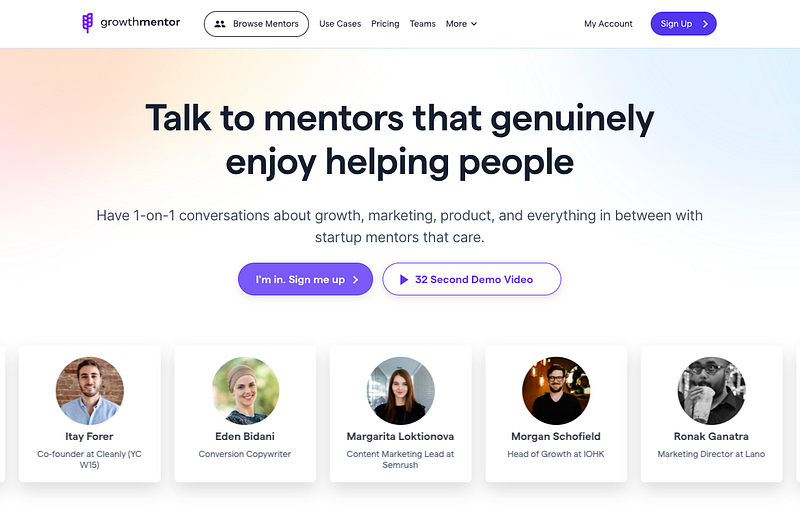
I love this platform because it can help you try out different mentors and find one to work with long-term. You can’t be the expert in every area, so finding a mentor can save you hours of wasted time, primarily if you work for a startup. In addition, most mentors offer sessions for free on the platform (including myself).
Badal Pandey, eCommerce Growth & Facebook Ads Consultant, explains it as follows:
“Having a mentor helps a lot. While you have a limited budget, you can’t test it all, but with the right mentor, you can focus on the priority and what to test first.”
Starting at £74.50 per month, it is a steal; you can check it out here.
Suppose you can’t afford GrowthMentor; you should message or email who you want to learn from instead. Just make sure you take the time to write a personalised letter highlighting their value in a meeting rather than a “Hey, can we chat?”.
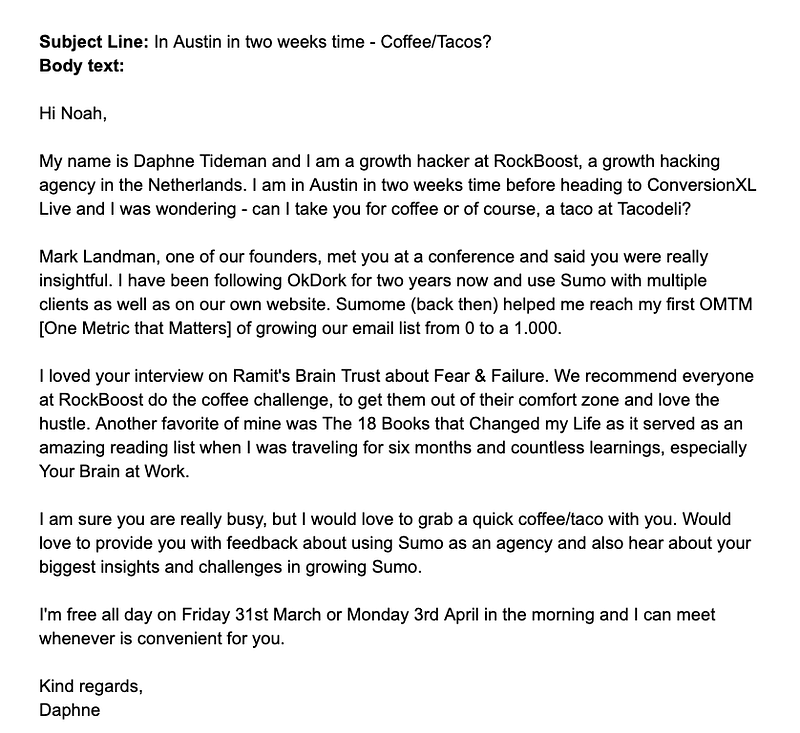
For example, in 2017, it took me over an hour to write the following email to Noah Kagan, but it led to an incredible hour-and-a-half bike ride through Austin, where I learned so much from him. He even asked me how long the email took to write and when I told him, he said, “Good, that is how long it should take. That is what made the difference.”
2. Steal This Newsletter
by Matt Lerner
I consistently read this newsletter every week. Matt constantly challenges the norm and provides comprehensive, actionable insights. He recently rebranded his newsletter to “Steal This” to inspire readers to take his practical advice, steal his actionable insights, and put them into practice. Check it out.
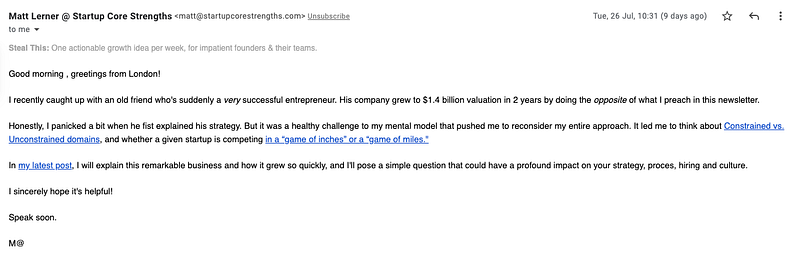
Instead of subscribing to many newsletters, choose a few you enjoy and read them regularly. Also, look for those that are specifically focused on your niche. Here are a few other ones I love for DTC startups are:
- DTC Examples Newsletter — Badal Pandey
- DTC Newsletter — DTC Team
- DTC Branding Newsletter — Nik Sharma
- Growth Marketing Newsletter — Aazar Ali Shad
3. Growth Groups
I participate in a few Whatsapp and Slack groups for D2C brands where you can always ask questions and gain knowledge from the resources shared by other members.
So take some time to find a community of like-minded people where you can learn from each other. I almost see this as an opportunity to serve as a micro-mentor, teaching others while learning from them.
Having a community allows for micro-mentor moments, powerful 5–10 minute interactions that teach you so much.
I even run my own community of Women in Experimentation which has also been a great learning resource.
4. Reforge
Let me start with the fact that Reforge is not cheap. It costs around £130 per month (paid annually), including access to all courses and one live cohort. They regularly update and add courses. Moreover, they don’t accept everyone; you usually need to be vouched for by another member.
They also tend not to accept agencies.
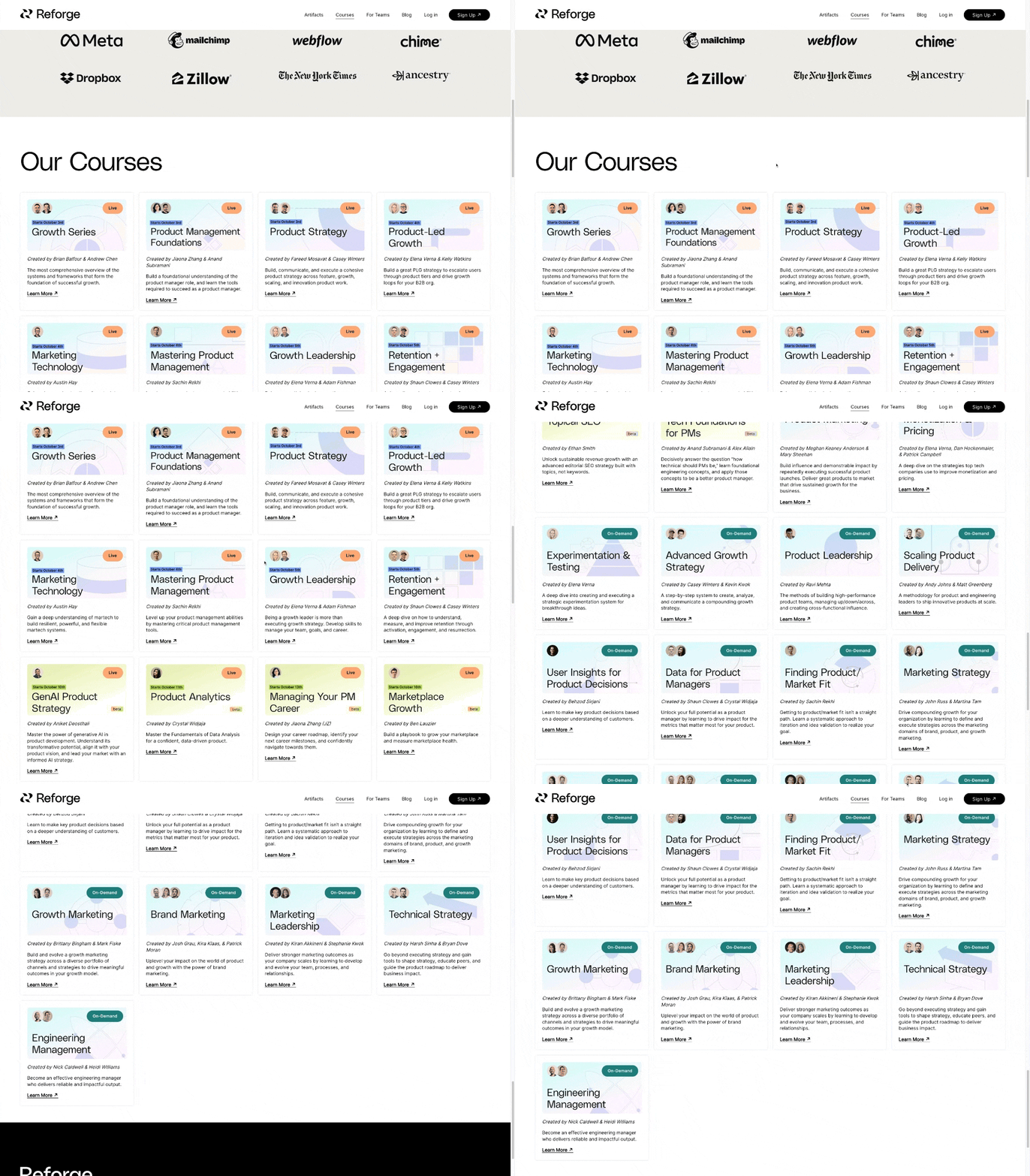
Despite all that, it can beworth it for at least a year. I completed almost all the courses on Reforge in the year I had a membership (there were far less back then) and learnt many strategic frameworks and how to build growth models.
My favourite was the Advanced Growth program. They also have a Slack community where you can ask questions and talk to others, but I didn’t use that much.
When you are experienced in growth and looking to take it up a notch, this is a great option. I will say it is very B2B focused and high-level, making it not always actionable.
If you are not sure whether it is worth investing in, it can be worth following their blog first to get a feel for their content.
5. CXL
by Peep Laja
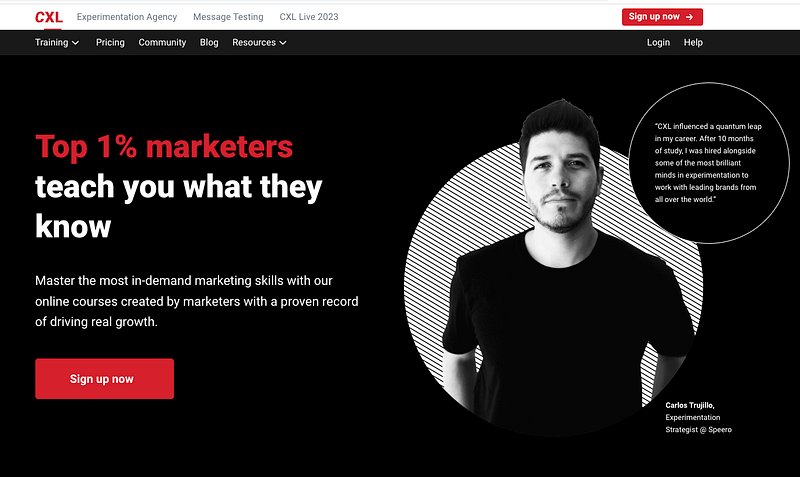
For more hands-on channels, analytics and CRO knowledge, CXL is perfect. Over the last six years, I’ve followed various courses from them and learned something new from each one.
Moreover, they regularly update the content and recently added Playbooks, 5–10 minute step-by-step guides for resolving various growth challenges, e.g. Improve Engagement with Chatbots.
A great place to start is the Growth Marketing minidegree, their new E-commerce Marketing minidegree is also great.
Individual subscriptions with the annual plan start at about £103 per month. However, they offer team discounts and the option to buy one-off courses. With that membership price, you can access a wide range of courses.
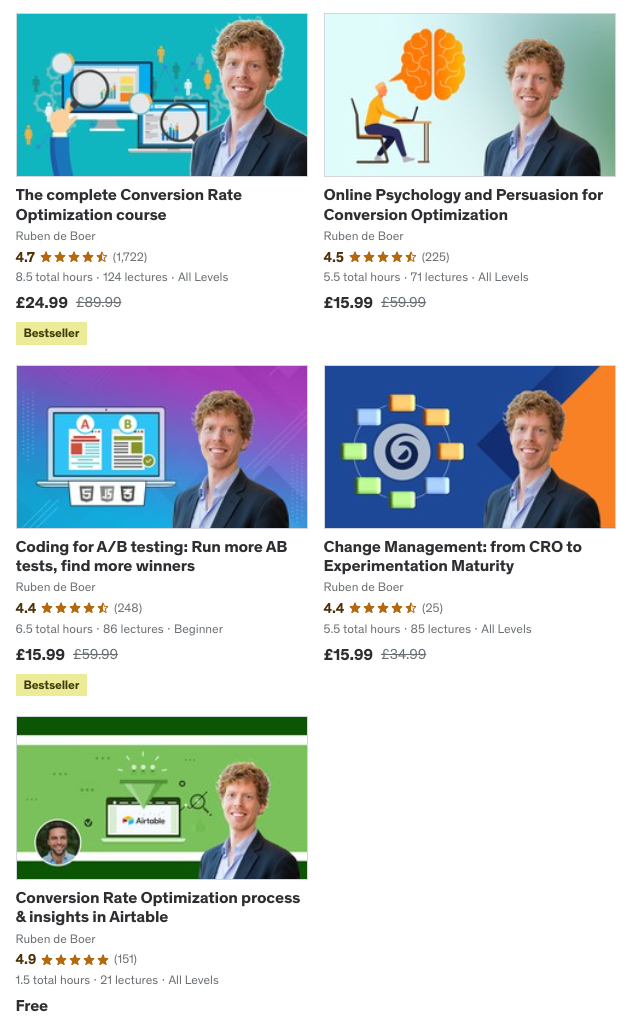
If you want to focus only on improving your CRO knowledge, a must for all growth people, I would suggest Ruben de Boer’s CRO courses on Udemy instead. He wanted to make CRO courses accessible to everyone and has several courses that he is constantly updating with the latest changes. I’ve followed the complete Conversion Rate Optimisation course, which was very practical and full of insightful nuggets.
7. Conferences
I go to at least 2–3 conferences a year from Conversion Hotel to Growth Marketing Summit to Experimentation Elite. I learn so much there not only from speakers, but mostly from the attendees and connections I make there.
I’ve built such an incredible network and lifelong friends through going to events that I can’t recommend attending a live one at least once a year if you can.
How to reduce the inflow of knowledge
Sometimes all the noise makes it hard to learn; that is when reducing your inflow of data. Here are a few ways to do this:
- Use a tool like Feedly. It is an RSS feed that helps you filter down your favourite blogs/websites or track specific topics to only see the content you’re interested in.
- Folder for favourite Linkedin Profiles. I have a Bookmark folder with my favourite 15 Linkedin Creators to quickly check if they’ve posted anything new and engage with their content (credits to Lena Sesardic for this tip).
- Uptime. I use Uptime to listen to/read five-minute versions of books first. I hate starting and not finishing a book, so I check Uptime first to see the key insights to help me decide which books are worth reading.
There are many more incredible resources out there to learn more about growth; as mentioned, I’ve stuck only to the ones I’ve used consistently for at least a year to provide an honest recommendation.
For example, I hear incredible things about GoPractice, but I haven’t tried it yet. There are also a few I haven’t used long enough to add, like Breakout Growth Podcast and Your Basket is Empty Podcast, but I do love them (so they are worth an extra mention).
As I discover more, I’ll definitely update this list, staying critical of what resources I’m using to learn.
What are your top growth resources? Where do you go to learn?
Note there are a few affiliate/referral links (mainly for non-monetary rewards): GrowthMentor, Steal This Newsletter and D2C Newsletter. These have had no impact on what made the list or the order.


