
The Top 10 Skills People Want to Learn in 2019 and How to Learn Them
Real data collected from the SkillUp your Life program
*Are you worried about what to do during the pandemic? Please read this comprehensive guide:
In previous articles, I’ve covered the 3 most important skills and 8 timeless skills to learn to thrive in 2019.
In this article, I’m covering the top skills people have reported wanting to learn from the SkillUp your Life program. For each skill, I’ll provide suggestions on how to break it down, how to learn it and some resources or ways to find resources to help you learn them.
Feel free to skip skills that are not of interest to you. Bookmark for future reference.
*Refer to Appendix A and B at the end for universal tips that will help you with any of the 10 skills.
**Disclaimer: The results are slightly skewed due to the fact that people who join the program mostly know me through Medium and sometimes use the skills that I learned myself as an example.
#10. Drawing
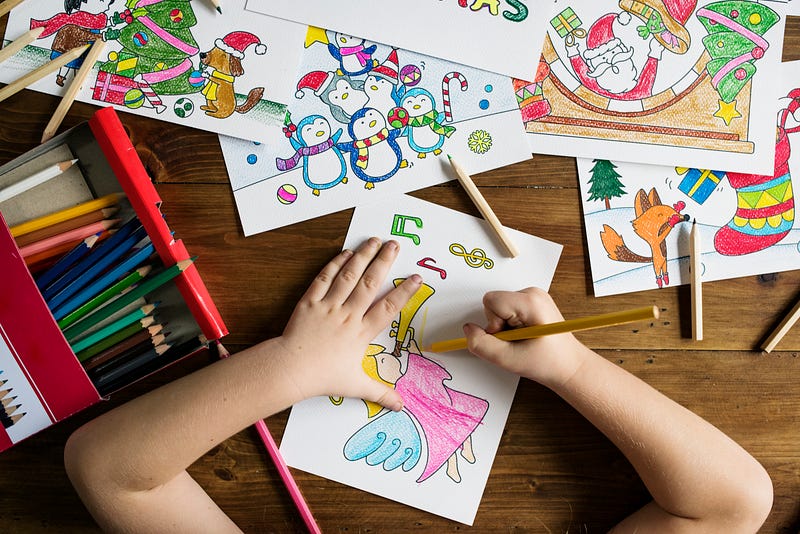
My definition: Illustrating an idea.
Drawing is an art form that takes many years of practice to become excellent at it. Luckily, this is a very broad skill that can easily be broken down. The smaller sub-skills don’t have to take too long to learn.
Sub-skills
- Sketching techniques (paper or software)
- Line art (paper or software)
- Colouring techniques (paper or software)
- Software usage (Photoshop, Illustrator)
- Pencil gripping
- Controlling line weight
- Faces, People, Creatures, Objects, Scenery
- Shading techniques
- Realistic, cartoon, caricature styles
- Technical drawing (Architecture, Electrical, Engineering, Structural, Scientific, etc.)
- and many many more!
My story with Drawing
Drawing was the first skill I decided to learn when I started the SkillUp method. It was the one skill that I’ve always thought that I couldn’t learn and wanted to prove myself wrong. And I did.
For the period of a month, I practiced for 30 minutes every day, following tutorials online, mostly on Youtube. I practiced sketching, line and colouring techniques exclusively in Photoshop.
My results were a lot better than I expected them to be.
How to learn it?
Since Drawing is a very broad skill, I suggest aiming to start learning the basics of any of the sub-skills above with about 5 hours of paced practice (~30 minutes per day). With good online tutorials and consistency, it’s surprising how fast you can become good at most of the sub-skills.
Resources
Free
- Youtube.com
- Search Engine search: how to do
or best way to learn
*I opted not to link to direct resources since things change so fast and most of the time it’s a matter of preference.
#9. Being More Productive
My definition: Making the most out of the 24 hours you have in a day.
This is an ambiguous skill since productivity is an “abstract” concept. The key metric to measure progress then is based on time saved and the quality and quantity of results accomplished.
Being more productive is not all about work. It’s about spending time doing what matters to you. That can be family/friend time, work time, entertainment, etc.
Sub-skills
- Clearly identifying your passion/purpose
- Clearly identifying your values
- Adopting a growth mindset
- Developing self-awareness
- Focusing
- Going into flow
- Getting the Limitless Effect
- Crafting SMART goals
- Truly understanding the Pareto Principle (80/20 rule)
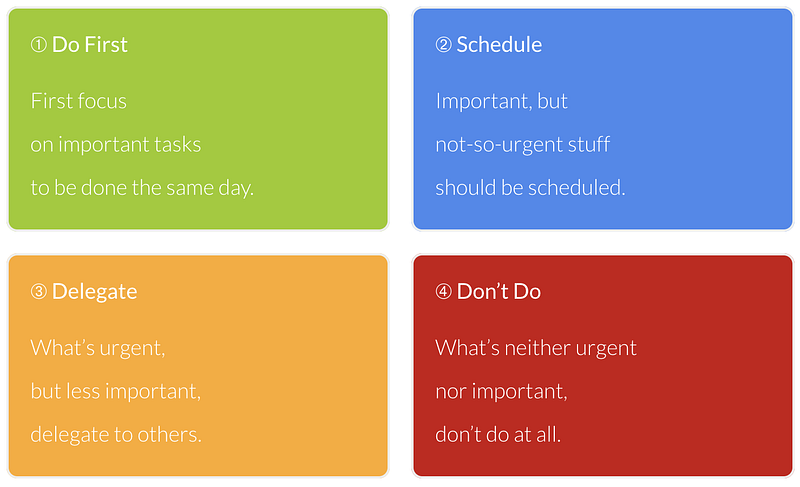
- Using the Eisenhower Matrix
- Career planning
- Time management
- Learning to learn
- Having KPIs
- Mastering max speed on trackpad or mouse
- Typing faster on computer or phone
- and many more!
My story with Productivity
Ever since I’ve been working professionally in software development 13 years ago, I realized I had developed habits that made it so I was more productive than most people on a computer. I wrote an article on that a few years ago.
Years later, I developed more self-awareness and then I started to get a lot more done in a lot less time. It is then that I decided to start writing on Medium.com. The first topic I wrote about was productivity tips.
How to learn it?
I suggest starting with sub-skills that help you increase your self-awareness first. Learn how to identify your passion/purpose/values, learn how to adopt a growth mindset, and learn how to use the Eisenhower Matrix. The reason for this lies in a quote by Peter Drucker:
“There is nothing so useless as doing efficiently that which should not be done at all.” — Peter Drucker
This is, in retrospect, probably the best advice one can get.
From there, you should really understand the Pareto Principle and apply it to almost anything you can think of. That and learning how to set SMART goals.
Now that you know all the basics to starts accelerating your productivity, you can start to be a little more specific.
If you use a computer a lot:
- Start by learning to use your mouse or trackpad at maximum speed
- Learn how to type faster without looking at the keyboard.
- Learn all the keyboard shorts of software you use frequently. And that of your operating system (Window, Mac, Linux).
When you start, you’ll be a little slower, but within less than one week, you’ll pick up the pace. Only by learning this, I’m usually 2–3x faster than 90% of people when using a computer. It pays to invest time in this.
Resources
Free
- Article: 34 Quick Tips for a More Productive 2019
- Article: Completely and Consistently Smash Your Goals with The Limitless Effect
- Article: Smart Goals
- Article: Eisenhower Matrix
- Course: Learning to Learn (free)
- Article: Pareto Principle
- Article: How To Move Around Your Mac At The Speed Of Light
Paid
- Tool: Limitless Calendar
- Book: How we Learn (affiliate link)
#8. Playing the guitar
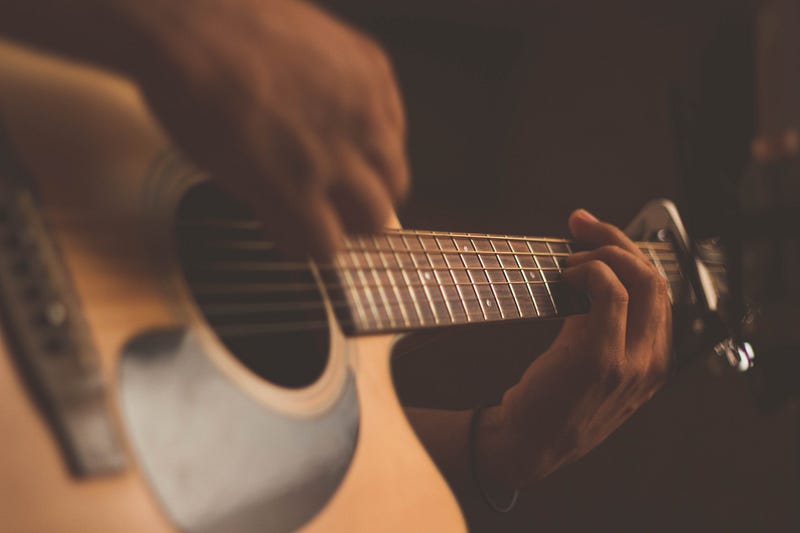
My definition: Learning to play the instrument.
Playing the guitar is the most popular of the instruments people want to learn in the SkillUp your Life program. The guitar is used for so many songs and is a blast to play at friend and family gatherings. With so many different types of guitars, it’s not hard to find a sound you like.
Plus, learning the guitar shows you many of the basics to learn most strings instruments.
Sub-skills
- Guitar terminology
- Knowing all types of guitars
- Guitar playing styles
- Reading music sheets
- Holding the guitar
- Positioning and moving fingers
- The essential strumming patterns
- The 4 most popular chords
- Playing a specific song
- Playing a specific style
- and many more!
My story with guitar
Oh man, that’s an embarrassing story…
I’ve been meaning to learn to play guitar for years. In fact, in my life, I’ve owned two guitars. I even have access to one in Colombia right now. I’ve never had the patience to learn it. I tried on my own many times when I was younger, but back then the resources were not as accessible. You either found a teacher or tried really hard from tabs on the internet (at 56k speed).
When I met my wife when I was 17 years old, I thought I’d be cool if I had a guitar. Little did she know that I couldn’t play it at the time haha. Nonetheless, I was “cool”. :)
How to learn it?
Because I don’t currently know how to play guitar, the following is based on observations of how I saw other people learn it, based on research, and based on how I would likely approach it. If you’re a guitar pro, please correct me in the comments below!
Basically, the way I would learn it would be by following the list of sub-skills I listed above, in order.
I’d spend at most 1 week trying to learn the theoretical stuff (the first four), using apps like Anki to help memorize everything. During that time, I’d probably dabble in learning how to hold a guitar and how to move my fingers on it.
The next week, I’d practice holding the guitar, moving fingers and learning the essential strumming patterns while dabbling in the 4 most popular chords.
The next week, I’d try to become really great at the things I learned the week before. I would start looking for songs that heavily use the 4 most popular chords. Preferably looking at videos or tabs as opposed to music sheets (that is another beast in itself!).
The following weeks would be about practicing a variety of songs.
Resources
Free
- Video: Reading music sheet for guitar
- Video: How to hold the guitar
- Video: Learn the 4 most popular chords
- Video: Fingers, Fret, and Strings
- Video: 5 Essential Strumming Patterns
- Article: Guitar terminology for beginners
- Article: 9 Types of Guitars Every Guitarist Should Know
- Article: How To Approach Playing Guitar In Different Genres
- Article: Choosing a Guitar Playing Style
- App: Anki
- Website: Tabs by Guitar Tabs
Paid
#7. Photography

My definition: Learning to use a camera to take good photos.
Photography is a very broad skill, much like drawing. More and more people are interested in photography due to the rise of smartphones and DLSR technologies. It’s now easier than ever to learn and is a great satisfying skill to both learn and apply.
Sub-skills
- Terminology
- Framing
- The rule of thirds
- Composition
- Reading the histogram
- Types of cameras
- Understanding the basics: Shutter Speed, Aperture and ISO
- Portrait photography (has many sub-skills)
- Landscape photography (has many sub-skills)
- Object photography (has many sub-skills)
- Action photography (has many sub-skills)
- Macro photography
- Long Exposure photography
- Photo editing in Camera Raw
- Photo editing in Photoshop
- Photo editing in Lightroom
- and many many more!
My story with Photography
I used to not care for photography at all. When I bought my iPhone 6 a few years back, it was the first time I was armed with a good enough camera. I started taking shots and playing around with them on various apps. I started enjoying it.
When I took a trip to Iceland, I decided I should probably step it up if I wanted to take beautiful photos. It turns out the little bit of research I did paid off and I started taking decent photos.
Then I travelled around the world for a year. I took over 15K+ photos on that trip. I got a lot better and people thought I was actually a photographer. So I decided to buy my first DSLR in India and continued the trip with it. I learned a whole lot.
I was later contracted to take professional photos of NGO operations for Sundara and the opening of a new WeWork location in Bangalore, India.
I’m learning portrait photography this month and will be practicing with these beautiful people: Carla Diaz, Diana Jabba, and Kevin Nguyen.
How to learn it?
The best 80/20 I found was to learn about the rule of thirds. You can learn that in less than 5 minutes and instantly, your photography is at least 2x better.
The rule of thirds is one of many framing techniques and it’s worth it to look into the other ones too. Many amateur photos are good but lack proper framing skills. Note that you can and should crop your photos during post-production to frame them better.
Another very important as aspect is to learn proper exposure. Learn what is perfect exposure, what’s underexposed and what’s overexposed. Learn to read the histogram. Learn to use that to your creative advantage.
Both of these things don’t require expensive gear. A DSLR helps for exposure, but you can expose a photo properly with a phone too.
For a month, practice a specific style you’re interested in. I started with landscape. In retrospect, I actually find it to be the hardest one to create photos that stand out.
When ready to purchase a camera, find one that comes with a lens that allows you to shoot the style you’re interested in. You’ll learn that, in most cases, the body doesn’t matter as much as the lens.
I’d suggest learning a new style only once a month. Focusing on one style at a time will give you enough practice to become good enough at it.
Resources
Free
- Article: 10 Tips for Taking the Best Photos at Any Event
- Article: 25 Common Photography Terms All Beginners Need to Know
- Article: Rule of Thirds
- Article: 10 Top Photography Composition Rules
- Video: How to read a camera histogram
- Article: A Simple Guide to the Different Types of Digital Cameras
- Video: If You’re Serious About Taking Better Portraits, Watch This
- Article: 14 portrait photography tips you’ll never want to forget
- Article: Lightroom Crash Course: Ultimate Beginner’s Guide To Lightroom
Paid
- Book: Scott Kelby’s Digital Photography Boxed Set, Parts 1, 2, 3, 4, and 5 (I learned most of what I know from Scott Kelby’s books).
- Book: Mastering Exposure in Digital Photography
#6. Meditation
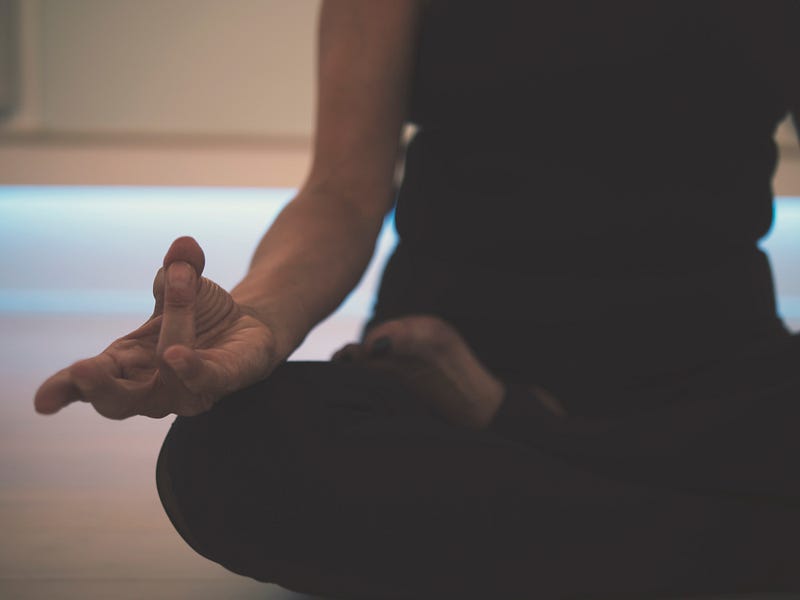
My definition: Learning to control the “quality” of your mind.
A lot of the world’s top performers have integrated meditation as part of their daily routine. There’s hardly a better way to get clarity of mind.
It can help you fall asleep faster, be less stressed, help you make better decisions, etc.
Sub-skills
- Understand the 7 basic types of meditation
- Breathing techniques
- Compassion and Love
- Body awareness
- Relaxation
- Lack of judgment
- Mantras (many sub-skills)
- and many more!
My story with Meditation
Meditation is one of those skills, like drawing, that I thought I would never be able to learn.
The problem back then was that I didn’t think of meditation as a skill, meaning I didn’t think I could learn techniques to meditate well.
I had the preconception that meditation was about not thinking about anything, therefore any time I had a thought, it frustrated me.
And I know I’m not the only one who thought that way. But it’s wrong.
Back in September, I tried meditation with a friend in Cambodia and failed miserably. It took me 4 months after that attempt to finally give it a go again. Once I had the right mindset and I consistently practiced, I actually became good at it.
How do I learn Meditation?
As a beginner, I strongly suggest guided meditation. I’ll list what has been most helpful for me in the resources section below.
What’s good about guided meditation is that it teaches you that it’s okay to have thoughts and guides you through a greater clarity of mind, which is what meditation really is about.
You learn to be aware of how your body and mind feel. You learn to relax, even when you feel like you’re too nervous to relax.
What’s important that a lot of people don’t realize is that it takes time to learn it. Don’t try once and leave. Meditate at least once a day for at least 10 minutes.
You’ll feel all types of emotions. In the beginning, I was bursting in laughter when instructed to count my breaths. Sometimes you’ll be frustrated. No matter the emotion, don’t let it go to your head. You have control over it. The more hours of practice you put it, the easier it gets.
It’s also important that you practice where you won’t be disturbed. And as a beginner, try where there isn’t too much ambient noise. Some people will tell you to sit to meditate but I started by laying in my bed, otherwise, I didn’t feel comfortable enough and concentrated on that.
So whichever pose they tell you to take, try it, but comfort is more important in my opinion, especially when learning.
Resources
Free
- Article: 7 Types of Meditation
- Article: UCLA’s Guided Meditations
- App: Insight Timer
Paid
- App: Headspace
#5. Spanish
My definition: Learning to use the Spanish language in multiples forms.
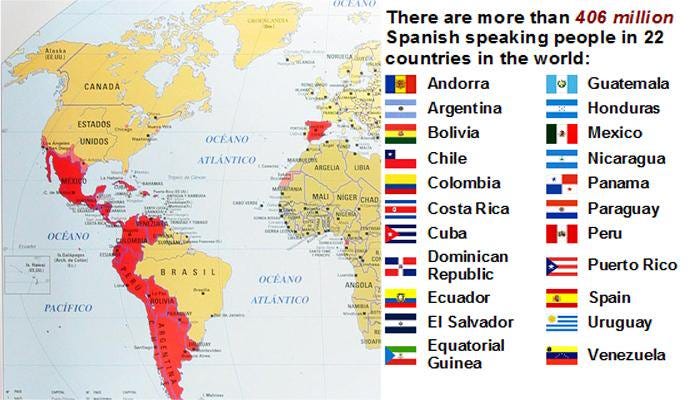
Did you know that Spanish is the world’s 4th most spoken language after Mandarin, English, and Hindustani? More impressive even, it’s the language with the second-most number of native speakers. In a way, it would make more sense for Mandarin and Spanish to be the universal languages.
Spanish is a most useful language to learn with 22 countries that have it has one of their official languages. Most in Central and South America.
Sub-skills
- Grammar
- Vocabulary (many sub-skills)
- Pronunciation
- Verb tenses (many sub-skills)
- Listening
- Reading
- Speaking
- Writing
My story with Spanish
I took a remote Spanish class back in college. This video summarizes what I learned really well:
Needless to say, it wasn’t super useful.
A few years later I put my phone in Spanish and started doing Duolingo. I learned a good amount. Now, less than two years ago, when I started my SkillUp approach, I practiced Spanish conversations for the workplace. That forced me to learn the past, present, and future tenses and I acquired many technical terms.
I then moved to Spain and spoke the language every day with my friends. I learned a great deal. In less than 3 months, I was able to have decent conversations.
I now live in Colombia and speak it every day to a slightly better level of fluency.
How do I learn Spanish?
A great way to learn a language is to combine all four main sub-skills in your practice: listening, reading, writing, and speaking. In speaking, the important part is to actually do it. A lot of people are afraid to make mistakes but that’s exactly when you learn.
- Switch your phone to Spanish. You’re already familiar with navigating your phone, so you just get a bunch of words for free.
- Label everything around you on Post-its with the word in Spanish. Put the “mesa” label on your kitchen table for example.
- Consistently doing Duolingo for 15 minutes a day is a good way to increase your vocabulary and get exposed to all four main skills. It also has the spaced repetition principles built-in, to remind you when you should be recalling things you’ve previously learned.
- To increase your speaking abilities, try doing conversation exchanges or doing classes. If you can’t do in-person, there are plenty of ways to do it online (see some resources below). What’s nice about these concepts is that you feel more comfortable making mistakes.
- While you’re doing these two things, spend some time daily to learn at least one new phrase, ideally one of the most used phrase (see resources below).
With the five things above, I was able to communicate in as low as two weeks of practice. It wasn’t the deepest conversations, but I kept going and my conversations got better almost on a daily basis.
Pimsleur has come highly recommended from other people but I have personally not tried it (again, see resources below).
Resources
Free
- App: Duolingo
- App: Memrise
- Article: Top 100 short phrases
- Video: 100 phrases to know (more complete)
- Video: 100 phrases to know (more fun)
- Website: freespanishtutorials.net
- Website: Language Exchange (I had great results in the past)
Paid
- Course: Pimsleur for Castilian
- Course: Pimsleur for Latin American
- Spanish schools
- Spanish Tutors
#4. Programming
My definition: Learning to code to create software and hardware.
Programming is a most popular skill with reason. Many of us want to create things “from scratch” and programming can be a great way to do that. Programming is used for both software and hardware.
For those not familiar with programming, it’s the art of giving instructions to a “machine” to make it do things. Without programming, we’d have no computer.
Sub-skills (each has many sub-skills)
- Web development
- Backend development
- Game development
- App development
- Robotics
- Artificial Intelligence
- Augmented Reality
- Virtual Reality
- Data Mining
- Scripting
- Languages
- and many more!
Sub-skills’ common sub-skills
- Variables
- Loops
- Functions
- OOP (Object-Oriented Programming)
- UML (Unified Modeling Language)
- File Handling
- Databases (many sub-skills)
- and many more!
My story with Programming
For those of you who don’t know me, I’m a software engineer by trade. I currently build video games for a living.
I’ve been interested in programming since I was a kid because I started playing games when I could barely walk and wanted to make them. It’s common nowadays but back then it wasn’t.
When I got my first computer when I was 13 years old, I jumped into RPG Maker 1995 and started making video games. There was no programming, but I learned the concepts of logic and variables.
A few years later I started using a program called BYOND (Build Your Own Dream) and created a massively multiplayer online (MMO) game called Final Fantasy Arena. Everything was in code, which I didn’t really know at the time. It got popular because people thought it was made by the makers of Final Fantasy. I got booted from the platform shortly after… bummer.
The rest is history.
How do I learn Programming?
Programming is daunting at first. A lot of people give up really quickly.
To learn programming, you have to do it with a purpose. What do you want to build? Once you have answered that, then you’ll see the point of it all. You will struggle but keep your motivation. Once you get something working, you’ll be so proud and that will boost your motivation to keep going.
Read my story from above? If it wasn’t for having a deep desire to build games, I would probably have given up. Learning the sub-skills’ sub-skills is extremely boring (and hard). Learn them as you build your own dream.
My suggestion is to just do it, whatever it is you want to do. Search for tutorials online and put it in action right away. For game development, Unity’s tutorials really do quick start you the right way (see resources below).
Truthfully, there has never been a better time to learn programming. You get access to so many great resources all for free. It’s not a matter of which tools or resources you use, it’s about making things you care about and learn everything along the way.
Resources
Free
- Website: Code Academy
- Website: Khan Academy
- Website: Free Code Camp
- Website: Unity Learn
- Article: 71 of the Best Places to Learn To Code For Free
- Website: StackOverflow (a programmer’s best friend)
Paid
- Website/Course: Lambda School
#3. Public Speaking
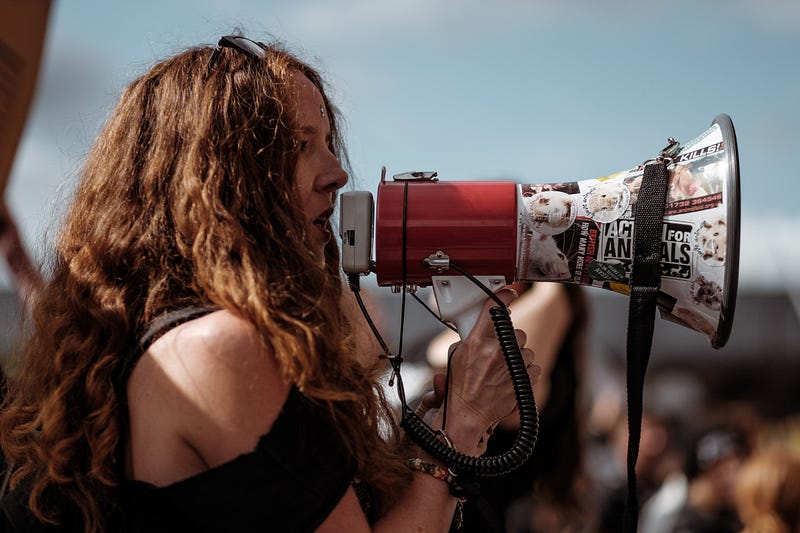
My definition: Learning to speak with ease in front of a crowd.
There is so much to public speaking that it’s no surprise it’s a skill that makes almost everyone nervous just to think about. It is, in some ways, the epitome of mastery of a language.
It also tackles a bunch of fear most of us have like fear of failure or crowds.
Sub-skills
- Pitch
- Tone
- Volume
- Vocabulary
- Clarity
- Crafting introductions
- Crafting conclusions
- Storytelling
- Pace
- Presentation (how you present yourself)
- Body movement
- Crowd interactions
- Creating visual support
- Controlling nervousness
- and more!
My story with Public Speaking
As a shy introvert, I’ve never really wanted to do any public speaking. In school, to get me out of the shyness, I’d act out some confidence in front of the class. It worked pretty well.
It’s actually I technique I still use. Whenever I do a presentation in front of an audience, I picture myself in the shoes of Tony Robbins.
Isn’t there anyone more comfortable in front of a large audience than Tony Robbins?
Before writing in January, I picked up Storytelling and Public Speaking as two of the skills I would practice for the month. Little did I know that both these skills would become valuable in my writing after.
How do I learn Public Speaking?
Seek opportunities to speak in front of groups.
Start with people you’re comfortable with, like your friends and family. Talk about subjects you’re really passionate about. When you talk about things you love, around people you love, the nervousness doesn’t kick in.
Recognize that the first time you tell a story, it won’t be perfect. Take notes of people’s non-verbal reactions. Notice people’s interest level with each sentence you say.
Public speaking is all about refining your stories.
When ready, attend Toastmasters events. Do talks at your workplace. Do a TEDx talk. Sky’s the limit!
Resources
Free
- Article: An Introvert’s Top Tips on How to Be a Great Storyteller
- Website: Toastmasters
Paid
#2. Learning How to Learn
My definition: Learning principles on how learning happens in our brains.
A lot of people think they know how to learn and most are wrong. We’ve never been taught how to learn properly and as a result, some of us have always struggled any complex skills.
Before I started the SkillUp method, I was disorganized and unmotivated to learn new things. It always felt like I was not making the progress I was hoping for. As I pushed through, I learned that there are ways for us all to learn better and faster.
Sub-skills
- Consistency
- Knowing what to learn next
- Knowing when you have learned enough
- Increasing curiosity
- Timing exercising to increase retention
- How to use habits to your advantage
- Memory techniques (many sub-skills)
- Defeating procrastination
- Visualization techniques (many sub-skills)
- Spaced repetition
- Testing principles
- Understanding how it manifests in the brain
- and more!
My story with Learning How to Learn
When I started my journey to learning, I was slightly disorganized and didn’t fully understand what I was getting into. With practice, I understood the importance of knowing how our brain truly works. Today, learning anything new isn’t as hard as it used to be.
It may seem to you that I’m spending 100% of my time learning these skills, but the truth is that I’m only just practicing 30 minutes each every day. In 15 hours of deliberate practice, I’m usually able to learn any skill and be confident enough to say I’ve acquired it.
How do I learn How to Learn?
It would take a whole book to teach you how to learn to learn. To keep this article at a respectable length, I’ll refer you to this other story I wrote which details the keys aspects of learning to learn:
The 3 Most Important Skills to Learn Now to Thrive in 2019
The first 8 hours:
Watch 30 minutes of the Learning to Learn class on 2x speed for 16 days.
Resources
Free
- Article: The 30-second habit
- Article: The 5-hour rule
- Course: Learning to Learn
Paid
- Book: How We Learn
#1. Writing

My definition: Learning to put ideas in text.
Writing has been one of the most important skills to learn for centuries. It is arguably the most important way to communicate ideas from one person to another.
Learning to communicate effectively through writing is not as easy as it seems. With the lack of context in the “physical” world, sometimes it’s hard to grasp the intent of the writer. Are they sad, happy, mad, playful? Writing clearly and concisely are skills that take years of practice to get good at.
Sub-skills
- Grammar
- Vocabulary
- Brevity
- Organization (how to structure ideas in a cohesive way)
- Formatting
- Crafting headlines
- Using images that best convey ideas
- Storytelling
- Reading (yes)
- Note-taking
- Fiction (many sub-skills)
- Non-fiction (many sub-skills)
- Blog posts
- Novels
- Emails
- and many more!
My story with Writing
I never aimed to write. If you asked me a little over a year ago what I thought about writing, I’d tell you it’s not for me. I’m a programmer. I code and I love it.
But then in January of 2018, I decided that I should improve my writing skills, simply because it’s one of our most powerful method of communication and it’s valuable both in life and in business.
After 5 days of writing, I got published by The Startup. 23 days later, I became a top writer in 7 categories. I received incredible comments from my reader and really started to enjoy it.
I always meant to stop after 30 days of practice but with all the momentum I had going, I had to keep going. So here I am writing this piece 12 months after I wrote my first piece on Medium.com.
How do I learn Writing?
Like any skill, you learn by doing. But here’s a trick most people don’t do: write publicly.
You learn better when people can actually see your work. It forces you to dig deeper and do your very best. It gives you accountability. You get feedback from others and improved based on it.
Create a blog and publish regularly and consistently. Try publishing once a day, even when you’re not satisfied with your results. People don’t have to read it.
The first 8 hours:
Write 300 words a day in 30–45 minutes in 12–16 days and publish it somewhere.
Resources
Free
Paid
A lot of what I know today about writing on Medium.com, I learned from these awesome writers: Dave Schools and Anthony Moore.
Conclusion
I hope that this helps you learn skills that are proven to be popular. You can make a career out of most of these skills, but also, they are useful in other areas and they can be a lot of fun with the right mindset.
Refer to the universal tips from Appendix A and B below whenever you learn any skills. For each skill on the list, pick and choose which sub-skills are most relevant to you and follow the resources in this article or find your own.
What’s important to note is that skill learning doesn’t have to be tedious. It can be really fun and you’ll be amazed how much you can actually learn in only 15–20 hours of deliberate practice!
Here’s me dancing Salsa after 18 hours of practice:
Skill learning has completely changed my life 16 months ago. I’m no longer shy. I’m more social and interesting. I make deeper connections. I make more money. I’m healthier. I’m happier.
And that’s what I want from you too. So start your skill learning journey now. Be the person you really want to be. Be the person you know you can be. It all starts by learning one simple skill. Welcome to the club!
You can do this!
Thanks for reading, sharing, and following! :)
- All links to Amazon are affiliate links

Appendix A: 14 universal tips that apply to most of the skills below
- When watching videos, remember that you can skip ahead or go back. Skip intros and conclusions as needed. Skip when out of topic.
- If the expert you’re learning from is not a good “instructor”, try another one. No hard feelings. It’s your time/money.
- When watching videos, remember that you can put it at 2x speed and add subtitles.
- Never forget the Pareto Principle (80/20 rule).
- Always break skills down into smaller sub-skills.
- Always track your progress and save resources you used for later reference.
- Take notes on what you learned and what you did.
- Always be consistent. Practice a small amount of time every day.
- Diversify your practice. Don’t just re-do the same thing over and over again.
- Use spaced repetition techniques, meaning, don’t repeat randomly.
- As much as you can, practice with someone else. It adds accountability and the learnings can be shared.
- Share your progress with your entourage or online. That also adds accountability, plus the “need” to perform a little better than if private.
- Mentors work best. Find people will to teach you what they learned on a one-to-one basis.
- As much as possible, learn what you are interested in. This will help you stay motivated.
Appendix B: Resources that will help you learn any of the skills below
- Course: Learning to Learn (free)
- Book: How we Learn (affiliate link)
- Community: SkillUp your Life
- Mentorship: Magnifi.io
- Website: Skillshare.com
- Website: Masterclass.com
- Website: LinkedInLearning
Check out my deeply actionable Course on 10 Skills to Improve Your Learning in 10 days.
