
The “To Make You Neigh” Ersatz Coffee Romanians Drank in Communist Times
It was officially called “Coffee with substitutes,” but people called it Nechezol, referring both to its ingredients and to Elena Ceaușescu.
In the eighties, Nicolae Ceaușescu, the Romanian dictator, was dead set on paying Romania’s external debts, whatever the cost to the country’s population. Prices soared and people found they could buy much less with their salaries — not that there was much to buy. I was a child at the time but I remember grocery stores with nothing to sell but cans of sardines (possibly other fish as well) and Vietnamese shrimp.
Electricity was also expensive, and as a result I spent many days in primary and middle school writing with frozen fingers in class, my winter coat on. Radiators were often cold or lukewarm at home as well and hot water was on intermittently.
In the eighties, the state also started rationing basic foods like bread, flour, oil, and eggs. In the morning, at 4 a.m., people stood in line to get milk for their children. Meat was very scarce — unless you had relatives in the countryside to provide you with some.
I vividly remember that in the eighties our fridge was mostly empty. However, we did have stuff in the freezer from my mother’s sister, who raised chickens and rabbits and also slaughtered a pig every December. To this day many people in Romania are big fans of meat, which I believe has something to do with the fact that it was a forbidden pleasure for so long. Veal, in particular, was a rare treat, because you were not supposed to raise calves — you were supposed to give them to the local cooperative. If you were caught with veal in the trunk of your car, you could go to prison. And according to what I’m reading online, buying a pig was illegal too.
Around this time, in 1982, Ceaușescu also started the “Program for scientific alimentation of the population.” Instead of salami with meat, you found salami made with soy and various meat subproducts (pork rind/scratchings, gristle, etc.). As for the “scientific” in there, the rations were much less than science dictated.
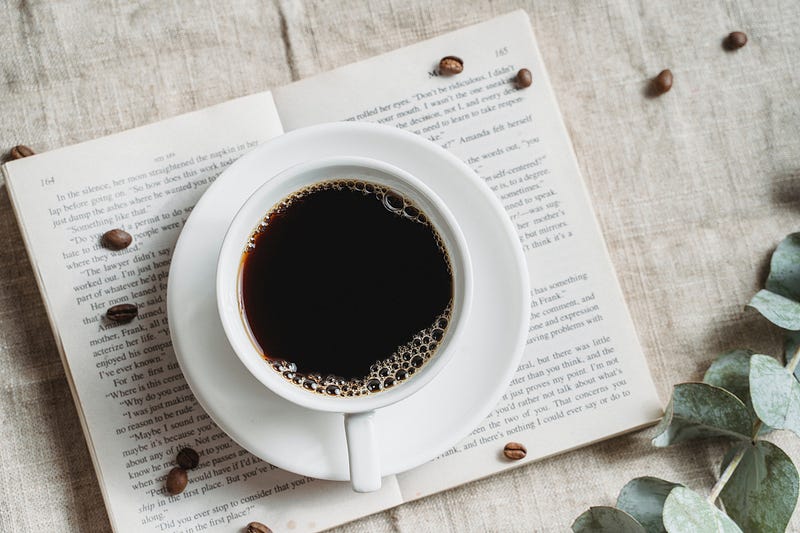
When it came to coffee, well, you had to make do with the famous Nechezol, a mix of 20% real coffee and 80% substitutes, such as chickpeas and oats.
Coffee was, of course, an imported product, and Ceaușescu didn’t want to import much in those days. So a head of department at a coffee factory, where workers roasted coffee beans, came up with the “Coffee with substitutes” product. I don’t think it had a name other than that descriptive label. Romanians, however, had a sharp sense of humor in those days. The word they chose to refer to it alluded both to the fact that it was made from horse fodder and to the world of chemical products, where Nicolae Ceaușescu’s wife, Elena Ceaușescu, was supposedly a master. She was a PhD in chemistry, an academic, and a “worldly renowned savant,” even though she had only attended primary school, just like the President of the Socialist Republic of Romania. (Real chemists wrote her books for her.)
There wasn’t much cocoa around either. It was mostly used only for holiday foods such as the traditional Romanian sponge cake. Our cocoa and milk drink as kids was, in fact, a mix of instant chicory root with various kinds of cereal.
We skip a few decades and arrive in 2023 Romania, where people nostalgic after the so-called “simple” — but hardly easy — times of communism remark that Ceaușescu was ahead of the times with his soy salami, because, look, more and more people now remark that soy is healthy and meat isn’t.
Well, but the penury, the lack of freedom, the lack of choices? These people don’t concern themselves much with these issues. And, in fact, many of them seem to forget why we wanted freedom so badly in ‘89.
It’s not only about wanting the pleasure and boost of coffee or the ability to eat meat if one so chooses, it’s about being able to, well, choose for yourself what you want to do with your life. If you restrict yourself to a simple life and a simple diet, that has to be your choice, a result of awareness and freedom. And if you want to enjoy a steak now and then — without waiting for hours in lines, or risking prison— then you should be able to do that too.
I won’t even go into how books and ideas were censored in communist times. How people could be nostalgic for a “simple” time like that is beyond me, much as it does also appear to me that the times we live in, with big, sudden changes and accelerated technological progress, are difficult too.
But I believe a simple life is never truly fully lived unless you arrive at it either from a place of old tradition or from a place of complexity. It‘s rarely a result of a suddenly imposed lack of choices that then takes up a good chunk of your life, although there are individuals who transcend their times.
I also believe that one (life)style does not fit all, and I admit I’m struggling to reconcile that with what I see in very traditional communities here in Romania, communities that do have, otherwise, many good things going for them.
So, for me, the communist experiment in Romania is food for thought, as is the big divide between urban and rural lifestyles.
Reading through Nobel Prize winner Annie Ernaux’s book The Years last night, a memoir that weaves a masterful tapestry of the author’s life in France from the early forties to 2006, I also considered, once again, some questions posed by rampant capitalism, which creates, for one, far too much waste.
So what would the perfect society look like? Well, that’s a question for the ages, isn’t it?


