
The Time Is Now! Plant A Wildflower Garden For Biodiversity
Low-maintenance and beautiful, the insects will love you for it.
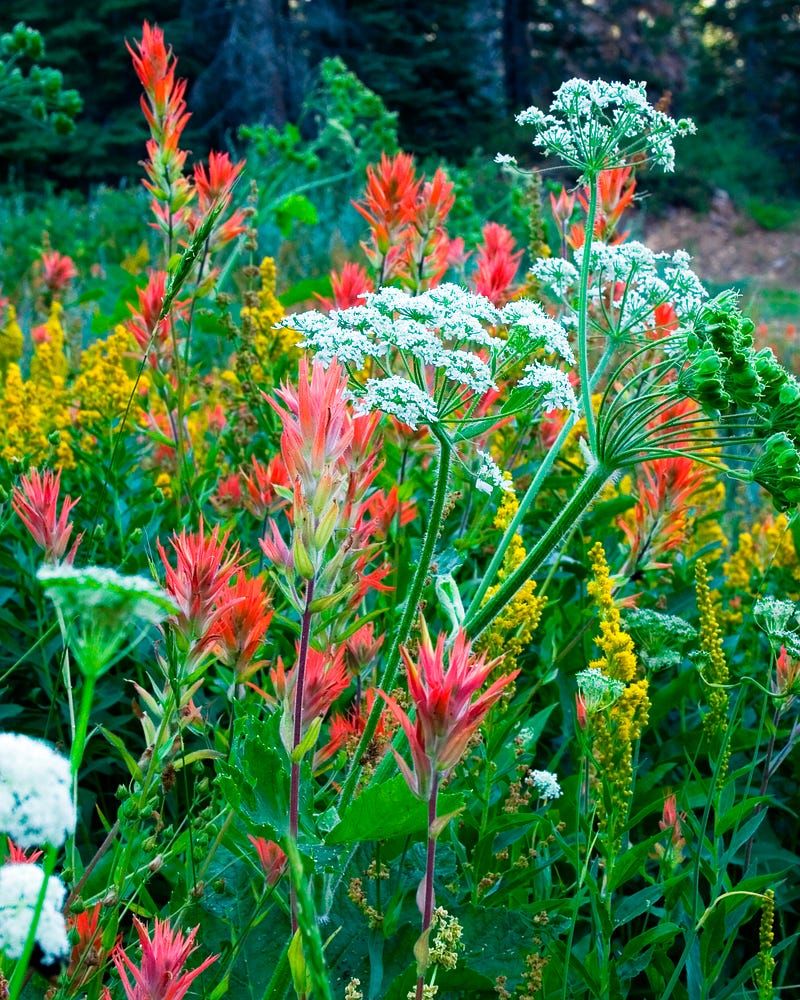
“Man has created some lovely dwellings, some soul-stirring literature. He has done much to alleviate physical pain. But he has not… created a substitute for a sunset, a grove of pines, the music of the winds, the dank smell of the deep forest, or the shy beauty of a wildflower.”
So I’m just a little bit excited. I have just located a seed company close to home, one that sells quality seeds.
- All are all heirloom and open-pollinated
- No hybrids or GMOs
- None of their seeds is chemically treated
I’m in heaven.
But heaven or not, I’m also suffering from huge overwhelm, simply because their range is quite large.
I want them all.
It’s spring time here in Ozland. Time to get creative in a very relaxed way.
Time to plant a wildflower garden.
My plan is to do very little digging to allow the seeds to do what they naturally do. We have rich soil, so I will be using some of that, with mulch, to plant tenderly and effectively.
I recently visited a friend, her garden already alive with color and I asked her what she did to be ahead of the pack.
‘It was hard,” she laughed. “I’m not sure you’re up for it.”
“Try me,” I replied.
“I just pretended to be a wildflower and scattered my seeds to the wind.”
My kind of garden, and though this garden has rich, dark soil, so that plants will be easy to grow, I ‘d like to ensure that mine will turn out just like the image above.
Hint: It probably won’t. But if I can find apricots I will be happy. If not, I will also be happy with the magical unfolding.
Are you at all interested in planting a wildflower garden?
Allow me to convince you of its merits, to both you and the environment.
One thing to know
All wildflowers are natives, plants that haven’t been doctored in any way by humans.
Any other flowers in your garden have been bred for your absolute pleasure, but their genealogy will always relate to the wildflower.
Those belonging in the any other flowers category, will always need more care than its distant relative.
Why plant wildflowers?
The obvious reason is for their beauty, and resilience.
Wildflowers tend to be more resilient than exotic garden plants.
Once established they are basically set-and-forget plants requiring far less water than their cultivars.
They attract bees and butterflies into your garden, as well as other insects. They feed on the nectar, at the same time collecting pollen on their bodies, which in turn feeds your vegetables, and fruit, which in turn produce seeds.
“You couldn’t have fruits or veggies without pollination, so planting wildflowers in the garden, even amongst your edibles, is a great way to ensure a good harvest.”
It’s the the cycle of life.
The natural cycle of life is what we humans once relied on.
It’s how it should still be, for the health of all living creatures.
Wildflowers were once wild
When I was a little girl, I recall the joy in finding the forest and its surrounds alive with wildflowers. Of course I gave no thought to their benefits.
To me they were simply things of beauty.
I’d gather huge armfuls of them and take them home to my mom, or my teacher. As the first herald of spring, they were everything.
I suspect they are no longer there in the significant swathes that I remember. We need to be concerned about that.
You see these beautiful plants, even without one flower in bloom, are ever-active and present, working away, deep beneath the soil, just for us
“Their root systems, along with those of other grassland plants, extend deep into the soil, storing water and nutrients while holding on to carbon that would otherwise be released into the air.”
Storing water and nutrients…something that has been overlooked in recent times.
Also, one field of wildflowers can be home to so many different species.
Pros of planting wildflowers
- They are low-maintenance, but you should ensure that your plant choices are native to the area. When you choose from a trusted seed source, it’s easy to ensure that is the case.
- They are attractive to beneficial insects. Wildflowers help to encourage bees and other important pollinators to the area. You couldn’t have fruits or veggies without pollination, so planting wildflowers in the garden, even amongst your edibles, is a great way to ensure a good harvest. As a bonus, these native plants will attract other beneficial insects that can help fend off bad bugs that might otherwise feed on your crops.
- They help provide both food and shelter for many types of bird species and other wildlife. But that’s not all. We, humans, use many of them too. From seeds or tubers that we eat, to oil, dyes or fibers for products we need, wildflowers are important.
- Wildflowers can be your saving grace, If you have a garden area, however small, that you despair of, well, you know what to do. Plant some wildflowers.
Something to think about
It’s easy to go down to the plant shop and buy some hybrid natives.
The problem with that is:
“Although hybridisation occurs in nature, “problems arise when it’s human-caused.”
“Some of these hybrids are sterile, but that doesn’t mean they don’t cause other problems”, says conservation geneticist at the University of Maine, Judith Rhymer. “It’s still a conservation issue because parents are contributing less and less to the next generation.”
“And that’s the crux of the problem. Humans are bringing together plants and animals that have never seen each other before, through habitat destruction and the international nursery and pet trades.”
It’s why you must be selective about what plants you choose and the quality of your seedlings. Plants native to your area, heirloom or open-pollinated, and chemical-free, will allow for a magnificent show of super-healthy, robust flowers.
Now I hope I have inspired you to get out into your garden and show the love. There’s nothing like a garden glowing with color. Ask any butterfly or bee.
If you need further information about bees and having them live and buzz in your garden, take a lesson from ‘Be The Bee’.
Stop fearing bees, Carol Lennox says.
Stop doing that!
“Bees are usually docile, and attack only when they, or especially the hive, are threatened. When a human a million times their size slaps at them, that’s a threat. If a giant started swinging his hands at you, and you had a stinger, you’d sting, too.”
Such an entertaining piece. I now have such a different take on their buzzing around in my garden.
I might even put up a welcome sign.