
The Three Pillars of Racism
Racist attacks are a manifestation of the problem, not the origin
The reason we could never be who we wanted and dreamed of being is that you kept your knee on our neck.
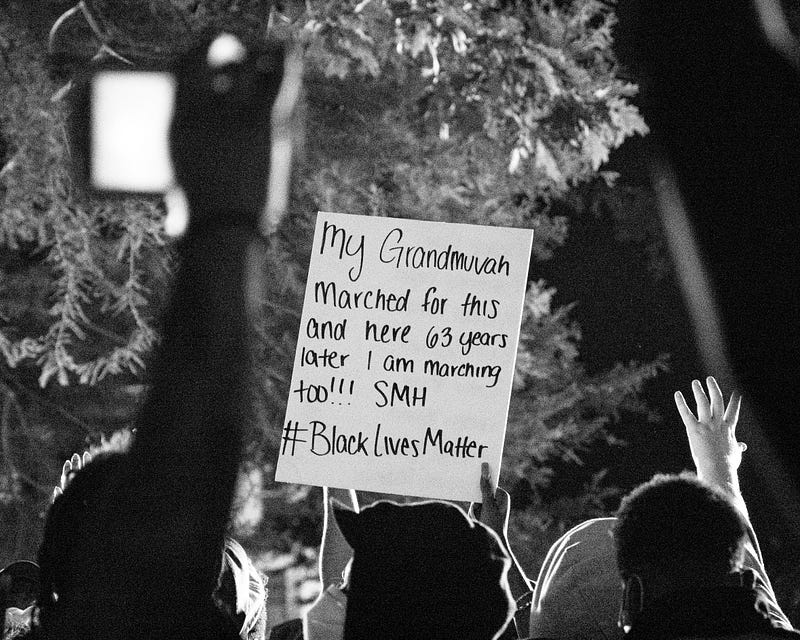
Civil rights leader Rev Al Sharpton’s moving eulogy at George Floyd’s memorial service highlighted the structures of racial inequality prevalent all across the United States. The nationwide protests in the wake of Floyd’s inhumane death are, to say the least, an appropriate response to the injustice inscribed in the country’s history of racial violence. Let’s be true to ourselves — America has never known a continual state of peace.
Before you bash me for writing a “half-baked, wishy-washy liberal” statement, please consider the following:
Peace does not simply refer to the absence of violence.
Johan Galtung, in the canonised paper ‘Violence, Peace, and Peace Research’, eloquently elaborated the different types of violence that exist; more than half a century ago in 1969. His works— more relevant than ever now — state that a country cannot achieve complete peace until all types of violence are eliminated. It is, therefore, crucial to view these forms of violence from a race-based perspective in order to understand how racism wreaks havoc.
1. Direct Racial Violence
George Floyd, Ahmaud Arbery, Atatiana Jefferson, Trayvon Martin…the list is endless. All of these are victims of direct violence; of racism manifesting itself in a physical way, where a perpetrator is present and evidently causes harm to a victim. But it isn’t always as visible, and it can occur in non-physical ways such as the use of racial slurs, humiliation, and other forms of abuse. Both these physical/psychological attacks are sub-categories of direct violence. Even the threat to use force in this regard is considered a part of the direct form (cc: Amy Cooper).
2. Structural (Indirect) Racial Violence
Rev Sharpton outlined that “what happened to Floyd happens everyday in every area of American life”. These unfair social institutions form the basis of structural racial violence. This form of violence occurs as a result of the majority’s privilege over others; when this unequal advantage is built into the economic, social, and political systems that govern the country. The direct impact of structural violence is that it prevents members of minority groups from achieving their potential in society. A clear example of this is the apartheid regime.
It is important to note that structural racial injustice is latent and physical/psychological racial violence is its manifestation. The two forms are interdependent: the presence of one leads to the occurrence of the other.
3. Cultural Violence
Quite possibly the most important of the three forms, cultural violence serves to legitimize racist attacks, as well as limit the victims’ ability to respond. It is expressed through twisted ideologies, language, and prejudiced dogmas. The end result of this form of violence is a feeling of superiority/inferiority based on race permeating all levels of society. You really don’t have to look far to find examples of materials that validate racist doctrines —the local right-wing group would have plenty.
In essence, the tacit racist beliefs embedded in America’s governing structures lead to direct attacks on minority groups; which are given legitimacy by the draconian ideologies pervading the nation. It is only when all these forms of violence cease to exist that a country can hope to have lasting peace and social justice. If any one form is present, the rest would eventually follow.
Everyone has a role to play in the peace process. The battle has to be fought on the streets, in government institutions, at corporate offices, and within your own circles.
You need to speak up when your friends use racial slurs “as a joke”. You need to take action when you notice bigoted practices at your workplace. More than anything, you need to educate those who look up to you — whether it’s your children, a junior employee, or a younger sibling.
It is time for us to stand up in George’s name and say, “Get your knee off our necks!”