
The Things I Failed to Ask Before Prostate Surgery
A supposedly safe and effective minor surgical procedure did not fix my problem for very long
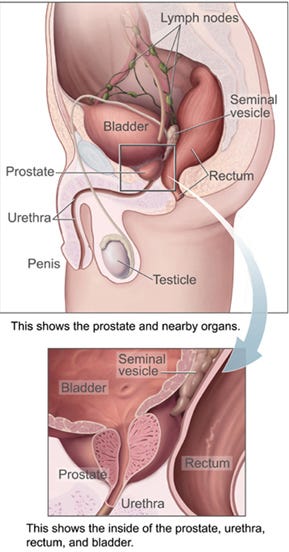
Like most men over 65, I have been dealing with symptoms of an enlarged prostate gland for a few years now. Two years ago, I tried medications, but they all had undesirable side effects. My urologist convinced me to undergo a UroLift procedure. My prostate gland itself was not overly big. But lobes of it were enlarging and preventing good urine flow down the urethra and out of my penis. These symptoms were difficulty starting a urinary stream, a long time to emptying my bladder, and dribbling of urine after peeing, to name just a few. In the urology world, this constellation of symptoms is called LUTS, short for lower urinary tract symptoms. Most men with these symptoms have a grossly enlarged prostate, and medications and other procedures may help them.
Urolift is unique because it doesn’t cause sexual dysfunction after other procedures, such as a TURP (Trans Urethral Resection of the Prostate) or HoLEP, a surgical laser operation. The field of Urology possesses quite a few acronyms for their procedures to treat enlarged prostates. The alphabet soup includes PVP, TUNA, and FLA-BPH, to name just a few. BPH (or benign prostatic hypertrophy) and LUTS affect about one-third of men over age 50 and 90% over 85. Thus, the opportunity to make money for medical device companies is enormous. Urolift is now advertised on TV, in magazines, and popped up first on my Google search of BPH procedures.
Although the procedure can be done in a doctor’s office under local anesthesia, my doctor advised out-patient or day surgery and general anesthesia. He had been involved in the original research for the procedure and said he had done between 50–100. As a physician, I failed to ask one key question. That was, if successful, how long would the benefits last? According to the company, there is a failure rate of 14% by two years. There is scant data for three years out or longer. Unfortunately, after twelve to eighteen months, I was one of the unlucky 14%. I am back on awful medications that have terrible side effects. One is a stuffy nose, which doesn’t help my sleep apnea treatment. The latter involves a CPAP machine. Secondly, they cause retrograde ejaculation, defined as the ejaculate after orgasm going backward into the bladder rather than forward out of the penis. As Danny Devito joked about it during Netflix’s “The Kominsky Method,” it “makes for a clean and tidy blow job.”
I wish I knew now what I did not know or ask, then. The procedure was painful afterward with constant bladder spasms, and anal pressure, giving a sensation of the need to defecate. Relief of my LUTS did not come for one to two months. Thus, I had a net benefit for only slightly over one year. Now I am stuck with five stents in my urethra, awful medications, and the prospect of more procedures. At the moment, I am declining the latter.
I outline my tribulations here to illustrate that even doctors can make mistakes when assessing surgical procedures’ risks and benefits. Before consenting to an operation, especially if it is new or recent, here are my recommendations.
- Do your research. The Internet now makes that easy.
- Other than serious complications, ask how long the benefits last.
- What are the alternatives?
- Get a second opinion, preferably though a doctor in the field who does NOT do the operation, and therefore can be more objective.
I have started a Facebook group, called Urolift Patient Group, to learn more from others. For now, I will soldier on and hope for newer medications with fewer side effects and surgical technology to advance.
If you enjoyed reading this, or found it interesting, please follow me on Medium https://medium.com/@davidmokotoff/, Facebook, or contact me at [email protected]. More about me: https://tinyurl.com/y7bjoqkd

You just read another post from In Fitness And In Health: a health and fitness community dedicated to sharing knowledge, lessons, and suggestions to living happier, healthier lives.
If you’d like to join our newsletter and receive more stories like this one, tap here.