
Slow Health
The Therapeutic Power of Walking in Storms
Immersive nature experiences put life back in perspective.
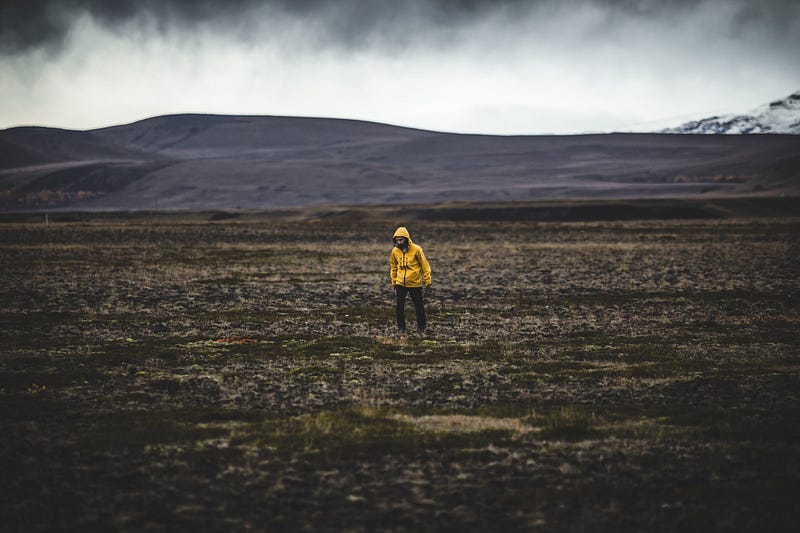
The poet and outdoorsman Jim Harrison wrote that the danger of civilization is you will piss your life away on nonsense.
Nonsense levels are at all-time highs. It’s no wonder many of us are escaping civilization for the steady sanity of nature. The National Parks Service has recorded record numbers of visitors since 2015, and the story is the same at state and municipal parks across the country.
I’m fortunate to live a few hundred feet from a forest, and most evenings I go there to walk. Sometimes I have company; in summertime the paths are popular from dawn until dusk. But when thunderstorms roll through, or the colder seasons drag the sun down early, I’m always on my own.
That’s a shame. Sunny summer walks are pleasant and restorative. I enjoy them. But the foul-weather walks — when the great outdoors feels less like scenery and more like a presence — work a different sort of alchemy. The strength and scale of the natural world expand, and my own concerns shrink by comparison. Back at home, out of the storm, I can see a hot shower, a warm bed, and the peace of my sleeping children for what they are: gifts.
The benefits of “forest bathing” — or mindful walks in nature — are well-studied. As far as I can tell, storm bathing isn’t a thing. But research on immersive nature experiences shows I may be onto something.
If you take most animals out of their natural habitat, they don’t do very well. Human beings are different. Ours is a remarkably malleable species; our ability to survive and thrive in shifting environments is one of our hallmark traits.
Still, there’s a limit to how much we can tolerate. Evolution has calibrated our minds and bodies toward certain modes of living, and soaring rates of depression, anxiety, burnout, autoimmune disease, and metabolic dysfunction suggest we’ve overstepped the boundaries of our adaptability.
“We have an innate connection to nature — nature is basically a part of us — and when we engage with nature, this is good for us.”
When something goes wrong, there’s a tendency to overcorrect. Some people look at the problems of modern life and decide to go full Paleo. I think that’s probably overdoing it. Simply spending more time in or around nature has been shown to relieve the symptoms of most “diseases of modernity” without necessitating some kind of primal existence.
In an effort to explain how time in nature fixes us, researchers have developed something called the biophilia hypothesis. “The hypothesis says we have an innate connection to nature — nature is basically a part of us — and when we engage with nature, this is good for us,” says Marcia Jimenez, PhD, an assistant professor and environmental epidemiologist at the Boston University School of Public Health.
Jimenez coauthored a 2021 review of the research on therapeutic nature exposures. In that paper, she and her colleagues describe the two prevailing theories on nature’s salubrious effects.
The first is termed Attention Restoration Theory. The idea here is that the mental fatigue associated with modern life depletes our attention, which produces distraction and willpower shortfalls. Over time, depleted attention may also contribute to burnout, attention-deficit disorders, and other cognitive or psychological problems. “According to this theory, spending time in natural environments enables people to overcome this mental fatigue and to restore the capacity to direct attention,” Jimenez and her colleagues write.
Immersive nature experiences — those excursions that eschew everyday settings and offer a feeling of “being away” — provide outsize health benefits.
The second theory is called the Stress Reduction Theory. “Because of people’s innate connection to the natural world,” they write, “spending time in nature might influence feelings or emotions by activating the parasympathetic nervous system to reduce stress and autonomic arousal.”
Chronic stress stokes inflammation and discombobulates our nervous system. It’s a risk factors for pretty much every non-communical disease of the mind and body. It’s poison, and nature appears to be one of its antidotes.
However, not all time spent in nature is equally therapeutic.
Walking in a city park is great; if you’re stuck in a downtown office building, by all means, do more of that.
But there’s evidence that immersive nature experiences — defined as those excursions that eschew everyday settings and offer a feeling of “being away” — provide outsize health benefits. Long before “green spaces” and “nature therapy” became part of the public health lexicon, research on Outward Bound-style wilderness trips showed how they could help combat veterans overcome PTSD and related psychological problems.
I think stormy walks do wonders for me because they check that “immersive” box. When the weather is pleasant, nature is a little too easy to ignore. I can hike for an hour on a forest path, but my thoughts may be on college football or the work emails I need to send. My mind doesn’t always follow my feet.
This doesn’t happen when the weather is angry. The elemental power of wind and rain and snow are arresting. At those times, mindfulness comes effortlessly; I’m fully there, experiencing the moment with all my senses, without forcing it.
I told Jimenez about my fondness for walking in foul weather, and she expressed delight.
“Spending time in nature is like going back to yourself,” she told me. “Seeing the trees and how they swing with the air . . . it creates a sense of calmness. It’s like you know everything is going to be okay.”