
The Themes of George Orwell’s “1984” Are Still Relevant In 2017
The classic dystopian novel was originally published in 1949.
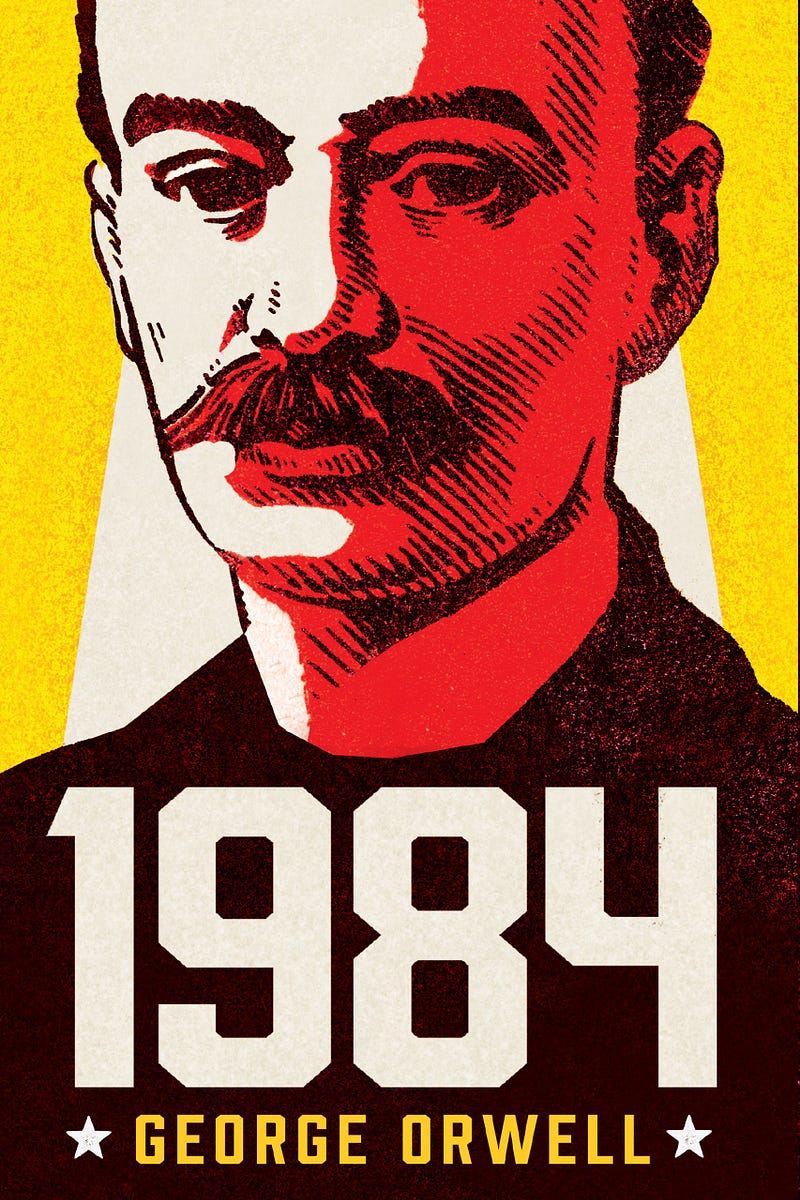
When we talk about works of dystopian fiction, George Orwell will inevitably be mentioned. Orwell’s 1984 is widely recognized as one of the best works of dystopian fiction, often mentioned alongside Aldous Huxley’s Brave New World for their portrayals of a society oppressed by a totalitarian government.
2016 was a year dominated by the U.S. Presidential election, and 67 years after it was originally published, some of the themes of 1984 seemed to have found a second wind and regained relevancy courtesy of now President-Elect Donald Trump, a figure built through a cult of personality not too different from Big Brother. The parallels do not end there, however.
Surveillance
“He took a twenty-five cent piece out of his pocket. There too, in tiny clear lettering, the same slogans were inscribed, and on the other face of the coin the head of Big Brother. Even from the coin the eyes pursued you. On coins, on stamps, on the covers of books, on banners, on posters, and on the wrappings of a cigarette packet — everywhere. Always the eyes watching you and the voice enveloping you.”
In the world of 1984, Big Brother is always watching, whether it’s his moustached face on large posters plastered on walls or the omnipresent “telescreens” that force you to not only act, but also think, in conformity with the Party. One could argue that Orwell’s telescreens are alive and well in 2017, taking the form of our handheld smartphones. There are very few places one can go where there isn’t a phone nearby, and more often than not, that phone is our very own. Our phones control us. Social media enslaves us. Through the constant bombardment of images that promote slogans like “be thin” or “get more followers”, social media and the devices we use to access them become the ever-gazing eye, a gaze so omnipresent and omnipotent that we end up feeling like we have to govern ourselves. The only difference between the panopticon-like governance of 2017 and 1984 is that the telescreens exist to govern because of a totalitarian government, whereas our phones exist to govern us today only because we allow them to.
Language as a control mechanism
“Don’t you see that the whole aim of Newspeak is to narrow the range of thought? In the end we shall make thoughtcrime literally impossible, because there will be no words in which to express it. Every concept that can ever be needed will be expressed by exactly one word, with its meaning rigidly defined and all its subsidiary meanings rubbed out and forgotten.”
We take language for granted. We take for granted the capability of words that allow us to express ourselves in the ways we desire. In 1984, “Newspeak”, an iteration of our English, is a language whose vocabulary is in a constant process of being edited down. Imagine a well-defined and thoughtfully-curated sculpture. Our freedom of thought is that sculpture. With each word that is destroyed by the likes of Winston’s comrade, Syme, of the Ministry of Truth’s Research Department, a small corner of that sculpture is chiselled off, the pool of possible words we can use to describe something or express ourselves shrinks, and with it, our freedom of thought.
Language controls what we can or cannot talk about, but it also controls how we talk about them. Contemporary debates about abortion exemplify the significance of nuanced word choices: pro-life advocates tend to use the emotionally-loaded word “baby”, instead of the pro-choice word, “fetus”, that’s scientific and disjoint of emotion. In such cases, words act as what literary theorist Kenneth Burke calls “terministic screens.” This ability to shape perception is shared by Newspeak, as the Party manipulates vocabulary to ensure that individual thought is restricted to that which is deemed fit by the Party, as detailed by the “Principles of Newspeak” found in the appendix that follows the concluding chapter.
A society founded on fear and hatred
“It is impossible to found a civilization on fear and hatred and cruelty. It would never endure…It would have no vitality. It would disintegrate. It would commit suicide.”
This past year, we’ve heard a lot about cultures of fear and hatred, again, courtesy of the President-Elect. The rhetoric of fear and hate that Donald Trump founded his campaign on is undeniable. Although Trump’s regime will not have complete and total control like Big Brother’s Party, his being elected has already resulted in an increase in hate crimes, and, unfortunately, there is no end in sight, much like the perpetual war Oceania remains in. Inciting hatred and fear is as much a part of Donald Trump’s creed as it is Big Brother’s. For our sake, let’s hope George Orwell was correct and a civilization founded on fear and hatred never sees the light of day.
If you liked this article, you may like:


