Japan and History
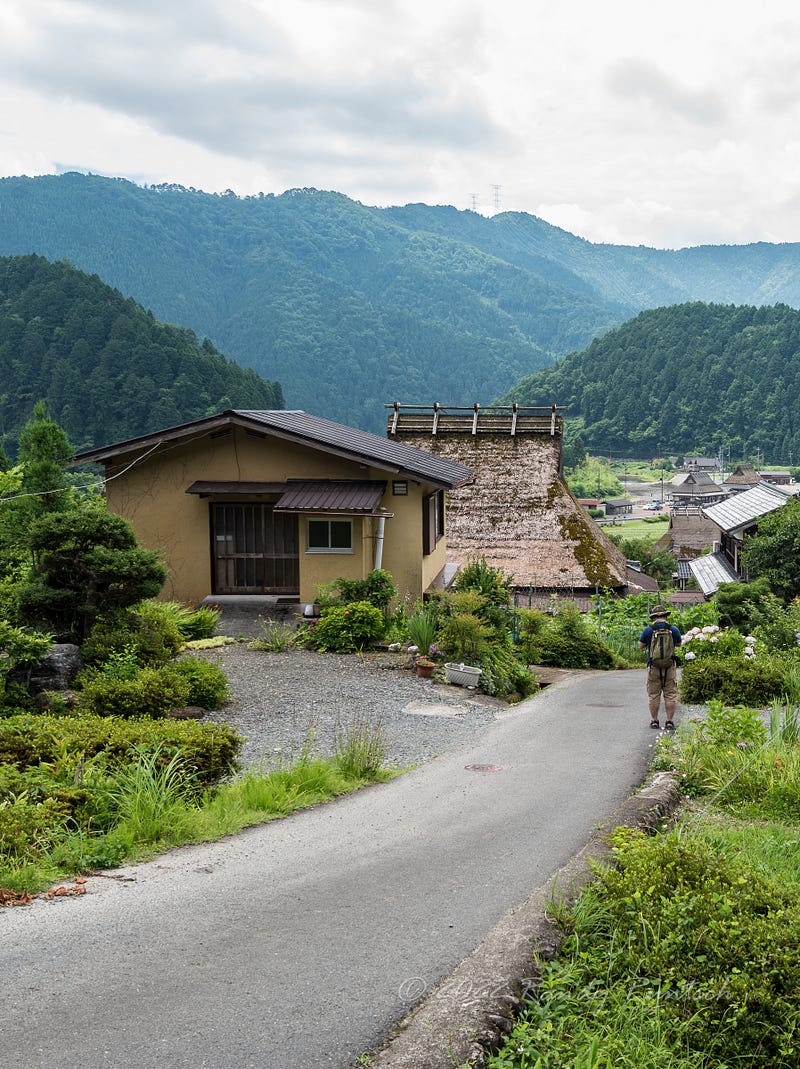
The Thatched-roof Houses of Kayabuki no Sato in Japan
This village of grass-roofed houses is a welcome diversion from the busy city of Kyoto
When our son Grant Takashi (dragon) was five months old, my wife Kazumi and I journeyed with him to Okinawa, Japan. The main purpose of the visit was to present him to his grandmother, uncle, and other relatives. It was my first visit to my wife’s homeland.
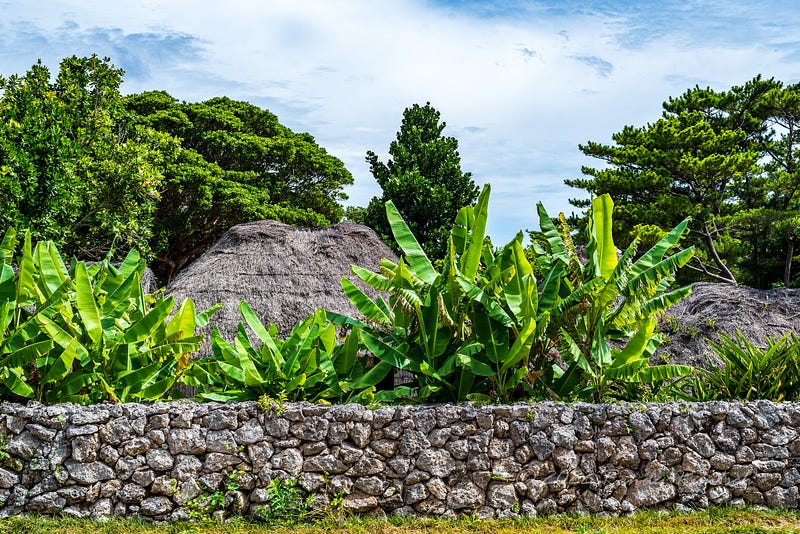
An Okinawa travel guide showed a photo of one of two remaining traditional Okinawa wooden houses with a thatched roof. The picture showed a woman walking beside the house, carrying a woven wooden basket filled with laundry on her back.
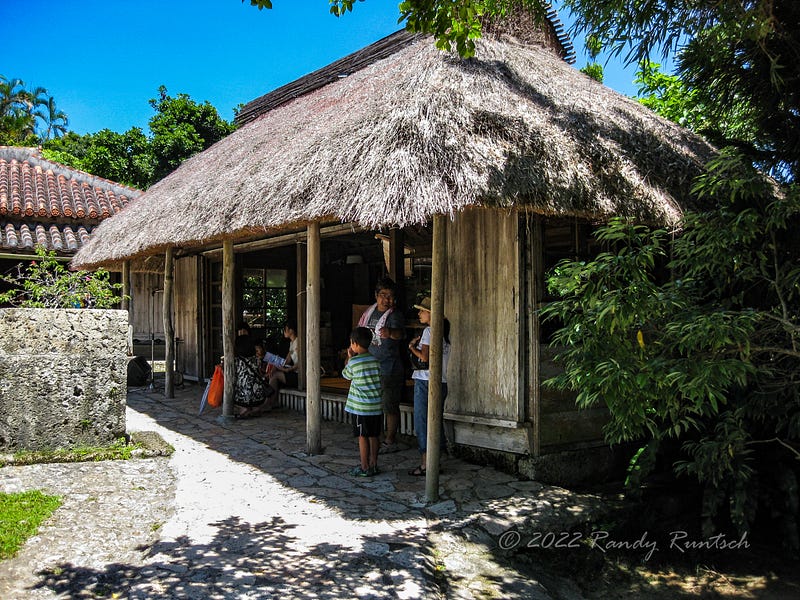
Kazumi’s childhood friend Mu-chan was kind enough to drive us to the village where the thatched-roof house was located. As we wandered through the village, I spotted the house. It was a simple wooden house with a thatched roof. But the scene amazed me as a woman walked beside the house, carrying a wooden basket filled with laundry on her back. The real-life image was a facsimile of the photo in the travel guide.
Sixteen years later, after several trips to Okinawa, Kazumi and I decided to tour some of “mainland Japan” with Grant Takashi. We flew to Osaka from Minneapolis, Minnesota, and my wife’s brother Tadashi Oshiro flew in from his home in Okinawa.
For a week, we explored the historic sites of Kyoto and Nara, and enjoyed the cuisines and modern conveniences of Osaka.
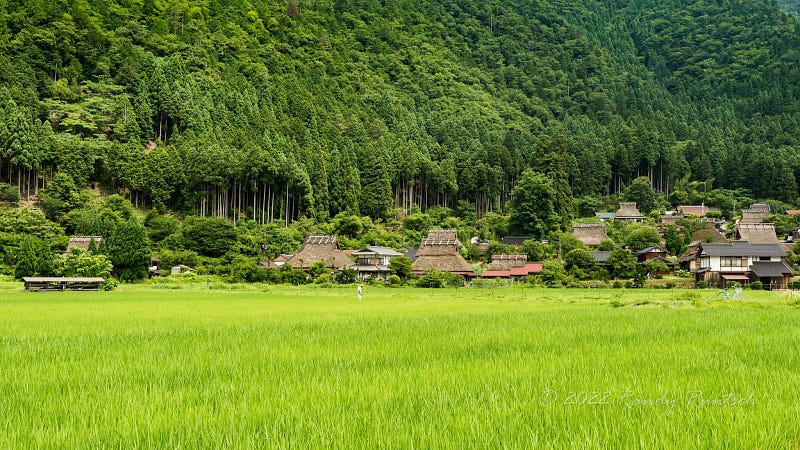
While we traveled mostly on foot and by train on the island of Honshu, one day Tadashi rented a car and drove us 33 miles (53 km) north from Kyoto to Kayabuki no Sato. The hamlet is filled with thatched-roof houses and is surrounded by mountains to the north, and the Yura River to the south.
On our way to the village, we stopped for lunch at a restaurant along the river’s north bank. As we ate, we watched fishermen attempting to catch trout.
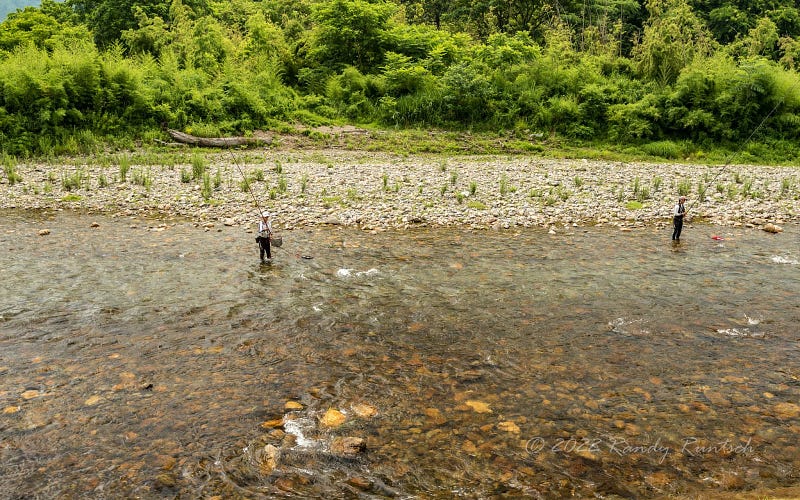
The fisherman used long tenkara rods that usually range from roughly 10 feet to 14.5 feet (3 to 4.5 meters) long. Unlike most fishing rods, the rods lack a fishing reel, and work like the old-fashioned cane poles I sometimes used as a boy.
After lunch, we walked around Kayabuki no Sato. The village is more than 200 years old and features more than thirty thatch-roofed houses.
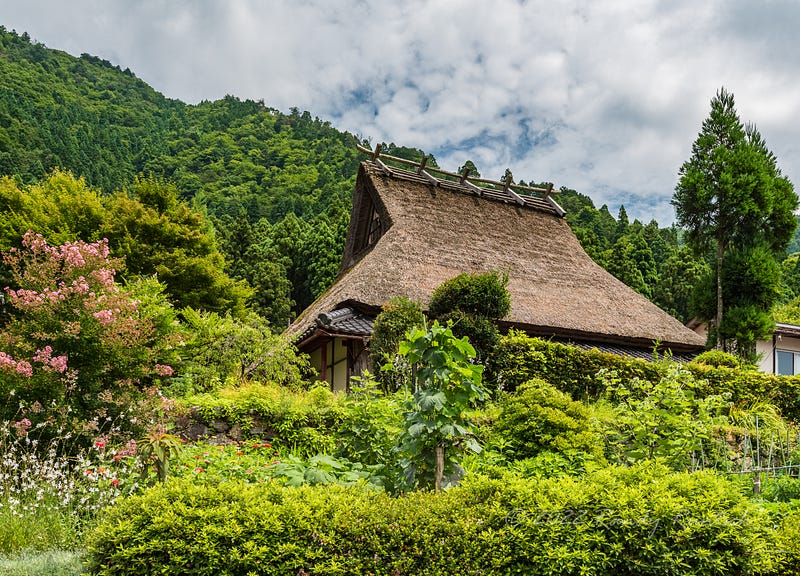
“Kaya” in the name “Kayabuki” means grasses, while “buki” means roof. Kayabuki no Sato means “the home of the Kayabuki.”
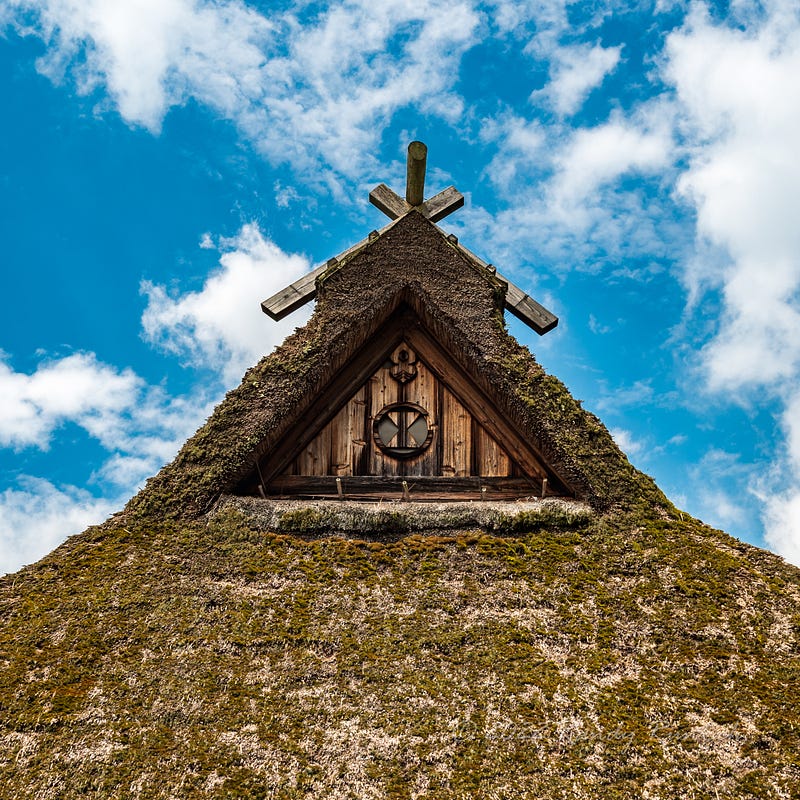
Because of the flammability of the wood and grass-roofed houses, the village has installed a fire protection system. It performs a public test of the system in May and December during the Water Hose Festival. During the event, villagers shoot jets of water into the air.
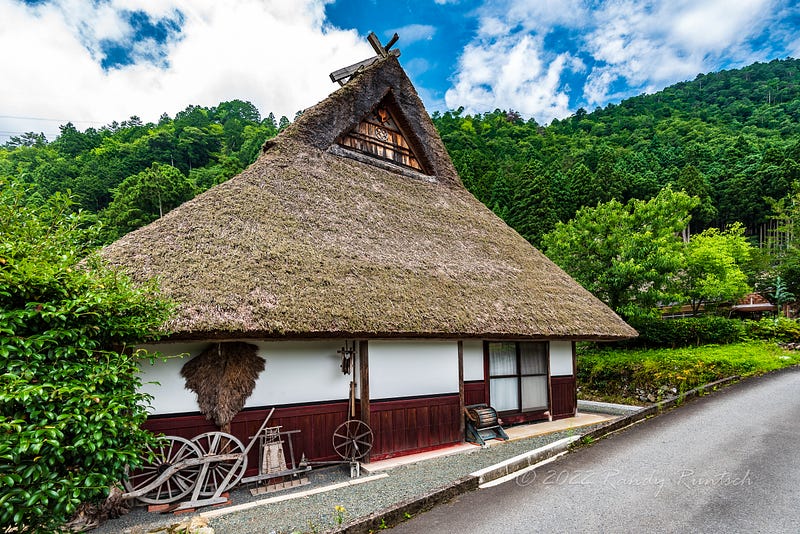
Kayabuki no Sata isn’t the only place to see traditional thatched-roof houses in mainland Japan. One of the most famous collections of the buildings is located in Shirakawa-go in Gifu Prefecture. The place has been designated as a UNESCO World Heritage Site. There, visitors can walk among the famed gasshō-zukuri minka houses. Minka means “home of the people.”
The COVID-19 pandemic postponed the plans of my wife and son to visit Okinawa in 2020. But with the ease of travel restrictions in Japan, they hope to return soon.