
The Term “Social Distancing” Needs A New Face, Not Mask
We can do better than social distancing.
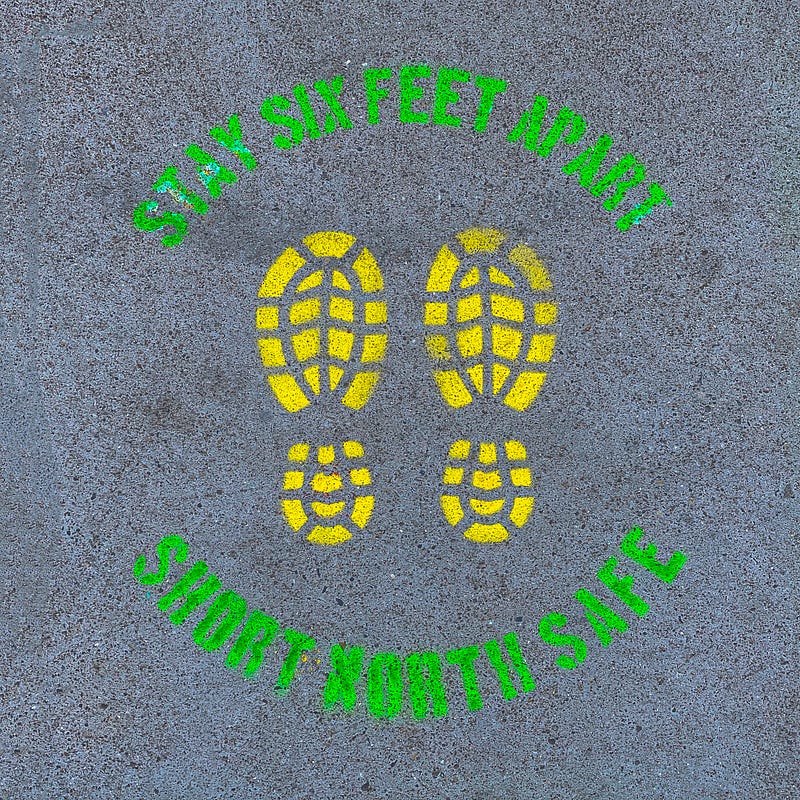
Wash your hands
Wear a mask
Practice social distancing
Looks Familiar, Right?
The majority of the world recognizes these recommendations for protecting ourselves against coronavirus. These recommendations are so well-versed nowadays, even more than our national anthem.
Washing hands and wearing a mask is straight-forward advice, but the term “social distancing” remains opaque. When it comes to life-saving advice, the message needs to be clear as day, not mud.
The Center for Disease Control and Prevention (CDC) applies the phrase “social distancing” as a means to create a safe space of at least 6 feet between yourself and those around you. “Social distancing” is a typically used term, but this coined phrase sends mixed messages. Social distancing is interpreted on a scale ranging from the original intention of a physical 6-foot length to extreme measures of complete isolation.
The phrase “social distance” bears a subjective psychological component.
- Some interpret social distancing from a physical 6-feet length standpoint.
- Others interpret social distancing from a frequency standpoint as in the number of social encounters experienced.
- Others view social distancing in a time duration of socialization.
- In extreme cases, some consider two or more of these possibilities simultaneously, resulting in a form of social isolation.
“Social distancing’” is hazy phrasing, blurring the differentiation between physical proximity and social proximity. The result is myopic social behavior.
The message of “social distancing” is not clear cut and has developed into some outlandish social behaviors.
When I have ventured to the grocery store, I have witnessed people maintain excess distance from others and seem afraid like everyone in view has the bubonic plague. I have experienced neighbors reluctantly wave at me while also glaring like I’m a nuisance for coexisting on the same side of the street. This type of fear and behavior reduces human interaction and friendly exchange of greetings before COVID-19.
The vagueness of social distancing’s intention carries small and large-scale consequences for mental health and well-being. The term “social distancing” has contributed to social isolation during quarantine and isolation when people most need to stay connected with others. A human connection, such as conversations with strangers, relationships, and friendships, is a critical factor in our emotional and physical health.
The long-term behavior of social isolation behavior is unhealthy. There is scientific evidence suggesting that social relationships affect a wide range of health outcomes, including mortality risk, mental health, physical health, and health habits. Harvard Women’s Health Watch also states that those with satisfying relationships demonstrate increased longevity and health. Precautions for COVID-19 are as necessary as human connection.
The phrase “social distancing” needs rehabilitation with a specified term that fully encapsulates its mission with little ambiguity for better effectiveness and health.
“Social distancing” is better off with a new face: “physical distancing.”
Let’s Trade the Word “Social” For “Physical”
“Physical distancing” sends a more hopeful and direct message than “social distancing” with less connotation. “Physical distancing” effectively implies the 6-feet rule without presuming avoidance of socialization altogether. The “physical” component emphasizes the 6-feet length from others; that’s it. Physical distancing destroys the connotation of social isolation. We can safely participate in a plethora of social activities while maintaining rules of physical distancing.
Knowing the difference between these two terms can be helpful in these unprecedented times. Physical distancing itself, along with the rephrasing from social distancing, is vital to slowing down the spread of COVID-19. We are social creatures, and it essential we remain connected with people in our lives because staying in touch helps us thrive daily.
It’s all well and good to be alive, but we lead a low quality of life if we isolate ourselves.
Physically distance while reaching out to others. We are all trying to survive this pandemic, and human connection is a vital strategy to keep humanity around. Nurturing the relationships we have and social interaction is as essential to surviving as washing your hands.
COVID-19 is a long storm we are weathering out. If we physically distance while creating and sustaining relationships, we can share umbrellas because there is a frequency in numbers.
Social distancing is a misnomer. One word swap makes a significant difference in our health outcomes and survival. It is time to shift our terminology because, with life-saving advice, there needs to be no ambiguity.


