avatarJonathan Poletti

Free AI web copilot to create summaries, insights and extended knowledge, download it at here

4928

Abstract

aption>Ella Loraine Case and Lewis Sperry Chafer (1896; colorized & photo enhanced); C.I. Scofield in Dallas (c.1905)</figcaption></figure><h1 id="3d0c">Cyrus Ingerson Scofield was born in 1843.</h1><p id="3433">What appeared to be a biography was published in 1920, though Charles Trumbull’s <i>The Life Story of C.I. Scofield</i> told an elliptical story of a man who had become enormously famous in the Evangelical world.</p><p id="e105">Scofield was born in Michigan, but raised in Tennessee. For his youth, Trumbull had just a brief <a href="https://archive.org/details/lifestoryofcisco00trum/page/6/mode/2up">praise of slavery</a>.</p><blockquote id="47a7"><p><i>“The slavery of that region was of a mild, kindly, patriarchal form. Like so many others in the South, masters and mistresses and slaves loved one another.”</i></p></blockquote><p id="9b1f">At age 17, Scofield enlisted in the Confederate army. When the Civil War was over, he zipped along to St. Louis. There he concealed his Confederate past. He married a wealthy woman and launched a career as a lawyer, then a politician — until check fraud and alcoholism landed him in jail.</p><p id="d128">This wasn’t a story Trumbull told. In 1984, Joseph M. Canfield published a new <a href="https://www.scribd.com/doc/54737546/Incredible-Scofield-and-His-Book">biography</a>, <i>The Incredible Scofield and His Book. </i>He documented the life of a religious hero who came off looking like a con artist.</p><p id="f0a7">In prison, Scofield met a wealthy woman who was there for Christian charity work. Suddenly he was “saved,” and married her — after divorcing his first wife and two daughters on the grounds of them being Catholic.</p><h1 id="0c6a">All his life, Scofield moved with amazing speed through social networks.</h1><p id="d8be">Soon after becoming Christian, he was a pastor, then a national Christian leader who was close with the famous evangelist, Dwight L. Moody.</p><p id="db6f">Then Scofield was a Bible scholar! He was called ‘<i>Dr</i>. Scofield’, after he awarded the title on himself. He’d never been to a day of college in his life. He also didn’t know either Greek or Hebrew.</p><p id="512e">But the racism was real. Scofield was a great believer in the “Curse of Ham,” which he would write into his famous <i>Scofield Reference Bible.</i> It marked him personally. Canfield’s biography has notes for a speech Scofield gave in 1904 to Confederate veterans. It included the line:</p><blockquote id="8b90"><p>“right superior race to bear white man’s burden of an inferior race in its own way.”</p></blockquote><p id="407d">Southern whites saw themselves as the “superior race” — and had a tricky problem after the Civil War. They’d been beaten, humiliated, shamed, and were out of power, culturally and politically.</p><h1 id="ee88">How could God’s favorites be treated so badly?</h1><p id="7650">Scofield came in for the save. They’d lost the war, but he offered them a Christianity that evened the score. The world, as he explained, was incurably evil—but the end of the world was at hand.</p><p id="e147">Back in St. Louis, he seems to have met a dissident Anglican cleric named John Nelson Darby, who’d visited America trying to get a new denomination started. The ‘Plymouth Brethren’ never went far. But Scofield liked Darby’s ideas—and passed them off as his own.</p><p id="60b0">Jesus would soon return, Scofield said, to take the true believers to Heaven in an event he called ‘the Rapture’. He repurposed Darby’s central idea for Southern Christians after the Civil War.</p><p id="3a23">They could sit out ‘Reconstruction’, keep to their church communities where race was policed, and look forward to this evil world burning—as <i>they’d</i> be lifted up into the clouds.</p><h1 id="3c16">Scofield put together his ‘study Bible’.</h1><p id="bff9">The <i>Scofield Reference Bible, </i>published in 1909, was a set of footnotes to the King James translation, and seemed to explain the whole thing to you.</p><p id="c46f">Those famous footnotes became for many Evangelicals like divine additions to the sacred text. At the same time, Scofield set out to establish seminaries that would teach his ideas. He found in Chafer a special helper.</p><p id="52bf">John D. Hannah’s discussion of the relationship reads like a courtship:</p><blockquote id="e959"><p><i>“Chafer reported that the two were intensely working on future plans from early morning to late in the evening, and that a new relationship between them had been consummated. Scofield would preach, but, says Chafer, ‘I am to be teacher.’”</i></p></blockquote><p id="1a4d">A biographical <a href="https://www.wholesomewords.org/biography/bchafer2.html">note</a> in Chafer’s <i>Systematic Theology </i>put it this way:</p><blockquote id="9734"><p><i>“…there was cemented between the two men a closeness of fellowship in the gospel that grew into an intimate companionship in the

Options

teaching ministry which lasted until Dr. Scofield’s death in 1921.”</i></p></blockquote><h1 id="788c">Wasn’t it a marriage?</h1><p id="b096">Evangelical scholars tiptoe around the unusual situation. Jeffery J. Richards <a href="https://www.google.com/books/edition/The_Promise_of_Dawn/RcFKAwAAQBAJ?hl=en&amp;gbpv=1&amp;dq=%22identification+with+Scofield.+Chafer+literally+saw+himself+as+walking+in+the+footsteps+of+his+mentor%22&amp;pg=PA71&amp;printsec=frontcover">writes</a> of Chafer’s “identification with Scofield. Chafer literally saw himself as walking in the footsteps of his mentor…”</p><p id="5718">Chafer’s well-known 1918 tract <i>He That Is Spiritual,</i> as Randall Gleason <a href="https://www.academia.edu/1803190/BB_Warfield_and_Lewis_S_Chafer_on_Sanctification">notes</a>, was “simply Chafer’s elaboration of what he had learned from Scofield.”</p><p id="614a">Chafer’s books, as John D. Hannah <a href="https://www.academia.edu/16417452/Theological_Emphases_in_Lewis_Chafers_Systematic_Theology">noted</a>, “institutionalized Scofield’s thoughts and attitudes.” It was a huge effort to embody Scofield’s sensibility. They weren’t theological texts, so much as portraits.</p><h1 id="0b2b">The portrait was always of racist white guys.</h1><p id="52b4">I browse <i>Systematic Theology</i> sure I’ll be finding the ‘curse of Ham’. All those old Southerners had a lunatic interpretation of Genesis 9 as somehow authorizing the enslavement of Black people.</p><p id="a90c">And there it is. Chafer writes that Ham gives rise to an “<a href="https://www.google.com/books/edition/Systematic_Theology/b-JfSYC8HSMC?hl=en&amp;gbpv=1&amp;dq=%22This+almost+limitless+prediction+with+its+threefold+division+of+humanity%22&amp;pg=RA1-PA329&amp;printsec=frontcover">an inferior and servile people</a>,” though a concept, he adds, that “belongs to another science than theology.”</p><p id="336f">That refers to ‘<a href="https://en.wikipedia.org/wiki/Scientific_racism">scientific racism</a>’, the idea that races can be ‘scientifically’ ranked. Like Scofield, Chafer was a hard-core white supremacist.</p><h1 id="8871">The school was framed as their ‘child’.</h1><p id="e502">That’s how Chafer <a href="https://voice.dts.edu/article/a-flame-that-has-endured-commemorating-the-150th-anniversary-of-lewis-sperry-chafer/">put it</a> in 1944: “The Dallas Theological Seminary is, as you know in a very real sense, my own child.”</p><p id="9d73">The subtext is unstated: Chafer and his wife were childless.</p><p id="0634">He lived the rest of his life in total fealty to Scofield’s memory. Chafer took over pastoring Scofield’s church, and taught many students Scofield’s ideas.</p><p id="3c88">The white guys kept coming to him—all wanting to be told they were part of a sacred “elect” waiting for the Rapture.</p><p id="7f19">Even if the original sources are forgotten, or concealed, the sense of being <i>special</i>, the feeling of being <i>elite</i>, flows from the idea of whiteness.</p><figure id="865b"><img src="https://cdn-images-1.readmedium.com/v2/resize:fit:800/0*91guiT5x_H88Kz9_.jpeg"><figcaption><a href="https://voice.dts.edu/article/a-flame-that-has-endured-commemorating-the-150th-anniversary-of-lewis-sperry-chafer/">Lewis Sperry Chafer</a> and DTS students (undated c.1950)</figcaption></figure><h1 id="0fe4">Desegregation was a challenge.</h1><p id="1ee6">The president of Dallas in the 1960s, John Walvoord, seemed uncertain what to do. He <a href="https://www.google.com/books/edition/An_Uncommon_Union/1Idkeh8-JKQC?hl=en&amp;gbpv=1&amp;dq=%22The+Scriptures+never+discuss+the+matter+of+segregation%22&amp;pg=PA180&amp;printsec=frontcover">offered</a>: “The Scriptures never discuss the matter of segregation…There is nothing in the Bible which deals with the subject.”</p><p id="9ffc">They decided that God had decreed, in such cases, Black people be ‘seperate but equal’. The historian Shawn Varghese <a href="https://faithandhistory.org/general/meditating-on-human-depravity/">traces</a> how Black students were admitted, but kept in Black churches.</p><p id="9d53">There was <i>talk</i> of racial unity—in the afterlife? As Varghese <a href="https://faithandhistory.org/general/meditating-on-human-depravity/">adds</a>, “nowhere did I find hints toward integration that reflected the future heavens.” 🔶</p><div id="569d" class="link-block"> <a href="https://readmedium.com/the-rapture-is-racist-5bc3d9ab820a"> <div> <div> <h2>The “Rapture” is racist</h2> <div><h3>An Evangelical idea is a hit of pure white supremacy</h3></div> <div><p>medium.com</p></div> </div> <div> <div style="background-image: url(https://miro.readmedium.com/v2/resize:fit:320/1*ThX96UukX7QjsxQSkKxj8Q.png)"></div> </div> </div> </a> </div></article></body>

The Temple of White Supremacy

To learn Evangelical racism, you’d go to Dallas Theological Seminary

If you grow up in America’s largest religion, you’d know about its most prestigious school. Dallas Theological Seminary is called the “Evangelical Vatican.”

We just called it ‘Dallas’, and knew a fact about it that we didn’t much care to talk about. They were big on racial segregation.
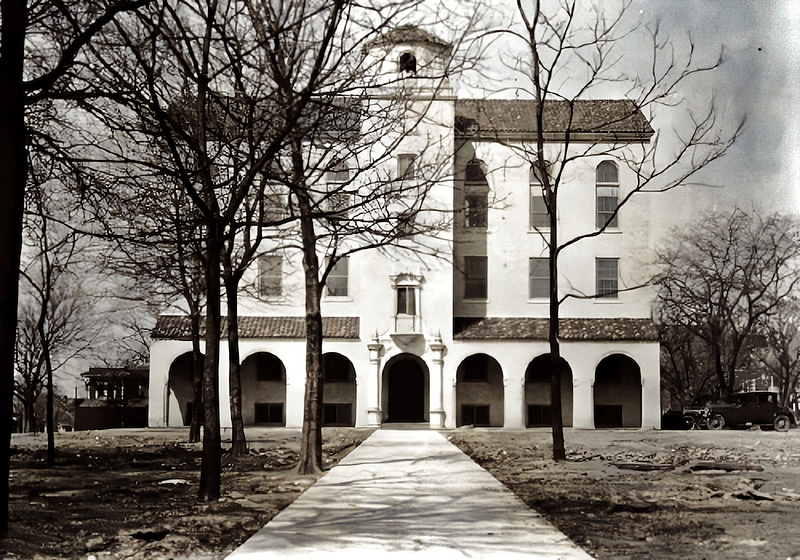
Evangelical Theological College c.1930 (colorized)

Founded in 1924, the first Black student was admitted in 1966.

I think back on the many Evangelical stars who’ve come from DTS—from Charles Swindoll to Charles Ryrie, from J. Dwight Pentecost to Hal Lindsey, or J. Vernon McGee.

They’d attended a white supremacist school and said nothing about it.

In 1973, Dallas Theological Seminary’s admissions department said the school “welcomes black students.” But the school kept up a segregated system. They’d train Black students to be pastors—of Black churches.

In 2006, a graduating student named Jimmy King anticipated help from the school in finding a pastor gig. He recalled being told:

“We’ve never placed a black graduate to a white church.”

In 2020, amid the riots sparked by George Floyd’s death, Dallas released a statement against racism, calling it “demonic” — and yet only barely alluding to its own history. Blink and you’ll miss it.

“Our apologies may come across to some as hollow and self-serving; our goal at DTS remains to teach truth and love well.”

Dallas Theological Seminary (publicity photo)

The school’s founder and first president was Lewis Sperry Chafer.

He was just “Dr. Chafer,” the greatest Bible scholar in the Evangleical world, really. He was the author of the monumental eight-volume Systematic Theology, where all the secrets of the Bible resided.

I look over his history now, and laugh. Chafer never graduated college. He got an honorary degree in 1926, and started calling himself ‘Dr. Chafer’.

He didn’t know Greek or Hebrew, or much about Christian history.

This was left only to the sharp-eyed reader to surmise. As Bernard Ramm noted in 1983 in a rare critical study, Chafer “had no linguistic training” and was “always working with secondary sources…”

It’s a strange, queer story.

Chafer was born in 1871. His father died when he was eleven. He went to Oberlin College to study music. His passion was singing. He’d dreamed of going to Italy for advanced vocal training.

He ended up traveling around America as a “singing evangelist.” He got engaged. In John D. Hannah’s 2009 book An Uncommon Union: Dallas Theological Seminary and American Evangelicalism, he says the “romance” took place “largely through an exchange of letters…”

Chafer’s wife was invisible to the Evangelical world. The music gigs dried up and he tried being a pastor. In 1901, he was riveted by a sermon.

Chafer later wrote of the moment:

“I am free to confess that it seemed to me at the close that I had seen more vital truth of God’s Word in that one hour, than I have seen in my life before. It was a crisis for me. I was captured for life.”

From that moment on, he became a devotee of the man who was the actual love of his life. Chafer’s later theological texts were not his own thoughts. They were C.I. Scofield’s.
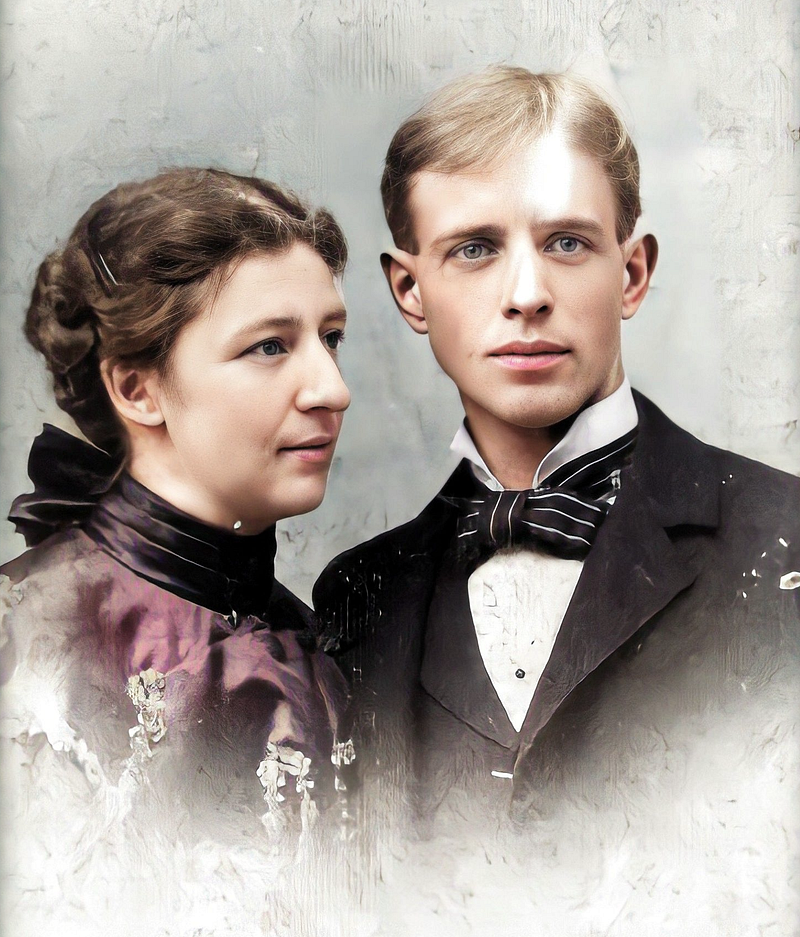
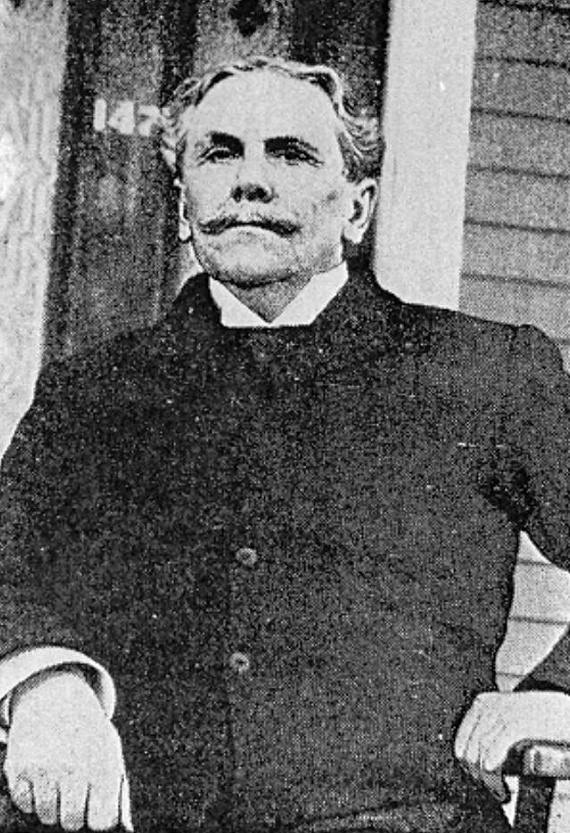
Ella Loraine Case and Lewis Sperry Chafer (1896; colorized & photo enhanced); C.I. Scofield in Dallas (c.1905)

Cyrus Ingerson Scofield was born in 1843.

What appeared to be a biography was published in 1920, though Charles Trumbull’s The Life Story of C.I. Scofield told an elliptical story of a man who had become enormously famous in the Evangelical world.

Scofield was born in Michigan, but raised in Tennessee. For his youth, Trumbull had just a brief praise of slavery.

“The slavery of that region was of a mild, kindly, patriarchal form. Like so many others in the South, masters and mistresses and slaves loved one another.”

At age 17, Scofield enlisted in the Confederate army. When the Civil War was over, he zipped along to St. Louis. There he concealed his Confederate past. He married a wealthy woman and launched a career as a lawyer, then a politician — until check fraud and alcoholism landed him in jail.

This wasn’t a story Trumbull told. In 1984, Joseph M. Canfield published a new biography, The Incredible Scofield and His Book. He documented the life of a religious hero who came off looking like a con artist.

In prison, Scofield met a wealthy woman who was there for Christian charity work. Suddenly he was “saved,” and married her — after divorcing his first wife and two daughters on the grounds of them being Catholic.

All his life, Scofield moved with amazing speed through social networks.

Soon after becoming Christian, he was a pastor, then a national Christian leader who was close with the famous evangelist, Dwight L. Moody.

Then Scofield was a Bible scholar! He was called ‘Dr. Scofield’, after he awarded the title on himself. He’d never been to a day of college in his life. He also didn’t know either Greek or Hebrew.

But the racism was real. Scofield was a great believer in the “Curse of Ham,” which he would write into his famous Scofield Reference Bible. It marked him personally. Canfield’s biography has notes for a speech Scofield gave in 1904 to Confederate veterans. It included the line:

“right superior race to bear white man’s burden of an inferior race in its own way.”

Southern whites saw themselves as the “superior race” — and had a tricky problem after the Civil War. They’d been beaten, humiliated, shamed, and were out of power, culturally and politically.

How could God’s favorites be treated so badly?

Scofield came in for the save. They’d lost the war, but he offered them a Christianity that evened the score. The world, as he explained, was incurably evil—but the end of the world was at hand.

Back in St. Louis, he seems to have met a dissident Anglican cleric named John Nelson Darby, who’d visited America trying to get a new denomination started. The ‘Plymouth Brethren’ never went far. But Scofield liked Darby’s ideas—and passed them off as his own.

Jesus would soon return, Scofield said, to take the true believers to Heaven in an event he called ‘the Rapture’. He repurposed Darby’s central idea for Southern Christians after the Civil War.

They could sit out ‘Reconstruction’, keep to their church communities where race was policed, and look forward to this evil world burning—as they’d be lifted up into the clouds.

Scofield put together his ‘study Bible’.

The Scofield Reference Bible, published in 1909, was a set of footnotes to the King James translation, and seemed to explain the whole thing to you.

Those famous footnotes became for many Evangelicals like divine additions to the sacred text. At the same time, Scofield set out to establish seminaries that would teach his ideas. He found in Chafer a special helper.

John D. Hannah’s discussion of the relationship reads like a courtship:

“Chafer reported that the two were intensely working on future plans from early morning to late in the evening, and that a new relationship between them had been consummated. Scofield would preach, but, says Chafer, ‘I am to be teacher.’”

A biographical note in Chafer’s Systematic Theology put it this way:

“…there was cemented between the two men a closeness of fellowship in the gospel that grew into an intimate companionship in the teaching ministry which lasted until Dr. Scofield’s death in 1921.”

Wasn’t it a marriage?

Evangelical scholars tiptoe around the unusual situation. Jeffery J. Richards writes of Chafer’s “identification with Scofield. Chafer literally saw himself as walking in the footsteps of his mentor…”

Chafer’s well-known 1918 tract He That Is Spiritual, as Randall Gleason notes, was “simply Chafer’s elaboration of what he had learned from Scofield.”

Chafer’s books, as John D. Hannah noted, “institutionalized Scofield’s thoughts and attitudes.” It was a huge effort to embody Scofield’s sensibility. They weren’t theological texts, so much as portraits.

The portrait was always of racist white guys.

I browse Systematic Theology sure I’ll be finding the ‘curse of Ham’. All those old Southerners had a lunatic interpretation of Genesis 9 as somehow authorizing the enslavement of Black people.

And there it is. Chafer writes that Ham gives rise to an “an inferior and servile people,” though a concept, he adds, that “belongs to another science than theology.”

That refers to ‘scientific racism’, the idea that races can be ‘scientifically’ ranked. Like Scofield, Chafer was a hard-core white supremacist.

The school was framed as their ‘child’.

That’s how Chafer put it in 1944: “The Dallas Theological Seminary is, as you know in a very real sense, my own child.”

The subtext is unstated: Chafer and his wife were childless.

He lived the rest of his life in total fealty to Scofield’s memory. Chafer took over pastoring Scofield’s church, and taught many students Scofield’s ideas.

The white guys kept coming to him—all wanting to be told they were part of a sacred “elect” waiting for the Rapture.

Even if the original sources are forgotten, or concealed, the sense of being special, the feeling of being elite, flows from the idea of whiteness.
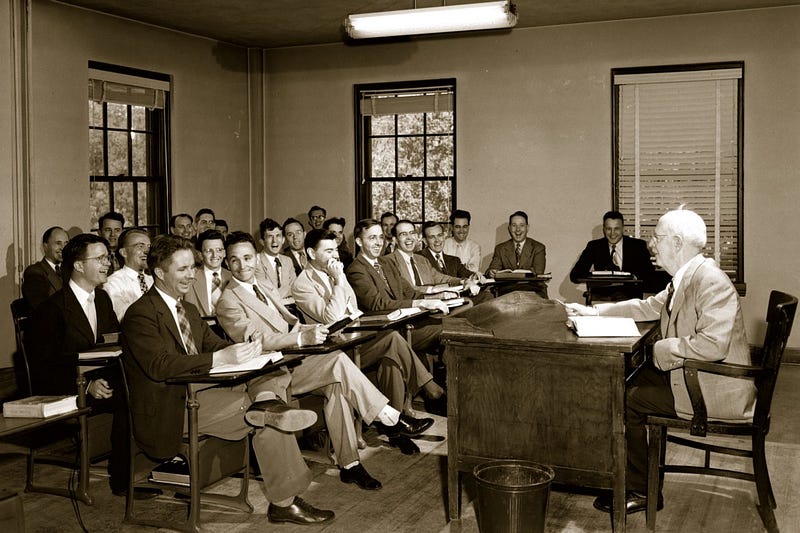
Lewis Sperry Chafer and DTS students (undated c.1950)

Desegregation was a challenge.

The president of Dallas in the 1960s, John Walvoord, seemed uncertain what to do. He offered: “The Scriptures never discuss the matter of segregation…There is nothing in the Bible which deals with the subject.”

They decided that God had decreed, in such cases, Black people be ‘seperate but equal’. The historian Shawn Varghese traces how Black students were admitted, but kept in Black churches.

There was talk of racial unity—in the afterlife? As Varghese adds, “nowhere did I find hints toward integration that reflected the future heavens.” 🔶

Religion
Christianity
History
Racism
White Supremacy
Recommended from ReadMedium