
Psychedelic
The Synergy of Music and Psychedelics
Music and psychedelics have been together since the beginning. These two forces have long been powerful tools for humanity to alter our states of consciousness and ultimately lives.
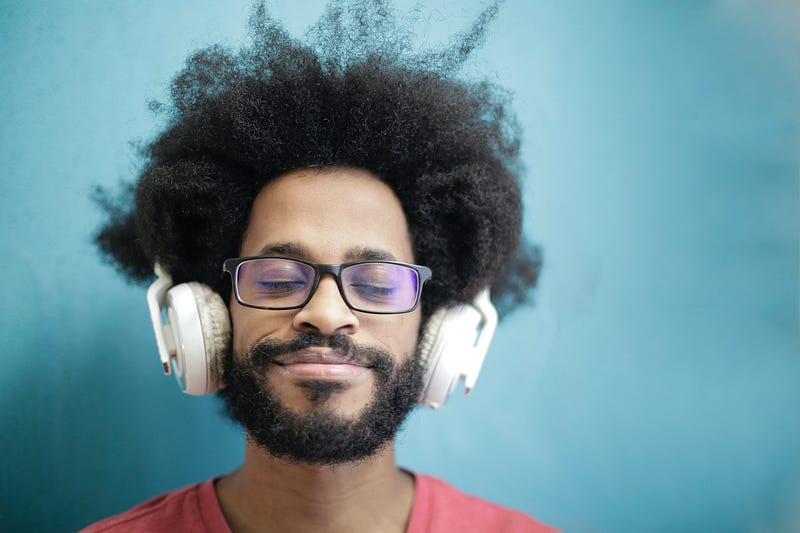
The use of psychedelics and music dates back thousands of years in cultures all over the world. Music may even predate language. Some scholars suspect it may have been how we communicated feeling before words.
The synergy of psychedelics and music together creates heightened states of emotion, meaning, and even memory. Psychedelics have long been described as amplifiers, and music has a record as highly effective therapy all on its own.
I will never forget the first time I smoked weed. Sitting in the back of my friend's car while Snoop Dogg's Drop It Like It's Hot drove me crazy. At that time, I thought rap was lame and heavy metal was awesome. But something about the bassline just hooked me in. It's debatable if cannabis is psychedelic, my only point being, that in an altered state, the feelings evoked were overwhelming.
When I hear the tune, I can still feel the soft red upholstery of the backseat of my friend's car or the warm summer nighttime air coming in through the window. The leather couch we smoked on in the unfinished basement.
We all have these memories with music, intensified by substances or not.
Maybe it's your graduation or wedding—a time with a lover, a party with friends, or a childhood vacation. Whatever your music taste and life experiences are, we all can suddenly be pulled back to specific moments, often saturated with feeling and vivid images.
This is one of music's superpowers — it has been studied in the lab for its ability to trigger a cascade of powerful emotion and recall memory. Music activates many areas of the brain. Relevant to this article are areas related to rewards, memory, and emotion. Unsurprising is that brains on LSD also overlap with some of the same areas as music. And a vital component of both the effects of musical and psychedelic experiences is serotonin.
When observing people on LSD inside an MRI scanner, activity in terms of blood flow to brain areas related to music and language has been shown. MRIs also showed increased activity in emotional and memory regions. Musical changes influenced this activity along with participants' sense of meaning with internal imagery and memories.
The synergy has also been documented with psilocybin. In a recent study, emotions were shown to be amplified by 60% during a journey. Music may have the capability to trigger transcendental experiences during a trip. When these "mystical-type experiences" happen, effects of psilocybin have been shown to last significantly beyond therapy — months later, people exhibit reduced symptoms of depression and improved wellbeing.
Music has always been a pillar of psychedelic ceremonies in indigenous cultures and continues to this day. In the Amazon, vegeitalistas still whistle and rattle out icaros — songs of protection connecting to the spirit world or healing ceremony participants. Anyone who has sat in a ceremony can attest a certain icaros triggering a purge or memories long forgotten resurfacing.
Traditions like the Mexican Huichol peyote songs, African Bwiti ibogaine music, and the Mexican Mazatec Mushroom language all have unique, intentional musical traditions that survive in some form to this day.
Music to Create Set and Setting
To appreciate how important music is to both internal and external experience cannot be understated. Psychedelics will reflect back to you whatever is going on inside and out. Many of us have been at a live performance and heard the wrong song or musical note.
The consequences are immediately felt. And on a heroic dose of acid, a triggering or offputting tune can be devastating. You don't need to be trained in the subtleties of shamanism to notice when the music is not suitable for the moment.
Curating playlists for modern trippers is becoming an art form in itself. Researchers are well aware certain songs negatively affect the experience of psychedelic journeyers. Michael Pollan writes about it in his book How To Change Your Mind. While undergoing a guided mushroom journey, he could not get into his therapist's choice of ambient New Agey tunes, and after he settled into some classical, he could get a bit deeper in this journey.
These options — ambient soundscapes or classical are probably the most common playlists being used in studies. But many recreational users would likely scoff at this limited spectrum. In the age of streaming music, one size doesn't fit all.
Remember the nostalgia effects of music? Well, this effect is a big deal to people tripping. What music works in the moment has a lot to do with what kind of music they are familiar with, what they like, their overall generic taste, and even their personality type.
The music needs to be just right to act as the guide as it is supposed to. It can calm people during challenging sections of a trip and being someone to heights unimaginable. But what gets you out of your body might and into the cosmos be a breakup song for someone else. Musical taste is highly subjective and entwined with one's life. And any DJ will tell you creating the perfect playlist is an art.
The Modern Human on Psychedelics and Music
So, what are a bunch of PhDs in neuroscience without years of DJing festivals or shamanic initiation doing to facilitate musical journeys?
Medal Kealan, a scientist and sound artist, has shown what the future could be for the western psychedelic healing session. He has created Wavepaths, an immersive experience combining sounds, lightning, and AI to create a gentle yet stimulating environment for a meaningful trip.
The experience has been highly praised. When a pop-up shop in London opened, those who entered managed to "lose all sense of space and time" — without any psychedelics. (Or at least any given by Kealan.)
Wavepaths is working on building software for therapists and an app for those seeking immersive experiences at home. And he is not alone in this vision. A number of startups are working towards creating experiential musical therapy that will overlap with the rising tide of psychedelics.
Lucid, a Canadian app, is building a platform of music composed in-house and streamed only in their app. They hope to remove the nostalgic or negative associations with certain songs by keeping it fresh. They also use biofeedback like your breathing and heart rate from a headband to determine your mood. It can be hard to tell where someone is when they are hours deep in a journey, wearing eyeshades, and not talking. And having a therapist messing with your playlist while your ego dissolves is not ideal.
Musicians like East Forest and Jon Hopkins are making music specifically for tripping. Hopkins released "Music For Psychedelic Therapy," which is roughly the amount of time for a ketamine trip. East Forest recently released his second "Soundtrack for Psychedelic Practitioners," an excellent companion for a psychedelic or sober sound journey. Definitely my preferred alternative to Snoop Dogg these days.
Hopkins recently told the Guardian he was amazed at "the synergy between these substances and technology." Long have psychedelics and art been connected. The 60s brought their creative and even healing potential to the spotlight. Traditional cultures have made this evident for centuries with carvings, paintings, and medicine songs.
With scientific data, synthetic pharmaceutical-grade compounds, AI, targeted therapy, and dedicated clinics, the West is finding its own way with psychedelics. As psychedelic publication DoubleBind puts it — "the days being dosed by guys in white coats under fluorescent lights" are over. It might not be long until you pop some designer psychedelic, settle into a cozy clinic, don eyeshades and a headband, have your guided session with an AI-curated playlist, and integrate with an app.
With the potential of technology, wearable devices, and the tsunami of information bearing down on the modern world, the question of what will happen legally with psychedelics is a curious one. Will the promised mass healing be possible? Or just for those who can afford biofeedback devices? Will the soul of the medicine be missing? Can ambient electronic tunes open portals to the spirit world or offer the protection of a shaman? Or will therapists and AI create a new way for modern humans?
It's exciting to see unfold, particularly when psychedelics and art begin to mix. The culture of psychedelics is already bigger than studies about depression and PTSD. Art and music will always be part of psychedelics, and if history keeps repeating itself, neither one is going anywhere. How both will evolve together, we can only wait and see.