
How Dolphins Created the Very First TikTok
- Technically

Hello, ocean enthusiasts! Have you ever wondered where the first TikTok might have originated? No, it wasn’t a tech-savvy teenager or a social media influencer. Dive beneath the waves and you’ll find the potential original creators — dolphins. They’re intelligent beings with their own language and social structures. And who knows, they might just be the original creators of the ‘TikTok’ sound — technically speaking, of course!
Now, before you get too excited, we should clarify that dolphins didn’t create the TikTok app. They didn’t film a video, add a catchy song, or start a viral dance trend. But in their own way, they’ve been using clicks, whistles, and body movements to communicate long before humans invented social media. So, in a sense, they were the first ones to create a ‘TikTok’ — a short, catchy, and meaningful sound to communicate.
But how do these intelligent marine mammals talk to each other? What are they saying? And how does their communication affect their behavior and survival strategies? Let’s dive in and explore the fascinating world of dolphin communication.
The Underwater Party Chatter
Imagine you’re at a party, but instead of people, the room is filled with dolphins. The air — or rather, the water — is filled with clicks, whistles, and body movements. But what do these signals mean? Are the dolphins exchanging pleasantries, sharing vital information, or perhaps even gossiping? And how do they physically produce these sounds? These are the questions that have intrigued scientists for decades.

Deciphering the Dolphin Language
To answer these questions, we turn to the world of scientific research. In a study titled “Evidence of signature whistles produced by Indian Ocean bottlenose dolphins (Tursiops aduncus) in Mozambique” by Rachel Probert and her team, researchers investigated the use of signature whistles by a coastal resident population of T. aduncus in Mozambique. They found that most of the dolphins produced signature whistle types that demonstrated temporal stability for up to 8 years. This suggests that each dolphin has a unique whistle, much like a name, that it uses to identify itself.
The researchers also found that dolphins use their unique language for a variety of social behaviors, including cooperation, competition, and mate selection. The complexity of their communication is comparable to human language, highlighting the intelligence of these marine creatures.
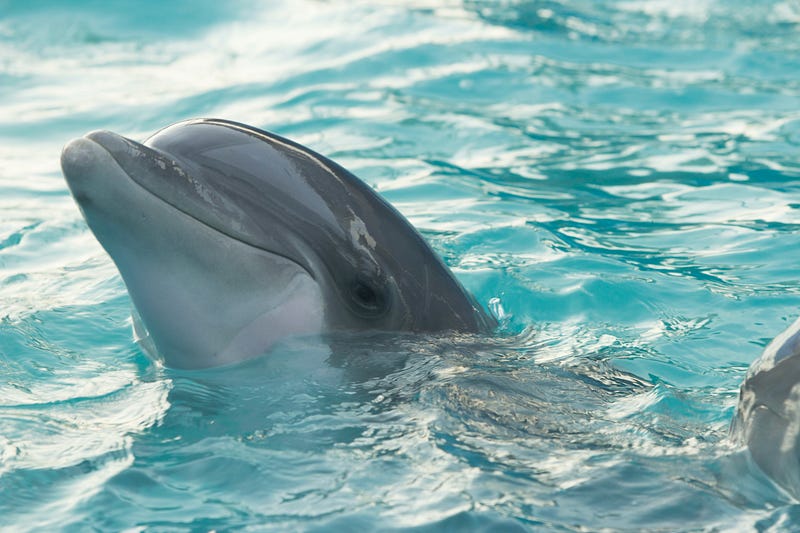
But how do dolphins physically produce these sounds? Another study titled “Bottlenose dolphins’ broadband clicks are structured for communication” by Arthur Stepanov and his team, the researchers provided insights into how dolphins physically produce these sounds. Dolphins generate clicks and whistles using a structure in their head called the ‘phonic lips’. The sounds are then focused and directed using the ‘melon’, a fat-filled organ in the dolphin’s forehead. Dolphins can control the pitch and volume of their sounds, allowing for a wide range of communication signals.
Moreover, the researchers categorized dolphin vocalizations into types based on amplitude contour and analyzed the distribution of individual clicks in sequences. They found that the dolphins’ repertoire composition follows three key linguistic laws of efficient communication, suggesting that dolphin communication is not just random sounds but a structured language that allows them to convey complex information.
Decoding the Party Chatter
So, what does this all mean? Imagine you’re a dolphin at the party. To say hello to a friend, you might produce a series of quick clicks. To warn others about a nearby predator, you might emit a high-pitched whistle. And to coordinate a group hunt, you might use a combination of sounds and body movements. It’s like having a secret code language that only your species understands.
This communication is not just for socializing. It’s crucial for survival. Researchers found that dolphins use their communication skills to enhance their hunting strategies. They use a combination of sounds and body movements to direct each other during hunts, demonstrating a high level of cooperation and intelligence.

The Original ‘TikTokers’
As we resurface from our deep dive into the world of dolphin communication, let’s take a moment to appreciate the complexity and beauty of these underwater dialogues. The next time you see a dolphin, remember, they’re not just playful creatures. They’re intelligent beings with their own language and social structures. And who knows, they might just be having a conversation that could rival the chatter at any human party!
So, keep listening, keep exploring, and keep asking questions. The ocean is full of mysteries waiting to be unraveled. And as we continue to learn more about these fascinating creatures, we’re reminded of how much we have in common with the life beneath the waves, like the previously mentioned coral cities. After all, we’re all inhabitants of this beautiful blue planet. And who knows, maybe we have more to learn from our dolphin friends about creating the perfect ‘TikTok’ -sound-!
Your support has been instrumental in my journey, and I’m truly grateful for it.
- Stay connected and receive updates directly in your inbox, by subscribing to my email list
- How I express myself musically? Give it a listen:
Your engagement helps me to continue sharing valuable content. Thank you!
Sources:


