
The Sykes-Picot Agreement: The Secret Pact That Shaped the Middle East
Understanding the Lasting Impact of the Sykes-Picot Agreement on Modern Middle Eastern Politics and Conflicts
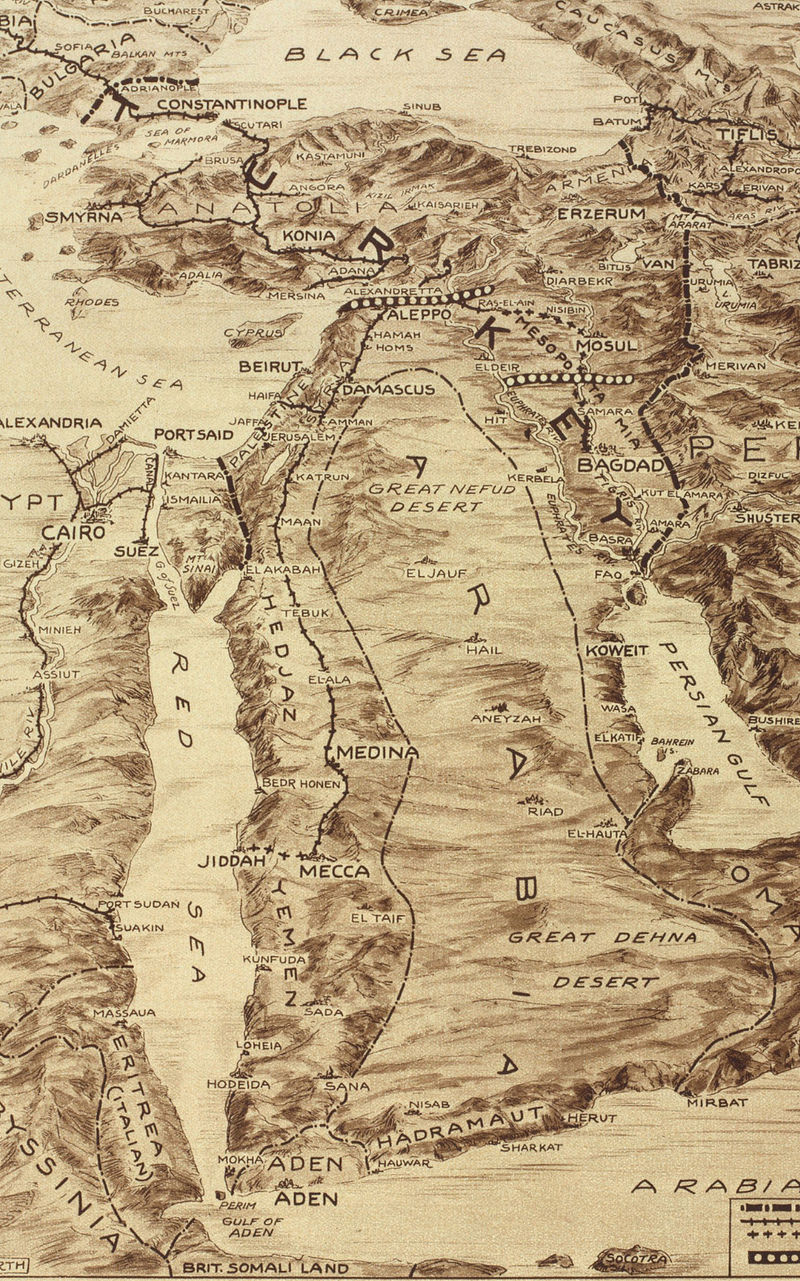
Prior to the 20th century, the Middle East was a complex tapestry of cultures, religions, and empires, with the Ottoman Empire reigning supreme over much of the region. This ancient world was set to change dramatically with the onset of World War I though, when European powers saw an opportunity to redraw the map to their advantage.
One of the most consequential outcomes of this period was the Sykes-Picot Agreement, a secret treaty drafted in the midst of World War I.
Named after its British and French drafters, Sir Mark Sykes and François Georges-Picot, the agreement proposed a new vision for the Middle East — one that bore the imprints of European imperial interests rather than the cultural, ethnic, and religious realities on the ground.
The Sykes-Picot Agreement marked a turning point in the history of the Middle East, with consequences that are still felt today.
From the formation of modern nations to the conflicts that often dominate headlines, much of the region’s contemporary political landscape has been shaped by the lines drawn a century ago by two European diplomats.
This is a tale of imperial ambition, secret dealings, and the enduring impact of artificially drawn borders on the lives of millions.
The Middle East Pre-Sykes-Picot
Prior to the Sykes-Picot Agreement and the advent of World War I, much of the Middle East fell under the domain of the Ottoman Empire. For over 600 years, this empire, with its capital in Istanbul, commanded vast territories spanning three continents, from the edges of Europe to Africa and Asia.
The socio-political structure of the Ottoman Empire was marked by a high degree of centralisation under the Sultan, who held both political and religious authority as a Caliph. This multi-ethnic empire was organised into a system of provinces, or vilayets, each governed by a Pasha appointed by the Sultan.
While the central authorities exerted significant control, there was some level of administrative flexibility, allowing for a degree of local governance and the application of local customs and laws.
Religious communities in the Ottoman Empire, known as millets, were granted a certain level of autonomy, allowed to govern themselves according to their religious laws in personal matters, like marriage and inheritance.
This system, while not without its flaws, facilitated coexistence among the Empire’s diverse religious communities, including Muslims, Christians, and Jews.
The Middle East, even under Ottoman rule, was home to a rich mosaic of cultures, languages, and religions. Arabs, Turks, Persians, Kurds, Armenians, and many other ethnic groups contributed to the cultural tapestry of the region.
Islam was the dominant religion, but the region was also home to significant populations of Christians, Jews, and other religious communities, each with their distinct traditions and practices.
Geographically bridging Asia, Africa, and Europe, the Middle East has been a vital crossroads for trade and cultural exchange throughout history. The Ottoman Empire controlled key trade routes and strategic waterways, including the Suez Canal, the Dardanelles, and the Bosporus.
The region’s geopolitical significance was not lost on the European powers, and their interest in it grew further with the discovery of oil in the late 19th and early 20th centuries.
Before the cataclysm of World War I and the Sykes-Picot Agreement, the Middle East was a region marked by complexity and diversity under the rule of the Ottoman Empire.
The stage was set, however, for a dramatic reconfiguration of the region that would have far-reaching consequences.
Origins of the Sykes-Picot Agreement
As World War I raged across Europe, the Middle East became a stage for the strategic manoeuvring of global powers, particularly Britain and France. Their designs on the region would culminate in the Sykes-Picot Agreement — a secret treaty that would dramatically reshape the Middle East.
With the Ottoman Empire aligned with the Central Powers in the war, Britain and France saw an opportunity to extend their influence in the Middle East. The region’s strategic location, its control over critical maritime routes, and the potential of its oil reserves made it a coveted prize.
For Britain, control over parts of the Middle East was seen as essential for protecting the route to its colonial jewel, India. France, on the other hand, had long-standing cultural and religious ties to the region, particularly in Levant, and sought to expand its sphere of influence.
To negotiate their respective countries’ interests in the Middle East, Britain and France appointed diplomats Mark Sykes and François Georges-Picot.
Sykes, an English diplomat and traveler with a keen interest in the Middle East, and Picot, a French lawyer and diplomat, were tasked with carving up the region into spheres of influence suitable to their countries’ strategic objectives.
Negotiated in secrecy in 1915 and 1916, the Sykes-Picot Agreement outlined a future partition of the Ottoman Empire’s Middle Eastern provinces between Britain and France.
The agreement divided the region into several zones. France was to gain direct control over a northern strip extending from Lebanon to northern Syria, while Britain would govern a southern part from Palestine to Iraq. The rest, including modern-day Jordan, was to be shared influence.
It’s important to note that the agreement was entirely devoid of any consideration for the region’s cultural, ethnic, or religious realities. The lines drawn on the map by Sykes and Picot aimed primarily at fulfilling the colonial and strategic ambitions of Britain and France.
Its immediate goal was to weaken the Ottoman Empire and strengthen British and French control over vital trade routes and resources.
The Sykes-Picot Agreement was a clandestine pact that completely disregarded the aspirations of the people living in the Middle East. Its ramifications, as we will now explore, have shaped the course of history in the region.
Terms of the Sykes-Picot Agreement
Under the agreement, the Middle East was divided into a series of zones of direct and indirect control. France was allocated direct control over what is now Lebanon and parts of Turkey, and was given influence over a swath of territory that covers today’s Syria.
Britain was granted direct control over what would become modern-day Jordan, southern Iraq, and a small area around Haifa, to allow access to the Mediterranean. Britain also had influence over an area that included the rest of Iraq and the Arabian Peninsula.
Russia, still under Tsarist rule at the time of the agreement, was also promised influence over large portions of Ottoman Turkey, including the strategic Turkish Straits.
In addition, there was to be an “international administration” in Palestine due to its significance to multiple religious groups.
A glaring deficiency of the Sykes-Picot Agreement, as noted, was its lack of regard for the existing cultural, ethnic, and religious boundaries in the Middle East. The division was based solely on the strategic interests of the European powers, rather than any consideration of the people who lived there.
The arbitrary borders drawn by Sykes and Picot often bisected communities and lumped together diverse groups with little in common and with longstanding rivalries.
For example, in Iraq, the agreement pushed together Shia and Sunni Muslims, as well as ethnic Kurds, leading to tensions that still exist to this day.
The Sykes-Picot Agreement stands as a prime example of colonial disregard for local realities and self-determination. The lines drawn on the map in 1916 would sow the seeds of conflict and unrest that have lasted for over a century.
Implementation and Repercussions of the Agreement
In the aftermath of World War I and the fall of the Ottoman Empire, Britain and France moved to establish their control over the territories as agreed. Colonial governments were established, often referred to as mandates, in the territories they controlled.
The mandates resulted in the formation of several new states, including Syria and Lebanon under French control, and Iraq, Transjordan (now Jordan), and Palestine under British control — with borders, as noted, failing to reflect the ethnographic realities of the region.
The imposition of foreign control and the arbitrary state boundaries were met with resentment and resistance across the Middle East. Many local populations felt betrayed, especially given the contradictory promises made by Britain to Arab leaders to secure their support during World War I.
This period also saw the emergence of Arab nationalism, as peoples across the region sought self-determination and freedom from colonial rule. Several revolts and uprisings occurred, notably the Great Syrian Revolt against French rule and the Iraqi Revolt against the British.
The borders drawn by the Sykes-Picot Agreement have since been a source of ongoing conflict and tension. These artificial boundaries often placed rival ethnic or religious groups within the same state or split groups between different states.
One of the most enduring conflicts has been the Israeli-Palestinian conflict. The Balfour Declaration, issued by Britain in 1917 and arguably an extension of Sykes-Picot’s colonial partitioning, expressed support for the establishment of a “national home for the Jewish people” in Palestine, leading to decades of conflict over the land.
In Iraq, tensions between Kurds, Sunnis, and Shias are often also traced back to the formation of the state after World War I. Similarly, the division of the Kurdish people across Turkey, Syria, Iraq, and Iran has been a source of regional tension and conflict.
Legacy of the Sykes-Picot Agreement
The nations that were created — Lebanon, Syria, Jordan, and Iraq — have become vital players in the region’s political landscape.
But as noted, the Sykes-Picot borders also created a breeding ground for conflicts by enforcing artificial homogeneity within the newly created states while ignoring ethnic, religious, and sectarian differences.
The Sykes-Picot Agreement also set a precedent for the involvement of external powers in the region’s affairs, a trend that continues to shape the Middle East’s geopolitical landscape.
In many ways, the Agreement laid the foundation for regional and international conflicts involving Middle Eastern states. From the Lebanon civil war to the current Syrian crisis, the shadows of the Sykes-Picot Agreement loom large.
Perhaps one of the most potent legacies of the Sykes-Picot Agreement is the deeply entrenched suspicion and resentment towards Western interference in the Middle East. The agreement is often viewed as the epitome of colonial betrayal, with Western powers reneging on promises of Arab independence and instead pursuing their own interests.
This perception has had profound implications for the Middle East’s relationship with the West. It has often fuelled anti-Western sentiment and has been a rallying point for both nationalist and Islamist movements in the region.
The Sykes-Picot Agreement, born in the shadows of World War I, has cast a long shadow over the Middle East for more than a century. The arbitrary division of the region into spheres of influence for the benefit of European powers has left an enduring mark on the Middle East’s geography, politics, and identity.
The geopolitical landscape of the modern Middle East is a direct product of the Sykes-Picot Agreement. The borders that were drawn have not only defined the region’s states but also shaped their interactions.
The cultural, ethnic, and religious diversity of the region was largely overlooked in the partitioning process, causing tensions that have manifested in regional conflicts and power struggles, some of which persist to this day.
The agreement has also been central to political dynamics in the Middle East, setting a precedent for foreign intervention that continues to shape the region’s geopolitical landscape. It also planted seeds of distrust towards Western powers, stirring feelings of betrayal that have often fuelled nationalist and anti-colonial sentiments.
Ongoing debates about the Sykes-Picot Agreement and its legacy remain a significant part of contemporary Middle Eastern politics. Its centennial in 2016 reignited discussions about the region’s colonial past and its impact on present-day realities.
There are debates about whether the current Middle Eastern borders, a legacy of the agreement, are sustainable or if a new, more organic configuration that better respects the region’s cultural and ethnic diversity is needed.
Understanding the Sykes-Picot Agreement is therefore key to grasping the complex realities of the Middle East today. The decisions made over a century ago continue to resonate, underscoring the enduring impact of historical events on shaping our world.
As we navigate the evolving geopolitical landscape of the Middle East, the lessons of the Sykes-Picot Agreement serve as a stark reminder of the profound and lasting effects of colonial ambition on the regions they once sought to control.


