
The Surprising Origins Of Data Mining: A History Of Analyzing Information
“Science is a differential equation. Religion is a boundary condition.” — Alan Turing

The well-known Alan Turing is considered the father of modern computing, and his contributions to the field of computer science have been immense. One of his most significant contributions is his work on data mining.
Turing’s ideas and techniques have paved the way for modern data mining, which has become an essential tool in many fields today.
Early Life And Education
From an early age, he showed an interest in mathematics and science. He attended King’s College, Cambridge, where he earned a degree in mathematics in 1934.
After completing his degree, Turing began work on his Ph.D. at the same university, focusing on the foundations of mathematics.
The Turing Machine
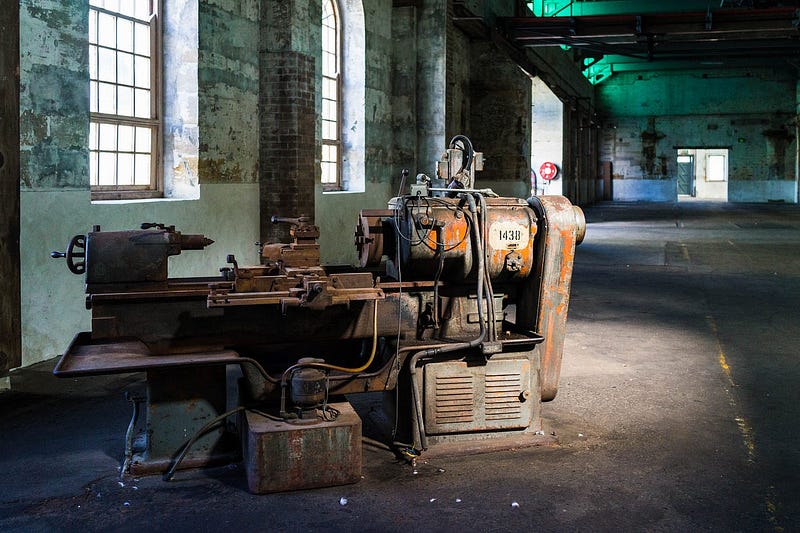
Turing wrote a paper titled “On Computable Numbers, with an Application to the Entscheidungsproblem” in 1936 while still a Ph.D. candidate. In this paper, he introduced the concept of a Turing machine, a theoretical machine that could perform any computation possible with a computer.
The Turing machine is considered the theoretical basis of modern computing and has been an essential concept in the development of computer science.
Breaking The Enigma Code
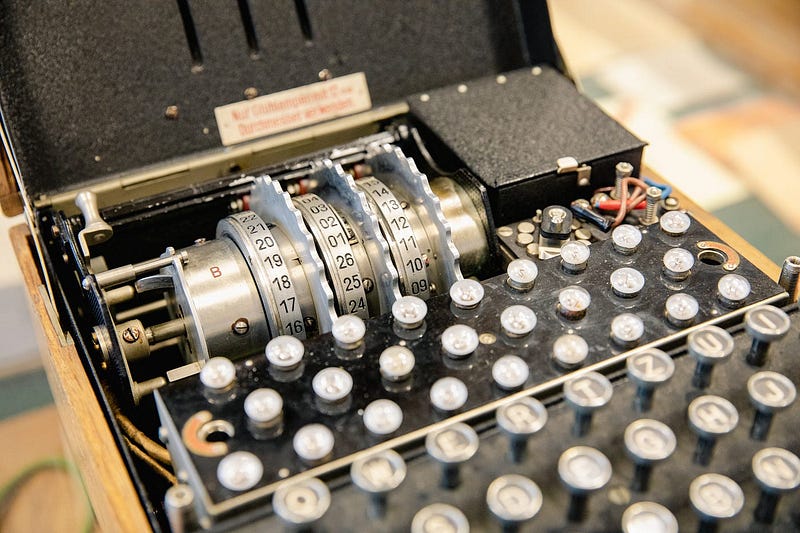
Alan Turing was a brilliant mathematician and computer scientist who was pivotal in the Allied victory during World War II. In 1939, shortly before the start of the war, he was recruited by the British government’s codebreaking agency, known as the Government Code and Cypher School (GC&CS).
Turing’s role was to work on cracking the codes used by the German military, which were considered among the most complex and sophisticated of the time.
Turing was initially stationed at Bletchley Park, a secret facility in England dedicated to codebreaking. At Bletchley, he was part of a team that included other top mathematicians, cryptanalysts, and linguists. Together, they worked on breaking the codes used by the Germans, which were encrypted using an electromechanical device called the Enigma machine.
The Enigma machine was a complex device that used rotors to scramble messages, making it extremely difficult to decipher. However, Turing and his colleagues were able to develop a machine known as the Bombe, which was capable of breaking the Enigma code.
Data Mining

After World War II, Turing began to focus on the field of data mining. He recognized the potential of large datasets to reveal patterns and insights that would be difficult or impossible to uncover by other means. However, at the time, the tools and techniques for analyzing data were still in their infancy, and the concept of data mining still needed to be widely understood.
Despite this, Turing continued to explore the possibilities of data mining and developed several innovative algorithms for extracting useful information from large datasets. He understood that the key to successful data mining was identifying the most relevant variables and patterns within the data and using these insights to make predictions and inform decision-making.