
The Surprising Link Between Falls and Lifespan
Why older people fall, and how to avoid it
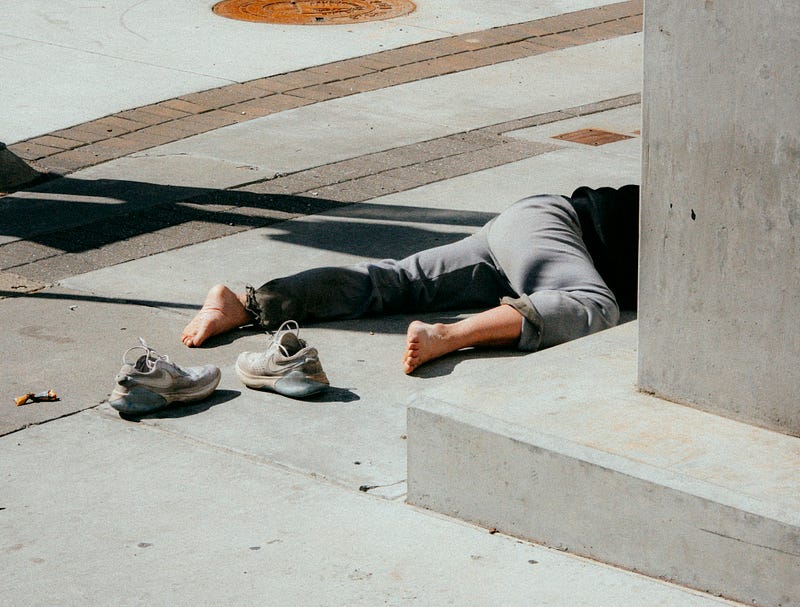
During my recent physical, the nurse practitioner asked a surprising question. “Have you had any recent falls?”
Doctors and nurses routinely ask about medicines, blood pressure, alcohol, smoking and exercise. But asking about falls was a new addition to the list. I told her I had slipped on a rocky incline while scrambling behind my grandchildren during a mountain hike.
“That doesn’t count. Anybody could fall under those circumstances,” the nurse replied. “I’m talking about falling for no reason.”
Smugly, I answered, No, I’m not prone to falls. But I wasn’t so smug a few weeks later. Groggy from sleep, I got up around 2 a.m. to use the bathroom. It was dark, I whirled around suddenly, lost my balance, and surprised myself by slipping on the tile floor. I didn’t have time to catch myself, and landed hard, doing a face plant.
When I sat up, I was horrified to see blood dripping on the white tile and saturating my pajamas as it gushed from my nose and mouth.
“Are you okay?” My husband got out of bed to check on me, and I could tell by his expression that it was bad. His first words were, “Don’t look in the mirror.”
He spent the rest of the night icing my face, and in the morning, I realized how lucky I was. My nose wasn’t broken, there were no black eyes, and other than a split lip and a slightly loosened tooth which has since reset, I was fine.
But the fall concerned me, and I take a flashlight with me now whenever I get up during the night.
A Leading Cause of Injury and Death
It turns out, I had good reason to be concerned. According to the CDC, about 36 million falls a year are reported among older adults, resulting in more than 32,000 deaths. Every day an older adult (age 65+) suffers a fall in the U.S., making falls the leading cause of injuries and death in this age group.
When falls happen to us and the people we care about, the CDC information becomes more than an interesting statistic. We realize how abruptly a fall can change everything.
A year ago, one of my relatives fell, hit her head, and died several weeks later from her injuries. Last night, a friend texted me that she had fallen down her stairs and was at the ER. Luckily, she only had a bump on her head and a sprained ankle. My own fall showed me how suddenly accidents happen, shaking our confidence even when injuries aren’t serious.
Older people are more susceptible to falls because of changes due to normal aging, such as declining muscle mass, effects of medications, impaired vision and hearing. Certain health conditions like Parkinson’s disease make people more prone to falls, but you don’t have to be sick to fall. According to research from John Hopkins, people with mild hearing loss are nearly three times as likely to fall. Even Vitamin D deficiencies that decrease bone density or strength can contribute to falls.
One of my friends who suffers from vertigo was told by her PT therapist that “losing our balance and vertigo are incredibly common with folks our age.”
I don’t take any medications other than prescription eye drops, don’t suffer from hearing loss, and exercise regularly, walking four or five miles a day. Yet at 71, I still suffer from one major risk factor, which is my age. The most startling thing about my fall was that I was unable to catch myself before my face slammed into the floor.
As Moriarity said to Sherlock Holmes, “It’s not the fall, it’s the landing.” And I landed hard!
The Reason I Fell
But there might be a reason I was unable to catch myself. As we get older, our reaction time slows because of slower signals from brain to muscles. This reduces our ability to make the quick adjustments necessary to either prevent a fall or soften the impact.
Dr. James Richardson, M.D., and his team of researchers set out to discover what factors determined whether an older person could successfully recover from a stumble before suffering a fall, and it all boiled down to reaction time. At the end of their study, they concluded that “When an elderly person falls, it seems likely that their brain is not keeping up with what is happening and so it is not able to quickly, and selectively, attend to a particular stimulus, such as hitting a curb.”
Both reaction time and balance play a big part in whether we’re going to fall as we get older.
Following my initial relief at surviving a hard fall without serious injuries, I began to worry about my loss of balance. A 2022 study published in the British Journal of Sports Medicine found balance to be a major indicator of longevity. Did my fall mean my balance was poor?
Can a Balance Test Predict Longevity?
According to the study, people in middle and later life who were unable to stand on one leg for 10 seconds were almost double the risk of death within the next few years. Researchers asked participants to stand on one leg with the front of the free leg resting on the back of the opposite lower leg, their arms by their sides.
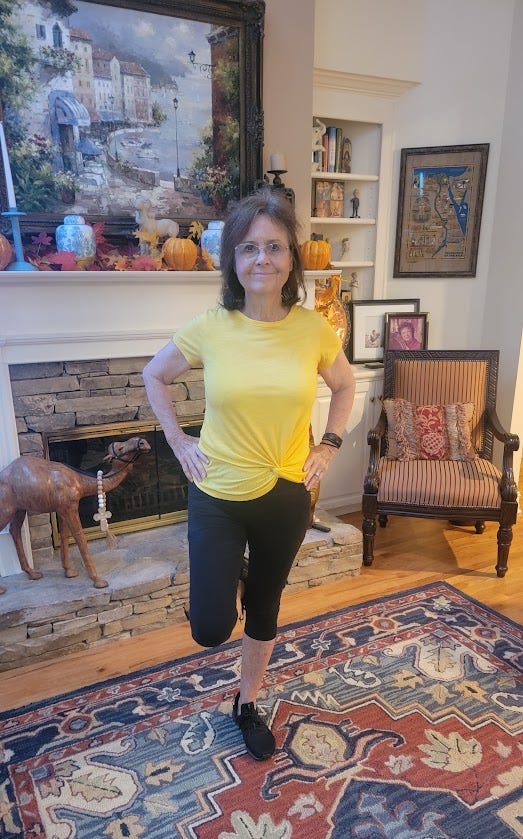
After taking age, underlying health conditions, weight and other factors into account, scientist determined the balance test was associated with an 84% heightened risk of dying during the study period.
I tried the balance test and was relieved to discover I had no problem standing on one foot for longer than 10 seconds. But another balance test devised by a team of Brazilian researchers and written up in the European Journal of Preventative Cardiology is a lot harder. It’s supposed to be a longevity test, and if you score between and 8 and a 10, you’re in good shape.
In this test, you sit on the floor from a standing position without using your hands, arms, or knees to slow your descent. Then you stand back up without using your hands, arms, or knees. Starting with a score of 10, you subtract points every time you touch the floor with the help of those appendages.
In other words, for each hand, knee, forearm, one hand on knee or thigh, or side of leg used for support, you subtract one point.
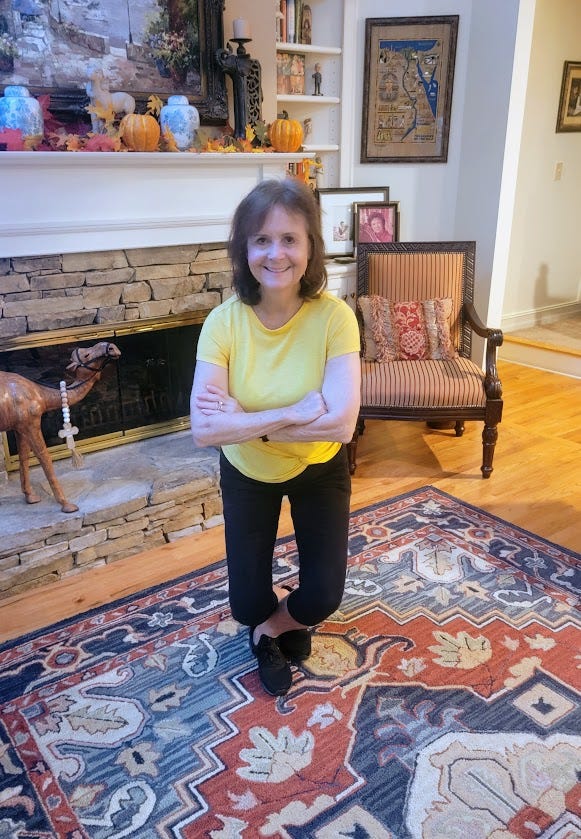
Believe me when I tell you this test is hard. You shouldn’t try it unless you have a soft place to land. I scored a 9, since I was able to sit without using hands, arms, or knees, but I needed a hand to boost myself back up. Using the hand was a minus one.
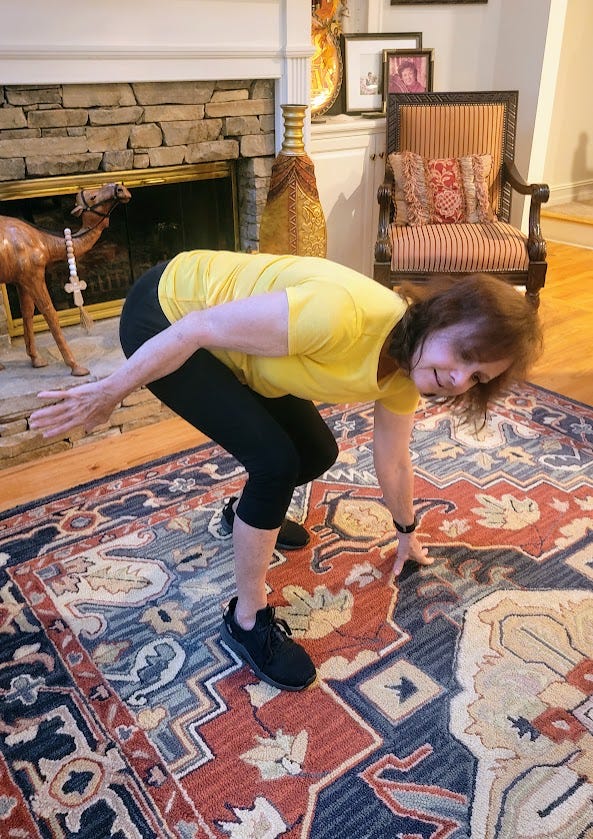
Those who needed both hands and knees to get up and down were almost seven times more likely to die within six years than those who could spring up and down without any assisting appendages.
But I have some doubts about this test. My mother could not have sat on the floor, nor could she have gotten back up, and she lived to 102. The test doesn’t account for people who have had knee replacements, who are not naturally flexible, or who have foot problems. If my husband tried to sit without using hands, knees, or arms, he would crash to the floor like a felled tree, yet he is strong, fit and healthy.
Despite my misgivings about this test, it makes sense that balance is one predictor of longevity. There are a lot of connections between the brain, muscles and neurons that must function to achieve good balance, and the good news is that balance can be improved through practice.
Another reason you might want to practice standing on one foot is because achieving better balance has also been shown to improve cognition. Older adults who participated in a 12-week balance exercise program showed significant improvements in verbal memory and selective attention.
How to Improve Reaction Time
Although my balance appeared to be fine, I still worried about my inability to react in time to prevent the bathroom fall. Was there anything I could do to improve my reaction time?
Fortunately, the answer is yes. As we get older, cognition and reaction times decrease, but we can strengthen our body’s response to external stimuli and improve our reaction times through exercise and lifestyle changes.
Nutrition, cognitive exercises, meditation, staying hydrated and getting adequate sleep all help improve brain function. But to battle the cognitive deterioration that comes with age, we can step up our game even more by doing things as simple as using our non-dominant hand more often. Try brushing your teeth, pouring a drink, or signing your name with your non-dominant hand. This helps activate the non-dominant hemisphere of your brain, which has shown promise in improving cognitive function.
Sports are another way to improve reaction time. This doesn’t mean we have to take up pickle ball or tennis. Just throwing a tennis ball against a surface and catching it when it bounces back can improve your reaction time.
Improving balance and reaction times play a part in preventing falls, but there are other practical measures we can take. Wearing safe footwear helps, along with avoiding slippery floors and clutter that might trip us up. Avoid drinking too much alcohol, since alcohol can cause dizziness and lower reaction times.
Since my fall, I’ve made sure I have adequate lighting when I use the bathroom in the middle of the night.
How to Get Back on Your Feet
My cousin confided in me that she fell when she was working in her yard and couldn’t get back up. She was on the ground for over an hour before a neighbor spotted her and helped her to her feet.
I was surprised, because my cousin is close to my age and doesn’t suffer from any major health issues. I was used to my elderly mother not being able to get up after a fall. She was in her nineties when she fell and had to call the fire department for help. But hearing about my 73-year-old cousin was a shock until I researched falls and discovered that at least 50 percent of older people who fall aren’t able to get up by themselves.
My mother wore a medical alert watch that she activated by pressing a button, and this alerted the fire department when she fell. Older people who live alone should wear a medical alert device or carry a phone at all times, but even this precaution might not be enough. My cousin had her phone with her, but she couldn’t find it. Only later did she realize she was sitting on her phone when she fell. This is why it’s also a good idea to have someone check in on you periodically.
Another good idea is to practice getting off the floor. There are a lot of videos on how to do this, with most of them emphasizing a slow, step-by-step approach. Rolling to one side, moving slowly toward a low chair with a grip, then rising to a kneeling position before getting in the chair are common suggestions.
We watched a few of these videos with my mother after she moved in with us, but she was too frail and physically weak for any of the recommended maneuvers. Yet watching the videos was not a waste of time, because my husband and I were able to practice the techniques. We also learned the value of remaining calm and assessing the situation after a fall.
In Conclusion
Falls are common and dangerous among the elderly, but they aren’t inevitable. In addition to making our homes safer by eliminating hazards, we can gain strength and improve our balance and reaction times. Good nutrition, a healthy lifestyle, and exercises as simple as standing on one foot, using the non-dominant hand, and catching a tennis ball can help. We can’t prevent the pitfalls of aging, but we can do a lot to retain and improve our cognition and physical health.
You can’t turn back the clock, but you can be careful, maintain a healthy lifestyle, and keep moving! Your life and your longevity might depend on it.