
WHEN THE MONEY STOPS FLOWING
The Surprising Gifts You Get When Your $10,000 a Week Business Suddenly Fails
The only way through a disaster is often to flip the script and see what you’ve gained

My husband and I bought an old-fashioned lakeside “fish camp” in 1998. By 2006, we had turned it into a thriving weekend retreat for city dwellers, satisfying their need to exchange the noise and heat of the city for sunsets and water sports.
Besides the cabins, we offered boat and watercraft rentals, horseback rides, nature trails, RV sites, and an onsite steakhouse crowded with both locals and tourists every weekend. Our summer seasons were a blur of people seemingly throwing money at us for any legal form of escapism we could dream up between May and September.
Life was hard, but good. Until it wasn’t.
By Saturday morning of the 2007 Memorial weekend, it was obvious that the rain was not going to stop long enough for guests to enjoy much of anything beyond a weekend away from their own houses. Boat rentals were canceled. The pool was closed due to intermittent thunderstorms. People began to get grumpy.
Muddy cabins to clean when the last guests left were only the beginning of our problems. The lake rose 23 feet in a matter of days — at the time, it was the fourth-highest flood (although when you live on a lake you don’t use that “f” word) in the history of the lake. Our cabins were high and dry, but boat ramps closed, leaving out a substantial portion of our business.
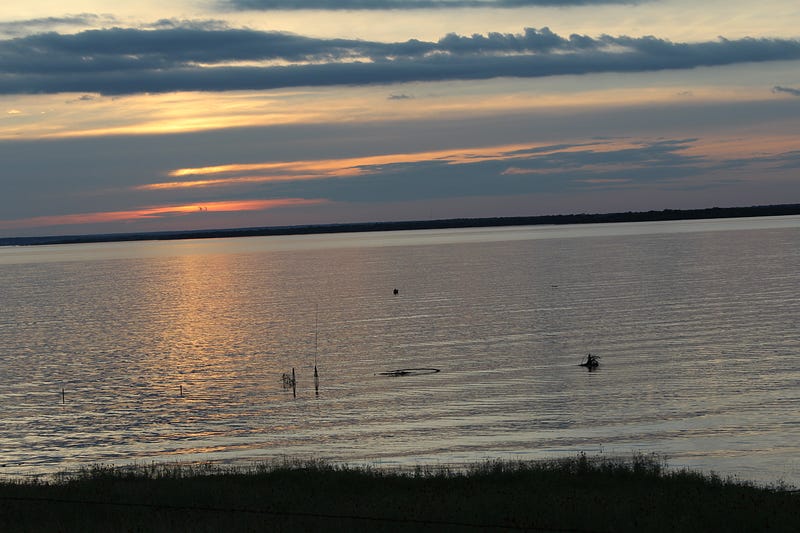
As media is wont to do, tales of our demise were greatly exaggerated. Even though public parks were swamped with water and therefore closed, private businesses like ours were open. That, of course, was not what was reported.
Our lake is a flood control lake designed to hold back water to protect several communities downriver. That means the high water arrived in a rush but did not leave that way. Our entire summer of business disappeared right before our eyes. Oh sure, the locals supported the restaurant through the summer — if for no other reason than to enjoy the striking views of the greatly expanded lake.
Disasters happen
Communities and businesses in them suffer catastrophic losses like ours all the time due to floods, fires, global pandemics. Some recover, others do not. In our case, the flood was backed up by the 2008 recession making it a much tougher slog.
Not long after we bought our business a neighbor came to visit bearing plant cuttings. During our introductory conversation, I happened to point out the haphazard patches of irises cropping up on the property below the cabins.
“Those are flood irises,” she explained. “Washed up there from somebody’s garden during the big flood.”
As a newbie to lake living, I could not fathom the lake rising to those heights. Nine years later I understood not only those flood irises, but all the other gifts that wash up on our business shores from time to time.
“Those are flood irises,” she explained. “Washed up there from somebody’s garden during the big flood.”
Our list of gifts from the flood of 2007
- We understood our business and our customer base better We had been so busy that we hadn’t noticed how many of our guests were involved in watersports. At the time we thought it was balanced between those with boating in mind and those that just wanted a quiet place to escape the city. Even with bad press, our hopes of retaining half our business drained away as we realized that it was far less than half.
- New marketing tactics were mandatory We had always marketed our business, but the flood drove home the reality that marketing the lake itself was a more secure approach than only marketing ourselves. We discovered that marketing the lake and surrounding area ensured that more people knew where to find our business. We helped state legislators pass bills improving both our community’s marketability and providing the funds to do that.
- Our community mattered to us more than ever Because we all suffered the effects of the flood, and with our new-found desire to market the community, we built bonds with fellow business people — including our competitors, that have outlived any of our businesses.
- We found joy in working at a slower pace We talk about those first nine years as the hardest years of our lives. It took the flood to help us understand that we could run a business in a way that allowed us a bit more time for life beyond it — something we failed at before the flood.
- The fact that we didn’t cause the loss of business ourselves gave us confidence As we felt the life slip out of our business that summer, there was no sense of failure. We had been at the pinnacle. There was probably some room for improvement — there always is, right? But we weren’t failing because of a lack of business skills. We knew we could thrive at something going forward, regardless of what happened with the business.
- We became thrifty The sudden jolt to our bank account caused an immediate need to scale back everything we had previously been spending money on. That thriftiness allowed us to weather the recession that followed the flood.
- We developed a stronger line of credit and the contacts we needed to move forward The business world revolves around credit and contacts. That point was made clear to us in 2007 and at the exact right time. Not only did our ability to belt tighten get us through, but our stronger credit and banking contacts also helped keep us afloat as well.
- The need to diversify and develop other income streams was obvious If there is one thing that 2007 did most for us was to help us see clearly how focused we were on only one income. We thought we were diversified enough by offering a variety of products. The problem was that we were still only selling to one customer base. If those people didn’t show up, it was irrelevant whether we could have offered them a choice between ten sizes of cabins or options to spend the day on a horse or on a boat. Our gift shop gathered dust and our add-ons like fresh cinnamon rolls or fresh roses in the cabins felt like silly attempts to boost ticket totals when there weren’t any tickets to boost. We discovered that most of our gift shop items sold well on Amazon and that writing about travel and was a skill I had let fall by the side of the road as we built our business. Those two side businesses, fully developed in 2007, now make up our primary income.
- We stretched our creativity tenfold We only thought we were being creative before the flood. The reality was that we had barely touched our creative base. By pushing ourselves to fight for our business and our financial future, we developed skills we could never have imagined possible before.
- We learned to play “worst-case-scenario” before every decision The most important bit of advice we got from the previous owner of our cabin business was to think things “all the way through.” It was not until we went from $10,000 per week to $0 that we understood the value of that advice. We learned to ask “what if…” almost every day.
Takeaway:
Every failure, no matter the cause, no matter how slow or how sudden, can light the way to your next success. But that only works if you are open to the changes that failure brings. Like our flood irises, your gifts may not reveal themselves until your next growing season. Look for them among the debris and you’ll know you are on the right path.