
The Superhero Movies And The Fear Of American Hegemonic Displacement
A Marvellous Masquerade
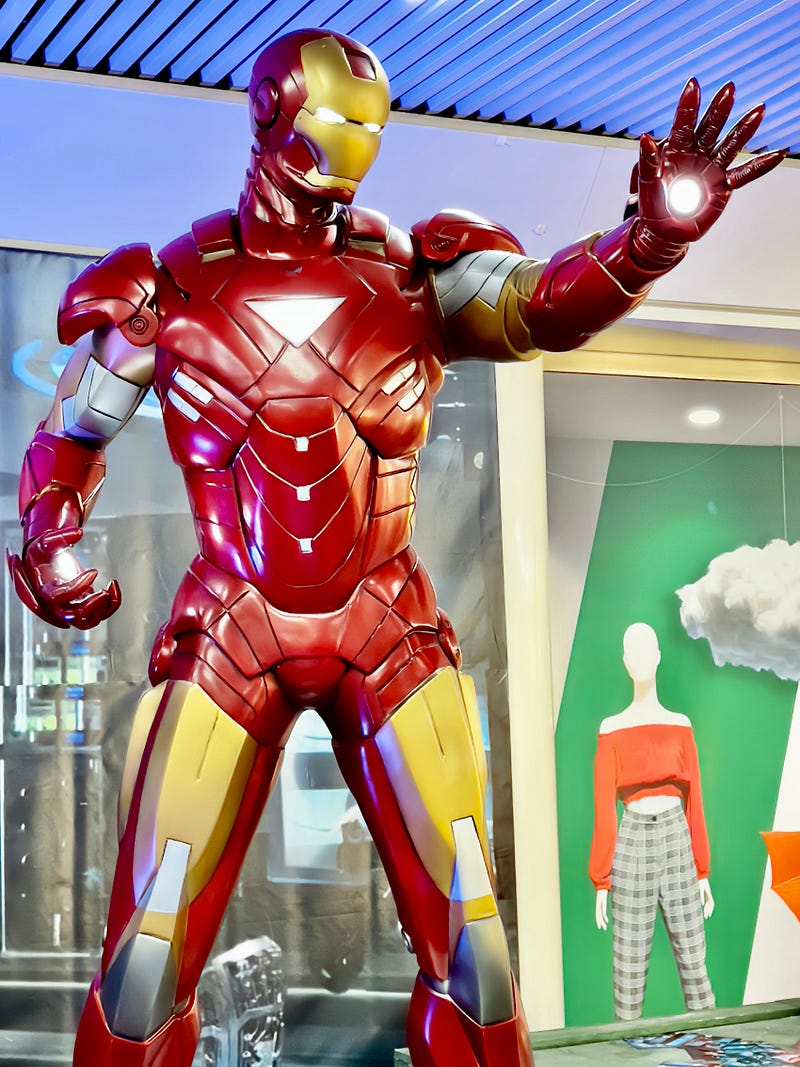
I am pretty sure I have seen all of the Superhero movies that have been made in the last two decades. They are of course great fun and very entertaining; as they are required to be to recover the colossal revenues expended upon and invested in them by the studios concerned. Yet they are cultural products and all cultural products display the worries and anxieties of that epoch.
There is no cultural product that can stand alone or outside of the dominant Weltanschauung. And our Weltanschauung has been for the last 200 years that of Capitalist Realism. The creation of culture has had to dance to the tune of Capitalism or has been in opposition to it. There has been no other place that is outside of space and time where culture can be produced. Only machine culture could qualify as being devoid of the Weltanschauung but whether a machine can produce ‘culture’ that is by definition non-human is another question for another day.
All cultural artifacts have an economic and political imprint upon them. And the political and economic part of this is the dominance of America since the second world war as the Capitalist hegemonic Superpower. Here the Superhero was born as an anti-fascist and remained without challenge for decades the very symbol of the ‘World’s Policeman’ in action.
Unchallenged hegemony in fiction and in fact until Vietnam. And then as the hegemony was undergoing a catastrophic blow from defeat in Vietnam along came in the 70s those big budget films of Superman with Christopher Reeve being launched on the big screens. Coincidence? No chance.
As if to reinvigorate the limp military phallic symbols a rerun of the Vietnam War now takes place on a giant screen — General Zog? I mean how obvious do you have to be? Along with Terence Stamp’s Asiatic-looking General Zog, it's pretty obvious what's going on here. The Free World i.e. American Capitalism is triumphant against the insidious threat from the Other — the not so sleeping Dragon of millions wanting to communise America and its way of life.
And then a hiatus. As American Capitalism becomes the only game in town. As the Soviet Union buckles and falls into a fractured state of almost complete collapse. Saved by a man who would be repudiated as Saviour and seen as a traitor to many now — Mikhail Gorbachev (2 March 1931–30 August 2022) He has been harshly treated. Without him it is doubtful whether any of the last two decades of Superhero movies would ever have been seen by Russians.
But then came the mortal blow that literally shook America to its foundations. The hegemony was hit very hard on 9/11 and its status as the mightiest hegemonic power in the world took a substantial hit. It was attacked deep within its own territory and at the very center of the structure of democracy and its potent political symbols in iconic architecture. It was also hit in the epicenter of a building known for trade around the world.
All three essential aspects of its hegemonic infrastructure were hurt very seriously. It was hurt politically, economically, and culturally. The damage to its military reputation would come later as it went full-on regime change in Iraq and Afghanistan. But the superhero franchise would hold the line for American power as it pushed on with the regime change. I don't think it is an exaggeration to say that during those two decades of the American invasion of Iraq and Afghanistan the superheroes of America were expensive state-of-the-art war porn.
To recover its undoubted dent in hegemonic power it had to strike back. Not just physically in military terms but also in cultural terms — the comic superhero was now transformed into a sign that signified the power of America and its dominance and extensive global reach. American military and economic power were global. Yet the architect of 9/11 could not be found.
Such power yet it could not find its most dedicated enemy and nemesis. So it hung another to fill the need for vengeance and still the hegemony wasn't satiated. A new President took to the skies with weapons — much like those flying superheroes — to find the enemy. And that's when the trouble with the unaccountable nature of such weaponry/superbeings really began in earnest. Who is to hold to account these extra-judicial murders? Fiction and fact became the same battleground in a fictional Civil War.
It would later internalize the conflict as the War on Terror moved from the threat from outside to the threat from inside America. The symbols of American might would fight amongst themselves to prove who was right about such might. A reductio ad absurdum that created another grand narrative of twisted logic.
More might more right? But that is the bloody problem in the first place. OK. So let's add more might and then we can see who is the strongest. Here we go again. And we end with a very similar mutually assured destruction but this time with teams of superheroes and tight-fitting colourful costumes. America fighting itself in a fight over a War on Terror that it had exacerbated and created in the first place. It was looking in the mirror and punching itself in the face. But hey it was entertaining I’ll give you that.
Only later did the threat posed internally to the soul of America become the subject matter of other characters within the superhero or heroic comic franchise. The latest iteration of Batman would coincide with the debacle of America leaving Afghanistan with its tail between its legs as the Taliban regained control with ease.
And desperate young men tried to fly like a superhero out of their country by holding onto the undercarriage of the last flights from Kabul. Much like those desperate Vietnamese clinging to the helicopters as they left the American Embassy in Saigon. No CGI to save any of them. Just another death in a mounting mountain of global clusterfucks and collateral damage in the fear of losing 1st Place in the Hegemonic Super League.