
The Sun
No Ego In Sight
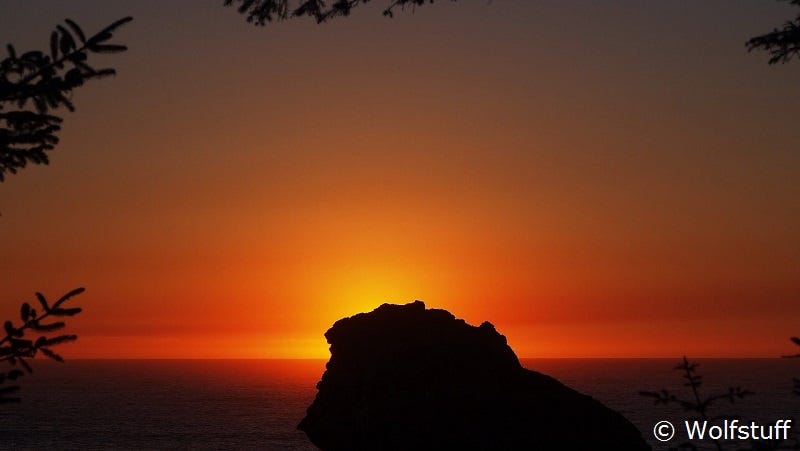
Does the Sun ever think: What’s in it for me?
Now, I don’t know if the Sun ever thinks, at all. But should she, she strikes me as a little too giving to worry overmuch about herself.
After all, think about the absolutely colossal amount of energy she gives away, freely, every second of her life, even if most of it is simply wasted — from our standpoint; most of it just rays into out-there, into the nowhere nothing of dark, cold space; for when you stop to think about it you realize that only a smidgen of a smidgen of her ongoing gift, her glorious output, finds its way to our little planet, and to us upon it, to keep our planet and us citizens warm and cuddly.
Warmer and warmer, of course, and not necessarily cuddlier and cuddlier as human ignorance (and greed) wrestles the upper hand from reason, warming itself to death.
Does the Sun every worry about that? I would not surprise me.
Does the Sun ever worry about running out? Perhaps, methinks, for no more Sun means no more giving, and I think that runs squarely against her nature, against her giving grain.
Does the Sun know what happens to stars when they grow older? Does she know how stars pass away?
Does she know that most stars (her size) take millions of years to die, that when a star like her has burned all of its hydrogen fuel, it expands to become a red giant, a huge, millions-of-miles-across giant — big enough to swallow nearby planets, say Mercury and Venus.
Does she know that, eventually, she’ll shed her far-reaching outer layers and collapse to form a very dense white dwarf, one teaspoon of what now remains of her weighing in at a hundred tons.
Does she know that, then, over the next billion or so years, the white dwarf sun will cool and becomes invisible.
Now for all intents and purposes no more, dead.
Does she know about this? Does she worry? About us? About herself? Perhaps about us, that’s what I think.
Perhaps she secretly wishes she were larger, for those larger stars they go out with a bang — not where the expression comes from, but it’s very apt, for stars of, say, eight or ten times the mass of the Sun, for reasons best known to gravity and astronomers, end their lives in a different, very sudden manner. When they run out of fuel, they, like the Sun, will swell into a red giant, but into one much larger, into a super-giant.
Will swell into a super-giant who refuses to die and now clings to life by burning different fuels, but this will only work for a few million years, then it will, unavoidably and finally, blow itself apart in a huge, glorious supernova explosion — the going out with a bang.
For a week or so, the supernova will outshine all of other stars in its galaxy and will be seen from most planets even in sunlit daytime. Then it quickly fades, normally leaving nothing but a tiny, dense object — a neutron star — or, if it were truly massive to begin with, a black hole, surrounded by an expanding, fleeing cloud of very hot gas.
The elemental remnants of the supergiant (such as oxygen, carbon and iron) now drift scattered throughout surrounding space: stardust that I time will attract and cohere and form other stars and planets, and so it starts all over again.
Perhaps she would prefer this going-out-with-a-bang option. I would, if I were the Sun.
Mostly, though, I think she worries about us, and about human ignorance embarked upon our slow but quite certain global suicide.
© Wolfstuff


