
The Sultan of Brunei’s Wife Stopped in My Shop
And changed the course of my life
“You sound like an Indonesian,” she told me, (finally!), “but you sound like you come from the gutter!”
It had taken me twenty minutes to receive this enlightenment.
I couldn’t ask her outright why she was laughing at me in a full-on, mouth-hiding giggle fit. No. Indonesians typically balk at being asked direct questions. If you want to find something out, you need to offer up your own perspective, first off, as an innocuous and tentative statement that is on the very edge of the subject you wish to know about. Then both parties work a series of guesses, disguised as tentative statements.
Making a definitive statement also goes against the grain, so much so that if, for example, you ask a 90-yr old woman whether she has children, and she doesn’t, she will say “Belum”: — not yet.
It had been a typical day in the shop I managed, in the Student Union of the Institute of Education — part of the University of London. The Inst of Ed is where students get a teaching degree, and teachers get further certifications in teaching.
The student supply shop was small, but I am a space wizard, and I stocked a huge variety of goods, at only 25% markup, not the usual 50% or 75% markup prices. If someone wanted something and I didn’t have it, I got it in.
The shop sold stationery, logo-ed clothing, and toiletries, and was a second-hand book depository. The latter had a high turnover rate, as students brought their textbooks and novels to sell when they had finished with them, or came looking to find books they needed at a cheaper price.
During lulls in the day, I learned a lot about the teaching life by reading the amusing novels that came in. Novels about teaching school should be a recognised genre all its own, I reckon.
I loved that job, and it had saved me from getting kicked out of England, eight years previously.
Also, I have a stationery fetish. As a child, put to bed at 6.00 but still wide awake, I used to enter my fantasy world, where I was surrounded by stacks and piles of clean virgin paper, notebooks, pads, pens pencils, and paints of all varieties. The wide-open possibility of it all! The fresh untrammelled wealth!
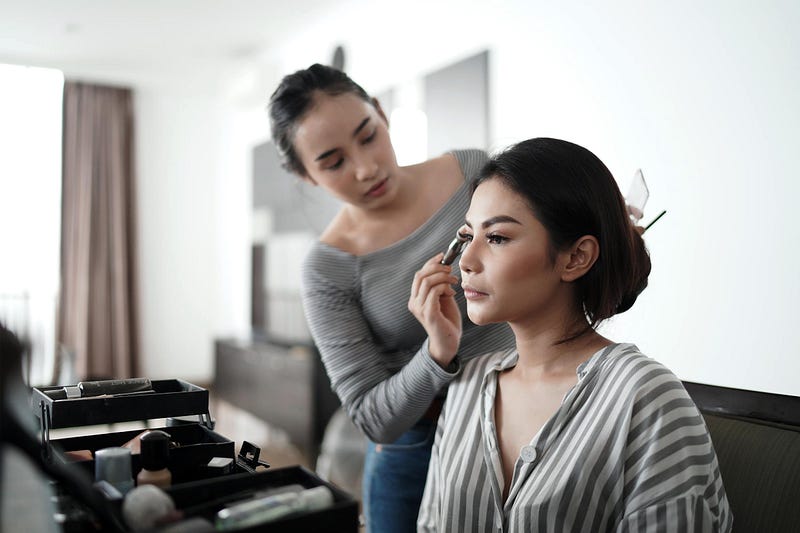
This particular day, during a lull, in comes the most beautiful woman you ever saw. Her lustrous black hair was perfectly coifed in a bun, tastefully adorned with filigree gold, as were her ears, neck, and hands. The make-up on her beautiful face was subtle and perfect. Her perfume was divine.
She was wearing, I guess, what might be called a tailored skirt suit, of fabulous silk. Her air was confident, but gentle and open, and very Indonesian. I think my jaw dropped, and stayed there, for three full beats when I looked up from the book I was reading, sitting at the till in the corner.
In a word, this woman was halus.
Halus (hah- loo-ss) is an Indonesian word that loosely translates as ‘fine.’ We all have our own character, which incorporates a mix of aspects that run on a scale from halus, — fine — , through to kasar, which translates as rough, dirty, or coarse. This stunning woman was Halus, with a capital H, through and through. No big surprise then: turns out, she was royalty.
I stopped gawping and blurted out “Apakah Saudara dari Indonesia?” (Are honorific-you from Indonesia?), and we went on to have a lengthy conversation in my second mother tongue, Indonesian.
She divulged that she was an Indonesian-speaker, but was not technically Indonesian herself, as she was one of the wives of the Sultan of Brunei, an independent principality on the island of Borneo. Said Sultan was, and might still be, the richest man in the world.
I divulged that I had lived in Jakarta for many years, as a young child and then as a teenager, because my father was an Australian diplomat posted to Jakarta in 1967, and my stepfather was Managing Director of Inco in Sulawesi and Jakarta, from 1972 to 1982.
At some point, she got a fit of the giggles, which returned sporadically while I tried, politely, and then a bit desperately, to find out what was so hysterical.
I suggested it was surprising to find an Indonesian speaker in the corner of a tiny London shop — something that could well apply to both of us. She agreed.
Prompted by her non-questions, I told her more about my family. (nope)
I praised some things I loved about Indonesia. (nope, still giggling)
I marvelled at temples and other architectural wonders in various islands my family had visited. (nope)
I lamented that it was many years since I had actually been to a country that I loved; (getting warmer).
I lamented that my vocabulary was small, and was only that of a child. (Bingo), for now, she spoke the words that changed the course of my life.
“You sound like a native Indonesian, but you sound like you come from the gutter!”
Her observation affected me profoundly and stayed with me all week.
What I had thought was my second mother tongue, Indonesian, was in fact not proper Indonesian but Omong Jakarta — a kind of Jakarta street slang, — which omits grammatical prefixes and suffixes completely, and is peppered with a mish-mash of Sundanese, Javanese, and Chinese words.
I had picked it up effortlessly from my schoolmates, from playing with kids in the street, and from Javanese dance school, (where our mother made us go when my sister scoffed at a dance performance we went to and declared “Pah! Anyone can do that!”).
But now I could no longer claim that I was fluent in Indonesian.
My chance encounter with the Sultan’s wife got me imagining future encounters with Indonesians, and shamed me into learning Indonesian proper; so I went next door to SOAS — The School of Oriental and African Studies — and enquired about doing a double BA in Indonesian Studies, and (non-Western) Music.
I talked it over with my partner, handed in my three-month notice, helped interview for my replacement, and then began a completely new chapter in my life, as a mature student at SOAS.


