
The Substance of Sleep
From Sweet Dreams to Insomnia
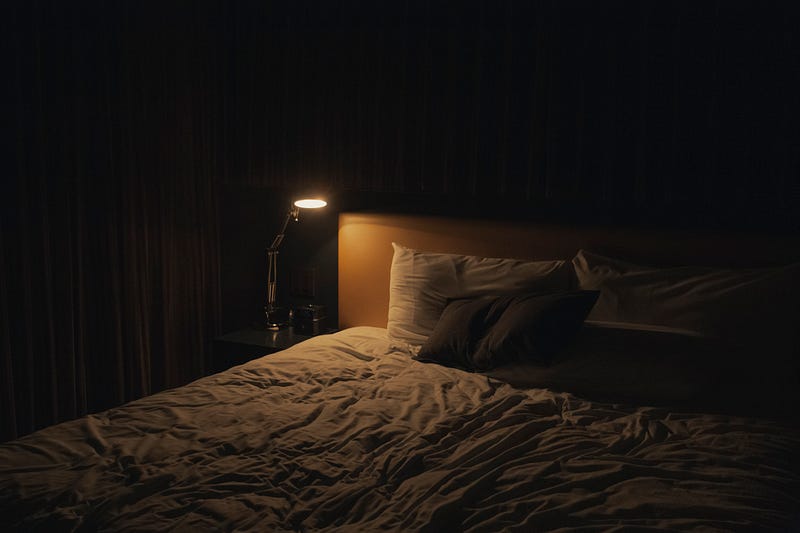
On some nights sleep is like love at first sight. It’s an immediate embrace — an effortless encounter. There is no resistance. Eyes close and dreams enter. Few obstacles bring about slumber’s delay. Shutting off the lights is a mere formality. Sheets and pillows are not necessary. My mind lets go. My thoughts and concerns fade away. It is easy and comfortable to transition out of the state of being awake. I have fallen asleep in bed, on couches, mid-conversation, and even (quite surprisingly) at a baseball game.
On other nights sleep comes through subterfuge and reverse psychology. Focus and effort make it disintegrate. Chasing after it makes it run away. Distractions issue an invitation. Ignored, it will sneak up from behind a corner of my consciousness and overtake my mind in a silent ambush. I have spent hours contemplating the shadowed ceiling above my bed — hyper-conscious of time’s progression — calculating the precise amount of sleep I would get if I fell asleep right now…or now…or right now. I have counted the minutes by trying not to count them. I have tried to distract myself by making plans for the next day.
Some nights being tired isn’t enough. I cannot just trust-fall into sleep. Instead, I keep looking back to make sure it will catch me. Insomnia, like a plague, overtakes ever-expanding territories of my mind. Slumber has to be coaxed and encouraged or given up on entirely. It advances and retreats with anxious timidity. It waxes and wanes with frustrating irregularity. Falling asleep becomes like starting a fire in the rain. I rage against the machine in my head that won’t disengage. With each wakeful hour the substance of sleep grows more tenuous. The only hope is to stop trying to fall asleep (and then to stop trying to stop trying). Eventually, the preambles of slumber will form like a whisper on the periphery of my mind — gradually, and with great effort, pulling the shades down over my consciousness to dim the thoughts that light up my head from the inside.
Once sleep has taken hold, I hope to have sweet dreams — dreams that will be so delicious I’ll wake up sated. Perhaps I’ll see lost loved ones or be able to fly. Maybe animals will speak to me and reveal the mysteries of life. Some dreams unfold like forgotten memories; others act as harbingers of things that are yet to be. The rules of dreams are different. There are no rules exactly. Nothing is linear. Time is irrelevant. Age and death and distance are vestigial concepts.
In what feels like an instant, whether by sunlight or the sound of my alarm, I will be forced to wake. The fresh air of reality rushes in and my dreams begin to evaporate. When I find myself being pulled from a dream I love — one that I find delectable — I try to go back for a second portion. I will my brain to return and engage that particular dream again — either to pick up where it left off or replay it. But more often than not I find the path back impossible to navigate. I must receive a new dream or awake.
Breaking through the surface into my conscious mind, some dreams are expelled like a sigh. They are shed like a snake’s skin — forgotten and unceremoniously left behind. In waking, the memory of them is not sustained. As if they never were, I cannot remember them. But fortunately not all dreams are lost. Sometimes parts of them remain. They dig in and hold fast — finding permanent residence inside my brain. These are the dreams that carry forward. These dreams resonate. These are the dreams that I hold on to — dreams that live on when I’m awake.
A version of this piece originally appeared on the blog Write Away.


