
The Struggle of Balancing Health and Self-Love
Our desires for #BodyGoals and #FoodPorn are at war.
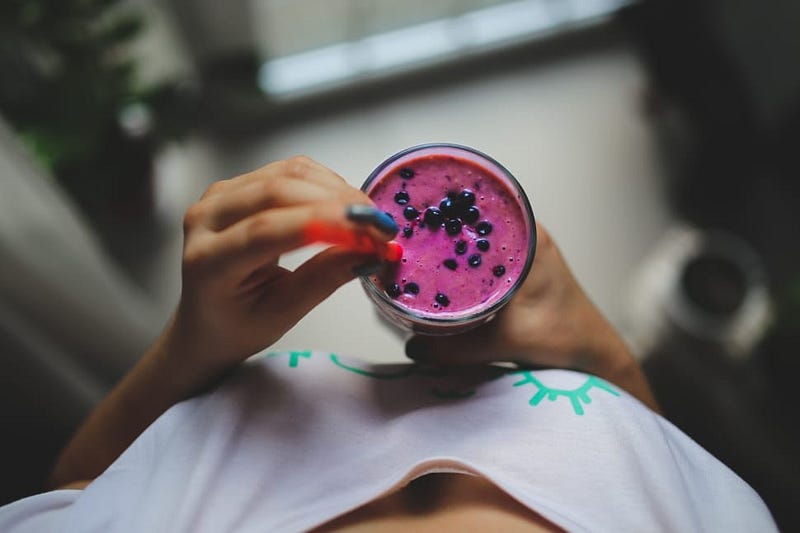
As the developed world’s food issues become increasingly polarized — with us obsessing over the latest health fad and unattainable depictions of the perfect “beach body” one moment, and drooling over hybrid baked goods and melted cheese the next — it’s clear to see that our intensely emotional connection to both food and body image has gotten way out of hand.
Since these two intense desires don’t tend to coexist well, the satisfaction of one of them only leaves us yearning for the other. Is it any wonder, then, that when it comes to our health and self-love, we are struggling to find balance and inner peace?
Not only is this a toxic combination, forcing us to oscillate between self-loathing and self-soothing, between unhealthy restrictions and indulgences, but we are taking out these internal conflicts on each other.
Entirely personal choices we all make each day about what, when, and how much we eat have become seemingly open to the commentary and judgment of others. And as much as society seems to love pointing the finger at people’s unhealthy choices, the pendulum also swings the other way, as many of those trying to live a healthier life feel judged too.
Because we all know the one who turns down happy-hour cocktails is boring, and the one who passes on the pizza must be judging everyone else for not being as annoyingly virtuous, …right?
In truth, the idea that those who try to make healthy choices (at least some of the time) are either arrogant, judgemental, or simply sad and don’t love themselves, is as inaccurate as it is harmful.
Sure, self-care can mean indulgences and treating yourself — but it can also mean exercising, nourishing, and taking care of your body. This balance may be different for everyone, but both aspects of showing love to yourself are valid and, above all, a very personal thing.
The decision of whether to spend your downtime with chocolate, wine, and Netflix or pushing yourself at the gym is between no one but yourself. But upon hearing the habits of others, many of us take this as a personal attack of our own choices.
For instance, whether it’s some light teasing when you turn down the office birthday cake, a full-blown debate every family dinner about why you abstain from dairy, or your social life suffering as a result of your decision to cut alcohol, we tend to mock the healthy decisions of others.
But why do we care so much about how others — even complete strangers — treat their bodies?
Sure, a few harmless “come on, this one cheat won’t hurt,” or “live a little, have the cake,” can be nothing but friendly encouragement to enjoy yourself and let go of too much self-restriction — which, of course, can be helpful at times. However, if this evolves into sabotage of your personal goals, then things can rapidly turn toxic.
Likewise, when someone takes a third slice of cake or admits they spent the entire weekend in front of the TV with snacks — we somehow have a problem with this too. Whether we think silently — “well, that’s why they look like that,” or alternatively — “that’s so unfair, how can they do that and still look like that,” our resentment is the common thread.
But why do we care so much about how others — even complete strangers — treat their bodies? Why are the fad diets and physical changes of celebrities plastered across our magazines, and murmurings along the lines of “who lost weight” or “let themselves go” present in so many of our conversations?
I propose that our obsession with the health choices of others essentially stems from our own buried insecurities about how we feel we should be. We habitually scrutinize and judge others to avoid thinking about our own health, and thoughts about our own body.
With images of both unrealistically “perfect” bodies and food tempting to sabotage any such dreams bombarding us each day in the media, it’s no wonder that everyone’s desires are set in a spin. Our ongoing quest for the perfect body, as well as the ultimate deep-fried or chocolate-covered indulgence, are in constant battle. All we ever do is want and crave obsessively — but for two things which don’t tend to go hand-in-hand.
In the meantime, many of us internalize an ugly loathing — both for those who over-indulge, and those who avoid temptation altogether — for those who don’t seem to care at all, and for those who, we feel, care too much. The majority of us, meanwhile, are stuck in a limbo — chasing these two insatiable desires which sit at opposite ends of the spectrum.
So, how can we do better?
How can we avoid shaming others for the health choices they make— whether they are overweight, underweight, a shameless foodie or an aspiring health guru?
It all starts with us taking a long hard look in the mirror — what is it about the health choices of other people that interest you — or maybe even bother you — so much?
Often, it’s those who are depriving themselves too much who target their poison towards overweight people — or simply those who love to indulge from time to time. On the reverse side, it’s those who struggle with their own willpower and health regime who can’t stand those crazy green juice-drinking health nuts who seem to smugly have it all together. It’s simply a case of projecting our own insecurities onto others. Seeing them in a negative light to feel better about ourselves.
In short, we all face our own battles around health and self-acceptance — but these should not be negatively impacted by those around us. If you notice that you have internalized resentment for either outwardly “unhealthy” or “healthy” people, then consider where these feelings are coming from.
What’s really going on with you?
Try to focus on your own self-improvement before averting your attention to that of others. And hopefully, we can all move past this media-fuelled frenzy over our bodies and our food, and learn to find a balance between health and happiness, between self-discipline and self-love.
Roxanna is a British-Iranian content writer specialised in human rights, health, and welfare. With a languages degree from King’s College London, a Masters in European Studies from LSE, and an EU communications background, she strives to increase the visibility and encourage debate around ethical and sociocultural issues around the world. http://roxannaazimy.com @roxannayasmin


