
The Story of The Osaka Ripper
He killed, dismembered and disposed of women in boxes.
Murder is committed for a variety of reasons; jealousy, greed, passion, hate, or anger. A lover murders their cheating partner, a person high on drugs robs and kills a stranger, a racial killing, a hate crime, a person suffering from delusions or mental illness. But sometimes it’s a bit harder to pinpoint the exact motive.
Someone randomly attacks a stranger, kidnaps a child, rams a truck into a crowd of pedestrians, and so on. These murders can’t be explained away by a specific cause. These crimes are the ones that shock, confuse and frustrate society.
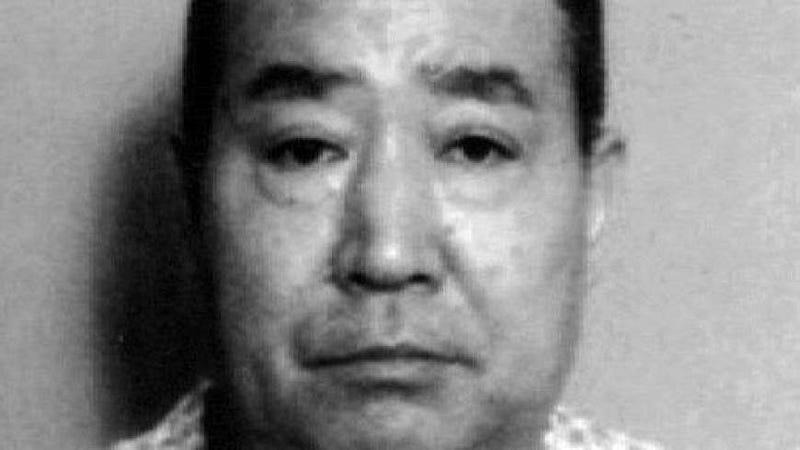
This story is about one such criminal. Dubbed The Osaka Ripper, a man named Yasutoshi Kamata began killing women when he was 45 years old. With no previous violent record or history of mental illness, what led him to suddenly and brutally kill girls and women? Did he hate women? Did he target a specific type of woman? How was he caught and what happened to him?
The Killer
Yasutoshi was born in 1940 in Ehime, Japan. Born to parents who owned a successful ryokan, or Japanese-style hotel, his family was well off and Yasutoshi had a normal childhood. Yasutoshi also worked in a company that supplied disposable chopsticks to other ryokans.
However, Yasutoshi’s father died when Yasutoshi was a teenager so he decided to drop out of high school and move to Osaka to look for work.
Unfortunately, Yasutoshi couldn’t figure out what he wanted to do and decided to come back to his home town when he was 20 years old and get married. He had a son and a daughter with his wife and things seemed to be going well until his wife passed away.
He took his kids and moved to Nara where he worked at a sock manufacturing company. Once again, not satisfied with life, he decided to take his kids and move to Osaka and try to find work there. While in Osaka, he started stealing clothes from various shops and clothing factories and would ride around on his bicycle and sell them to the waitresses and staff of various restaurants around town. Sometimes he would be caught by police and be arrested and fined.
During this time, he would also visit hostess clubs and snack bars, which are places where women get paid to serve drinks and sit with men, and flirt with them. He ended up dating one of these hostesses. Whether it was a rocky relationship with his wife or because he was frustrated with his own life, he would often argue and attack his wife, often strangling her. His kids would have to intervene and stop him.
Fed up with married life, he left his kids with their stepmother and continued the relationship with his hostess girlfriend. The marriage had only lasted a few months and his children stayed with their stepmother.
Once again on his own, as he continued to steal and sell clothes and other accessories to women around the city, he eventually started accumulating enough money to purchase over 20 different apartments and dwellings across the city. His manner of talking, charisma, and kind demeanor made him quite popular and trustworthy among women and he was able to take advantage of this by charging extremely high prices for his stolen goods.
Despite not having an education, losing his first wife, leaving his children, and dealing with stolen goods, Yasutoshi was making good money and getting attention from women. However, people who knew Yasutoshi knew he had two sides.
The kind, soft-spoken, and polite Yasutoshi during the day, and the argumentative, fierce, and often violent Yasutoshi who would quickly grab someone’s neck and try to strangle them when he was drunk.
Killing Fusae Azuma
On May 14, 1985, Yasutoshi visited a bar where he met Fusae Azuma. She was a 46-year-old housewife with a husband and three children but was at the bar alone and used a fake name. While at the bar, Yasutoshi, Fusae, and some others got acquainted and ended up going out to dinner and drinks as a group.
But by the end of the night, when everyone was drunk, Yasutoshi brought Fusae to his condominium. According to prosecutors, Yasutoshi claimed that they argued in his condo and she rejected his sexual advances so he strangled her.
After strangling her, he dismembered her body in his apartment and disposed of the body parts in the forest along the highway in Kobe, Japan. Unfortunately, her body wouldn’t be found for another 10 years.
Midori Chinen
Yasutoshi’s next victim would be Midori Chinen. A 19-year-old who worked at a care facility for the disabled, she was out after work just a month after Yasutoshi murdered Fusae when she was approached by Yasutoshi. He invited her to get sushi and she agreed. After their meal, he brought her to his home. According to reports from the Yomiuri Shinbun, once at his house, she asked him for 10,000 yen (about $100) so Yasutoshi grew angry and strangled her.
After strangling her, he decided to dismember her body. But this time he laid down vinyl sheets and used a saw, knife, and other tools to cut her body into pieces. He then placed her body in a cardboard box. He used a rental car to drive her body out into a bamboo grove in Nara Prefecture.
But unlike his first victim whose body would be missing for a decade, Midori’s body was found the next day. Police in the area where the body was found started investigating her murder. It would be three months before they got their big break.
Yasutoshi, thinking he had gotten away with two murders, decided to send a letter. He wrote to the police that was in charge of investigating Midori’s murder. He claimed he was the infamous “Killer with 22-faces” which was a highly publicized unsolved case of blackmail and murder featuring prominent businessmen and companies.
In the letter, he gave information about the girl he killed, the sushi shop where they went, and the parts of her body he cut (which were not made public). Police were able to confirm that the letter was sent by Midori’s killer and they found a fingerprint on the envelope. But they hadn’t been able to link the print or the letter to Yasutoshi yet.
Elementary School Student Kumiko Tsujikado
It would be about a year and a half before Yasutoshi would claim another life. This time he targeted a 9-year-old girl who was walking home after her tutoring class. He drove up and asked her for directions and offered her 200 yen ( about $2) for her help.
He then brought her to his home and tried to sexually assault her but she started screaming. Yasutoshi ended up strangling her and putting her in a box and dumping her body in the mountains.
He then allegedly called the school where she attended and told them he had kidnapped Kumiko and she was still alive. He requested a ransom of 30 million yen (about $ 300,000) from the school or he would kill her.
Police and the community searched for the missing girl and finally, in May her body was discovered in a cardboard box in the mountainous regions of Osaka. But unlike Yasutoshi’s other two victims, Kumiko’s body was not dismembered. Later Yasutoshi told police he didn’t dismember her because she was small enough to fit in the box.
Yasutoshi’s Arrest
After having killed two women and one girl, Yasutoshi was still not on the police’s radar for their murders. Instead, in 1989, two years after killing Kumiko, Yasutoshi was arrested for theft. He was sentenced to prison then released. He then was arrested again for theft in 1991 and was prisoned again until he was released in 1993.
Killings Begin Again
After being released from prison, just a few months later in July 1993,Kazue Suda, a 45-year-old hostess was Yasutoshi’s next victim. Yasutoshi was a patron of the club where Kazue worked and was often seen flashing wads of cash. He was interested in Kazue and paid to have her go on a date with him.
He brought Kazue to his home and was making sexual advances when she asked him how much he would pay her. Angered by this, he strangled her. And like before, he dismembered her body, placed her in a box, and dumped her body in a forested area near the highway in Toyonocho Osaka.
Kimiko Nakano
Kimiko was a 38-year-old waitress at a pub that Yasutoshi often visited to sell clothes. She would often buy clothes from him and they had a good relationship. In March of 1994, Yasutoshi invited Kimiko out for a date and then brought her back to his place. Once again, like his previous victims, she asked for money which infuriated him and he strangled her, dismembered her body, and dumped it into a forest on the outskirts of Osaka.
Yasutoshi’s mistake
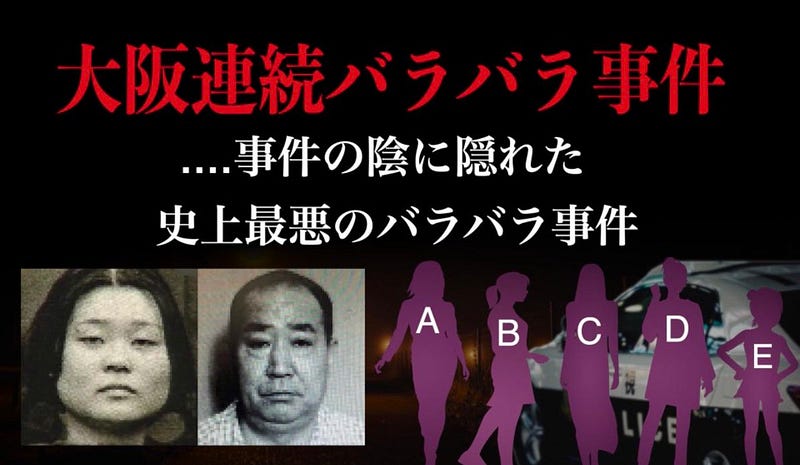
Despite killing five people over a span of 10 years, Yasutoshi was still a free man. He continued his illegal clothing business and visited his favorite hostess clubs possibly looking for his sixth victim.
However, in February 1995, Yasutoshi was arrested when he was caught stealing boxes of clothes from a warehouse. He denied stealing but was charged. Police also started looking at him because of his past run-ins with the law. They also noticed that he was a viable suspect for the serial murders as he was familiar with the area in which the murders took place.
Investigators linked his rental car records and found that he had rented cars during the times that the bodies had been dumped, the mileage on the car was a similar distance to the distance from his home and the dumpsite, and he often visited the restaurants around the sushi restaurant where Midori was last seen with a middle-aged man.
The police also found that he knew both victims Kazue and Kimiko from his illegal clothing business. The police in Osaka shared his fingerprints and found that it matched those on record with the Nara police from the letter that was sent egging on the police.
Both Nara and Osaka police pooled their information and began an investigation into the murders of the women in connection with Yasutoshi. Midori, Kazue, and Kimiko were all killed, dismembered, and disposed of in a similar way so police were able to connect the murders. It was at this point that Yasutoshi confessed to all the killings, including his first victim who police had not even connected to him.
Arrest & Sentencing
While in custody and being questioned, Yasutoshi admitted to all the murders but denied calling the school and asking for a ransom. A specialist from the Japan Acoustic Research Institute conducted a voiceprint test and found that only 10 points matched the 121 feature points of Yasutoshi’s voice. Prosecutors also decided to try the five murders in two separate cases, with one for the first two murders and the second trial for the last three murders.
Once the trial began in March 1996, Yasutoshi pleaded innocent stating that a friend of his did the actual killing and he just helped in the disposing of the bodies. In 1999, he was found guilty and given the death penalty for two murders but was acquitted for the ransom charges.
Yasutoshi and his defense team appealed the charges and his case went to the Osaka High Court in 2000. In the appeal, he continued to deny the murders saying he just disposed of the bodies. He also claimed that the police beat a confession out of him. But despite his efforts to drop the charges, once again in 2001 his death penalty charges stood.
In the last attempt, Yasutoshi appealed to the Supreme Court in 2005 but on July 8, 2005, the Supreme Court upheld his death sentence. After remaining on death row for 11 years Yasutoshi was executed in March 2016 at the age of 75.
Despite confessing to the murders initially, being convicted and finally being sent to death, this case seems very strange. Although the motive seems to be explained by Yasutoshi as anger towards women who ask him for money, it’s hard to understand what was really going through his mind when he committed the crimes.
I also find it quite hard to understand how someone who never had a traumatic childhood, mental illness, or serious run-ins with the law at a young age could start killing and dismembering women in his 40s. Though he was always dealing in illegal clothing sales, he always seemed to be well off financially and it didn’t seem like he was really pushed into killing if he didn’t want to. Nor did he present any strange behavior that is often common in serial killers.
Obviously, he must have had very bad anger issues which would come out when he became intoxicated so maybe there were some deep mental and anger management issues he hid from people. Unlike other killers I have researched, Yasutoshi seems to be very odd in that it’s hard to pinpoint his motive for killing.
If you liked this article, here are some more stories of true crime in Japan:
Sources:
English
https://en.m.wikipedia.org/wiki/Yasutoshi_Kamata
https://murderpedia.org/male.K/k/kamata-yasutoshi.htm
Japanese