
The Story of a Wise Man. The Purpose of Personal Development A Wise Man is Infallible in Everything
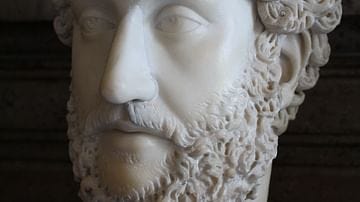
Demetrius, who had just conquered Magara, ironically asked the philosopher king Stilbon if he had lost anything, and Stilbon replied: “Nothing, everything that belongs to me is with me.” And yet, his wealth had been stolen, his daughters abused by enemies, and his homeland had fallen under foreign rule. This is the power of someone who keeps their values within, not without. This is the power of a wise man.
One who becomes Wise cannot lose anything. Such a person has stored everything within themselves. They entrust nothing to fate because they keep their goods in a safe place, finding satisfaction in their virtue and noble character.
Nothing from the external world can touch the wise: neither illness, nor poverty, nor punishment, nor loss, nor any other misfortune of the external world. A wise man experiences them, as do others, but none can affect their character. Thus, they will always be cheerful and tranquil.
What? Do you believe that when that foolish king tried to darken the daylight with his multitude of spears, any arrow fell upon the sun, or that by letting chains descend into the depths of the sea, they could reach Neptune? Just as the celestial elements elude human hands and just as those who demolish temples and set fire to statues do not harm divinity, likewise what is attempted against the wise is shameless, insolent, arrogant, and futile. — Seneca
Nothing can touch the wise one Indeed, throughout life, many things happen: we are wronged, slandered, mocked, insulted, and even emotionally hurt. However, these acts do not come as misfortune because we feel the pain and suffering internally, while the events are external. Therefore, we only cause ourselves pain.
If someone suffers an injustice, it must be committed. But if it has been committed, it is not necessary for him to suffer it. Are all people sad when an unpleasant event happens to them? No. Some are indifferent, and others are even satisfied because they can learn something new.
An act of injustice can be stopped by an external circumstance. Perhaps someone supports me, perhaps an authority sees what I have suffered and will act justly, so that the act of injustice, even if committed, does not reach me.
But what happens when the circumstance, the person, or anyone able to help me is not there? In the absence of the circumstance, we have the power of our thoughts. We can choose not to be affected.
The wise one is also human “There are other things that, even if they do not bring him down, strike the wise man — such as physical suffering, infirmity, the loss of friends and children, and the ruin of his country, in flames and war. I do not deny that the wise man feels all these things; for we cannot demand the hardness of stone or iron from him. It is not a virtue if he does not understand what he suffers.” — Seneca, On the Firmness of the Wise Man
The power of the wise one does not lie in total indifference. Not caring is the easiest; it is the simplest way to avoid pain. But you cannot feel pleasure and satisfaction in life events. Moreover, there is nothing noble about being indifferent and absent from what is happening.
The virtue of the wise one lies in the ability to feel painful emotions but not to be passive towards them, rather to rise above them and continue doing the things for which they came into this world.
However, being wise is an unattainable ideal, even after a lifetime of virtue. That is why Seneca tells us that the goal is not to become wise in itself, but to “remove one of his flaws each day and rebuke himself for his mistakes.”
So let’s see what are those aspects of personality worth paying attention to and improving one by one, following Seneca’s advice.
Characteristics of the Wise One
- Self-Knowledge. A wise person has a deep understanding of themselves, including strengths and weaknesses. They are aware of their values, motivations, and limitations and constantly improve themselves.
- Emotional Maturity. They have a deep understanding of their own and others’ emotions, being able to manage emotions and express them in a mature and healthy way, remaining balanced in tense situations. They are not dominated by impulses and react with judgment.
Moreover, a wise person understands the role of emotions in the actions they take and knows how to integrate them into their decisions.
- Empathy: A wise person shows empathy towards others, trying to understand people’s perspectives and feelings. They are willing to listen and offer support and understanding.
- Kindness and Compassion: The wise one acts with kindness and compassion towards others. They try to benefit those around them and contribute to the common good, bringing value to their community, having a positive impact on others, and in general, leaving the world a better place wherever they go.
- Objective Judgment. A wise person has the ability to look beyond appearances and understand the deep motives and implications of events and actions. Thus, the wise person understands that no one is perfect and that life can be unpredictable. Wise people adapt and learn from each experience.
- Informed Decisions. Wisdom involves making informed decisions based on careful assessment of the situation and an understanding of the associated consequences, thus avoiding prejudices and irrational impulses. Thus, a wise person finds solutions to real problems and resolves them as quickly and efficiently as possible.
- Continuous Learning. A wise person is modest and humble. They recognize that despite their wisdom, there is always something to learn and improve. As long as they live, a wise person learns. This is their fundamental trait.
These characteristics reflect an idealized model of wisdom, and it is important to remember that no one always meets all these criteria. Wisdom is a continuous process of personal development and learning, and anyone can aspire to cultivate these qualities in their life.
Conclusion Wisdom cannot be rigidly defined, but it is a quality manifested through deep understanding, empathy, responsibility, and the ability to make informed and balanced decisions in life. It is a continuous process of personal development and learning from experience.
Wisdom is a complex quality that truly penetrates life, people, and the world in general. It is not just about accumulating knowledge but also involves the ability to apply that knowledge wisely and judiciously.
How wise are you?