The Story Behind Writing a Book Series on Tottenville

Once upon a time the tiny community of Tottenville began with people just like you: the Lanape Native Americans who built their homes on the beautiful shore of Raritan Bay.
Tottenville is the southernmost part of New York State, part of the borough of Staten Island in New York City.
My fascination with its history began when I was a reporter for the Staten Island Register weekly newspaper.
Assigned to cover the demise of Spanish Camp, I learned of Dorothy Day who stayed at a summer cottage there as a retreat from her Catholic Worker work in Manhattan helping the poor. That led to learning of her acceptance into the Catholic faith at Our Lady Help of Christians Church in Tottenville, my own parish.
When the parish was preparing to celebrate its one hundredth anniversary, the pastor asked me to write an inclusive history for it.
In 1998 while researching for the centennial anniversary of Our Lady Help of Christians church, I found a fascinating book stored in reference at the Tottenville Public Library.
In 1950 Benjamin Franklin Joline self published a portrait of Tottenville entitled Tottenville in Retrospect. The book’s narrative began in 1668. History came alive for me as I read of the people of Tottenville, recognizing their names from the street names of the town. The only problem I found was that it ended in 1898, the year Staten Island became part of New York City, and the year with which I had wanted to start!
Where was the history of the next 100 years?
The Council on the Arts and Humanities for Staten Island (COAHSI) awarded a grant in 1999 to continue my research to answer that question and to hold an interactive workshop at Our Lady Help of Christians Auditorium on September 24 of that year.
In 2000, the New York Public Library sponsored another workshop at the Tottenville Branch, and in 2002, the N.Y. State Assembly named me a Staten Island Woman in History. The 50 Plus show at the local Community TV station interviewed me about this work and Gabe Pressman’s report on Tottenville on WNBC included reference to my work.
Life intervened to put my work on hold, but today, thanks to the work of the Tottenville Historical Society and other authors, I find a renewed interest in the history of Tottenville at a time when I have more hours to devote to sharing the deluge of information I had discovered.
First, there was Tottenville, The Town the Oyster Built by Barnett Shepherd, which accounts for those 100 missing years, followed by books by the Tottenville Historical Society on Tottenville in the Images of America series of Arcadia Publishing and by other authors.
After my publication of 17th Century Tottenville History Comes Alive: Meet the People. Experience the Events, the first in a series, I discovered even more interest.
More people are reading the Tottenville blog as well as joining my email list to receive my monthly newsletter. Membership in my Tottenville History Facebook group grew exponentially from 45 members to over 750 members, and continues to grow. I’m writing the next book on the 18th century now to an audience that is anticipating its publication by the end of this year.
In the 17th Century book I wrote of the early beginnings of Tottenville with the Lanape and the first explorers to the land. Next came the Dutch and the British to Christopher Billopp of Tottenville.
Did you know that at the close of the 17th Century Staten Island’s population was 1,063? The population of Tottenville, however, was just this one man’s family! By 1687 Billopp owned all of what is now Tottenville.
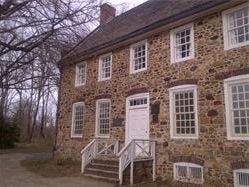
He built Bentley Manor, now known as the Conference House pictured with this article, a place that could have changed the course of the Revolutionary War. The manor, inherited by his great grandson of the same name, was where representatives of the Continental Conference met with a representative of the King on September 11, 1776 trying unsuccessfully to end the war.
But that story will be in the book on the 18th Century.