
The Story About the Amazing African Sky at Night
And how I learned to take photographs of it
I have been passionate about photography for years already. But I’m just doing it for my own joy. Not to earn money. I simply enjoy capturing the beauty of nature. Landscapes and wildlife can be so fascinating.
When I came to Namibia I did have a DSLR, but rarely shot in any other setting than in Auto. I loved my camera. It always joins me. Wherever I go. But I never took it with at night. Just didn’t know how to take pictures at night without using my flash. So it’s pretty pointless. But I also never got into the position where I wanted to take pictures at night.
The adventure
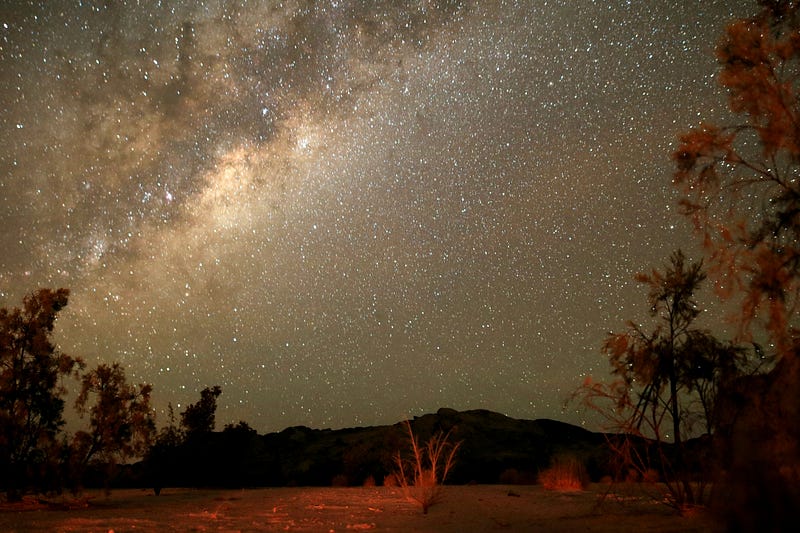
Until I got to see the stars of the African Sky. In a country with barely any light pollution. With countless stars to shine and several shooting stars to spot every night. Every single night. As long as you spend some time looking at the sky you will see one. At least one. It’s amazing.
My friends took me out one evening into the desert. Wild camping somewhere in a dried out riverbed. Far away from any other people. No signs of civilisation. A camp fire. Cooler box. Mattress on the ground. That’s it. That’s all we needed.
The African sky
When I looked up I couldn’t believe it. The brightness of the stars was just overwhelming. Impressive. I had never seen something like it. Countless stars lighting up the whole landscape around us. So much that I can actually see enough without any kind of torch. Because we have no other lights around us and our eyes adjust to the darkness.
The milky way
And then you realise that you are looking at the milky way. That milky way you learned about in school. But never seen it in such a clear picture. Talking about pictures. Wouldn’t it be amazing to capture it. But how? I’ve never taken a picture of the stars? After a few beers I decided to just try it.
The process
As I said I have had no idea about most of the settings on my camera. So I simply played around with them. Realised first that I have to use the manual focus. But luckily the stars are so bright that it is not so difficult to focus on them manually. But then I don’t really know what I did. When I looked at my pictures the next day I couldn’t believe it. I actually took my first picture of the milky way. It wasn’t worth a mention if I would look at it now. But that day I was pretty impressed with myself. And inspired. To do better. First of all to do some research and learn more about photography.
Research
I researched night photography. Read up about capturing stars. But so many of the settings they were talking about didn’t sound familiar to me. I had no idea how to use them and what for. I had to try them immediately to see how to use it. What effect will come out of it.
That first night out in Namibia happened about five years ago. Since then I practiced a lot. Every time we went out for a party, a gathering with friends or just to camp away from civilisation I took my camera with. Specifically to take pictures at night.
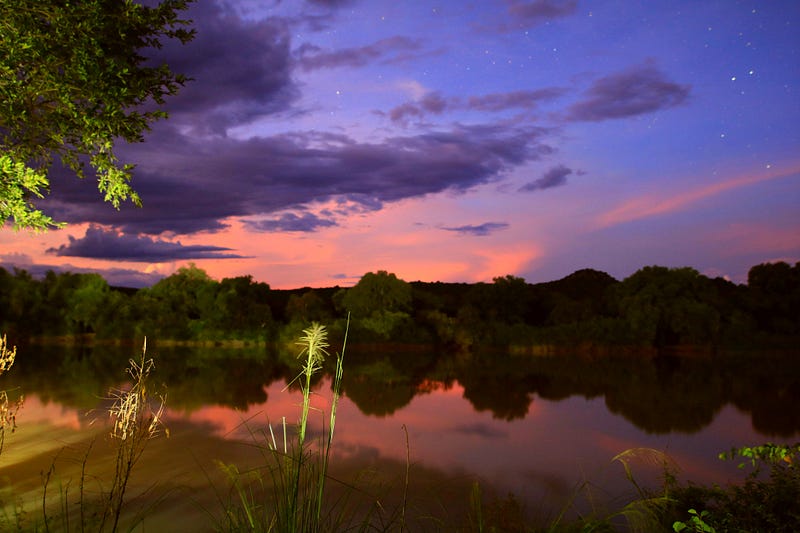
As soon as the sky would be filled with stars I would take my blanket, the tripod and my camera and head into the desert. Walk away from my friends. Find a spot for myself to sit down. Away from any light. To focus onto the milky way. And then I would stay out there for an hour or so. Experimenting with the settings of my camera. With the placement of my tripod. With the scenery I was capturing.
“Excellence is not an art. It is the habit of practice.”
Aristotle
My lone time
And this turned out to be a very important part of every night out there. Not just because I was improving my photography skills, but also because I spent all this time alone out there. While I would be waiting for the long exposures to create a preview of my shot I had lots of time to think. To think about the next setting I would adjust. To think about the stars. The brightness of the sky. To think about myself. About where I stand in life.
Or to just shut down the brain. To make myself clear again why I decided to live out here. In Namibia. That I decided to do so, because it made me happy. And if I wasn’t happy, I had to find out how to change that it.
Click.
That was an amazing shot! Look at the stars. Let’s try again. Move the lens to the right.
Click.
But it also gave me time to realise how grateful I should be to have this group of friends that takes me out here on a regular basis. A group of friends like I never had before. A group that stands together. A group where you’ll always have someone that will help you out with whatever you need.
Click.
And then it obviously would let me connect with nature. Sitting out there on the blanket in the sand. Hearing animals. Feeling the wind. Seeing the milky way. Counting the shooting stars. All of it together.
Wow. That turned out to be the perfect shot. My perfect shot. Enough for today. I’m happy with the result. Pack my things together and go to bed. Falling asleep while looking at the stars.
Wildlife at night
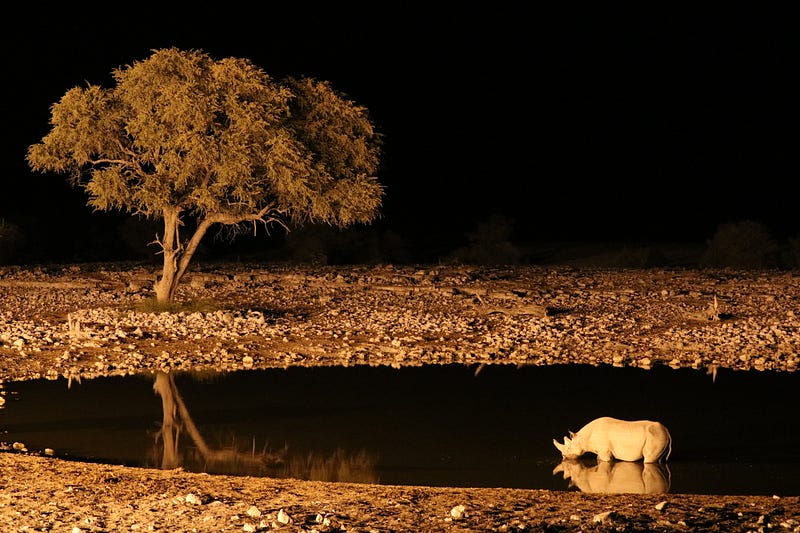
After a bit of practice I found myself sitting inside a national park staring at a waterhole late in the evening. Waiting for the animals to arrive. Getting excited when the first antelope appeared. Being overwhelmed when a herd of elephants arrived. Becoming speechless when the rhinos started interacting with the elephants at the waterhole.
Realising that I can take pictures at night. And that I should capture this moment. Being proud of my outcome. Knowing they are not perfect. But they remain my pride. My proud result of practicing for years. Practicing night photography, landscape and wildlife photography and combining the skills of all three of them. To get my new best photograph. One step better than the previous one.
The result
Over all these years playing with the settings of my camera during the night. Not trying to get the perfect shot. Because that would make you frustrated and force you to give up very soon. There are way too many perfect photographs of the milky way on the web in order to compete against. But instead of competing I was trying to get a better shot than the previous time. That kept me going. Until today. And motivates me to learn more. To become a better photographer.
Not to compete against others. Because the competition between astronomy photographers is massive out there. That would break my passion. But instead to look at myself. To look at the progress over the years. And to think back at all the time I spent out there. With myself. Giving my brain a break. Giving myself time to find out what I want to achieve that day. Or maybe the next day.
To look at things one step at a time.
To improve one little bit at a time.
To look at the results. One picture at a time.
That is what Namibia taught me. By capturing its sky during the night.


