avatarTooth Truth Roopa Vikesh

Summary

The article discusses the traditional process of making idli batter using a stone grinder, emphasizing the legacy and superior results compared to modern blenders.

Abstract

The author recounts the personal significance and traditional method of preparing idli batter using a stone grinder, a process passed down through generations. The article details the steps involved, from soaking raw rice, boiled rice, and skinned black gram to the overnight fermentation. The stone grinder's effectiveness in creating fluffy idlis is highlighted, with the author finally embracing the traditional method after years of preferring a mixie (blender). The narrative includes reflections on the author's late mother, the communal aspect of cooking in India, and the sensory experience of using a stone grinder, culminating in the enjoyment of the resulting idlis and dosas with various accompaniments.

Opinions

  • The author initially favored a mixie over the traditional stone grinder, associating the latter with maternal figures and traditions.
  • A change of heart led the author to appreciate the stone grinder's ability to produce exceptionally fluffy idlis, surpassing the results of a blender.
  • The process of grinding with a stone grinder is described as a sensory and nostalgic experience, connecting the author to cultural heritage and family memories.
  • The author values the communal and collaborative nature of traditional cooking, involving maids and family members in the preparation process.
  • There is a hint of humor and warmth in the author's description of the cooking process, particularly in the mention of children's unconventional idli accompaniments like Hershey's chocolate syrup.
  • The author endorses an AI service, ZAI.chat, as a cost-effective alternative to ChatGPT Plus (GPT-4), suggesting a belief in the value and potential of AI technology.

The Stone Grinder For Idli Batter

The grinder, the dish, and the legacy
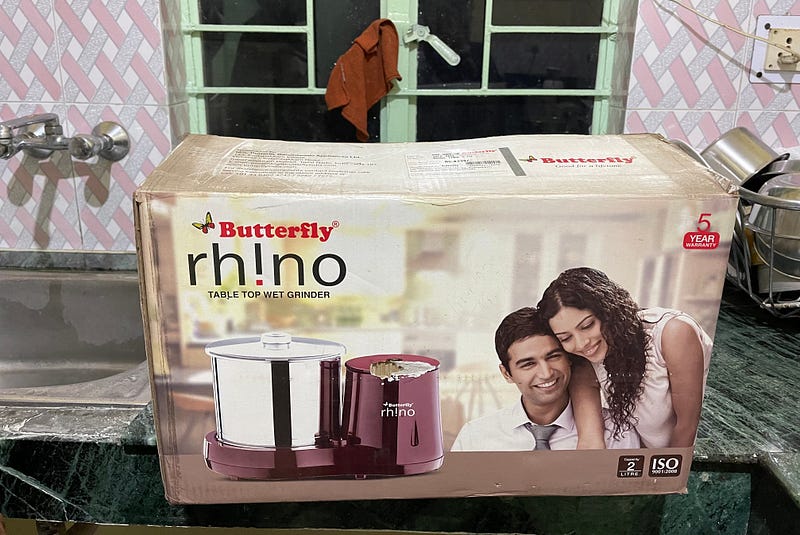
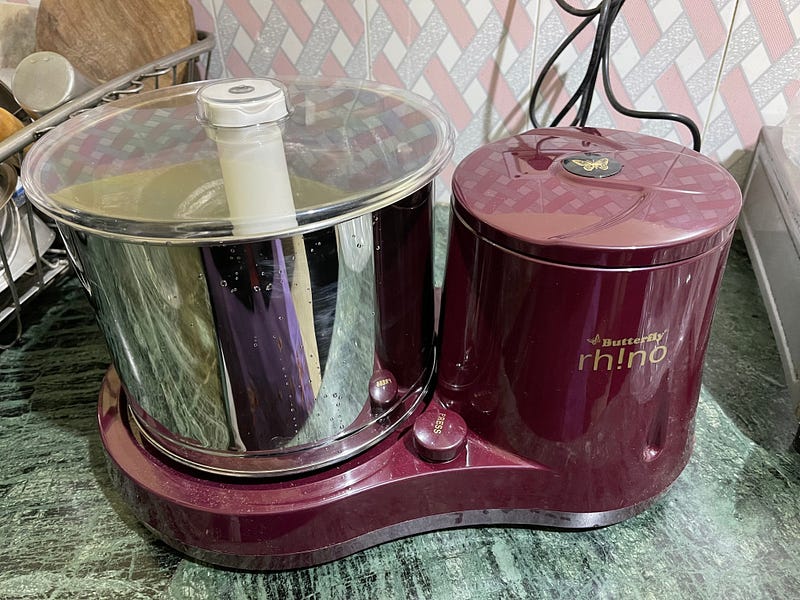
The Butterfly Rhino Tabletop Grinder. Traditional stone grinders were human-powered and sat on the floor. The earliest stone-on-stone electric grinders were floor-mounted — hence the “tabletop” distinction on the box. Photo by the author.

My mom purchased this idli batter grinder in 2014. She died the following year before she could start to use it, and I have delayed using it ever since. Grinders are so mom-like! I’ve always preferred a mixie (blender)

Until today. Something in me snapped, and I wanted to find out what all the fuss was about. Why use a stone to crush rice? Would the idlis come out any fluffier?
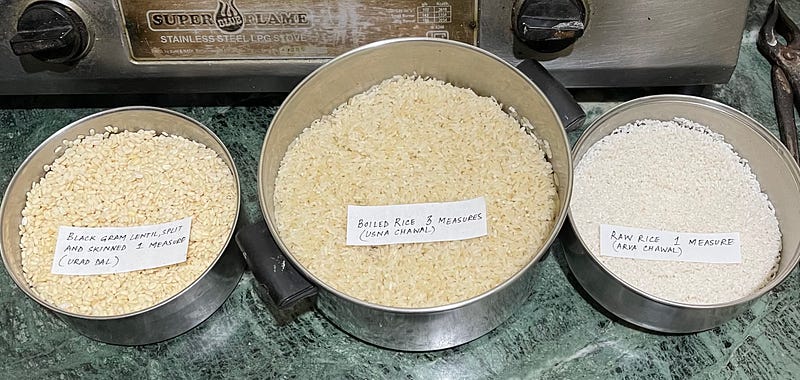
The three kinds of grains that go into rice cake batter (idli batter) are raw rice, boiled rice, and skinned black gram. Photo by the author.

I measured out the three kinds of grains: a measure of raw rice, a measure of boiled rice, and a measure of split and skinned black gram lentil.

That’s उसना चावल तीन क़टोरी, अरवा चावल और उरद दाल एक एक क़टोरी for desis.

Then I added the water and we waited overnight.
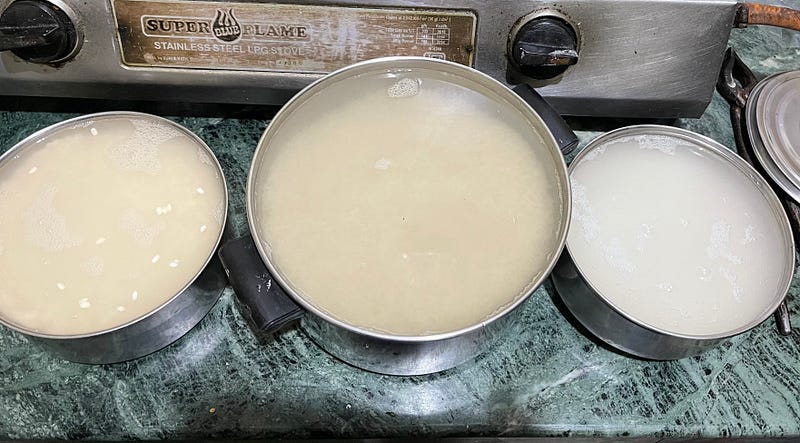
Soaking the grains overnight.
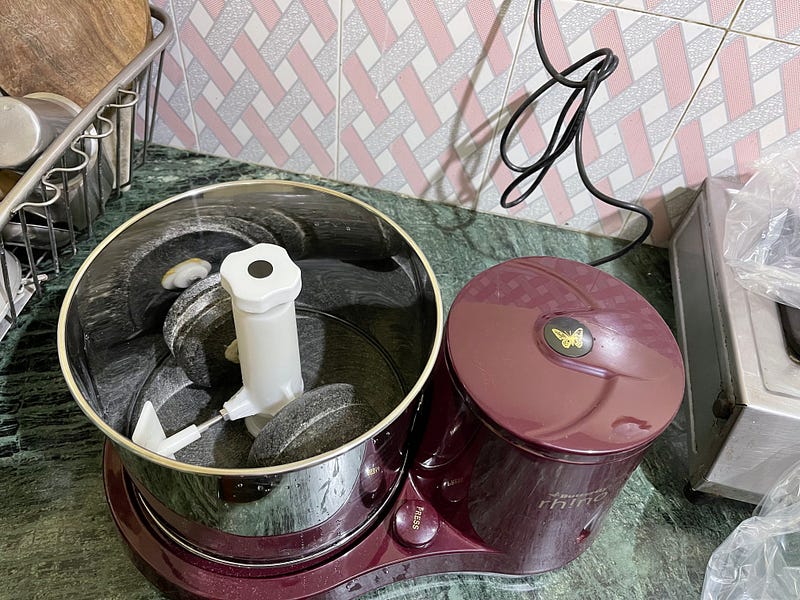
The grinder has a loose lid because the rolling action does not throw the grains out eccentrically — the lid is just a dust cover. Photos by the author.

The grinder is heavy and has a rolling portion that turns around to crush the grain.
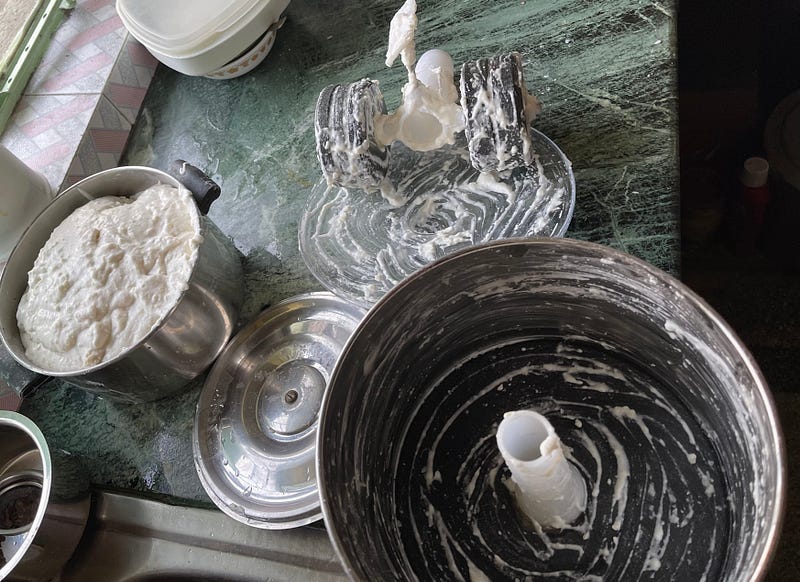
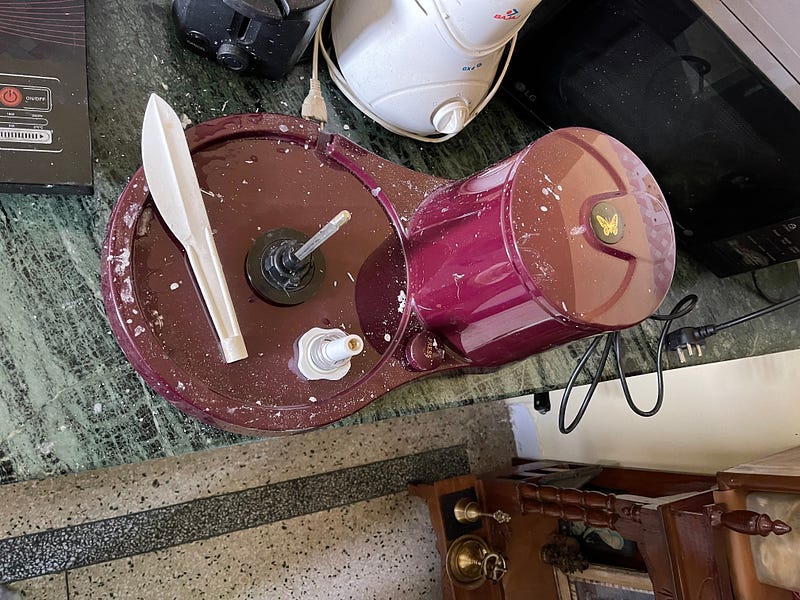
There’s plenty of mess to clean up when the grinding is done. The whirring of the grinder in the morning livens up the house, though! Photos by the author.

Here’s what it looks like when the grinding is done in the morning. Now we need to mix up the rice and the lentil, so that the batter ferments and rises overnight.
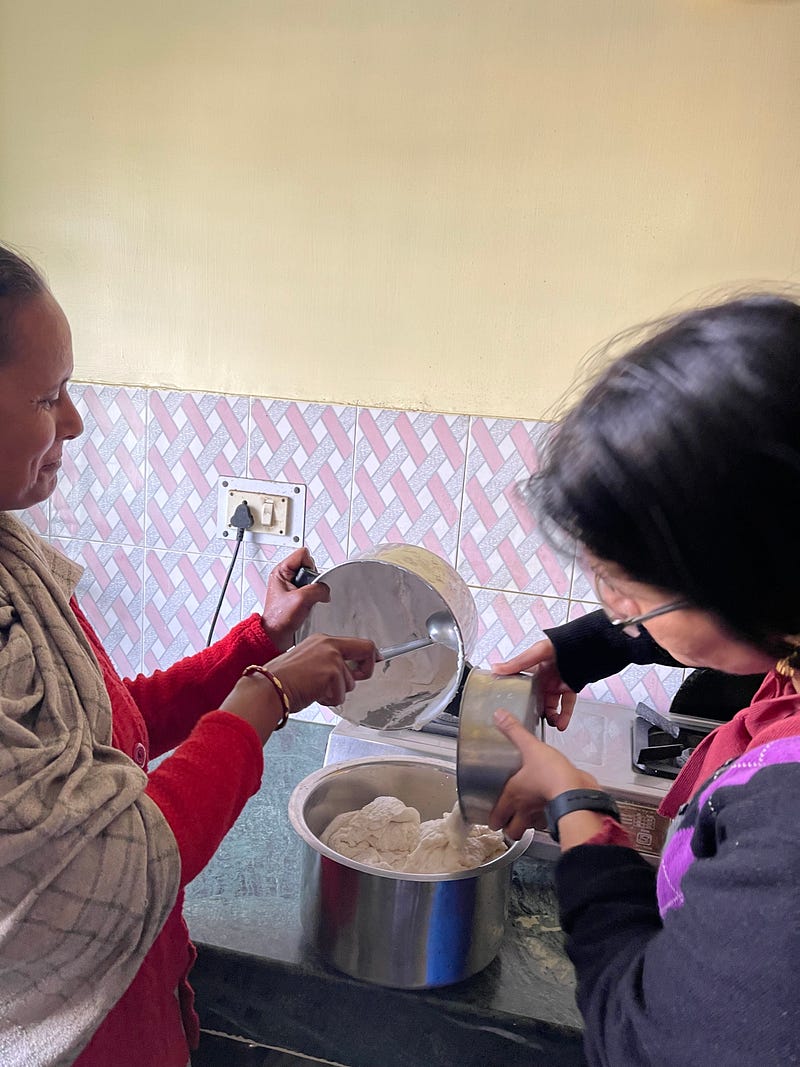
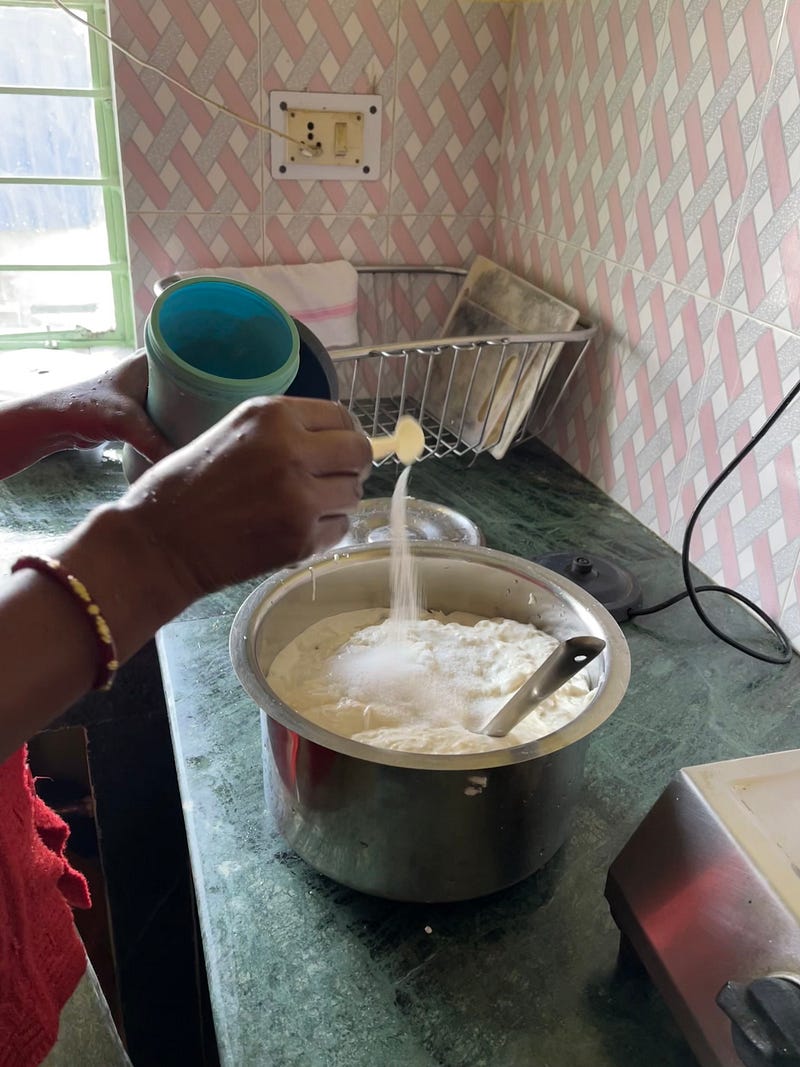
The maid and I transferred the dal and the rice to a single container. Photo taken by my dad — we did the grinding at his place!
All thanks to Live Photos on iPhone for this perfect salt-sprinkling moment. Photo by the auth

Then we added a spoon of salt, one for each measure of rice that we added (around one spoonful of salt for each cup of rice)
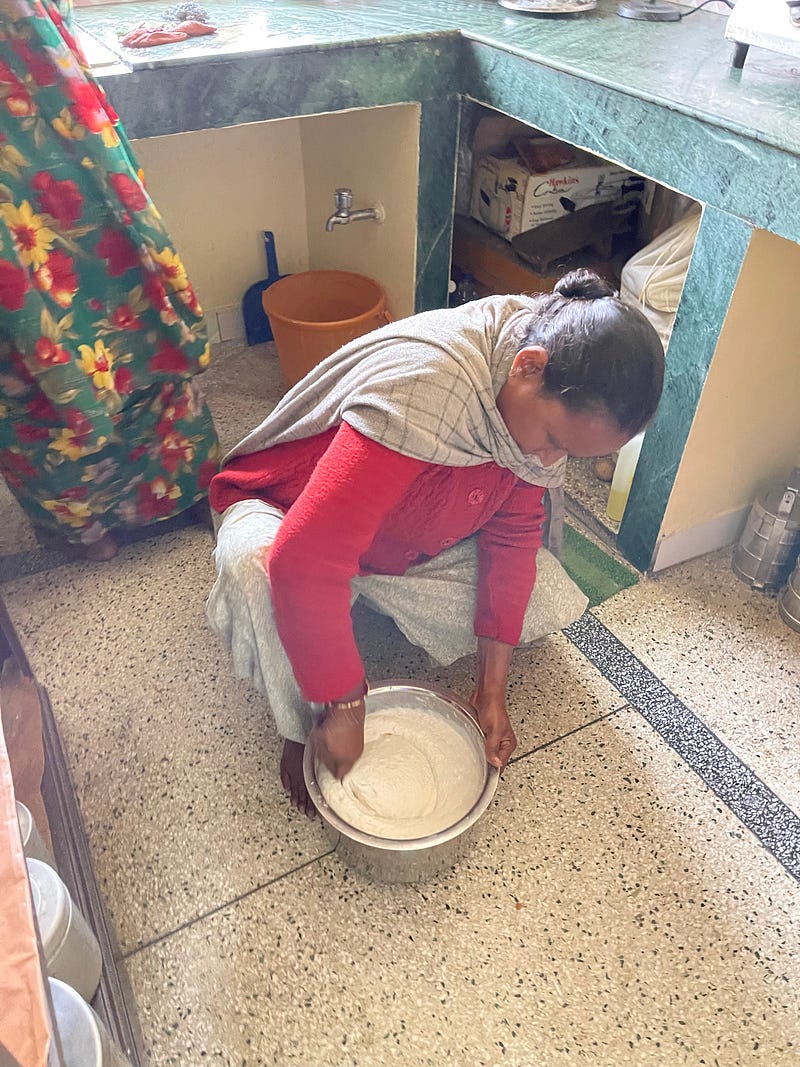
When humans must mix, gravity helps! Photo by the author.

Then my maid goes mix-mix-mix and stirs it all together.
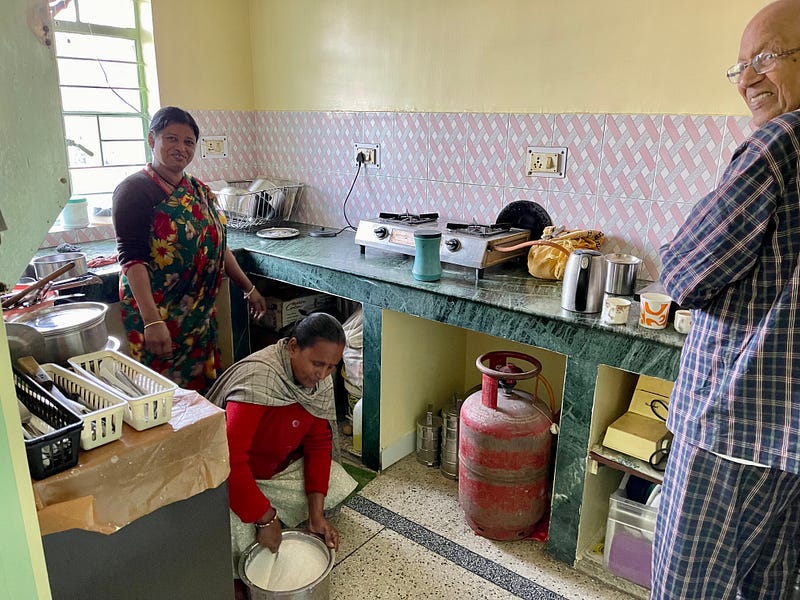
My maid-cum-cook mixes, while another does the dishes. It is normal in India, to have a maid do the dishes and the sweeping and mopping of the home. The cook, the one who’s whipping the batter, now she is the fruit of our good karma! Photo by the author.

The kitchen is a hubbub of activity as my dad makes tea for all of us. The maid who is doing my dad’s dishes comes around for the photograph when I ask her to.
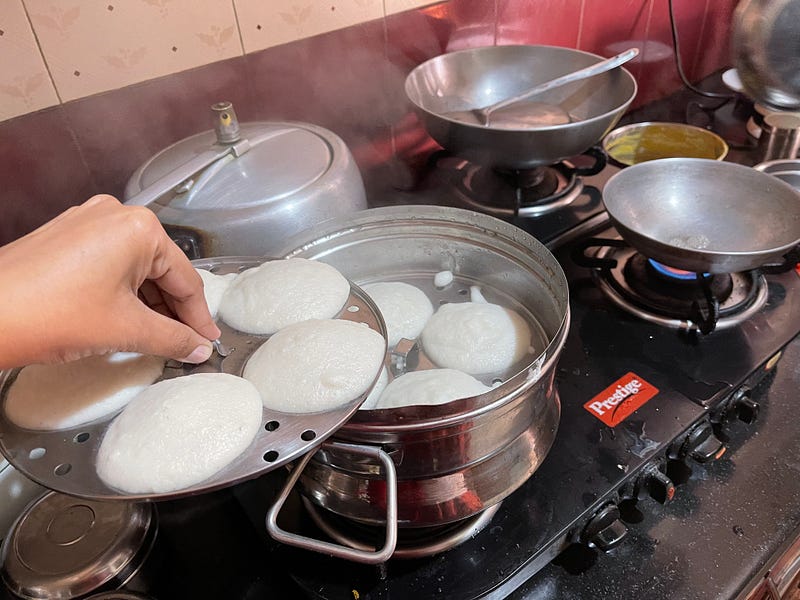
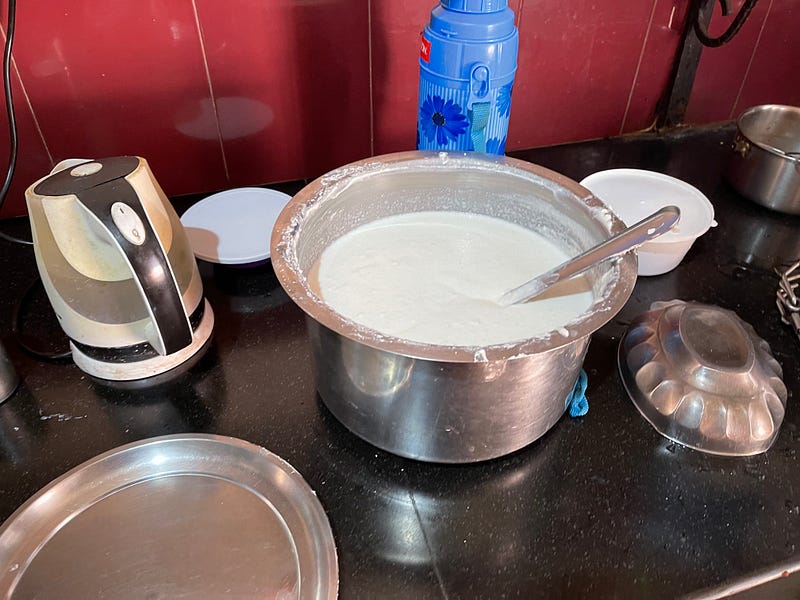
Fluffy idlis in the steamer, and the batter for many more rice cakes or crepes as we think fit. Photos by the author.

In the morning, the batter is ready to be steamed up into fluffy idlis in an idli cooker.
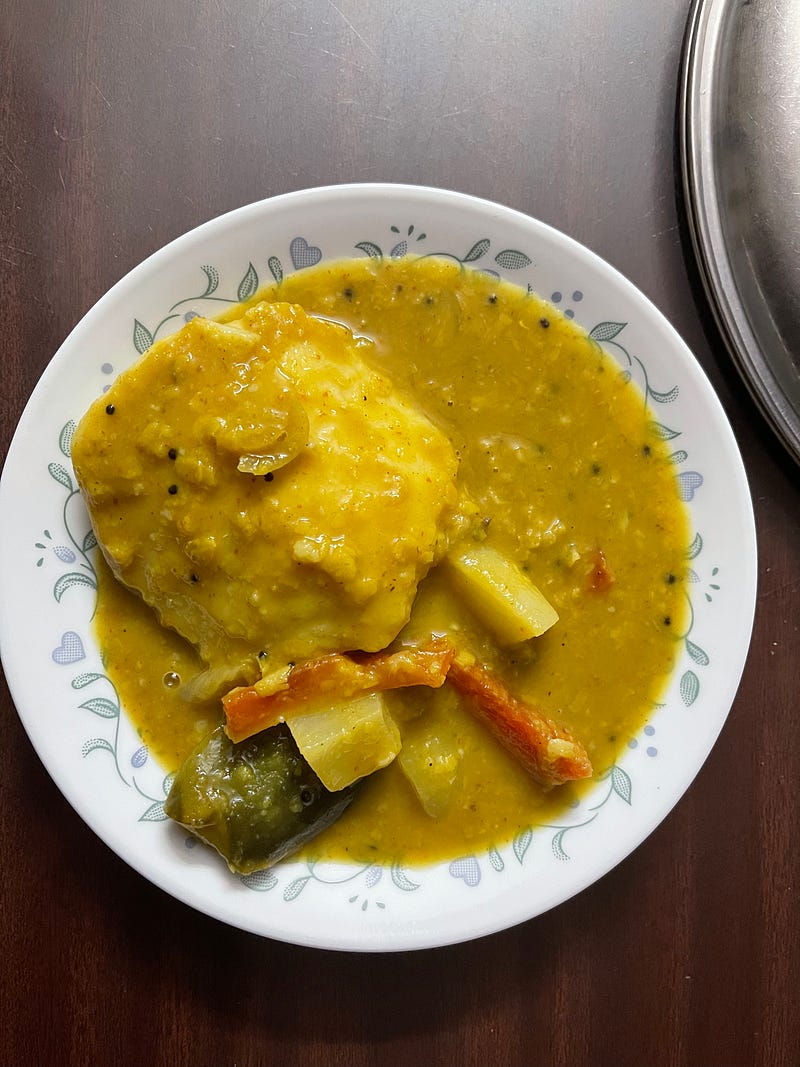
Idli with lentil soup (Sambar). Sambar is just a choice, there was a time when my kids used to eat their idlis with Hershey’s chocolate syrup. Some kids love to crunch idlis with sugar. Idlis are versatile that way. Photo by the author.

I ate my idli with a lentil soup called Sambar. The verdict on fluffiness? The stone grinders beat the blenders hollow — I mean, they beat the grains into a pulp, literally!

You can also use the batter to make crepes, like a dosa.
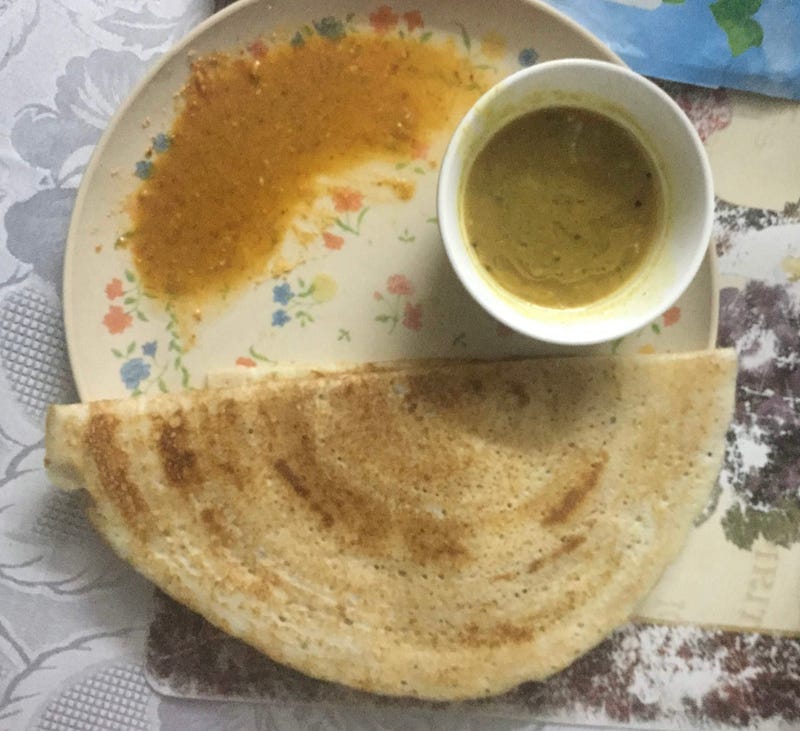
Dosa (crepe) with gunpowder and sesame oil, and a lentil soup. Photo by the author.

The crepes/dosas or the idlis/rice cakes are served with lentil soup, coconut chutney (not pictured here), or gunpowder with sesame oil.

Here’s the story that inspired this one — it was a story about the accompaniments with idlis.

Food
Digital Marketing
Parenting
India
Best Blenders
Recommended from ReadMedium