
The State of the Race for the 93rd Academy Awards

One year after the Academy Awards had their earliest ceremony ever, they are now having their latest ceremony ever. The COVID-related delay of awards season combined with the massive disruption to Hollywood’s production and release calendar has made this one of the most chaotic and unpredictable Oscar seasons ever. We are finally getting some clarity, though. After several weeks of minor critics groups weighing in with their votes for the best in film for 2020, the Oscar race really started to really take shape over the last two days with the Golden Globe, Screen Actors Guild, and Critics Choice Awards announcing their nominees. Check out my take on where things now stand for the 93rd Academy Awards.
The lead-up to the Academy Awards has become a notoriously drawn-out affair, with campaigning typically beginning in earnest in the fall and dozens of awards ceremonies from December onward leading up to the big night, which in recent years has mostly been held at the very end of February or in March. But, as a result of the sheer chaos that COVID-19 wrought on Hollywood (not to mention the globe), the Academy decided to make some changes to tradition.
First, films that premiered initially on streaming services are eligible for the first time. Since the inception of streaming, films needed to have a two-week theatrical run in Los Angeles prior to their premiere on streaming to be eligible for the Academy Awards. They waived this rule given the COVID lockdown that shuttered theaters across the US (including LA). Any film with a “previously planned theatrical release” that came straight to streaming since January 1, 2020 is eligible.
Second, they extended the eligibility window by two months. The result is that to be eligible for the 93rd Academy Awards, films had to be released between January 1, 2020 and February 28, 2021. This is the first time that the eligibility window expanded beyond a single calendar year. As a result of the extended eligibility window, the Oscars are later than ever before (April 25).
Clearly, several aspects of this year’s Oscar race are unprecedented. But in many ways, it hasn’t changed. The race is filled with fierce debate among critics and prognosticators, conversations about diversity and representation, divisive films and performances, and numerous records that could be broken.
Over the last several weeks, dozens of regional and national critics groups named their picks for the best in film over the past year. These critics groups are relatively poor predictors of the Oscars, highlighting the discrepancy in taste between film critics and Academy votes. The Oscar race does not typically truly start taking shape until the Golden Globes, Screen Actors Guild, and Critics Choice Awards announce their nominations. And that’s exactly what happened over the last week.
Below, I discuss each of the awards and then I move in to a discussion about what their picks indicate about the Oscar race.
- The 78th Annual Golden Globe Awards. A long-running institution, the Globes are voted upon by members of the Hollywood Foreign Press Association, a small and somewhat mysterious group of journalists who cover Hollywood for foreign media outlets. They have always been known to host a great party and a fun telecast, but in recent years have been taken very seriously due to their ability to presage the Oscars. In the last 25 years, the Golden Globes have converged with the Oscars on the winner of Best Picture 13 times, Best Director 14 times, Best Actor 18 times, and Best Actress 21 times. (Important note: At the Globes, separate awards for Picture, Actor, and Actress are given to dramatic and musical/comedy films at the Globes). The nominations were announced on February 3 and the ceremony will be held on February 28. The full nomination list can be found here.
- The 27th Annual Screen Actors Guild Awards. This relatively young awards show is notable in that it is voted on by the nearly 120,000 members of SAG-AFTRA (the actors union), a small but influential subset of whom are also members of the Oscar-voting Academy of Motion Picture Arts and Sciences. In the last 25 years, the Screen Actors Guild Awards have converged with the Oscars on the winner of Best Actor 20 times and Best Actress 18 times. (Of note, the SAG Awards only award actors; the closest thing they have to a Best Picture award is Best Ensemble, which has converged with the Oscar for Best Picture 12 of the past 25 years.) The nominations were announced on February 4 and the ceremony will be held on April 4. The full nomination list can be found here.
- The 26th Annual Critics’ Choice Awards. This ceremony is run by the Broadcast Film Critics Association, which is the largest organization of film and television critics in the United States (with a current membership of around 250). They tend to nominate more films than the Oscars (up to seven or eight per category instead of five) and have separate categories for genre movies (“Best Sci Fi/Horror Movie”). As such, it is always the case that there is some substantial divergence between this ceremony and the Oscars. Nevertheless, in the last 25 years they have converged with the Oscars on the winner of Best Picture 14 times, Best Director 19 times, Best Actor 17 times, and Best Actress 14 times. This year’s nominations were announced on February 8 and the ceremony will be held on March 7. The full nomination list can be found here.
Three long-presumed front runners now appear to be guaranteed nominees
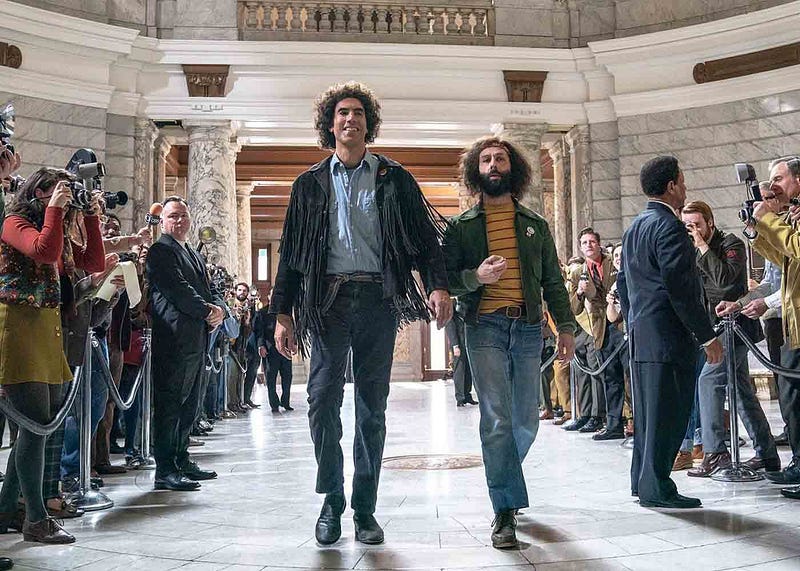
There is only one film that has showed up everywhere it possibly could have and that is The Trial of the Chicago 7. Aaron Sorkin wrote and directed the dramatization of the legal fallout from the anti-Vietnam War protests that rocked the 1968 Democratic National Convention in Chicago. It scored Best Picture, Best Director, Best Screenplay, and Best Supporting Actor (Sacha Baron Cohen) nominations from the Globes and Critics Choice, as well as additional citations for Best Ensemble and Cohen from SAG.
Mank, another Netflix film that began streaming at the end of last year, is performing very strongly. David Fincher (The Social Network) directed the film about Citizen Kane screenwriter Herman J. Makiewicz from his late father’s screenplay. The film showed up all over the place at the Globes and Critics Choice Awards, with citations for Best Picture, Best Director, Best Screenplay, Best Actor (Gary Oldman), and Best Supporting Actress Amanda Seyfried. The only sign of potential weakness is that it only scored a nomination for Oldman at SAG, with no nominations for Best Ensemble or Seyfried. It still seems like a lock for some major Oscar nominations, though.
Writer and director Chloe Zhao’s Nomadland has also received across-the-board love, which is fitting since it is the best reviewed film in the race. The heartbreaking meditation on the experience of the working class during the Great Recession scored Best Picture, Best Director, Best Screenplay, and Best Actress (Frances McDormand) nominations. Like Mank, it received a lead acting nomination at SAG, but was excluded from Best Ensemble. Unlike Mank, it was never really expected to get in there given that outside of McDormand the film only has three notable performances — a minor role for David Strathairn and a couple of non-actors in their film debuts.
Click here to read my review and analysis of Nomadland and Promising Young Woman
A trio of critically revered black-led ensemble films have uncertain prospects
The Trial of the Chicago 7, Mank, and Nomadland appear locked for widespread Oscar love, including Best Picture nominations. However, the fate of three black-led ensemble films remain a bit more of a question mark.
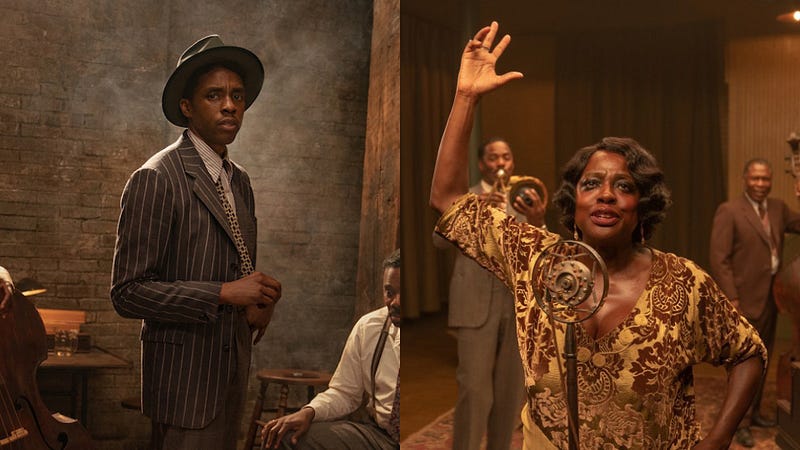
George C. Wolfe’s adaptation of August Wilson’s play Ma Rainey’s Black Bottom, which chronicles a day in the life of jazz singer Ma Rainey recording with her band in the 1920s, consistently scored nominations for its stars Viola Davis and Chadwick Boseman at all three awards. It is a lock in those categories, but its prospects outside of them remains uncertain. It scored a Best Ensemble nod at SAG and Best Picture nomination at the Critics Choice, but was omitted from Best Picture at the Globes and omitted from the Best Director race at both the Globes and Critics Choice.
Recent Best Supporting Actress Oscar winner Regina King adapted Kemp Power’s play One Night in Miami… to great acclaim, but it has showed up a bit inconsistently as well. Leslie Odom, Jr. has shown up everywhere for his performance as Sam Cooke, King received Best Director nominations from the Globes and Critics Choice, and the film scored a Best Ensemble nomination from SAG. However its omission from Best Picture at the Golden Globes (it got in at Critics Choice) was a bit curious.
Writer and director Spike Lee’s Da 5 Bloods, an epic drama about Vietnam veterans who reunite a half century later to honor their fallen brother, scored big at the Critics Choice Awards (Best Picture, Best Director, Best Screenplay, and two acting nominations for Delroy Lindo and Chadwick Boseman) and at SAG (Best Ensemble and Supporting Actor for Boseman). But the combination of its complete shutout at the Globes and the omission of Lindo at SAG raises some questions about its Oscar prospects.
A quartet of once-uncertain bets are on the rise
Many Oscar prognosticators have long suspected that writer-director Emerald Fennell’s Promising Young Woman would be too divisive to score major nominations. However, the electrifying revenge film that provides blistering commentary on America’s rape culture is outperforming most expectations. The film received Best Picture, Best Director, Best Screenplay, and Best Actress (Carey Mulligan) from both the Globes and Critics Choice. If it hadn’t missed out on a Best Ensemble nod from SAG (where Mulligan was its sole nomination), I would be even more certain that it is a major Oscar player. Nevertheless, its current prospects are dazzling.

The decision by many groups to relegate writer-director Lee Isaac Chung’s Minari, a coming-of-age film about Korean immigrants settling in rural America, to the Foreign Film category generated a lot of anger over the past couple of months from people who called the decision racist, noting that this was actually a quintessentially American film. I suspect that this controversy helped raise the profile of the small but critically adored film. It may have underperformed expectations at the Globes (which nominated it only in the Foreign Language Film category), but it over-performed at SAG (Best Ensemble, Best Actor for Stephen Yuen, and Best Supporting Actress for Yuh-Jung Youn) and Critics Choice (Best Picture, Best Director, Best Screenplay, Best Actor, and Best Supporting Actress). This one now feels like a real contender.
After failing to show up virtually anywhere at the various regional and national critics awards that preceded these recent nomination announcements, The Father returned to the Oscar conversation in a big way over the past week. Writer-director Florian Zeller’s wrenching depiction of a man sliding into dementia scored Best Actor (Sir Anthony Hopkins) and Best Supporting Actress (Olivia Colman) nominations from all three groups. Additionally, it showed up in Best Picture and Best Screenplay at the Globes and Best Screenplay at Critics Choice. Hopkins and Colman appear locks, but how it will play outside the acting categories remains to be seen.
Even though it looked like the definition of Oscar bait, Ron Howard’s adaptation of J.D. Vanec’s memoir Hillbilly Elegy was so reviled by critics that many expected (perhaps hoped) that it would be shut out of the Oscar race. However, Glenn Close has shown up in the Best Supporting Actress race in all three sets of nominations and Amy Adams scored an unexpected Best Actress nomination from SAG. At least Close is now certainly a lock.
The buzz of some once-hot contenders appears to be fading
Writer-director Paul Greengrass’s Western News of the World was expected to be a major player due its Oscar-friendly genre, subject matter, and star (Tom Hanks). However, it scored sole Best Supporting Actress nominations for 12-year-old actress Helena Zengel at the Globes and SAG. It fared better with Critics Choice, scoring Best Picture, Best Actor, and Best Screenplay nominations. It’s very unclear whether those major nominations were an anomaly or a sign of big things to come when the Oscar nominations are announced.
Director Kornel Mundruczo and writer Kata Weber’s wrenching domestic drama Pieces of Woman was declared a major player after its premiere at the Venice Film Festival last year. However, it only scored Best Actress nominations for star Vanessa Kirby at the Globes and SAG. Both groups shockingly snubbed Oscar-winning legend Ellen Burstyn for her electrifying supporting performance that, if nominated at the Oscars would make her the oldest acting nominee ever. Thankfully, the Critics Choice did nominate her this morning. Whether or not the deteriorating Oscar chances of the film as a whole have anything to do with the negative press surrounding co-star Shia LaBeuof’s horrifying abuse allegations is unknown.
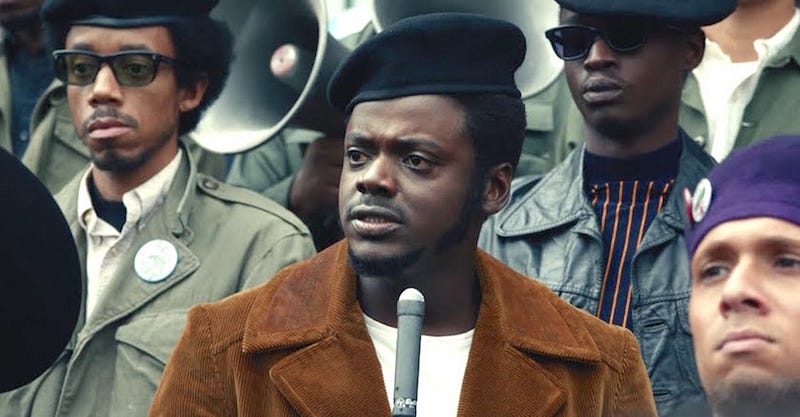
Writer-director Shaka King’s drama Judas and the Black Messiah, which chronicles the interactions of the Black Panther Party and the FBI in the late 1960s, was a late debut that wowed critics. However, the only place it has consistently showed up in the nominations is Best Supporting Actor for Daniel Kaluuya. It will be interesting to see if the heightened profile from its premiere in theaters and on HBOMax this Friday will lead to more Oscar attention outside of Kaluuya.
The United States vs. Billie Holliday, Lee Daniels’ biopic of the jazz legend, picked up Best Actress nominations for Andra Day from the Globes and Critics Choice. Day was snubbed by SAG and the film managed to get any other major nominations thus far, rendering its chances a bit rocky.
The big question marks
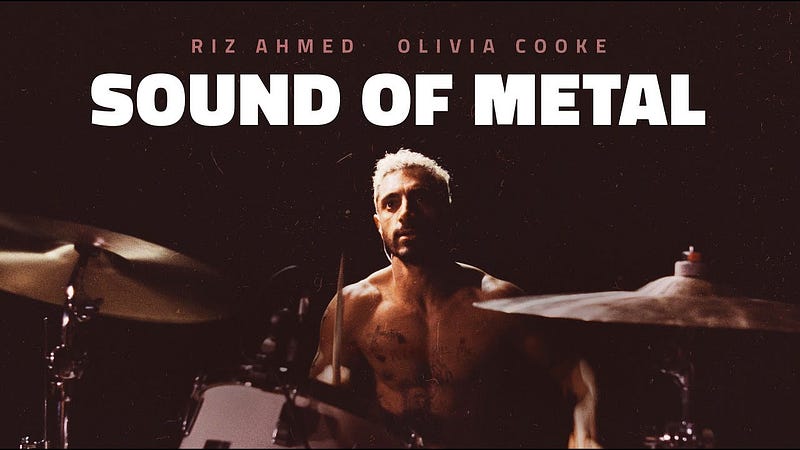
Sound of Metal, writer-director Darius Marder’s drama about a heavy metal drummer losing his hearing, has consistently garnered nods for Riz Ahmed’s lead performance from all three groups and was looking like it would garner broad support across several categories. However, it failed to show up in any other categories at the Globes or SAG, including Best Supporting Actor (Paul Raci’s turn in the film had won numerous awards from critics groups leading up to those announcements). The Critics Choice included Raci, however, and also gave the film nominations for Best Picture and Best Screenplay, reviving the film’s broader Oscar prospects.
One of the most unexpected aspects of this awards season is the across-the-board love for Maria Bakalova’s turn in Borat Subsequent Moviefilm, the sequel to the iconic and audacious mockumentary. She was nominated from all three groups, albeit in different categories (the Globes considered her a lead, while SAG and Critics Choice nominated her in supporting). Bakalova is certainly deserving, but two big questions remain: 1) Will the film’s grotesqueness and controversies turn off Oscar voters? 2) Will category confusion hurt her? Whether or not she is snubbed is one of the most fascinating questions of this year’s Oscars.
The Mauritanian, Kevin MacDonald’s legal drama about a detainee at Guantanamo Bay, was on very few people’s radars prior to its surprise Golden Globe nominations for Best Actor (Tahir Rahim) and Best Supporting Actress (Jodie Foster). Its failure to show up at SAG or Critics Choice suggests that its Globe nominations were a flash in the pan. But then again it might be unwise to completely count two-time Oscar winner Jodie Foster out of the race.
Writer-director Kelly Reichardt’s First Cow and writer-director Eliza Hittman’s Never Rarely Sometimes Always were frequently cited by critics groups but then completely shutout by the Golden Globes and SAG, seemingly squashing their Oscar chances. But the latter film scored nominations for Best Actress (Sidney Flanigan) and Best Screenplay at the Critics Choice Awards, somewhat reviving its chances.
When Netflix announced it was giving writer-director Sam Levinson’s Malcolm & Marie an Oscar-qualifying release on Netflix, many thought that it could upset the acting races. However, the incredibly divisive reception of the film and its total shutout at the Globes and SAG make it appear unlikely that stars Zendaya (who did score a Critics Choice nomination) or John David Washington will make it in.
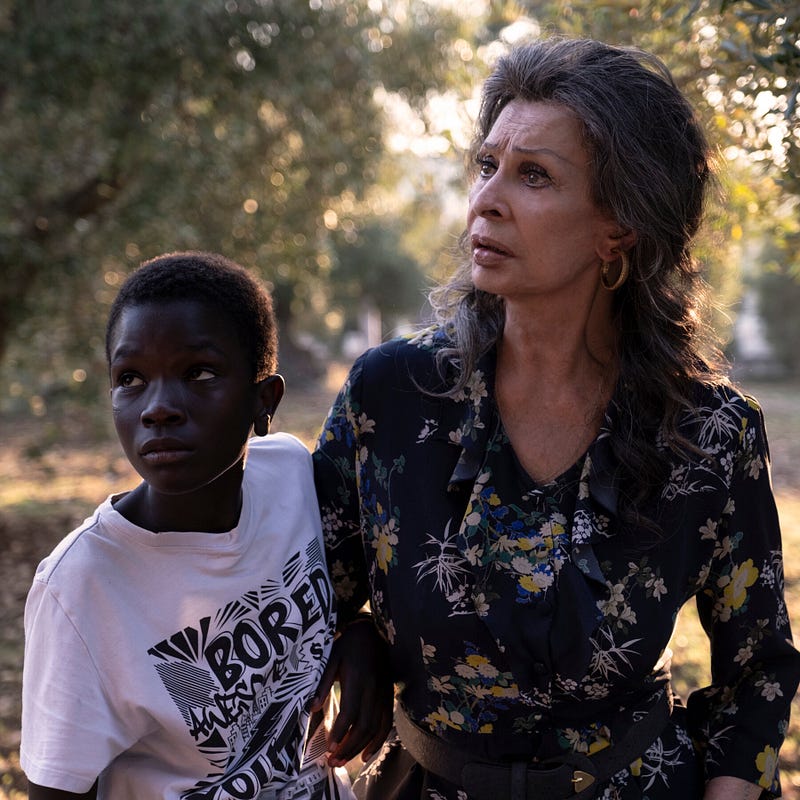
Oscar-winning screen legend Sophia Loren gave her first appearance on the big screen in 11 years when she appeared as Madame Rosa in writer-director Edoardo Ponti’s Italian drama The Life Ahead. Despite the fact that her performance was acclaimed, her movie is widely available on Netflix, and the narrative about her potentially returning to the Oscars as a nominee for the first time in 56 years is an incredible one, she has not received a single nomination anywhere. Most have already completely given up on her having any shot, but I have seen the Academy shockingly include lesser talents after failing to be nominated anywhere else, so I still think she could surprise in Best Actress.
And, finally, there’s the curious case of Jared Leto in The Little Things, a crime drama that recently premiered to tepid critical reception on HBOMax. The only thing more shocking than Leto’s surprise Globe nomination for the role was that it was repeated by SAG the following day. The shock and confusion of it all nearly broke Film Twitter. However, his snub by the Critics Choice (even in an expanded field of six nominees) suggests that this attention was in fact an anomaly.
The State of the Race
I currently feel quite confident at predicting the following seven films in major categories, including Best Picture: The Trial of the Chicago 7, Mank, Nomadland, Promising Young Woman, Ma Rainey’s Black Bottom, One Night in Miami…, and Minari. The major question marks for me are how Da 5 Bloods,The Father, Judas and the Black Messiah, News of the World, Sound of Metal, and Hillbilly Elegy will be received. Any of them could majorly over-perform or be notably snubbed.
Regardless of how it plays out, it seems likely that this will be a banner year for inclusivity in the major categories. There is the very real prospect that not one, not two, but three women could be nominated for Best Director (Chloe Zhao, Emerald Fennell, and Regina King). Considering only five women have ever been nominated for Best Director in the 92-year history of the Oscars, even one of them getting in would unfortunately be a major milestone. There is also the possibility that we have a near-record number of non-white acting nominees. I expect the late, great Chadwick Boseman to get double nominated and Davis, Ahmed, Kaluuya, and Odom Jr. seem locked in at this point. If Delroy Lindo, Andra Day, Stephen Yuen, and Yuh-Jung Youn also get in that means we could see half of the acting nominees be non-white.
In a nice birthday gift to me, the Oscar nominations will be announced on March 15. I will be back with a detailed analysis of the race in the days leading up to the announcement.
Click here to follow the author on Medium and Twitter.
Read recent articles about movies by this author:


