
The Spreadsheet of Liberation
The price of freedom is in cell G37

Following your passion is dumb.
I’ve said that before, several times, and I pretty much believe it. Passion is neither necessary nor sufficient for success, and it’s usually not very lucrative. That whole Starving Artist thing sounds noble and romantic, but I’ve always been more of a three-meals-and-an-afternoon-snack kind of girl.
And yet, a few months ago¹, I quit my job to become a writer.
Now, it’s sweet of you to worry about my cognitive dissonance, but fear not — my pursuit of passion is rational and well-reasoned, and incredibly brave. I do need to amend my original statement a bit, though: Following your passion before you have the financial means to do so is dumb.
But it turns out pursuing your dreams doesn’t have to mean coupon-clipping and poverty and sharing your last scrap of brie with the friendly rat that lives with you in your shabby-chic Parisian flat. You can follow your dreams without creating a burden on society that no amount of flash-fiction or experiential art can offset.
I did it, and you can do it, and I’m going to tell you how.
To follow your dreams, to pursue your passions, to finally shrug off the shackles of the oppressive corporate overlords to which you’ve willingly indentured yourself, you need one simple tool.
What is it? you whisper. Come closer, and I’ll tell you.
…
…
…
IT’S A SPREADSHEET!
Now, I love spreadsheets. I spent a decade in analytics, and I don’t care how many Big Data buzzwords you drop — machine learning and AI and python and Tableau — Excel will always have a place in corporate life. And in my heart.
I’ve used Excel to analyze complementarity and substitution among products in a pretty sizable retail portfolio, and I’ve used it to track thousands of tons of commodities along their entire supply chain. I’ve used Excel to to inform decisions worth hundreds of millions of dollars. My favorite spreadsheet, however, dealt with quite a bit less than hundreds of millions of dollars…but it was worth far, far more.
I call it The Spreadsheet of Liberation. It gave me my freedom, and it can give you yours.
Budget Your Way to Freedom
The Spreadsheet of Liberation is incredibly simple. There are no macros or Vlookups² or complex formulas — just a couple of columns and a couple of sums and a result that can literally change your life.
So, after all that buildup: It’s a budget.
It’s an exhaustive list of all of your non-discretionary expenses (rent, car maintenance, health insurance, cat expenses, donations, retirement funding, groceries, long-term savings goals, etc.), plus a few of your less-negotiable discretionary ones (Amazon Prime, vacations, non-generic-brand butter). The Spreadsheet of Liberation tells you exactly how much money it takes to Live Your Best Life for a year.
So far, nothing too revolutionary, right? But then you get to the second tab.
Here, you input your savings (minus a pretty big buffer for unforeseen expenses), and that gets divided by your annual expenses. And there — in that big, bold, thick-box-bordered cell — is freedom.
In this case, freedom is measured in time. The number that your Spreadsheet of Liberation spits out is how many years (or fractions thereof) you can afford not to work, i.e., to follow your passion without becoming homeless.
I’m not sure what your time frame will be, but I guarantee that it will be longer than you think.
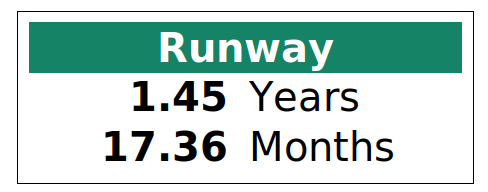
This is where the scary part comes in — now that you know you can follow your dreams, you actually have to do it. But that’s outside the scope of this article — there are far greater minds than mine on Medium that can motivate you through that journey.
I just want to help you get rid of the ‘I can’t possibly start my own company/become a writer/move to a new country/shrug off the societal expectations that I climb an unfulfilling corporate ladder to max out at middle management’ excuse.
Go Forth and Calculate
So here’s what you do. Open up Excel and Outlook (or LibreOffice Calc and Mozilla Thunderbird — you do you). Start your own Spreadsheet of Liberation, and figure out exactly how long you can afford to chase your dreams.
Then flip over to your calendar and pencil in a time-frame. Choose a start date in the not-too-distant future — say, at the end of your contractual notice period — and mark that Day #1 Of The Rest Of My Life.
Then get busy figuring out what you need to do to make sure that the endpoint — the day your savings/runway runs out — comes and goes and you’re so successful at your New Thing that you don’t even notice.
Just be sure to stock up on the good butter before your last paycheck.
¹ Around the same time I got into intermittent fasting…coincidence? ² Which are subpar anyway…you should be using Index(Match()) — it’s way more robust


