
The Spirit of Radio
An ode to the local radio of my youth.
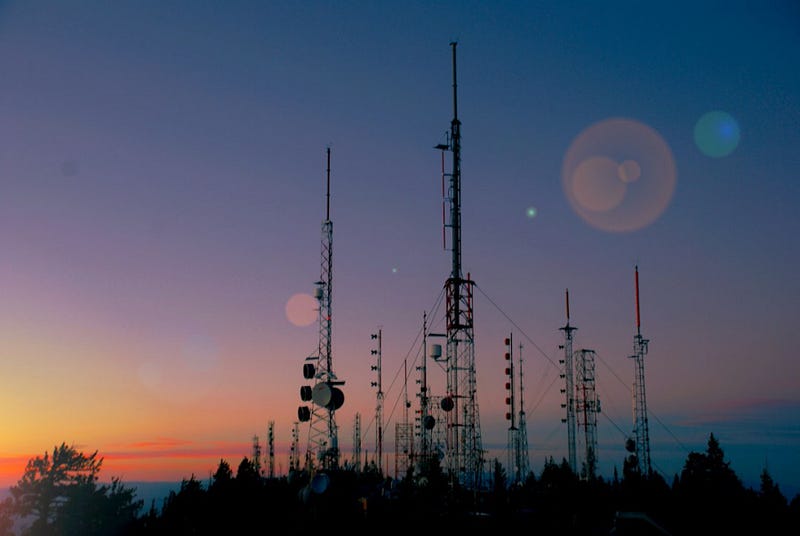
In the late 60s and 70s, in the USA, regional rock radio stations were popping up everywhere. These stations were a reflection of the massive fandom of the rock n roll explosion that had been occurring since the wonderful British invasion.
Nowhere was this explosion more prevalent than in the American Midwest. These radio stations introduced us to the quickly developing/evolving family tree of Rock n Roll. No one knew what to call it back then, but it would eventually come to be labeled “classic rock” by the mid to late 80s.
There were still top 40 radio stations in abundance playing all the hit singles so easy to digest, but this was different. John, Paul, George, and Ringo decided to embrace a deeper kind of creativity with their album Rubber Soul, and album rock began its domination for the next several decades.
Crates built just for album storage were popping up everywhere as our rock libraries ballooned with the latest albums from The Who, Pink Floyd, The Kinks, and on and on. Bands were sprouting up everywhere in the Midwest as well.
Regional acts became international successes. The regions around Detroit and Cleveland alone — my region — produced acts like The Stooges, MC5, The Romantics, Grand Funk Railroad, Ted Nugent, Bob Seger, The James Gang, Devo, The Pretender’s Chrissie Hynde, Wild Cherry and the Dead Boys. — Not to mention the incredible Motown acts.
It was an era of the perfect synchronization of creativity and a radio format with the balls to explore it all.
Beginning my rock n roll odyssey
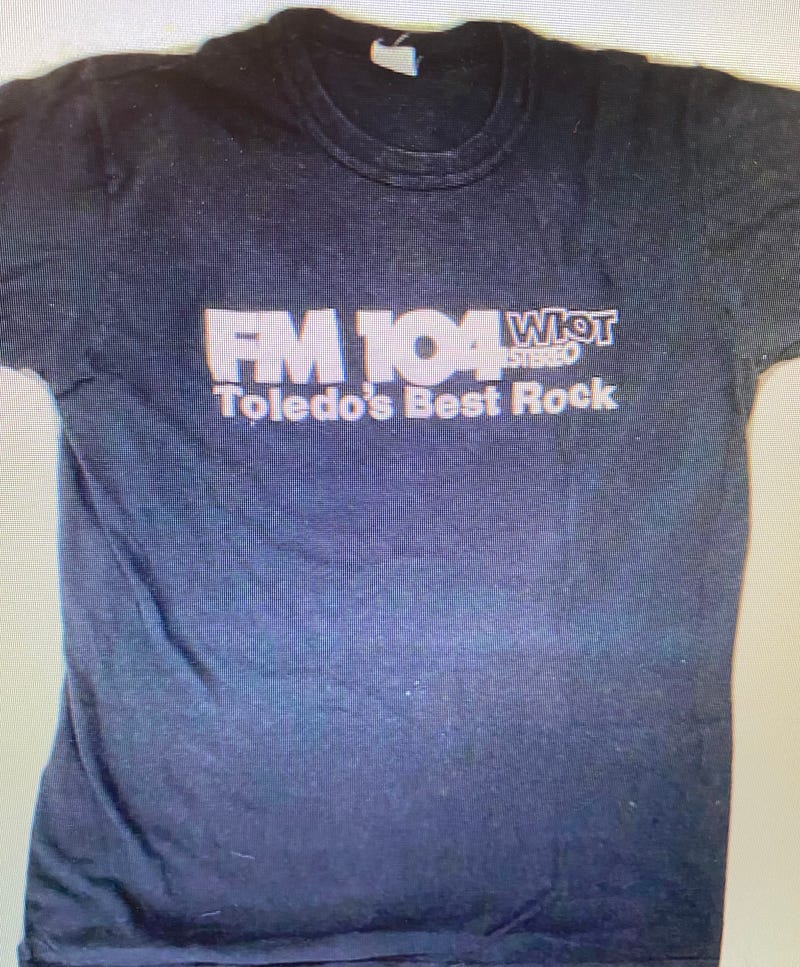
At the age of 9 my family moved to Toledo, Ohio — nestled perfectly between Detroit and Cleveland. It is all relative, but Toledo — population 380,000, in 1977 — was the big city for my family coming from rural Ohio. It wasn’t long before a certain radio station in my periphery became the wellspring of my rock n roll education.
It was an ocean of musical stimuli. I was overwhelmed with sounds that conjured feelings I didn’t know were in there. Feelings ranging from euphoria to terror as I absorbed Led Zeppelin’s ‘Kashmir’ and then sank into Black Sabbath’s fear-inducing ‘War Pigs.’
I seemed to gravitate toward cuts like Cheap Trick’s ‘Surrender’ and The Car’s ‘Just What I Needed.’ I loved the pop sensibilities and “modern” feel. — Learning that The Cars’ vocalist/bassist Benjamin Orr hailed from Northeast Ohio only made my fandom sweeter.
RIP, Ben.
I embraced the bad boyishness of Aerosmith’s ‘Walk This Way,’ and yes, I loved the inspirational — and very tightly produced — sounds of bands like Journey, Foreigner, and Jefferson Starship. — An evolution from Jefferson Airplane that I’m sure the hippies mourned, but to this day, I cannot figure out a way to rationalize this song sucking:
So many sounds entered my ears and sent shockwaves through every fiber of my being. Such a powerful impact on a boy entering his pubescence. All this thanks to my beloved FM 104.7.
The radio station’– and others like it all over the USA – would change us forever.
These classic anthems they played would even come to dominate our professional sports; as songs like Queen’s ‘We Will Rock You’ or Journey’s ‘Don’t Stop Believing’ blasted out from stadium sound systems — and still do to this day.
So much music to absorb and process. The wattage growing ever stronger as we would drive toward Cleveland and pick up the legendary WMMS with the same now classic format. By the 1980s you could drive anywhere and find “that” radio station. Every city had its version.
There was nothing like driving long distances and hearing Detroit’s own Bob Segar and his Silver Bullet Band, Springsteen and his E Street Band or Tom Petty and his Heartbreakers. This was American road music full of heart and reserved for the gritty romantics.
Some called this heartland rock n roll, but it was just pure no-nonsense rock n roll music and radio played it in abundance. Working-class Midwesterners felt heard and personified.
The 1970s were a unique time for Rock music. There was so much artistic freedom and experimentation, and radio wasn’t afraid to experiment along with us.
I remember listening to entire album sides of Pink Floyd’s ‘The Wall,’ and Bowie’s ‘Ziggy Stardust,’ played on the radio!
I’d be laying in my bed staring at the ceiling consumed and anxiously awaiting the next note, bridge, and time signature.
It was all so overwhelming and stimulating, and my local FM 104.7 was the reason. Those Disc Jockeys were fearless, as they spun us into intoxicating musical adventures. The peak of this great era seemed to slow down with tragic rock n roll losses as we drifted into the 80s.
I mourned with the DJs as they announced the passing of members of Lynyrd Skynyrd due to the plane crash in ‘77, The Who’s Keith Moon in ’78, the stampede and loss of life at The Who concert in Cincinnati in ‘79, AC/DC’s Bon Scott and the great John Bonham both in 1980. It all seemed to be punctuated by the tragic assassination of John Lennon in December of that fateful year. — 1980.
Rock n Roll felt dangerous back then and ignited my inner-angst. The sound of Bon Scott’s voice appealed to my inner juvenile delinquent.
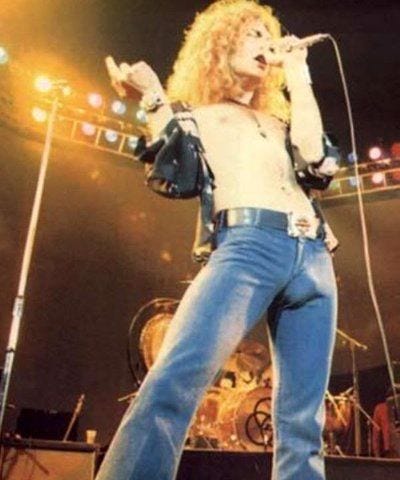
Local radio was the reason my sister’s ran off to Detroit’s Joe Louis Arena or the Toledo Sports Arena to see living legends. Suddenly the golden god of frontmen, Robert Plant, was sporting his trademark tube steak gripping jeans in this poster over my sister’s bed.
“Hey hey mama said the way you move
Gonna make you sweat, gonna make you groove
Ah, ah, child, way you shake that thing
Gonna make you burn, gonna make you sting.
Hey hey baby when you walk that way
Watch your honey drip, can’t keep away.” — Lyrics from the song ‘Black Dog’ by Led Zeppelin.
I wasn’t overly sure what Robert was carrying on about but my sister seemed to enjoy it. I just loved the music, especially the great Bonzo’s drum fills.
Although I was just entering my teens in the 1980s, I was fortunate to catch the tail end of this amazingly creative and fruitful time in rock music. All of this thanks to my local WIOT FM 104.7, Toledo’s best rock.
If it weren’t for 70s rock radio, some of my favorite bands and songs of all time would have never reached my consciousness. I would have never known to purchase The Clash’s ‘London Calling,’ AC/DC’s ‘Back in Black,’ Bob Seger’s ‘Live Bullet,’ or Rush’s ‘Moving Pictures.’
My rock n roll tastes are all over the map and that is because I was fortunate to grow up during a creative period when regional rock radio played whatever the hell they wanted.
From Super Tramp and Yes, to the Ramones and the Sex Pistols, radio played it all. Because when it all came down to it, as Seger wailed in his song ‘Rock n Roll Never Forgets:’
“…all Chuck’s children were out there playing his licks…”
It was an era before labels. Words like “Punk,” “Heavy Metal,” or “Progressive” were barley a thing. Writers of that snob-infested rag Rolling Stone, would impose such garbage on us almost subliminally.
RUSH, one of my favorite bands of all time. A band that if it weren’t for FM 104.7, I may have never heard of. I can think of no other song that pays a better tribute to this great era of music than their 1979 track, The Spirit of Radio’.
The 1980s would gradually bring with it a new era. I embraced this era as well. I loved the “New Wave” of bands that were ushered in by the new music television station that came with our cable TV package. Many of the bands from the 70s would adjust to the more polished sounds of the new decade, and do some great work, but many would not and disappeared.
Yes, AC/DC carried on without Bon, but somehow Malcom Young’s fantastic rhythmic down-stroke seemed just a little less dangerous, Eddie Van Halen’s finger tapping lost just a smidge of it’s mystique, and Pete Townsend seemed to turn down his amp forever, and that’s okay.
We survived.
What a fantastic experience it was, though.
Thanks for the inspiration DJ Hopkins.


