
The Sound of 1983–40 Years On

Each of the albums on this list is officially 40 years old.
A selective look at ten outstanding, still demanding of attention, metal and metal adjacent records from 1983.
Listed from least to most, noting that the gap shouldn’t be considered significant.
And the obligatory playlist for you to listen to while you read: Ten Mandatory Records From 1983.
Ten:
Iron Maiden Piece Of Mind
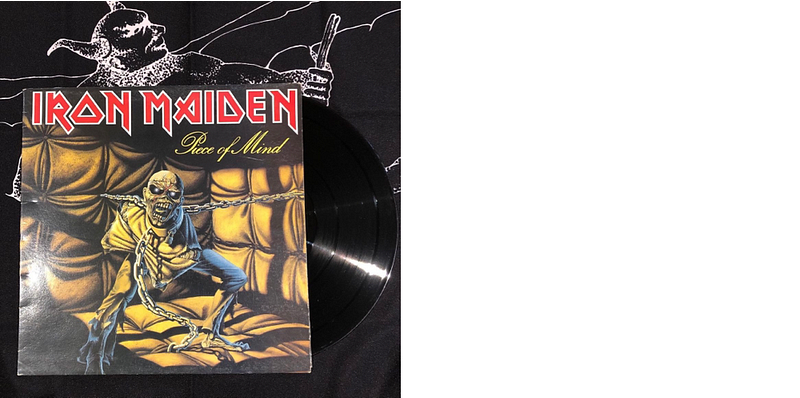
Though singer Bruce Dickinson’s second record with Maiden, this was the first in which he contributed to the band’s compositions, receiving credit on four of the album's nine cuts. Like all Iron Maiden’s first six full-length offerings, Mind features some of the band’s most undisputed classics. This should in no way suggest that they didn’t maintain their prestigious forge beyond 1988 — I’d posit they were less trenchant overall, at least until their Brave New World record dropped a decade and changed later.
Dickinson’s arrival enhanced the band and gave them increased scope to realise a musical vision without limitation. This lineup was effectively capable of whatever they conceived. It’s difficult to discern whether Dickinson’s songwriting contributions improved the band’s orchestrations overall, but word on the street is that Steve Harris is something of a perfectionist and doesn’t accept anything that isn’t on point.
The title offers a nice play on words, and artist Derek Riggs’ vision of Eddie in a padded cell, enhanced by the quasi-medieval facade, grants the collection an ominous tone.
Nine:
Exciter Heavy Metal Maniac
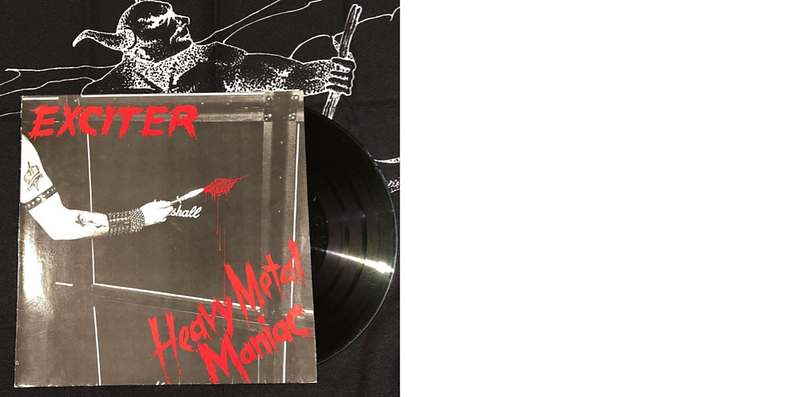
You had me at Canadian Metal… Well, before Canadian Metal was a thing, there was Exciter and their electrifying debut Heavy Metal Maniac.
Steeped in Heavy Metal affectations (in case the title wasn’t as significant a tell as imagined), the overall offensive sits more in line with the rising Thrash Metal current that they, like countrymen, Anvil, are renowned in the formation of the then-burgeoning style.
Interestingly, the band weren’t exclusively dedicated to speed and malice. Tracks like Iron Dogs were heavier, slower in delivery, but equally as dramatic as anything else assembled. Their passion for Judas Priest extending beyond their namesake.
The cover is totally iconic—the classic slasher of the Marshall amp, and the title is painted in blood. The staged band photos on the back cover aren’t as convincing as those shot for Show No Mercy (what is Jeff Hanneman doing with that crucifix?), but this is a small complaint.
Exciter’s follow-up was arguably better, the title track Violence and Force their greatest composition ever, but since that didn’t come out in 1983 and HMM did, that’s the treasure we’re digging.
Eight:
Accept Restless And Wild

Technically, it's a 1982 release; I’m leveraging the fact that it didn’t hit the UK or US until 1983 as its right to exist in this collective. And when it comes to Heavy Metal — in all its guises — this is one of its true monuments. Everything about it is spot on. The production, those crisp, heavier-than-thou riffs, the anthemic choruses, lead guitar trade-offs, and of course, UDO’s quintessential vocal style.
Bands of this era certainly knew how to amplify the statutes of Hard Rock, and I guess that considering that’s from whence they’d emerged, there’s nothing profound about that statement. The burgeoning 80s Heavy Metal sound was a condition they were forging, rather than channeling some phenomenon from the past.
The studio production of this age augmented the band’s dynamic range, preserving the kinetics and tension within the arrangements. You could argue that they had no true influence over this outcome — studio producers guided bands to make emotionally oscillating music that weaponised the range between the quiet and the overkill, providing a frame of experience for the listener.
Music production of today isn’t quite the same, is it?
Seven:
The Sisters of Mercy Reptile House
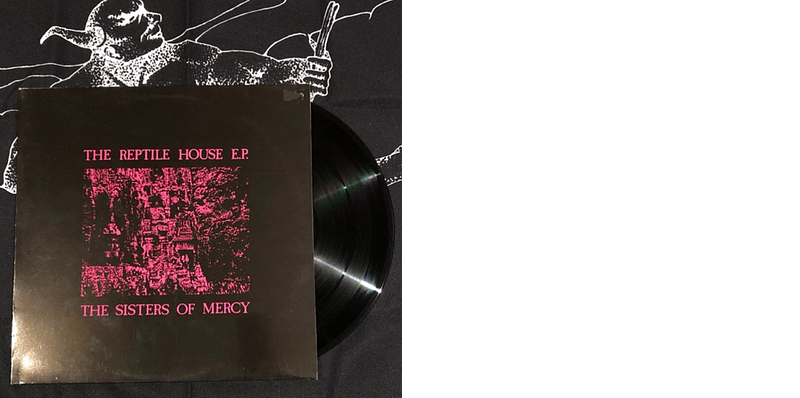
This was a tough one to call. I definitely wanted to include a Sisters record, but I debated over whether it should be this or the Temple Of Love 12”. As colossal as that A side is, as well as the EP closer, Gimme Shelter, originally by the Rolling Stones — I elected to surrender myself to how utterly bleak the Reptile House is, and that unlike a single or EP type of format, this can be experienced as a fully evolved release, stylistically cohesive from genesis to epilogue.
I’d posit this as the most sombre of all their records, and if the legend be true, it appears that Andrew Eldritch’s siloed approach was the correct one on this occasion. They can’t be all sunshine and lollipops.
Six:
Dio Holy Diver
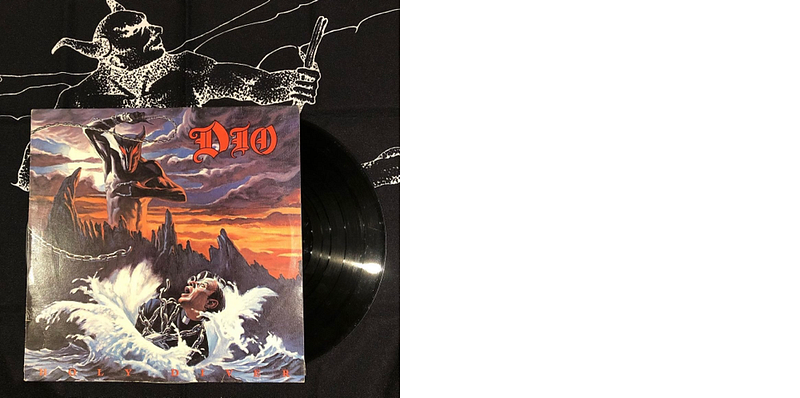
Ronnie James showed the world that he could assemble, direct, and deliver a world-destroying record off his own bat. While his storied stints in Rainbow and Black Sabbath demonstrated assertive influence over both, he was a key collaborator on each occasion, where the signal of anointing his post-Sabbath ensemble after his own nom de guerre was a far bolder declaration.
When looking retrospectively, it’s disingenuous to say that Ronnie stepping in to replace Ozzy in Black Sabbath was any sort of deposition — Ozzy’s documented abstraction from the band that he fronted across the 1970s shows that it was no usurpation. Tony and Geezer’s Never Say Die attitude in wanting to preserve the legacy of what they’d forged to date, still aspiring to greater heights, isn’t difficult to resolve. But this isn’t the focus here — only a milestone on Ronnie’s journey.
Holy Diver is the ultimate experience of Ronnie James without any limitations imposed on his musical vision. This is in no way to diminish or contain the role of his fellow musical assassins, but rather to suggest that they were able to work collaboratively to imagine this new triumph — in no way obstructed by the level of expectations projected onto Black Sabbath and to a lesser extent, Rainbow.
Five:
Hellhammer Satanic Rites

Just scraping into 1983 with a late December release, Hellhammer’s third and final demo was, not surprisingly, their most evolved, and as one would expect of a recording of this degree of influence and importance, has been heavily bootlegged. And that’s great because this mistyped sleeve and ill-informed vinyl colour selection you’re looking at only serve to amplify the abominable intent of these arrangements.
I understand that new people will perpetually be turned on to the Swiss necrolords, but tend to file this under records you’ll never turn your friends on to. It sort of suggests I have the wrong friends. Setting the influence of Tom G. and co. aside, I’m there for the primeval rush — no greater case needs to be made.
Four:
Manowar Into Glory Ride
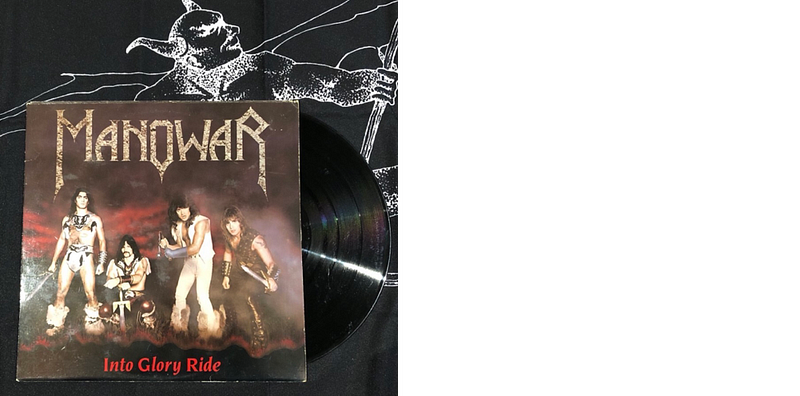
There were loads of wannabe Heavy Metal bands in 1983, so my feeling of bewilderment as to how unique and disparate those assembled in this list is probably naive. I am, however, enamored by how singular Manowar’s approach to Heavy Metal was.
Unambiguous, un-ironic and eternally defiant, they defined not only their vision of how Heavy Metal should sound, but forged ahead with their own manifesto — prescribing its most authentic identity and aesthetic in particular detail.
They stood head and shoulders above their fans, gods among men, yet promoted a “we’re all in it together” position, which I find appealing on a host of levels. For the oft-conservative metal fan, for those who would only dream of pursuing their own musical path, a larger-than-life force like Manowar was readily immortalised. From the band’s perspective, their deification was symbiotically entwined within their acolyte's belief that the quartet qualified for this fervour. For their part, over-the-top shows, heavy-handed thematics, and aggressive pursuit of perfection were all measures that contributed to the quantification of that success.
Po-faced in a manner that so few acts can pull off, let alone sustain across 40 years, their bold ambition didn’t always work in my opinion, but on this occasion, Manowar were both the hammer and the anvil.
Three:
Motörhead Another Perfect Day
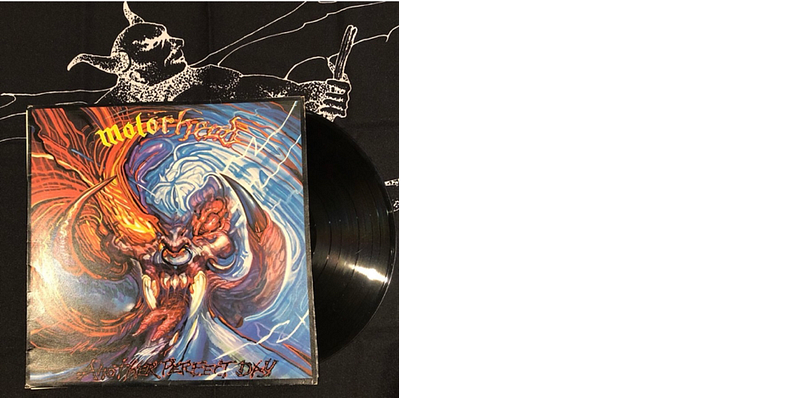
Despite Motörhead being my favourite band of all time, the records I hold in the greatest esteem do not fall within the parameters of those feted by your typical acolytes. I don’t know what it says about me, where I’m four records deep before Fast Eddie Clarke makes the scene, but I care less about the puritanical view and more about the rush. I certainly share the view that the Lemmy, Eddie, and Philthy lineup was the ultimate, but from an output perspective, the band would achieve grander heights — framed within my personal experience.
Adding former Thin Lizzy guitarist Brian Robertson to Motörhead seemed an odd equation, but I wonder if people get too caught up in the antics; the departure of Eddie, the shorts and the slippers, this idea that Robbo disrespected the band and the fans, all while failing to recognise the value of the sonic odyssey presented, and to acknowledge that APD was a brilliant offering. Iron Fist may be Motörhead’s greatest-ever song, but as an album, it was rushed; it contained fillers. It’s symptomatic of a band who aren’t functioning as intended.
Another Perfect Day sees Lemmy waging war from the centre of the Motörhead universe — cleaving a trail of visceral, merciless, and unrelenting destruction. Philthy underpins the offensive, while Robbo weaves melodious magick around this caustic swirl, and for me, he knew exactly how to play with Lemmy and helped to communicate a vision for Motörhead that not only worked but couldn’t have been conceived by anyone other than Robbo. He wasn’t baffled by any perceived lack of convention and contributed to a sound, style, and suite of arrangements that not even Motörhead would again realize.
Featuring cover art by the magnificent Joe Petagno, who, through this hellish vision, captured the chaos and disorder the band were experiencing during that time, it’s a phenomenal record—top 3 Motörhead records for sure. Top Notch!
Two:
Mercyful Fate Melissa
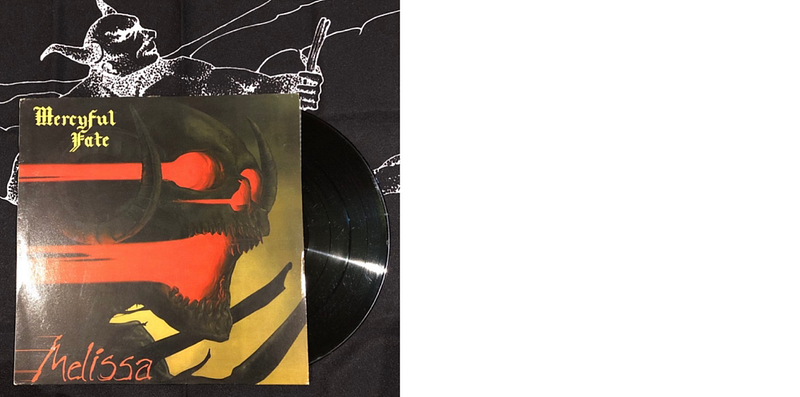
For Mercyful Fate to be absent from the upper echelons of a 1983 list of this nature would be madness. So I assume that people already fall before the altar of this occult-inspired, Heavy Metal opus and focus on one peculiar detail that I haven’t ever seen referenced before.
Salacious Crumb was an insidious creature who we first meet in the opening scenes of Return Of The Jedi. He serves as Jabba The Hutt’s court jester of sorts, geeing up the palace guests and steering attention toward mayhem and acts of vengeance. He has a diabolical laugh — a laugh you’d hope never framed you as the next victim.
Now riddle me this? If King Diamond’s laugh on Satan’s Fall wasn’t inspired by Salacious Crumb? Then what the hell was it? Diabolical intervention? Was it channeled by Melissa herself?
Here are the facts:
- Return of the Jedi release date: May 25th, 1983.
- Melissa recording dates: July 18–29th, 1983.
- Melissa release date: October 30th, 1983.
Considering we’ve never met this Melissa person, logic depicts Salacious Crumb’s laugh = Satan’s Fall.
One:
Slayer Show No Mercy
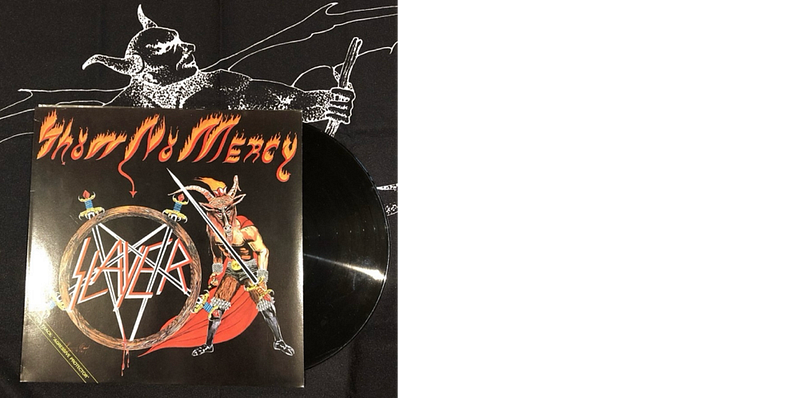
It was difficult to define whether this should be ranked ahead of Melissa, but then again, all these records were hard to rate — especially when considering the disparate currents of metal from which each drew their comparable experience and the chasm between those committed to perfecting an established sound, with those hell-bent on creating it.
Thrash Metal wasn’t completely new in 1983, and Metallica had already shown how the aggression of Venom could enhance these arrangements, but it was Slayer who injected true diabolical malice into this, their acclaimed debut.
Their (perceived) embrace of Satanism was decidedly less cartoonish than most of their contemporaries, and while within their aesthetic lingered the faintest hints of… let’s call it geographical glam — the overarching intention was more authentically diabolical, and I’d argue the presence of Slayer in the more malevolent manifestations of metal artists who followed in their wake, was more pervasive than perhaps any other act that came before them.
This isn’t to suggest that bands like Judas Priest, Motörhead or IronMaiden played no hand in forging the violence and force of the bands that arose during the 80s, but I’d argue that Slayer’s declaration of war was more keenly felt in that current. After all, Evil Has No Boundaries!


