
‘The Song Of Achilles’ by Madeline Miller
Counter Arts Book Club 2023
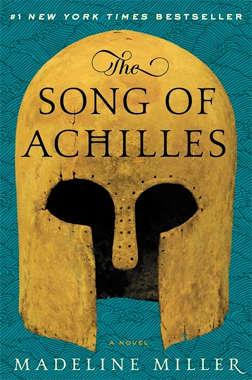
In Madeline Miller’s ‘Acknowledgements’ at the end of her thoroughly enjoyable and heart-achingly lyrical book The Song Of Achilles (2012) which synthesizes many disparate tales of the protagonists, she begins with this,
“Writing this novel was a ten-year long journey…..”
And for those who do not know The Trojan War lasted — according to Homer — ten years. And then for Odysseus, it took him another ten years to return home to Ithaka and Penelope and Telemachus. But that of course is another great epic story — The Odyssey.
Her title hints at how The Iliad was originally a spoken or sung epic. It was not a written text until much later and was sung at great days of celebration and by traveling bards who would over days tell the story — or requested parts — for certain high persons, completely from memory. This part is the song of Achilles and our creator is Madeline Miller.
Although Madeline does begin her story not with Achilles but with his mortal lover, Patroclus. And this makes perfect sense if you know the epic tale and a little about Classical Greece and its myths and history. She has an MA in Classics which has served her very well in the pulling together of source material and the telling of this mighty tragic tale of love, war, and death in a foreign land. The resonances are endless, as of course love war and death have been part of human history since Homer — the blind poet (allegedly) — sang of them.
I too have an academic background in the Classics. I say this not as a boast but to explain that even though I know of the tale and the heroes and Gods involved in the epic war at Troy yet the author takes the tale and adds flesh to the bones of these rather one-dimensional ‘heroic’ characters in Homer who either quarrel over status and the spoils of battle or just fight or fight and die in horrific ways. Madeline manages to include all this as well but more within the story of the mutually loving relationship between Achilles and Patroclus. That is paramount in her story.
Achilles and Patroclus are rounded individuals and their love for each other is beautifully shown and feels so real. There is nothing that feels forced or added to create this love between a mortal man and a demi-god. Patroclus knows both sides of Achilles and he also knows that Achilles will die at Troy because this is how he (Achilles) will achieve lasting heroic fame and glory. Yet, obviously, Patroclus does not want his love to die. But the tragedy is that it is the actions of Patroclus that will eventually result in the death of the greatest ‘hero’ of the Greeks.
The most one-dimensional hero and angry young demi-god in ‘The Iliad’ has become in the hands of Madeline Miller a real human being and she creates a picture of a psychologically affected young man who must deal with a sea-nymph for a mother and being told he will die young after having killed Hector. For Achilles to die Hector must die first. That is the only salve.
That is a heavy weight to bear. Even his mother cannot prevent his death. No wonder she is always pissed off and angry at Patroclus. Her beautiful son was born to die. And if you know the story of The Trojan War then you know that Patroclus is instrumental in that. But she cannot remove the instrument otherwise the fame her son will achieve cannot be. Thetis, I feel your pain and your inability to save your glorious son.
Madeline Miller portrays all the major characters involved except for Helen. She is seen at the beginning — or rather not seen — and then only alluded to in conversations. This is a clever touch as Helen was known for her beauty and the face that launched a thousand ships to bring her back to her husband, Menelaus — King of Sparta — after being stolen by Paris a Prince of Troy. Was she kidnapped or did she go willingly? Pretty obvious to me.
But Briseis the slave girl captured in a Greek pillage is a crucial portrayal of not just the acts of plunder involved in The Trojan War but of any war — then and now — and how ordinary women are mistreated and dehumanized. Yet her courage and fortitude in adversity are as strong as any of the heroes in their blood-splattered, bronze armour. Briseis is no slave. And yet like Helen, she is causing some havoc between the heroes but not causing a war; she is stopping the greatest warrior of the Greeks from fighting.
It is Agamemnon who is the slave. Slave to his status and honor and so is Achilles. These were crucial signifiers of heroic and masculine worth in The Iliad — at least on the Greek side. But Agamemnon is also a murderer, rapist, and undoubted sexual predator.
On the island of Aulis, he sacrifices his daughter Iphigenia in one of the most infamous scenes of Greek Tragedy. Written between 408BC and 406BC Iphigenia at Aulis is the last of the extant works by Euripides. Greek director Yorgos Lanthimos based his 2017 film The Killing of a Sacred Deer loosely on the story of Agamemnon. Please watch it.
Agamemnon lies to Achilles telling him he is to be betrothed to his daughter which is the only way Clytemnestra will allow Iphigenia to go to Aulis. Agamemnon must sacrifice his daughter as the winds have died because he has offended the goddess Artemis and he needs to get the Greek Army to Troy before it disintegrates and fractures. Achilles attempts to save her but is stopped. This is the serious basis for the hatred Achilles now has for Agamemnon as Iphigenia is burnt upon the altar like an animal sacrifice (The Killing of a Sacred Deer).
Once at Troy, Achilles refuses to fight and further tension develops as Agamemnon takes Briseis back. It is a major insult to both Achilles and the heroic code. The Trojans attack under the command of Hector who is King Priam of Troy's eldest son and greatest fighter. Patroclus tries to reason with Achilles to fight even though he knows it may end in his lover's death but Achilles sings and nonchalantly plays his lyre — not quite the song from Achilles. He is anything but the hero and Patroclus is aware that his reputation will be tarnished forever like the growing dust and grime upon his bronze armour.
So Patroclus asks Achilles if he can wear his armour and pretend to be Achilles. After much persuasion, because Achilles is worried about the safety of Patroclus, he agrees. Patroclus rides into battle on the chariot of Achilles with strict instructions that he not engage directly in battle and let the Myrmidons do the fighting.
Patroclus/Achilles rallies the Greeks who have lost many of their ships to the fires of the Trojans under Hector. He chases the retreating Trojans and begins to engage them in battle. And here is the beginning of the end for loyal and loving Patroclus who has tasted the glory by bringing down the mighty Sarpedon and will now pay the price at the hands of Hector.
And his true love the ‘swift-footed’ (epithet by Homer) Achilles is nowhere to be seen as he is watching the event from a distance. In the end, it is not the song of Achilles we hear but as in the original Homeric tale it is the wrath of Achilles we witness — both father and son — which ends Madeline Miller's modern classic uncensorious and understanding doomed love story within a time of heroes at war with themselves and their egos.
It is only Patroclus who has learned medicine from Chiron the centaur and then tends to the wounded during the battles and has such a deep love for Achilles who comes out of the story with no Homeric toxicity attached to him. But Patroclus was lucky because this story was written by a woman living in the 21st century and who had few direct details about Patroclus provided by Homer et. al.
I am not sure what book some of the critics who made comments on the back of the book were reading but I certainly did not find it ‘sexy’. Love and loving. Most definitely. Yes.
It was the Love Song of Patroclus. And Achilles.