The soft truth about hard skills
What makes a skill useful to your long-term career?

My biggest fear growing up was that I would end up useless.
I couldn’t see why anyone would pay me, of all people, for doing things. I didn’t feel like I knew anything particularly useful. What if I wouldn’t be able to earn any money? What if I would end up a drifting outcast ?
Very rarely did I share these worries as a child, as I assumed people would laugh. That adults would find it funny, and other kids would think I’m weird. This gut feeling was probably spot on, given how people get called “entitled” for daring to voice hopes and fears about jobs.
What’s odd, though, is that traditional advice (suck it up, buckle down) hasn’t been particularly helpful. The economy’s been changing so fast, with jobs either materially changing or outright vanishing. It seems few people can count on doing what they do for a living today, the way they do it today, in ten years’ time.
Economic resilience is the term used for the capacity of an economy to resist a shock and rapidly recover to previous growth levels and above. I’m no economist, but it’s clear that improving personal economic resilience is incredibly important to anyone with decades of work ahead of them.
And if ‘just doing what you’re told’ isn’t helping you achieve economic resilience, the only thing left is finding a way to keep getting better. Since nobody wants to get better at things they hate, this leaves us with finding what’s both fun for you and that adds long-lasting value to others.
Just look at Warren Buffet, who can do whatever he likes, and who chooses to read 500 pages a day. Like interest, he says, knowledge compounds. The more you’ll learn, the more you’ll earn.
Whether those earning come from a job or a business hardly matters. Either way, economic resilience is very much about gaining new skills that you can enjoy practicing.
Here’s the problem with new: people don’t like new. In fact, most people hate new. New is uncomfortable. New means you’re back to your first day of school. New means you’ll probably fail at first, except baby steps are for babies, and you’re an adult who’s actually seen things and done stuff.

No, better than new is Like-New.
Like-New is really stuff you kind of know, but in a shiny wrapper. It’s tweaking your knowledge base at the margin. It feels good, you’re reading and absorbing, but it doesn’t accumulate to any meaningful shift in abilities. If it’s December and what you can do looks a lot like what you could do back in January — that’s a lot of Like-New learning.
One way to think about Like-New skills, is by imagining a factory floor. A guy working one machine can learn to operate a different one. But most of the value in machine-operating skills is conditional on the existence of a factory.
Like-New doesn’t build economic resilience.
The best investment in yourself is learning how to pick up new, genuinely new, skills. Which ones though?
For starters, if you try something and it makes you absolutely miserable, just stop. No matter the prestige, it just isn’t for you. Just make sure it’s not fear or embarrassment that’s keeping you from trying.
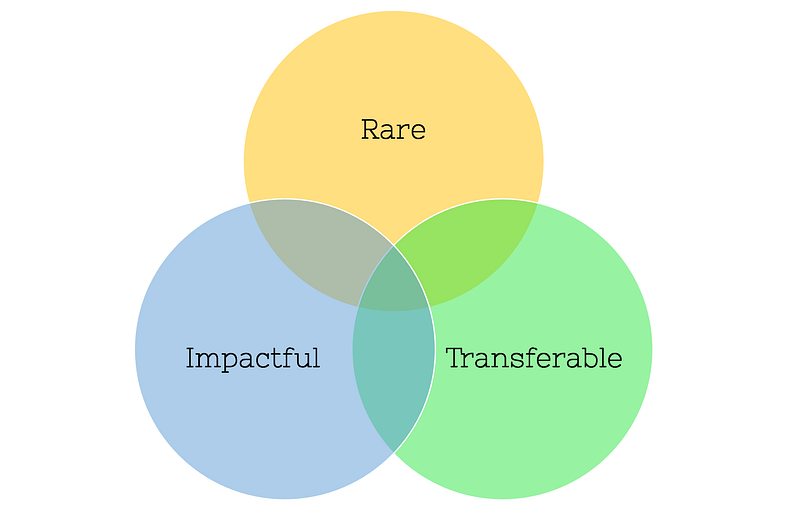
Still, with so many options, you still need a way to tell what makes a skill worthy of your time. I believe it boils down to three criteria a skill needs to meet:
1. It should be rare
This is purely due to supply and demand. A market that’s over-supplied will inevitably value a service less. Of course, rarity is always relative to demand: there aren’t that many unicycle riders out there, but the skill doesn’t command an explosive pay because no one but circuses needs it.
2. It should be impactful
There are lots of things you can learn to do that make your personal life better. Skills like cooking and cleaning, for example, can make a huge positive impact on your personal well-being.
But for the purposes of economic resilience, it matters how much of an impact a skill can make on other people’s lives. Sometimes it’s the same things you like to do anyhow, just applied differently: Writing in your private diary, you’re only influencing yourself; writing for an audience, the very same thoughts can influence many.
3. It should be evidently transferable
It’s easy to see why a transferable skill would be valuable, since it doesn’t bind you to a specific setting. Except, people often use the same words to describe completely different things, and over time we begin to question what that word actually means.
For example, Bob and Mary might both say they’re in sales, except Mary sells software solutions to large corporations and Bob sells vegan sushi at a downtown popup.
The easiest way for two people to agree that they think of a skill similarly is through social proof. If Bob points to securing a corporate client for his veggie rolls, it established common grounds with Mary.
Rare. Impactful. Evidently Transferable. That’s the acid test.