
The Smuggling of Chivalry into the Laws of War
Assassination and the dishonour of modern warfare
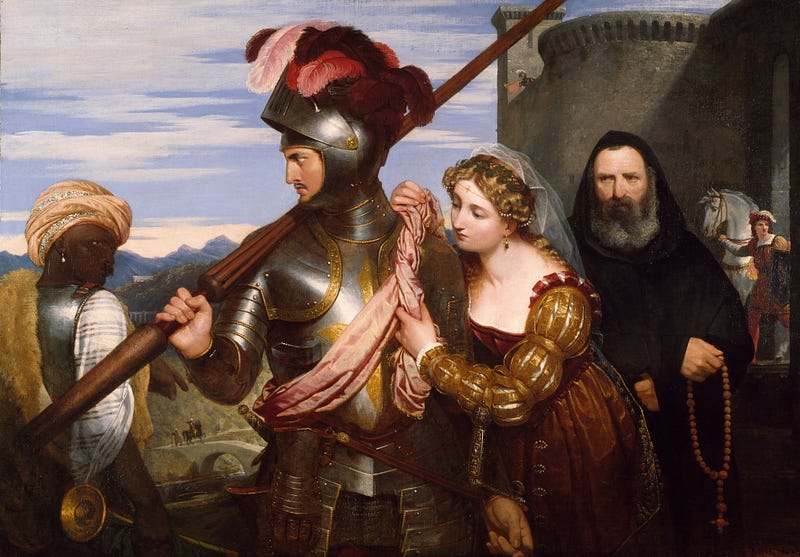
How can war be legal while assassination is outlawed?
Is this just a crude double standard, one for the grunts who fight the wars, and one for the politicians who initiate them or lead them from behind? After all, assassination is the targeted killing, especially of a prominent person, as in a political leader rather than a low-level soldier.
If you’re wearing a military uniform, signifying that you’re a trained killer, you’re a legitimate military target in wartime (when international law trumps the national law against murder). But if you’re a suit-wearing politician who leads your country into war, you’re supposed to be immune to attack. To paraphrase the comedian Chris Rock, you wouldn’t say a killed corporal in the army was “assassinated” in a war; rather, you’d say he or she “got shot.”
The dishonour of assassination
But it turns out that this apparent double standard isn’t what’s at stake in the international law on assassination. As a Westpoint article on the subject points out, quoting the relevant documents, the issue is the chivalric code of honour so the legal problem with the assassination is that this act is “treacherous” or “perfidious.”
The 1863 Lieber Code begins the legal tradition with this passage (with my emphasis):
The law of war does not allow proclaiming either an individual belonging to the hostile army, or a citizen, or a subject of the hostile government, an outlaw, who may be slain without trial by any captor, any more than the modern law of peace allows such intentional outlawry; on the contrary, it abhors such outrage. The sternest retaliation should follow the murder committed in consequence of such proclamation, made by whatever authority. Civilized nations look with horror upon offers of rewards for the assassination of enemies as relapses into barbarism.
Eventually, the 1899 Hague Convention (II) codified that sentiment, saying “it is especially prohibited…to kill or wound treacherously individuals belonging to the hostile nation or army.” The above article points out that that convention “also banned denying quarter and attacking a member of the enemy forces who is hors de combat,” or out of action due to injury.
The most recent international law on assassination is the 1977 Protocol Additional (I) to the Geneva Conventions, which changes the word “treachery” to “perfidy,” saying,
It is prohibited to kill, injure or capture an adversary by resort to perfidy. Acts inviting the confidence of an adversary to lead him to believe that he is entitled to, or is obliged to accord, protection under the rules of international law applicable in armed conflict, with intent to betray that confidence, shall constitute perfidy.
Examples of “perfidy,” the protocol goes on to say, would be “the feigning of an intent to negotiate under a flag of truce or of a surrender,” “the feigning of an incapacitation by wounds or sickness,” or “the feigning of civilian, non-combatant status.”

The modern fate of chivalry
But what all of this entails is that so-called honour matters more than the mass killing in war. Mowing down soldiers with machine guns or dropping bombs on them is permitted if you do so with honour. Honour would require signalling your intentions to commit mass murder by wearing your military uniform and allowing your enemies a chance to defend themselves.
Assassination, then, is dishonourable, which is why it’s prohibited in wars. The assassin targets leaders, bypassing their military defences, by pretending to be a civilian or by attacking suddenly, concealing the weapon, and leaving the leader no possible defence.
Alas, while soldiers evidently display much heroism on the battlefield, the medieval conception of honour in the war died along with the ancient gods. Martial honour died specifically with the invention of the handgun. The bow and arrow foreshadowed this dishonour, but the bow’s range, the arrow’s speed, and the difficulty of reloading quickly or of carrying many arrows meant this wasn’t usually a weapon of mass slaughter.
At any rate, modern weapons automate killing, making war a monstrous affair, as soldiers first learned in the First World War. There was no honour in that war, but just the randomness of being shot in squalid conditions. Nor was there honour in the dropping of atomic bombs in WWII, or in the use of remote-controlled drones in twenty-first century wars. Myriad war movies testify to the soldier’s concern that wars aren’t as honourable as they used to be.
Fighting with swords or spears is one thing since in that case, you must look your enemy in the eye as you struggle against his or her strength. Skill is a more important factor than luck in determining who survives or dies in that kind of hand-to-hand battle. But fighting with guns, missiles, tanks, submarines, and the like is something else again. There’s as little honour in modern wars as there is meaning in the drudgery of automated lines of work, such as in the mass assembly of widgets in a warehouse.
Moreover, it’s worth pointing out that chivalry was originally for knights who were nobles, not for slaves or peasants who fought in ancient or medieval wars. Thus, the question of a double standard reasserts itself since the “honour” of the nobles was supposedly due to their having been granted the right to rule by the gods. The loss of that religious justification makes the lawyerly positing of elitist honour in modern wars arbitrary.
Thus, it looks as though the talk of treachery or perfidy was a way of smuggling feudal elitism through the back door of soulless modern wars. This is why the connotation remains, that the notion of “assassinating” low-level soldiers is oxymoronic, that assassination applies to the killing only of modern nobles or personages. The legal talk of perfidy may be only a pretext, in which case the heart of this law against assassination would be the intention to protect the politicians and bankers who orchestrate wars, who seldom step onto the battlefield to invite the ordinary military targeting them. You outlaw assassination to make it harder to kill the elites who are most responsible for wars.
The grunts die in legal combat en masse, even as the honour that would normally be associated with their bravery and martial discipline flees them because of the introduction of automatic weapons and robots to the battlefield. The civilian leaders, arms dealers, and bankrollers of wars are ensconced in their Green Zones and protected from so-called dishonourable killings.
Even with the lack of any divine right to rule, and thus the lack of inherent majesty that makes anyone “noble” or mystically chivalrous, the international lawyers would have us think that the targeting of leaders is bad in a way that the mass killing of grunts is not. Supposedly, it’s worse to hide your military affiliation and to kill a war-profiteering politician from the shadows, than it is to fire missiles at scores of soldiers. The secretive killing of one person is supposed to be worse than the open killing of multitudes.
That’s legalistic gaslighting.
If assassination is dishonourable to wealthy politicians and bankers, wars are dishonourable to human nature. Why is the vanity of the richest one percent represented in the laws of war, while the interests of the species are left out?
I collect my Medium writings in paperback and eBook forms, and I put them up on Amazon. Check them out if you’d like to have them handy and to support my writing in that way. The newest one is Questing for Epiphanies in a Haunted House, and its 600 pages include 99 recent, wide-ranging articles of mine.