
The Slow March of Automation
The robots are coming. How will this affect you?
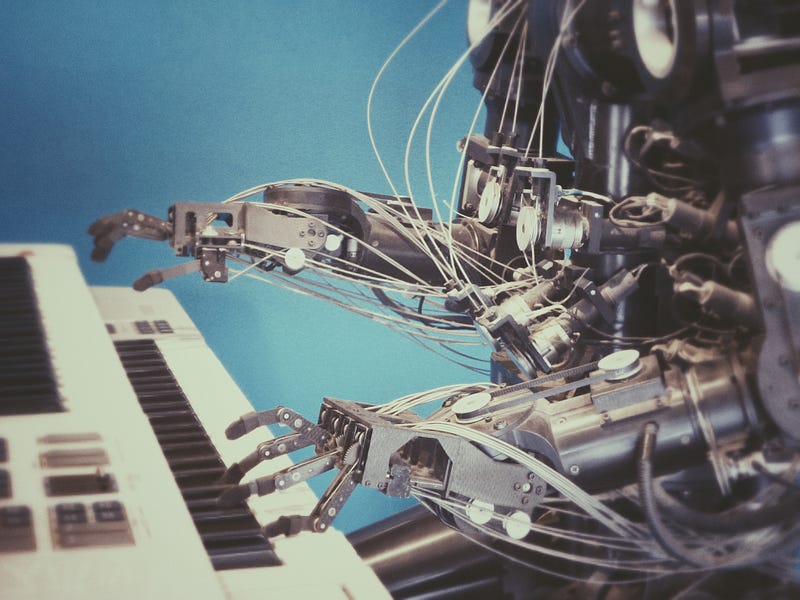
Through history, humans have created machines to perform tasks for us, often more efficiently, reliably and safely. For example, modern factories can mass produce everyday objects to very high standards with only a few humans required to oversee the process.
Fears that machines will lead to the destruction of industries have, so far, been unfounded. When the car replaced the horse and cart it did not lead to a rise in unemployment; rather, many more jobs were created. Technical jobs like engineers and service jobs like drivers sprang up.
Some take this as a sign that there is nothing to fear from automation, as it has up until now led to an expansion in employment. However, I don’t think this is a cycle that can continue indefinitely. Taken to its conclusion, the sphere of available jobs will surely shrink.
It is true that new technology can lead to entire new industries and areas where human ability can be put to use, the car being a good example. But it is hard to see how some advances will not simply replace existing jobs. Driverless vehicles will make drivers redundant and it is difficult to see how those individuals will find jobs in the same field. Even highly skilled jobs like surgery can be carried out using advanced robotics. The lower threshold of employability is slowly rising, and there will come a point where re-skilling will not be possible.
This could leave us with a class of individuals who are not merely unemployed, but unemployable.
It may be the case that at some point in the future humans will not need employment or even money, as machines will provide all our food and housing without needing payment. However, this will likely be some time after which we have a large group of people who cannot get jobs, and of course for that period they will still need money. It is unclear how we resolve this issue.
The scary truth about automation is that it could well wipe out far more industries than our intuition might tell us. We still tend to see robots as fairly primitive and emotionally unintelligent devices. I do not believe this will remain the case; given enough data a robot will outstrip our understanding of emotion using statistics.
This could lead to robot therapists, who could process a patient’s information and compare it to potentially millions of other patients in order to provide just the right words to help. Or robot artists, who could go deeper into the creative process to produce beauty on the most universally appreciated level.
I believe that one of the only limitations to what jobs robots might take over is our current imagination. Future generations might not relate to our way of working in any meaningful way. The only endeavor might be broadening our minds to what robots might teach us.
It is not clear how well humanity will cope without the ability to carry out meaningful tasks. There are massive social and economic implications, but even if we agreed we needed to keep protecting industries it isn’t certain that we would know how to. Innovation is chasing down the gaps in robotic ability; after all, if a human can perform a job what will stop a robot performing it in time? Intelligence, emotional intelligence, technique, memory, strength and even creativity are continuously improving in the robotic sphere and I don’t see in what domain humans will keep their edge indefinitely.
Timescale is the great unknown. We can argue about the inevitability of the above predictions, but if true it is still not obvious when these monumental changes will occur. This is a comfort; of course as it stands we are some way off a shrinking job market. However, do not rest too easily. Advances are likely to accelerate and once big automation takes off one could imagine a short period of, say, ten years in which the market changes dramatically.
The robots are coming. What are you going to do to keep your edge?