avatarJean Campbell

Free AI web copilot to create summaries, insights and extended knowledge, download it at here

4730

Abstract

ple, my realtor is highly conscientious, and it’s easy to watch how it has made him successful. He doesn’t routinely sell million-dollar homes, but he’s truly committed to finding his clients the perfect home and takes the job seriously.</p><p id="9080">He goes the extra mile and obsesses about every line of the paperwork.</p><p id="3362">He also sincerely believes that Dorothy was right.</p><p id="5df6" type="7">“There’s no place like home.”</p><p id="35af">I’m not at the other end of the spectrum, but for years I was a C-student. In my twenties, I got jobs without much responsibility and struggled with a consistent work ethic.</p><p id="00e9">I wasn’t applying myself, as they say.</p><p id="d205">This is very confusing to Authority Figures, especially when you have a history of acing standardized tests and grew up in a safe neighborhood with conscientious parents.</p><figure id="e63d"><img src="https://cdn-images-1.readmedium.com/v2/resize:fit:800/0*QLqzJQFHLSVlQbwA"><figcaption>My only real skill as a teenager. Photo by <a href="https://unsplash.com/@nguyendhn?utm_source=medium&amp;utm_medium=referral">Nguyen Dang Hoang Nhu</a> on <a href="https://unsplash.com?utm_source=medium&amp;utm_medium=referral">Unsplash</a></figcaption></figure><h1 id="289d">The Opposite of Conscientiousness</h1><p id="38d7">I was a slacker, a free-spirit, and a bit of a criminal in high school.</p><p id="2628">Looking back, I blame depression, which hit me around age 12.</p><p id="ca78">My sisters are much more conscientious and have had more success in life. Since we are genetically similar, it’s the environment I grew up in. I am eight years younger than my closest sister in age. I am also Gen X (or Gen Jones) while they are both Boomers.</p><p id="a616">The only reason any of it matters is that I want to have more of the C quality. Fortunately, two graduate degrees helped me gain more of it.</p><p id="4597">If you are perceived as lazy and untrustworthy, you are going to struggle in life, so the next question is: how do I change?</p><p id="052d">If you have a kid who is struggling with developing a sense of responsibility and commitment, there is good news.</p><p id="ca58">A person can become more conscientious, or regain this quality after losing it as I did.</p><figure id="4363"><img src="https://cdn-images-1.readmedium.com/v2/resize:fit:800/0*I49PZ1KlB8ERx-JL"><figcaption>The devil is in the details. Photo by <a href="https://unsplash.com/@gal8xies?utm_source=medium&amp;utm_medium=referral">Adam Flockemann</a> on <a href="https://unsplash.com?utm_source=medium&amp;utm_medium=referral">Unsplash</a></figcaption></figure><h2 id="e8dc">Step One: Assessment</h2><p id="bc24">You need to rate how much of the C trait you have. Taking the Big Five test can help, but asking others how they would rate your level of responsibility and commitment can provide insight.</p><p id="7bc3">It’s helpful to observe yourself rather than judge.</p><p id="49f2">Just because you aren’t remarkably conscientious doesn’t mean you are a criminal.</p><p id="2384">You may also show strengths in some areas, like getting grades, but weaknesses in others, like punctuality.</p><h2 id="7a2e">Step Two: Commitment</h2><p id="787e">Committing to a long terms goal such as military service, completing a degree, or finishing a volunteer job is a solid approach to improving this trait.</p><p id="913a">Those types of commitments aren’t always practical, but a shorter commitment can bolster your skills.</p><p id="f828">People lacking in C characteristics tend to give up when the going gets boring, or rough.</p><p id="89d8">I got all the way through a college degree in the usual four years, but with the same lackluster grade-point average as high school. Depression and anxiety carved out a big hole in my ability to stay focused, committed, and accountable.</p><h2 id="afae">Step Three: Role Models</h2><p id="37c8">Mimicking or copying someone who is conscientious is an efficient and effective way to build more of this trait.</p><p id="67fd">I worked for seven years for a boss who was highly conscientious. Ironically, one of her greatest superpowers was ethically and thoroughly citing all her sources!</p><p id="4102">Being around someone who has plentiful amounts of the C trait is a gift. Hopefully, that person will patiently nurture you.</p><h2 id="e2d7">Step Four: Address Underlying Issues</h2><p id="13ad">Altering personality traits is slow-going under the best of circumstances, but if you struggle with mental health issues it’s much more difficult.</p><p id="ed6b">It’s impossible to focus on tasks and commitments when it takes all your energy to get out of bed every morning.</p><p id="59fe">This doesn’

Options

t mean people with depression and anxiety are automatically lacking in conscientiousness.</p><p id="4217">If you find yourself struggling with improving your C-quotient, it’s worth checking in with a mental health professional before deciding you are doomed to a life of being unreliable.</p><h2 id="600e">Step Five: Gain Competence</h2><p id="d734">One of my problems as a kid was the feedback I got — I’d been told I was “smart.”</p><p id="eeb6">Side note: always tell kids they work hard, not that their smart!</p><p id="a3dc">My work ethic took a big hit, and it was almost impossible for me to admit I didn’t know something. So when the assignment to do a Bibliography came up, and I didn’t grasp the instructions, I couldn’t ask for help.</p><p id="403d">Because that would prove I wasn’t smart.</p><p id="66f6">When in doubt, fabricate! No one noticed I was using the pulled from air (PFA) technique.</p><p id="ca48">In general, it’s easier to focus and stay accountable when you know what you are doing, but gaining mastery without asking for help is usually not possible.</p><h2 id="9e35">Step Six: Help Others</h2><p id="6498">Helping someone else foster conscientiousness (or any positive trait) can strengthen your own practice.</p><p id="f213">Others in need of help are all around, from kids to prisoners to your political representatives. Making a commitment to another person who needs you is transformative, especially if you struggle with a sense of purpose or the ability to follow through.</p><p id="c931">Another method is to join a group, then keep your promise to meet with them.</p><p id="283a">In my thirties, I got into caving and after a couple of my random no-shows, I began to realize the group needed my presence.</p><h1 id="3bf6">Final Slacker Thoughts</h1><p id="251e">I have sensitive antennae for conscientious types because I am still honing my skills.</p><p id="cf09">I take note of their tendency to go the extra mile.</p><p id="e264">Although I haven’t lost my preference for finding shortcuts, I am writing a book with lots of citations!</p><p id="f1b8">In this case, not citing correctly could get me sued, so I guess you could say I’m paying better attention.</p><p id="8c6e">Sorry Mrs. Hartley. I’d like to blame my cheating ways on Queen Elizabeth but in retrospect, it was my inability to admit I was clueless.</p><p id="7594">If it’s any consolation, I’ve endured ridiculous amounts of schooling since those days at Bryant Junior High School.</p><p id="4b3b"><a href="https://jeancampbell-25104.medium.com/subscribe">Want an email heads-up for new articles? Click Me</a>.</p><p id="6d3e"><a href="https://medium.com/membership">Want to join Medium? Click Me.</a></p><p id="e8c4"><i>Jean Campbell recently started her first <a href="https://jeancampbell.substack.com/"><b>Substack</b> newsletter</a> to laser focus on getting her book, </i><b>City of Lies: A Street Hustler’s Omaha Journey </b><i>published.</i></p><div id="bfeb" class="link-block"> <a href="https://readmedium.com/we-have-a-low-wage-problem-d3168da2a6af"> <div> <div> <h2>We Have a Low Wage Problem</h2> <div><h3>In Hot Springs, city jobs start at $12.43 an hour</h3></div> <div><p>medium.com</p></div> </div> <div> <div style="background-image: url(https://miro.readmedium.com/v2/resize:fit:320/1*yLXktoB0AJDA4-WExWlQ-g.jpeg)"></div> </div> </div> </a> </div><div id="9a0c" class="link-block"> <a href="https://readmedium.com/feral-1970s-child-somehow-survived-178e0a129a7c"> <div> <div> <h2>Feral 1970s Child Somehow Survived</h2> <div><h3>My parents would be arrested for neglect today</h3></div> <div><p>medium.com</p></div> </div> <div> <div style="background-image: url(https://miro.readmedium.com/v2/resize:fit:320/1*7ATiUd6OZOMvm5ndMam1MA.jpeg)"></div> </div> </div> </a> </div><div id="784f" class="link-block"> <a href="https://readmedium.com/the-1-belly-fat-trick-revealed-bd2113185259"> <div> <div> <h2>The #1 Belly Fat Trick Revealed</h2> <div><h3>It’s the sugar, but then you knew that</h3></div> <div><p>medium.com</p></div> </div> <div> <div style="background-image: url(https://miro.readmedium.com/v2/resize:fit:320/0*TgStOEbQBncz3hJB)"></div> </div> </div> </a> </div></article></body>

PERSONALITY TESTS

The Single Personality Trait That Predicts Success

And how you can foster more of it
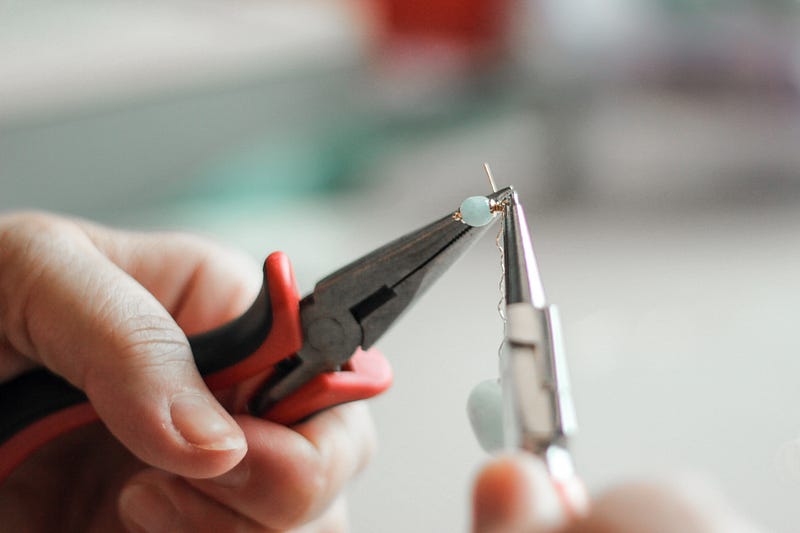
Paying attention to details is a winning strategy. Photo by eleonora on Unsplash

Extroverts and introverts don’t see eye to eye, according to internet posts galore.

Extroverts are mostly fed up with hearing how they get all the breaks.

Rating your extroversion isn’t rocket science. You like parties and lots of people, or you don’t.

Data shows about two-thirds of Americans are extroverts, so there is plenty written about how the rest of us feel oppressed.

As critical as extroversion can be to get a leg up in life, another trait matters more.

if you are hoping for success by conventional standards, it’s wise to nurture this trait in yourself and seek out others who possess it.

Like extroversion, this trait is one of the “big five” personality characteristics. In addition to your party proclivities, you exist on a spectrum for:

  • agreeableness
  • conscientiousness
  • neuroticism
  • open-mindedness

Online tests abound, but unlike the long-winded MMPI or dubious IQ tests, this one isn’t time-consuming or anxiety-producing.

I take a lot of shortcuts, so sue me. Photo by Hansjörg Keller on Unsplash

Taking Short Cuts with Abandon

Back in 7th grade in Mrs. Hartley’s class, we had to write our first three-paragraph essay with citations.

You know sh*t’s gotten real when they want a Bibliography.

I was saddled with writing about Queen Elizabeth I. God knows, I couldn’t have voluntarily picked her as my topic.

I had no idea what I was doing, and my primary research tool was our family’s Encyclopedia Britannica. (I’m checking my privilege; I realize some kids had no EB at home).

I resisted plagiarizing paragraphs about Liz I from the EB. It was dull and I got tired but I read about her and re-worded her life story.

When it came to the citations, however, I threw up my 13-year-old hands in despair. I was in complete darkness.

I had no idea how to cite the EB or my other sources, which must have been a library book or two, so I made up the citations entirely. Mrs. H., who I now realize was exhausted from supervising 7th graders all day, didn’t notice.

Prior to this high crime, I was a good student who worked hard at every task, dotting every I and crossing every T and never passing notes.

Somewhere in 6th grade, it all went to hell when I morphed into the class clown. I still managed good grades, but 7th grade was the beginning of the end.

In 8th grade, I started passing notes and got a C in Algebra.

I went from being highly conscientious to slackerdom. I can’t recommend it.

Painful memories of x and y. Photo by Laura Rivera on Unsplash

What Is Conscientiousness?

Conscientiousness is an umbrella term for characteristics like being:

  • dependable
  • consistent
  • responsible
  • detail-oriented
  • committed
  • accountable

Conscientiousness is a trait you can recognize in others because it makes you want to hire them, do business with them, and trust the with your children.

People with this trait become godparents, elected officials (sometimes), fire captains, and high school principals (usually).

For example, my realtor is highly conscientious, and it’s easy to watch how it has made him successful. He doesn’t routinely sell million-dollar homes, but he’s truly committed to finding his clients the perfect home and takes the job seriously.

He goes the extra mile and obsesses about every line of the paperwork.

He also sincerely believes that Dorothy was right.

“There’s no place like home.”

I’m not at the other end of the spectrum, but for years I was a C-student. In my twenties, I got jobs without much responsibility and struggled with a consistent work ethic.

I wasn’t applying myself, as they say.

This is very confusing to Authority Figures, especially when you have a history of acing standardized tests and grew up in a safe neighborhood with conscientious parents.

My only real skill as a teenager. Photo by Nguyen Dang Hoang Nhu on Unsplash

The Opposite of Conscientiousness

I was a slacker, a free-spirit, and a bit of a criminal in high school.

Looking back, I blame depression, which hit me around age 12.

My sisters are much more conscientious and have had more success in life. Since we are genetically similar, it’s the environment I grew up in. I am eight years younger than my closest sister in age. I am also Gen X (or Gen Jones) while they are both Boomers.

The only reason any of it matters is that I want to have more of the C quality. Fortunately, two graduate degrees helped me gain more of it.

If you are perceived as lazy and untrustworthy, you are going to struggle in life, so the next question is: how do I change?

If you have a kid who is struggling with developing a sense of responsibility and commitment, there is good news.

A person can become more conscientious, or regain this quality after losing it as I did.

The devil is in the details. Photo by Adam Flockemann on Unsplash

Step One: Assessment

You need to rate how much of the C trait you have. Taking the Big Five test can help, but asking others how they would rate your level of responsibility and commitment can provide insight.

It’s helpful to observe yourself rather than judge.

Just because you aren’t remarkably conscientious doesn’t mean you are a criminal.

You may also show strengths in some areas, like getting grades, but weaknesses in others, like punctuality.

Step Two: Commitment

Committing to a long terms goal such as military service, completing a degree, or finishing a volunteer job is a solid approach to improving this trait.

Those types of commitments aren’t always practical, but a shorter commitment can bolster your skills.

People lacking in C characteristics tend to give up when the going gets boring, or rough.

I got all the way through a college degree in the usual four years, but with the same lackluster grade-point average as high school. Depression and anxiety carved out a big hole in my ability to stay focused, committed, and accountable.

Step Three: Role Models

Mimicking or copying someone who is conscientious is an efficient and effective way to build more of this trait.

I worked for seven years for a boss who was highly conscientious. Ironically, one of her greatest superpowers was ethically and thoroughly citing all her sources!

Being around someone who has plentiful amounts of the C trait is a gift. Hopefully, that person will patiently nurture you.

Step Four: Address Underlying Issues

Altering personality traits is slow-going under the best of circumstances, but if you struggle with mental health issues it’s much more difficult.

It’s impossible to focus on tasks and commitments when it takes all your energy to get out of bed every morning.

This doesn’t mean people with depression and anxiety are automatically lacking in conscientiousness.

If you find yourself struggling with improving your C-quotient, it’s worth checking in with a mental health professional before deciding you are doomed to a life of being unreliable.

Step Five: Gain Competence

One of my problems as a kid was the feedback I got — I’d been told I was “smart.”

Side note: always tell kids they work hard, not that their smart!

My work ethic took a big hit, and it was almost impossible for me to admit I didn’t know something. So when the assignment to do a Bibliography came up, and I didn’t grasp the instructions, I couldn’t ask for help.

Because that would prove I wasn’t smart.

When in doubt, fabricate! No one noticed I was using the pulled from air (PFA) technique.

In general, it’s easier to focus and stay accountable when you know what you are doing, but gaining mastery without asking for help is usually not possible.

Step Six: Help Others

Helping someone else foster conscientiousness (or any positive trait) can strengthen your own practice.

Others in need of help are all around, from kids to prisoners to your political representatives. Making a commitment to another person who needs you is transformative, especially if you struggle with a sense of purpose or the ability to follow through.

Another method is to join a group, then keep your promise to meet with them.

In my thirties, I got into caving and after a couple of my random no-shows, I began to realize the group needed my presence.

Final Slacker Thoughts

I have sensitive antennae for conscientious types because I am still honing my skills.

I take note of their tendency to go the extra mile.

Although I haven’t lost my preference for finding shortcuts, I am writing a book with lots of citations!

In this case, not citing correctly could get me sued, so I guess you could say I’m paying better attention.

Sorry Mrs. Hartley. I’d like to blame my cheating ways on Queen Elizabeth but in retrospect, it was my inability to admit I was clueless.

If it’s any consolation, I’ve endured ridiculous amounts of schooling since those days at Bryant Junior High School.

Want an email heads-up for new articles? Click Me.

Want to join Medium? Click Me.

Jean Campbell recently started her first Substack newsletter to laser focus on getting her book, City of Lies: A Street Hustler’s Omaha Journey published.

Personality
Self Help
Success
Psychology
Growing Up
Recommended from ReadMedium